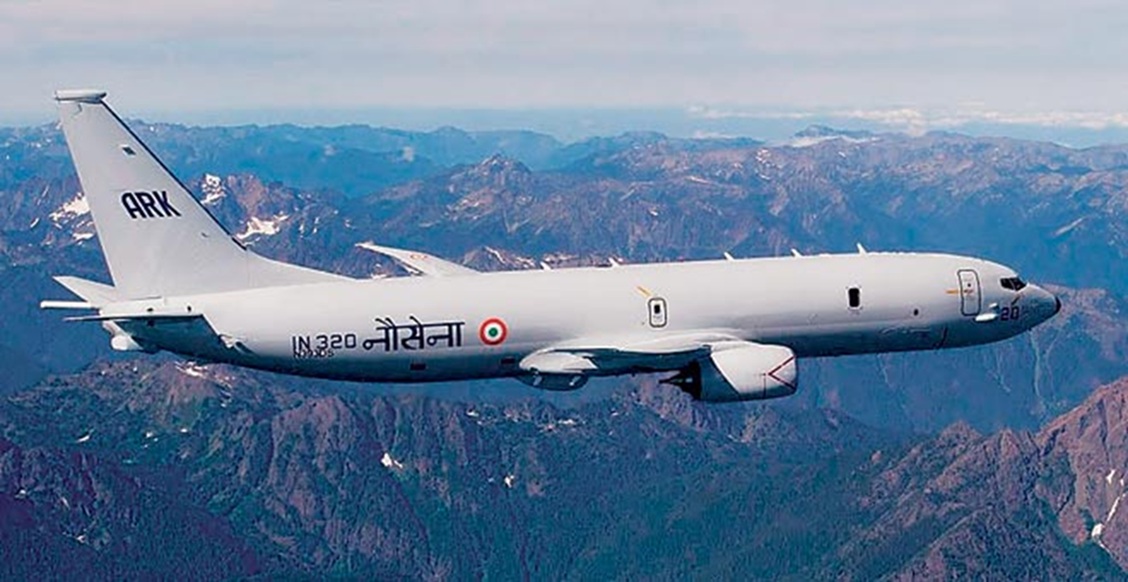
The Defence Acquisition Council of GoI had approved the procurement of six additional P-8I aircraft in November 2019, which was authorised by the US State Department in May 2021. However, due to the recent changes in policies of the US government, the procurement process has been paused due to the increase in cost. Notwithstanding, India is still negotiating with the US and Boeing for the acquisition of P-8I, which has the airborne ASW capability.
Why is ASW Important for India?
Anti-submarine Warfare (ASW) capability is very critical for the nation since enemy submarines can pose serious threats to the nation’s offshore and coastal assets. ASW platforms can provide strategic defence by protecting the sea lines of communication (SLOCs). They can also establish a tactical edge over the enemy by curtailing the nuclear strike capability of enemy submarines from the high seas.
Airborne ASW operations are essential since they can enhance the detection and tracking of underwater threats across vast expanses of ocean. ASW capabilities are a critical component of the Indian Navy’s defence strategy, especially given the rising submarine activity in the Indian Ocean Region (IOR). Airborne ASW Platforms P-8I Poseidon aircraft of the Indian Navy are the “Eye in the Sky” and the first responder. They provide excellent long-range surveillance, equipped with advanced radar and an onboard ASW system. It carries a variety of sonobuoys and is supported with magnetic anomaly detectors (MAD) along with a few lightweight torpedoes to detect and attack enemy submarines.
Multi-layered ASW Protection
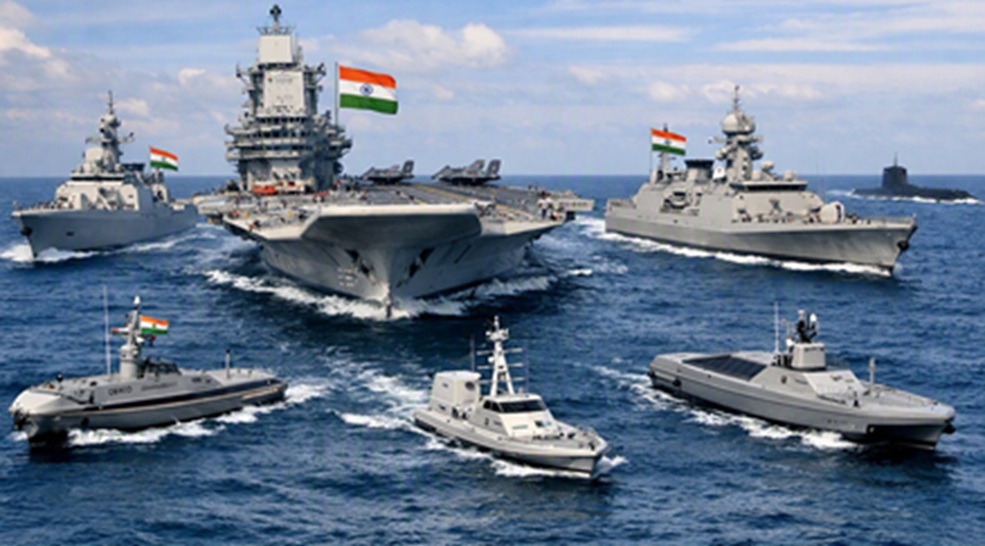
Only very few nations in the world have airborne ASW capabilities, and India is one among them. Indian Navy now operates a multi-layered ASW ecosystem involving submarines, surface ships, ASW and MR aircraft, helicopters and even unmanned systems. This has evolved rapidly, with the fleet expanding to over 150 warships, including 17 attack submarines. In the entire schema of layered ASW shields, P-8I aircraft provides the first line of defence. The P-8I squadrons are manned round the clock by highly professional ASW specialists who can process the complex sonar signature data being generated by multiple sensors across varied platforms. Decommissioned TU-142 M aircraft, the antecedent of P-8I, was of Russian origin, had superior ASW capabilities with a variety of sonobuoys capable of identifying submarines underwater over a larger area.
Need for Indigenous ASW Aircraft
India has a legacy of over 45 years in Airborne ASW operations. The need for designing and developing an indigenous airborne ASW system similar to the one fitted onboard P-8I or TU-142 M is yet to take off. The Indian Navy may have a challenging time if the sanction comes from the US on the technical support of the existing P-8I ASW system. The decision to buy the P-8I ASW platform instead of upgrading the TU-142M was taken in 2008 to ease the maintenance, support and operations. Since the commercial development of a few numbers of indigenous airborne ASW platforms may not be economical, the GoI made a decision to buy them from the US. Indigenisation can be commercially viable only if a larger number of ASW platforms are manufactured and supplied to the Indian Navy, as well as by exporting them to friendly nations worldwide. The Indian Navy has missed a golden opportunity to exploit the last decommissioned TU-142 M aircraft as a test bed for the development of an indigenous airborne ASW platform.
Bringing Back “Project Simhika”
The DRDO Project ‘Simhika’ refers to an airborne ASW initiative led by the DRDO in collaboration with the Indian Navy. Its primary goal is to establish a sophisticated, large-scale surveillance system in the IOR to detect and track enemy submarines. The present status of Simhika is not publicly detailed. However, we can reset this program and explore the feasibility of indigenous development with the support of DRDO and the prevailing startup ecosystem. Concurrently, associated sonobuoys can also be designed and developed. India is currently pursuing a partnership with the US in the development of Low-Frequency Dunking Sonar (LFDS) for ASW helicopters. But LFDS is inferior and can never be a match to the capabilities and the area being covered by the airborne ASW system supported with suitable sonobuoys.
Development of New Generation Sonobuoys
Sonobuoy sensors are the eyes of airborne ASW systems. Once deployed at sea, we can control and read the data from these buoys. Development of sonobuoys corresponding to that indigenous ASW platform is also mandatory since sonobuoys are specific to the respective ASW system. DRDO could steer the development of state-of-the-art autonomous intelligent AI-enabled smart sonobuoys. With the advent of long-endurance, low-cost battery technology, developing agencies can replace the existing saltwater-activated batteries. The feasibility of tapping renewable energy to keep the battery charged post-deployment can also be explored during development. Identification of the location of deployed sonobuoys, followed by recovery and recycling of sonobuoys, may be a good SDG practice and can cut the cost of operations in the long run.
Development of Air Launched Super Cavitation Torpedoes
Super-cavitation is an advanced propulsion technology that enables torpedoes to achieve extreme underwater speeds by creating a gas bubble (super-cavity) around the nose tip of torpedoes to minimise the drag. The DRDO’s Naval Science and Technological Laboratory (NSTL) is working on an ultra-high-speed super-cavitation torpedo (Varunastra) capable of speeds exceeding 80 knots (148 km/h). But this weapon weighs around 1.5 tons, and hence, there is a need to redesign this weapon with reduced weight for an airborne air-launch application. It can become a game-changer for India’s ASW operation capabilities.
Autonomous Surface Vessels for Airborne ASW Support
Autonomous Surface Vessels (ASVs), also known as Unmanned Surface Vehicles (USVs), are becoming increasingly vital to airborne ASW support, acting as force multipliers that enhance the range, persistence, and effectiveness of ASW aircraft and helicopters. Autonomous Surface Vessels can help the management of deployed sonobuoys, sensor argumentation and even recovery of sonobuoys. Maybe in the near future, they may take over the functionality of sonobuoys view given their energy endurance.
Installation of Fixed Underwater Sensors
Deployment of fixed sonar sensors across the entry points of all ports and straits can strengthen the underwater surveillance system. The initial cost for deployment may be high, but it would certainly be economical in the long run and can be integrated into the newly developed airborne ASW platform
Building Digital Repository of SONAR Signatures
Indian Navy maintains an excellent repository of sonar signature data. Porting and interoperability of these data on varied platforms may be explored. Generative AI can play a major role in generating synthetic sonar signature data using a GAN deep learning network. The nation needs a permanent task group for sonar signal processing, target classification, data sharing and data porting across heterogeneous platforms. A digital sonar data repository is mandatory to keep the institutional memory for next-generation systems.
AI Algorithms for Airborne ASW Operations
Algorithms for predicting enemy submarine positions utilise advanced mathematical modelling, optimisation techniques and AI-driven data assimilation towards estimating submarines’ trajectories and probable locations under uncertain conditions. Kinematic and dynamic modelling algorithms work on data on acceleration, velocity and movement patterns for estimation of the current and future positions. Using Random Finite Set (RFS) theory, we can measure uncertainty, false detection and unseen targets, confirming the presence /absence of submarines. Bayesian inference and sequential Monte Carlo modelling help to assimilate sensor data in real-time to update enemy submarine positions. Optimisation using Metaheuristic algorithms can optimise search and tracking, thereby improving the prediction of future position.
Tracking Enemy Submarines 24X7
Tracking of afloat enemy submarines 24×7 is a monumental challenge due to the stealth characteristics of submarines. It is very difficult to predict their endurance and underwater mobility, and speed. While no system guarantees universal real-time tracking, major technological advances and multi-layered surveillance efforts are increasingly narrowing detection gaps, especially for strategic regions and the protection of high-value targets. Digital twinning frameworks create a real-time virtual replica of the maritime environment and the submarine positions. This is a military objective for major naval powers, but a challenging task to achieve.
Make in India, Make for the World
Any indigenous development can become commercially viable only if the production numbers are high. By developing indigenous ASW airborne platforms, a manufacturer can never break even by sourcing only to the Indian Navy as a customer. Hence, the feasibility of joint development with other nations, private-public partnership and marketing to Foreign Friendly Nations (FFN) may be explored to achieve economies of scale. DRDO and the Indian Navy may restart the shelved endeavour, considering present-day geopolitical developments. Indian Navy should exploit the existing window of opportunity available post ‘Op Sindoor’.
Title Image Courtesy: Indian Navy
Disclaimer: The views and opinions expressed by the author do not necessarily reflect the views of the Government of India and the Defence Research and Studies
Article Courtesy: Raksha Anirveda