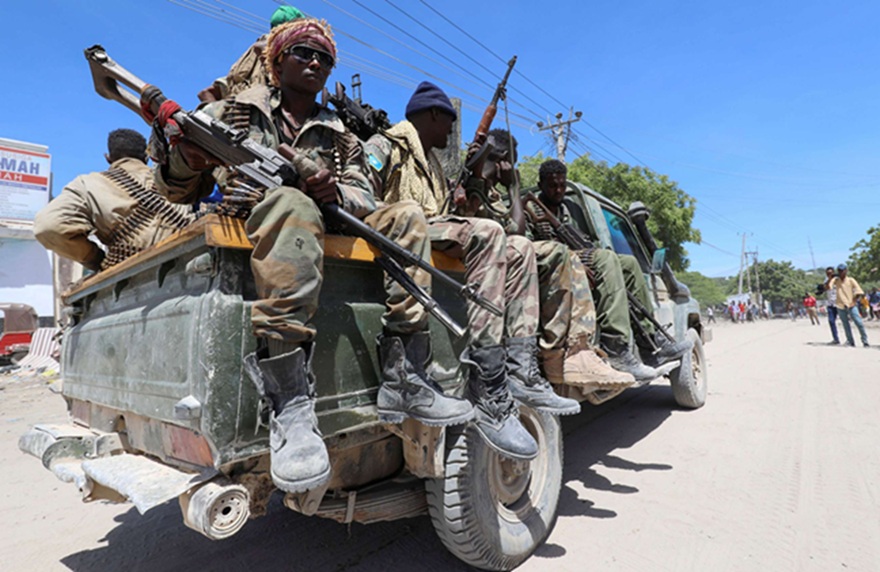
Everything that happened in international relations at the turn of the 1980s and 1990s was a consequence of changes in Central and Eastern Europe. These changes caused an “avalanche” of unexpected events, which led to the disappearance of one of the two world powers, the USSR, from the world map. However, while in Europe, in the vast majority of cases, everything proceeded in a relatively peaceful manner, the situation in Africa was completely different. The civil war in Somalia has had devastating consequences.
The poorest continent in the world has always been the arena of bloody struggles and tragedies for the inhabitants of Africa; in earlier periods of history, these were fratricidal wars. Then came the conquests of countries from outside the continent, whose main goal was to obtain black slaves and Africa’s natural resources. This period was a time of typical colonial conquests, which deepened the poverty and tragedy of African countries and populations. The period of colonialism lasted for several centuries, finally ending its shameful, inhumane existence in the 20th century. From the description of the end of European colonial rule in Africa, we will begin the story of what happened in Somalia between 1991 and 1994.
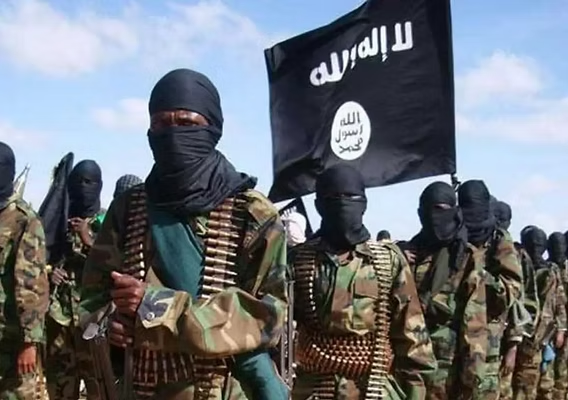
PC: Genocide Watch
The Process of Decolonisation of African Countries
In the second half of the 20th century, nation-states began to emerge in Africa, and the influence of European powers began to decline gradually. Their existing possessions were also shrinking. The colonial system, which had been established in the 19th century, was slowly becoming a thing of the past. Decolonisation initially affected the Asian continent, where the process was much faster, and then the countries of the African continent, which were mainly British and French colonies.
The process of African countries regaining independence took two forms. One form was uprisings, in which the indigenous population of the continent took up arms to fight for the sovereignty of their own territories. This was the case, for example, in Algeria (1954-1962) and during the war in Mozambique (1964-1975). Another method was the gradual attainment of independence. The main tool in this case was long and difficult negotiations with the authorities of the countries that had previously colonised the African continent. In 1955, at a conference in Bandung (Indonesia), 29 countries from Asia and Africa decided to form a bloc of states to fight colonialism and the domination of the superpowers. However, the movement did not live up to expectations. This was mainly because it was led by the communists Gamal Abdel Nasser, Josip Broz Tito, and Mao Zedong, who caused the bloc to pursue policies beneficial to the Soviet Union, without bringing the expected benefits to Africa.
Organisation of African Unity
In 1960, the issue of decolonisation in Africa became a fundamental goal formally adopted by the UN, and the General Assembly passed a resolution granting full independence to African colonial countries. On May 25, 1963, at an international conference in Addis Ababa (Ethiopia), based on a decision by the heads of government of thirty African countries that were already independent at that time, the Organisation of African Unity was established (in 2002, the OAU was transformed into the African Union). The organisation was based on earlier integration movements in Africa, mainly the Brazzaville Group, the Casablanca Group, the Monrovia Group, and the Union of Ghana with Guinea and Mali.
At the time of the OAU’s creation, 15 percent of the continent’s area and 8 percent of its population were under direct colonial rule by European countries. Seeking to liberate Africa completely from the yoke of colonialism, the founding conference of the OAU established a Liberation Committee, which included the following countries: Algeria, Ethiopia, Guinea, Congo, Nigeria, Senegal, Tanganyika, Uganda, and the United Arab Republic (the UAR was briefly established on February 1, 1958, as a result of the union between Egypt and Syria).
The Committee’s priority was to support national liberation movements on the continent. However, the decolonisation of Africa continued to be hampered by Western countries, which still wanted to maintain their spheres of influence, and although their form was to be different, the interests and presence of the existing colonisers still prevailed.
Internal Conflicts in Africa and Their Causes
Although decolonisation ultimately brought independence to African countries, it did not solve many fundamental political, social, and economic problems. The newly formed states were often unable to implement democratic principles, and economic issues seemed more important than these problems. Therefore, in the 1960s and 1970s, Africa was engulfed in many armed conflicts over territory, ethnicity, and/or religion.
Due to the limited scope of this article, I will not describe them in detail, but let us mention the civil war in Chad, the conflict in Zaire, and in North Africa, where Islam-professing Arabs living in Libya, Sudan, and Egypt came to the fore. Another important issue was the question of Western Sahara, to which Morocco laid claim (at the same time, some movements and organisations wanted to unite Western Sahara with Morocco or Mauritania). The conflict between Uganda and Tanzania was less significant and much shorter, but the Nigerian crisis (also known as the Biafran conflict) of 1966-1970, caused by the attempt to secede from the oil-rich eastern part of Nigeria, was more serious. Angola’s path to independence was also complicated. This was due to disputes within the national liberation movement caused by tribal conflicts.
In the summer of 1977, the Ethiopian-Somali conflict broke out in the so-called Horn of Africa, which did not remain without impact on other countries in the region. Called the “peaceful military revolution” in the Ethiopian Empire (it broke out on February 26, 1974), it activated separatist movements in Eritrea, whose goal was to separate the two provinces of Balie and Harer from Ethiopia. The problem, however, was that Somalia also laid claim to these areas. After the abolition of the empire in Ethiopia and the proclamation (on March 23, 1975) of the Ethiopian People’s Democratic Republic, the country moved closer to the USSR and other real socialist states. Relations with the US, West Germany, and Great Britain were severed. The Eritrean separatists, who had taken control of almost the entire country, were supported by Sudan, whose troops carried out armed raids in the border regions of Ethiopia.
On April 18, 1980, Zimbabwe (formerly Rhodesia) proclaimed its independence, which had a significant impact on the escalation of the struggle against racist systems existing in the southern part of the African continent (especially Namibia and South Africa). However, the decade of the “new economic order for Africa” (1976-1985) did not represent a breakthrough in overcoming Africa’s economic backwardness, as its countries were solely dependent on their own insufficient forces. However, in the first half of the 1990s, the era of apartheid came to an end in South Africa, and Nelson Mandela, the country’s first black president, came to power through democratic elections. In May 1991, a peace agreement was signed in Angola, although tensions in the country continued and even led to new fighting.
The Strategic Importance of the Horn of Africa
Located on the coast of the Red Sea, the Horn of Africa has always been and continues to be of strategic importance, which means that the ongoing disputes in this region have an impact on other countries in the region. The world was not indifferent to them either. As already mentioned, between 1977 and 1979, Somalia and Ethiopia were embroiled in armed conflict. The war and prolonged drought in Ogaden (a geographical region in eastern Ethiopia, now part of the Somali province, inhabited mainly by Muslim Somalis who want to unite with Somalia) caused a significant influx of refugees into Somalia.
The situation in this region became even more complicated at the turn of the 1980s and 1990s, when the global security system was redefined. This led to changes that had a fundamental impact on the end of the Cold War. The consequence of the “Autumn of Nations,” as it is referred to here, was the collapse of the USSR, one of the two world superpowers, as well as a change in the balance of power and influence. African countries were not “indifferent” to these events either, experiencing a series of ideological, political, and ethnic upheavals. An additional misfortune was the famine that affected the region.
Threats to Regional Stability
Failing states have become a threat in this period. Such states usually become a refuge for terrorists, gangs, and all kinds of organised crime. The authorities of failing states lose control over many matters that were previously their exclusive domain. Illegal decision-making centres are established, attempting to take over the functions of the legal authorities of the state, which are unable to counteract this.
In July 1990, the leaders of six countries in the Horn of Africa- Djibouti, Ethiopia, Kenya, Somalia, Sudan, and Uganda- decided to stop supporting armed groups that threatened the security of the region. This mainly concerned the activities of such groups on the border between Ethiopia and Somalia, where individual clans and hostile tribes were fighting each other. In addition, the issue of Eritrea’s independence remained unresolved in Ethiopia (it was only after a referendum in which 99.8% of the enclave’s inhabitants voted in favour of secession from Ethiopia that Eritrea gained independence on May 25, 1993).
Somalia – A Country Forced into Civil War
The example of Eritrea’s secession was contagious, but guerrilla groups already operating in Somalia took up arms to change the government. At the turn of 1990-1991, not only foreigners but also the United Congress of Somalia were preparing to leave the country. In 1991, all the clans in the country united and carried out a political coup. As a result, Mohammed Siada Barre lost power and fled the capital, Mogadishu, on January 28. Somalia was plunged into complete chaos. Due to the ongoing war and its consequences, the country began to be widely referred to as “collapsing.” Ali Mahdi Mohamed became the president of Somalia, but he did not have the support of all Somali clans. The conflict began anew. In this situation, after several months of fighting, Egypt and Italy took on the role of mediators. These efforts resulted in a conference being convened in Djibouti on June 7, 1991, during which the parties were called upon to end the fighting and form a transitional government.
Mohammed Farah Aidid
On November 18, 1991, bloody fighting in Mogadishu led to the overthrow of the incumbent president, Ali Mahdi Mohamed, and the appointment of General Mohammed Farah Aidid, chairman of the United Congress Party of Somalia, to the office. However, this did not end the fighting between the factions supporting the new and former presidents. On the contrary, chaos reigned throughout the country, which was conducive to looting, rape, kidnapping, and murder. Even international humanitarian organisations were unable to carry out their activities of supplying medicine, food, and water. Finally, on March 3, 1992, the parties to the conflict signed a ceasefire agreement.
As the fighting in Somalia had all the hallmarks of an internal conflict, no country or international organisation (except humanitarian ones) had the right to intervene in its course. As already mentioned, the Egyptian-Italian mediation failed, but it did have the positive effect of bringing about a ceasefire agreement under the auspices of the UN. This, in turn, gave rise to the approval by the parties of UN observers, 200 in number, who were to go to Somalia with a mandate from the Security Council (decision of March 18, 1992).
UNOSOM I (United Nations Operation in Somalia I)
The operation was the first such UN peacekeeping mission in Somalia, established by Security Council Resolution No. 751 of April 24, 1992. Somalia needed help from other countries and international humanitarian organisations. In a country ravaged by a bloody war, there was a shortage of almost everything. It was therefore necessary to create conditions that would ensure the safety of humanitarian aid transports for civilian victims of the conflict. Given the situation in Somalia, including armed groups intercepting shipments of food, medicine, and other goods, UN Secretary-General Boutros Ghali submitted a new proposal to the Security Council to organise and send a 500-strong UN mission to Somalia. It was to be supplemented by 50 military observers. The mandate included monitoring the ceasefire in the capital, Mogadishu, protecting UN personnel, equipment, and supplies, and escorting humanitarian aid deliveries in and around the capital.
General Aidid agreed to the mission in August, but by then an airlift organised by the International Red Cross was already in operation. Despite their best efforts, the 600 Pakistani UN soldiers stationed in Somalia were unable to prevent bands of looters from intercepting the aid. Secretary – General Boutros Ghali’s new proposal was to send peacekeeping forces to Somalia under the command of Americans experienced in such operations (e.g., the first Gulf War).
Boutros Ghali’s efforts resulted in another Security Council resolution, No. 775 of August 28, 1992, which expanded the previous mandate to include the protection of humanitarian convoys and aid distribution centres throughout Somalia. The increased scope of possibilities was also to be reflected in an increase in the number of UN forces to 3,500 soldiers. However, most of these troops did not arrive in Somalia in time, where the situation began to deteriorate, leading to the creation of a new mission, UNITAF, on the initiative of the United States in December 1992.
UNITAF (Unified Task Force)
The UNITAF Unified Task Force was a multinational peacekeeping mission in Somalia established on the initiative of the US, based on UN Security Council Resolution No. 794 of December 3, 1992. This mission replaced the earlier UNOSOM I, and its mandate was to ensure safe conditions for all humanitarian operations in Somalia, using all necessary means and forces. The first UNITAF troops, which were ultimately to consist of approximately 30,000 American soldiers and 17,000 from several other countries (Belgium, Egypt, France, Canada, Mauritania, Germany, and Turkey), landed in Mogadishu on December 9, 1992. On March 26, 1993, the day before the Somali factions signed a peace agreement in Addis Ababa, the UN Security Council decided to transform UNITAF into a new mission, UNOSOM II, with an expanded mandate.
General William F. Garrison took command of the operation, codenamed “Gothic Serpent.” The climax of the pursuit of Aidid was the battle in Mogadishu on October 3-4, 1993. During the battle, General Aidid’s men shot down two American Black Hawk helicopters and killed eighteen Rangers. Shortly after the operation, President Bill Clinton decided to withdraw American troops from Somalia. The withdrawal was completed in March 1994. That same year, on November 4, the UN Security Council unanimously decided to end UNOSOM II, the largest UN peacekeeping operation to date. This became reality in March 1995.
Conclusions
As these considerations show, the 1960s were a time when most African countries gained independence. However, liberation from colonialism did not solve even the most basic problems of this politically and economically “disadvantaged” continent. Africa continues to be the region of the world most affected by various tragedies. The most serious of these are hunger, epidemics (including HIV/AIDS), natural disasters, malaria, and armed conflicts. Most of these conflicts are ethnic in nature (Sudan, Rwanda). There are also conflicts over power (Sierra Leone, Liberia, Ivory Coast). Border disputes are also significant (Western Sahara, the dispute between Ethiopia and Eritrea). The situation in Africa is also greatly complicated by linguistic and ethnic diversity, and the struggle over borders between individual countries (artificially drawn by the countries that colonised the continent in the 19th and 20th centuries).
Dictatorial regimes and fierce fighting over the distribution of natural resources have a destructive impact on African societies. Africa has no shortage of riches, such as gold, diamonds, and oil. The UN and the international community are now responding more effectively than they did a few or several years ago to the challenges posed by armed conflicts on the continent. African countries themselves are also more effectively involved in conflict mitigation. Organisations and governments of many countries are increasingly participating in peacekeeping missions, seeking solutions to political crises before they escalate into armed violence. This sounds optimistic, but the truth is not so cheerful.
Aid to Africa from highly developed countries must be significantly increased. It is essential to cancel the huge debts of African countries and increase investment. Only by eliminating the causes of conflict, mainly poverty, illiteracy, and lack of healthcare (combined with sex education), can we begin the change for the better. Too much blood has been shed in Africa, and too much time has been wasted that could have been better used for the benefit of its inhabitants. The time has come to put an end to vain promises and start taking action. The wealthy West must ensure that people in Africa (mainly children) no longer die of hunger and disease.
Title Image Courtesy: ABC News
Disclaimer: The views and opinions expressed by the author do not necessarily reflect the views of the Government of India and the Defence Research and Studies. This opinion is written for strategic debate. It is intended to provoke critical thinking, not louder voices.