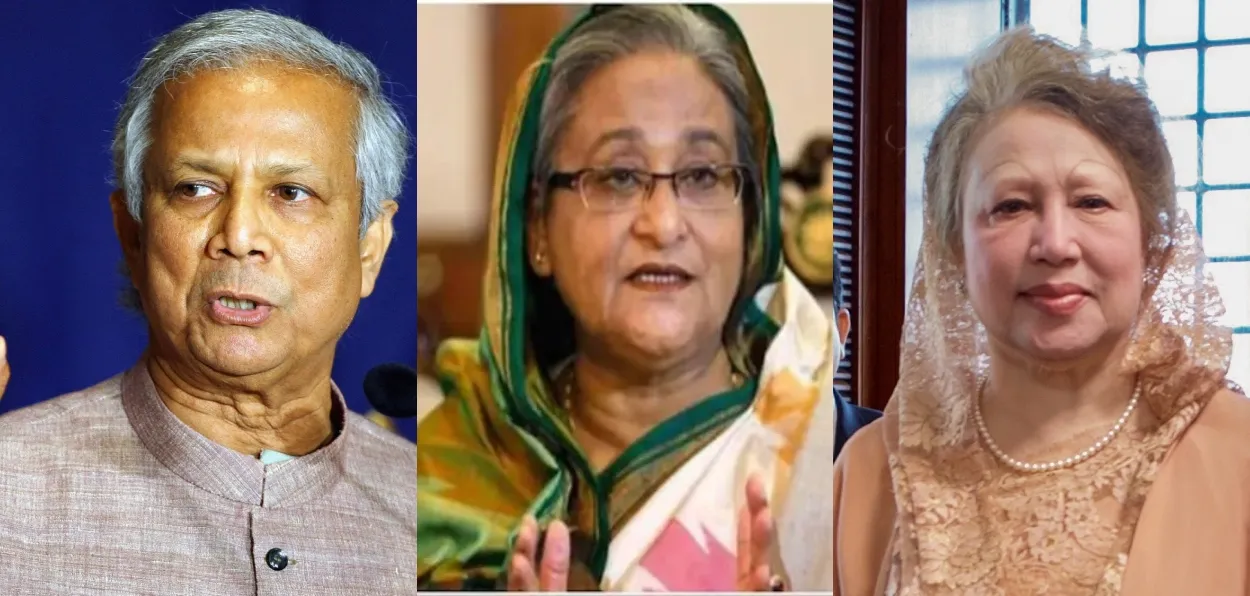
Bangladesh faces significant challenges like political polarisation, economic downturn, high inflation, climate vulnerability and human rights suppression, alongside managing the massive Rohingya refugee influx.
India’s Emerging Eastern Security Front
Bangladesh today sits at the centre of a seismic geopolitical shift that is rapidly reshaping the security architecture of South Asia. For decades, India viewed Bangladesh as a structured security partner and a predictable neighbour whose political orientation was broadly aligned with Indian strategic interests. Dhaka served as an extension of India’s internal stability framework, particularly in terms of insurgency suppression in the Northeast. That condition no longer exists. Bangladesh has transformed from a partner nation into the single greatest ideological and territorial risk factor along India’s eastern flank.
The ouster of Sheikh Hasina was the visible catalyst for this transformation, but the deeper drivers lie beneath the surface. Hasina’s tenure, regardless of its political complexion, provided India with an unbroken counter-insurgency shield. Militants who once manoeuvred freely between Dhaka, Chittagong, Cox’s Bazar and the jungles of Tripura and Mizoram were denied sanctuaries, logistics channels and ideological protection. A quiet intelligence compact operated between Indian and Bangladeshi agencies, enabling India to reduce troop concentration in Assam and redirect military energies away from repetitive counter-insurgency cycles.
Today, that strategic comfort has dissolved. Bangladesh’s political, military and administrative institutions have fragmented under ideological pressure. The caretaker structure in Dhaka lacks coercive authority, bureaucratic discipline and ideological direction. Military leadership speaks in cautious tones, bureaucracy repositions loyalties every week, the judiciary asserts independence without cohesion, and civil administration responds to clerical intimidation rather than constitutional mandates.
India, therefore, confronts a structurally altered Bangladesh: one that is politically fragile, ideologically mobilised, institutionally fractured and externally influenced. In this environment, India cannot rely on the earlier assumption that Dhaka’s internal security behaviour will naturally align with Indian interests. Bangladesh has entered a phase in which India must construct a continuous strategic presence inside Dhaka’s internal power terrain—rather than approach relations through episodic diplomacy.
Historical Strategic Foundation: The Rise and Fall of Dhaka as a Security Partner
To understand the scale of today’s strategic rupture, one must revisit the foundational India–Bangladesh security dynamic. In 1971, India’s military intervention defeated Pakistan’s eastern army and produced an independent Bangladesh. That victory forged an emotional link between the two nations and established early security alignment.
Yet by the late 1970s and 1980s, Bangladesh’s political landscape drifted into cycles of anti-India posturing and Islamist nationalism. The Northeast insurgent crisis flourished during this period. ULFA, NLFT, ATTF, NSCN(K) and several smaller groups operated from Bangladesh with near impunity. Urban safehouses in Dhaka, camps near Sylhet, command lines in Cox’s Bazar and logistic corridors through Chittagong allowed militant leadership to operate openly.
These structures persisted through the 1990s despite diplomatic pressure. The result was prolonged insurgency in India’s Northeast, extensive casualties, and significant economic stagnation. The terrain of Bangladesh became India’s strategic liability and an insurgency incubator.
The tide turned in 2009 when Sheikh Hasina returned to power. Under her leadership, Bangladesh dismantled insurgent architectures. Hundreds of militants were arrested or expelled; ULFA leadership chains collapsed; NSCN networks lost command stability; and insurgent morale weakened decisively. This made possible the peace-building arrangements that stabilised large parts of Assam, Tripura and Meghalaya, enabling India to focus on development rather than continuous combat readiness.
The security ecosystem that Hasina delivered represented a structural shift. India adjusted troop positioning, infrastructure priorities and internal security planning based on Dhaka’s predictable behaviour. That comfort zone ended the moment she fell. Dhaka has returned to ideological contestation, administrative fragmentation and clerical ascendancy reminiscent of pre-2009 turbulence.
Bangladesh’s present vulnerability is not a localised political dispute. It is an event equivalent to the re-opening of an insurgency corridor stretching from Chittagong into India’s Northeast. India must therefore treat Bangladesh’s instability not as Dhaka’s internal turbulence but as a direct national security concern impacting India’s internal fabric.
The New Bangladesh Risk Structure: Four Strategic Threat Vectors
The Bangladesh emerging today is institutionally weak, politically uncertain and ideologically unstable. Dhaka’s interim administration reflects neither national mandate nor institutional unity. Islamist organisations operate publicly with unprecedented freedom. Hefazat-e-Islam, Jamaat-e-Islami, Ansar al-Islam and Wahhabi-oriented madrasa networks have begun to act as alternate authority structures. Police conduct follows public sentiment, not law. Judiciary directions shift without state alignment.
In this security vacuum, Bangladesh poses four strategic dangers to India:-
- First, insurgent safehouses may re-emerge across the border. For India’s Northeast, this is a direct structural threat. Old corridors remain geographically intact. Cox’s Bazar, Rangamati, Bandarban, Moulvibazar and the Sylhet forest belts were once command hubs. If the administrative state weakens, these tracks may reappear.
- Second, ideological radicalisation within Bangladesh carries anti-India sentiment. Anti-Hindu rhetoric, clerical mobilisation, and Wahhabi-influenced identity reinforcement produce populations conditioned against India culturally rather than politically.
- Third, Hindu minority persecution inside Bangladesh has evolved beyond sporadic aggression to systematic intimidation, demographic displacement, identity erasure and mob-sanctioned violence.
- Fourth, weakening Bangladeshi sovereignty invites Chinese naval penetration and Pakistani intelligence return. External powers see an opportunity where the state has lost coherence.
These are not individual concerns—they form a combined threat structure that directly penetrates India’s strategic calculus.
Persecution of Hindu Minorities: From Social Violence to National Security Trigger
The Hindu minority situation inside Bangladesh today represents not only a humanitarian tragedy but a structural destabiliser for India. Historically, Bangladesh experienced periodic communal clashes, often tied to election cycles or local disputes. The current wave, however, is of a different nature—ideological, institutional and doctrinal.
The burning alive of a Hindu man under fabricated blasphemy charges stands as the grim emblem of this transformation. Law enforcement remained passive; local administrators remained silent; clerical figures justified the act. Minority security in Bangladesh is no longer determined by constitutional promise but by mob tolerance.
Temple desecrations, land seizures, forced displacement and targeted humiliation campaigns are not incidental. They represent a strategic erasure of Hindu identity. A community that once represented nearly a third of Bangladesh’s population now stands below ten percent. Such demographic collapse has national security consequences for India.
The persecution narrative crosses the border instantly. Hindu communities in West Bengal and Assam react viscerally to images of violence. Their anger, grief and anxiety generate internal Indian tension. This produces a dual outcome: radicalisation of Hindu sentiment along the border, and reciprocal justification for further Hindu persecution inside Bangladesh.
Dhaka’s internal violence thus becomes an operational trigger for Indian communal instability. The border is not a political curtain—it is a psychological membrane through which identity shock travels at speed.
Communal Echo and Siege Psychology Inside India
The most striking development linked to Bangladesh’s internal violence is the rapid expansion of siege psychology among Hindu communities settled along India’s eastern border belt. Villagers interpret Bangladesh’s ideological shift as a deliberate attempt to encircle Hindu identity demographically and psychologically.
Whether these perceptions are grounded in factual planning is less relevant than their strategic implications. Siege psychology produces heightened communal sensitivity, reduced tolerance for political compromise, and increased openness to radical mobilisation. Populations living in such fear settings become volatile, reactive and ideologically tense.
Digital flows from Bangladesh into West Bengal and Assam compound this insecurity. Shared linguistic space allows Bangladeshi clerical propaganda to circulate inside Indian networks without cultural friction. Messages created within Bangladeshi mosques often appear directly inside Indian village WhatsApp groups within hours.
This digital connectivity converts the territorial divide into a symbolic one. Rumour becomes truth before verification occurs. Violence becomes narrative currency. Each attack on Hindus in Bangladesh becomes social fuel for mobilisation inside India.
Such sentiments cannot be dismissed as emotional exaggeration. They must be treated as strategic realities with political, psychological and security consequences for Indian decision-makers.
Radicalisation Across the Border and Internal Indian Stability
Bangladesh’s ideological transformation does not remain confined to Bangladeshi soil. Madrasa circuits, preacher channels, hawala networks, cross-border kinship and shared cultural patterns create ideological connectivity between Bangladesh and Indian Muslim communities.
This spillover risks producing a dual radicalisation cycle. Islamist groups within India may receive ideological inspiration from Bangladesh, while Hindu groups in India may justify retaliatory rigidity using Bangladesh as ideological ammunition.
If this dynamic is ignored, India risks internal fragmentation across religious identity lines. Bangladesh-origin messaging influences internal political debate, religious behaviour, electoral polarisation and public communication. The eastern border has thus become an ideological inflow route into India.
Military Positioning and the Bangladesh Army’s Ambiguous Role
An essential element in India’s security assessment is the behaviour of the Bangladesh military. Historically, the Bangladesh Army served as nationalist glue and held moderate institutional values. Yet in today’s environment, military leadership operates cautiously, avoiding open confrontation with Islamist movements.
The military recognises the danger posed by clerical extremism, yet it also understands that confrontation could shatter state cohesion. Its silence reflects an institutional survival instinct rather than ideological approval.
For India, this creates uncertain operational geometry. The Bangladesh Army cannot be depended on for proactive counter-insurgency containment, nor can it be read as an institution inherently hostile to India. New Delhi must build channels across multiple senior army tiers to prevent Bangladesh’s internal military positioning from drifting into strategic ambivalence or foreign influence capture.
Insurgency Revival Threat and Northeast Fragility
Bangladesh’s internal collapse threatens to reopen the insurgent corridors that once fuelled violence in India’s Northeast. Cox’s Bazar corridor, Chittagong routes and Sylhet-linked jungle networks once allowed ULFA, NSCN and ATTF militants to operate with high confidence. Under Hasina, this ecosystem dissolved, enabling peacebuilding inside India.
With Dhaka unable or unwilling to police radical corridors, insurgent actors may return. Unlike earlier waves driven by ethnic separatism, the next iteration may merge Islamist ideological influence with insurgent logistics. The prospect of militant corridors blending religion-based mobilisation with territorial insurgency is far more dangerous than earlier nationalism-based conflicts.
Myanmar’s Strategic Weight in India’s Eastern Defence Posture
As Bangladesh becomes ideologically unpredictable and institutionally fragile, India’s eastern defence balance must increasingly rely on Myanmar to absorb the shock of any militant surge. Myanmar’s terrain, military leadership orientation and historical cooperation with India provide operational depth that Bangladesh instability cannot offer. Without this depth, insurgent formations could develop revival space on both sides of the Indo-Bangladesh frontier, overwhelming Indian counter-infiltration systems. Myanmar’s territory restricts militant fallback, prevents triangular mobility, and undermines the possibility of militant corridors stretching from Bangladesh to India through Burmese jungle belts.
The current geopolitical climate in Myanmar is not ideal for conventional diplomacy. Yet India must navigate the reality rather than the preference. Myanmar’s military establishment, facing its own internal conflict, remains strategically aligned with India because of shared insurgent threat memory, especially those emerging from the Northeast. For India, maintaining high-level military communication with Myanmar and expanding operational cooperation becomes decisive in shaping militant future outcomes. This relationship offers India more than mere tactical oversight; it offers geographic denial and strategic redundancy. Regardless of Western criticism of Myanmar’s military governance, India’s national survival logic demands that Naypyidaw remain an active partner in preventing insurgent reorganisation fuelled by Bangladesh’s ideological collapse.
Nepal’s Quiet Centrality to Bangladesh-Origin Radical Finance and Propaganda
Nepal holds strategic value not through military geography but through ideological, financial and demographic filtration. Clerical networks often use Nepalese territory as a financial laundering corridor. Madrasa-linked funds, preacher salaries, religious donations and extremist cash systems historically moved through Nepal into Indian space. In a Bangladesh radicalisation scenario, the same hawala funnels can now reroute extremist influence from East to North.
Nepal’s relevance lies in subtle intelligence mapping rather than an overt defence posture. Tracking financial signatures, visit patterns and clerical influence groups through Nepal gives India an early-warning advantage. Nepal also plays a messaging control role. Anti-Hindu or anti-India content incubated within Bangladesh often seeks passage into India through friendly linguistic environments. Nepalese space offers an observation belt from which India can detect hidden movement long before it reaches Indian soil. Such filtration cannot be achieved by Bangladesh-centric monitoring alone.
Thailand and India’s Extended Maritime–Cyber Defence Theatre
Bangladesh-origin destabilisation has a maritime and digital dimension. Radical networks produce online propaganda routed through Southeast Asian servers. These platforms often blend clerical messaging with militant recruitment, bypassing Indian cyber units by operating through third-country networks. Thailand’s intelligence partnership, therefore, becomes fundamental—not because Thailand has Bangladesh-specific interest, but because Thailand functions as a cyber corridor for regional monitoring.
The Bay of Bengal maritime grid similarly requires Thai partnership. Bangladesh’s instability increases the probability of sea-based infiltration, particularly along Cox’s Bazar routes. Thailand provides India with deeper mapping of sea corridors, maritime communication lanes and digital movement patterns that cannot be accessed through Bangladesh alone.
In the larger scheme, Myanmar, Nepal and Thailand strengthen India’s defence architecture not by replacing Bangladesh policy, but by creating a strategic cushion around Bangladesh—one that reduces Dhaka’s ability to act as a singular gatekeeper to India’s eastern flank.
Bhutan, Sri Lanka and the Maldives as Strategic Stability Anchors
Bhutan, though geographically distant from Bangladesh’s flatlands, remains vital to India’s security posture. Its stable border architecture limits ideological redirection. It provides India with Himalayan security depth and prevents the emergence of northern infiltration channels should Bangladesh unrest attempt to exploit mountain pathways. Bhutan acts as a silent barrier reinforcing India’s defence perimeter.
Sri Lanka and the Maldives contribute to India’s maritime stability calculus. A radicalising Bangladesh increases the Chinese incentive to entrench naval presence in the Bay of Bengal waters. Access to Chittagong or Payra under weakened Dhaka would extend the Chinese naval posture across India’s maritime east. Sri Lanka and the Maldives ensure India holds a central maritime reach—denying adversaries the operational vacuum they require.
These neighbourhood relationships are not ornamental extensions; they form structural layers of India’s eastern security map. Bangladesh’s instability forces India to transform its neighbourhood policy into neighbourhood integration—using every surrounding state to dilute Dhaka’s ideological overreach.
Chinese Encirclement Strategy and Bangladesh as a Naval Lever Against India
China’s posture towards Bangladesh cannot be interpreted as innocent economic engagement. Beijing views Dhaka as a missing link in a maritime containment ring around India. Gwadar anchors India’s west, Kyaukpyu forms the eastern hinge, and Bangladesh represents the central Bay of Bengal node.
If Bangladesh drifts deeper into Chinese strategic alignment, India risks: a potential Chinese naval presence in the Bay of Bengal, surveillance capacity near the Siliguri corridor, intelligence access to Northeast India, and erosion of India’s regional dominance.
The destabilised Bangladeshi state, desperate for economic bailouts, offers China a near-perfect opportunity. Infrastructure loans, port financing, weapons supply and high-level elite capture form Beijing’s toolkit. China will not impose ideology; it will impose strategic leverage. A Chinese naval foothold inside Bangladesh transforms India’s oceanic planning permanently, forcing Delhi to defend not only the western Arabian Sea corridor but the eastern Bay simultaneously.
Dhaka’s political volatility, therefore, amplifies the risk of China entering Indian maritime space with minimal resistance. India must treat Bangladesh as a core element of the Indo-Pacific rivalry rather than a bilateral neighbour.
Pakistan’s Re-Entry Route Through Islamist Bangladesh
Pakistan sees Bangladesh’s ideological drift as a moment of historical reversal—a chance to reclaim influence lost since 1971. For decades, Hasina’s governance suppressed Jamaat-e-Islami’s organisational strength and blocked ISI activities. That firewall has collapsed. Jamaat networks now surface with increased visibility; madrasa circuits show ideological aggression; clerical messaging echoes Pakistan’s anti-India doctrine.
Pakistan intends to use Bangladesh not to wage physical insurgency alone, but to wage ideological disruption. By inserting itself into the Bangladeshi radical revival, Pakistan avoids confrontation and instead weaponises civil instability. In this configuration, India faces two hostile corridors: the western Pakistan front and the eastern Bangladesh ideological corridor.
United States: Strategic Misreading and Democracy Paradox
The United States views Bangladesh primarily through democracy and human rights. India views Bangladesh through national survival. These two perceptions clash. American pressure for rapid electoral restructuring risks empowering radical forces by weakening state authority. A Bangladesh that satisfies Western democratic optics may fail to satisfy Indian security imperatives. India, therefore, must shape American understanding, not resist it. Dhaka’s radicalisation damages Indo-Pacific objectives; India must emphasise security priorities rather than moral frameworks.
Gulf States and Ideological Funding Expansion
Saudi, Qatari and Kuwaiti funding networks have historically supported clerical education and mosque expansion in Bangladesh. With Dhaka’s state power weakened, these channels will expand. Gulf-backed mosque construction and preacher funding will intensify Wahhabi–Salafi ideological presence inside Bangladesh.
This ideological funding architecture worsens Hindu minority vulnerability, accelerates radical identity formation and strengthens clerical street power. It also reinforces cross-border identity tension by constructing a religious narrative that positions Bangladesh as an ideological counterweight to Hindu-majority India.
Internal Indian Security Response: Communal, Demographic and Ideological Dimensions
Bangladesh-origin instability enters India in multiple forms: communal emotion, demographic pressure, ideological penetration, and cross-border radical messaging. The Indo-Bangladesh communal feedback loop intensifies internal security risk. Violence against Hindus in Bangladesh translates into outrage inside Bengal and Assam; that outrage circulates back into Bangladesh as clerical justification for further minority persecution.
India must break this loop through calm nationwide messaging, information control, and localised reassurance campaigns. Allowing emotional free flow risks internal radicalisation.
Demographically, India must prepare for refugee inflow. Hindu displacement will occur if clerical violence increases. India must create documentation architecture, settlement mapping, and demographic planning to avoid political overload in sensitive states such as Tripura and Assam.
Illicit Muslim migration from Bangladesh adds another dimension. The simultaneous development of Hindu refugee pressure and illegal migrant inflow creates demographic shock potential. India must manage this without compromising constitutional integrity.
Eastern Counter-Insurgency Reinforcement and Northeast Fragility
Bangladesh’s instability threatens India’s Northeast peace framework. Insurgency groups dismantled under Hasina may reorganise under new conditions. Assam’s electoral patterns, Tripura’s ethnic balance, Mizoram’s refugee reception points and Meghalaya’s past militant routes all require renewed surveillance.
The insurgency revival risk is not hypothetical; it is structurally anchored in geography. Bangladesh-origin militant forces may fuse ideological radicalisation with militant narrative. Northeast agreements, such as the Bodo and NLFT settlements, depend on the absence of external militant supply; Dhaka’s instability threatens this foundation.
The Northeast must prepare for a shift from civilian emphasis back to military preparedness. The Indian state must operate with foresight rather than surprise.
India’s Covert Imperative Inside Bangladesh
Bangladesh today cannot be treated solely as a diplomatic space. It requires covert operational presence. India must rebuild intelligence penetration inside Dhaka’s bureaucracy, clerical networks, border smuggling routes, madrasa structures, digital clusters and political factions.
Covert penetration must be defensive and pre-emptive: locating radical actors before they mobilise, tracking external money flows, and shaping public discourse silently through influence channels. Bangladesh’s ideological space cannot be left unmanaged; if India retreats, adversaries will fill the vacuum.
Strategic Influence, Economic Leverage and Civil Society Penetration
Bangladesh cannot be shaped by military or intelligence measures alone. India must build long-term emotional, cultural and socio-economic influence inside Dhaka. Academic exchanges, business linkages, media cooperation, civil society partnerships, military training programmes and youth engagement form a soft-power envelope.
Economic leverage will become structural. India provides electricity, transit networks, medical supplies, digital connectivity and market access. Dhaka’s survival depends heavily on Indian goodwill. India must convert this into stabilisation diplomacy—not coercion, but conditional partnership tied to Bangladesh protecting minorities, opposing extremism, and resisting external manipulation. Civil society penetration strengthens India’s ability to hold ground even if the Bangladeshi state shifts political alignment.
Bangladesh as India’s Eastern Internal Security Theatre
Bangladesh is no longer external to India’s internal affairs. It sits inside India’s domestic strategic equations. Hindu persecution influences Indian identity cohesion. Radical messaging impacts communal climate. Illegal migration affects electoral demographics. Militant revival impacts Northeast defence posture. This dissolution between the external border and internal terrain means Dhaka’s behaviour is now part of India’s internal security decision-making landscape.
Conclusion: Bangladesh as India’s Defining Eastern Strategic Question
Bangladesh stands at the heart of India’s eastern strategic future. Its political collapse, ideological radicalisation, minority persecution, demographic shift, external power penetration and administrative fragmentation create a single interconnected crisis. The Hindu minority condition reveals the structural danger, insurgency revival reflects territorial risk, and ideological spill demonstrates internal psychological vulnerability.
India must therefore shape Bangladesh’s evolution rather than watch from the margins. India must build internal presence inside Dhaka’s bureaucracy, military, business networks and cultural sectors; reinforce Northeast defence posture; strengthen maritime advantage; and stabilise refugee management capacity.
Bangladesh is no longer simply a neighbour. It is a decisive factor in India’s regional leadership, internal cohesion, demographic security, maritime control and great-power positioning. The nation that shapes Bangladesh will shape eastern South Asia. India must ensure that the nation is India.
Title Image: Awaz the Voice
Disclaimer: The views and opinions expressed by the author do not necessarily reflect the views of the Government of India and the Defence Research and Studies


References
Ministry of Home Affairs, Government of India. Annual Reports, various years (2009–2016). New Delhi: Government of India.
Institute for Defence Studies and Analyses (IDSA). Bangladesh–India Security Cooperation and the Northeast Insurgency. New Delhi: IDSA.
Institute for Defence Studies and Analyses (IDSA). Operation Sunrise and Indo-Myanmar Counter-Insurgency Cooperation. New Delhi: IDSA.
International Crisis Group. Bangladesh: Political Polarisation and Islamist Mobilisation. Brussels: International Crisis Group.
Barkat, Abul, et al. Deprivation of Hindu Minority in Bangladesh: Living with the Vested Property Act. Dhaka: Pathak Samabesh.
United States Commission on International Religious Freedom (USCIRF). Annual Report: Bangladesh. Washington, DC: USCIRF.
Bhaumik, Subir. Troubled Periphery: Crisis of India’s North East. New Delhi: Sage Publications.
South Asia Terrorism Portal (SATP). Bangladesh Islamist Organisations and Security Trends. New Delhi: Institute for Conflict Management.
Observer Research Foundation (ORF). China’s Strategic Footprint in Bangladesh and the Bay of Bengal. New Delhi: ORF.
Stockholm International Peace Research Institute (SIPRI). Arms Transfers Database: China–Bangladesh Defence Cooperation. Stockholm: SIPRI.
Raman, B. Intelligence: Past, Present and Future. New Delhi: Lancer Publishers.