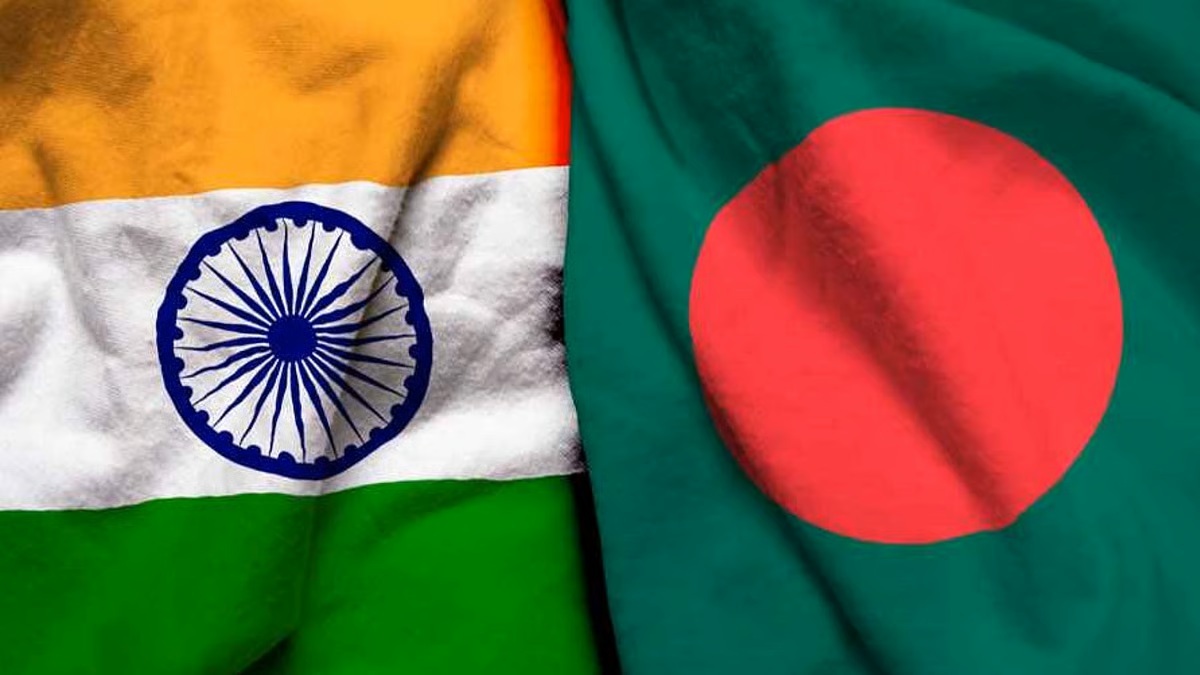
A recent YouTube discussion titled “Bangladesh on the Boil Again”, hosted under the hashtags #CASADialogues and #GunnersShot, captures a genuine unease within India’s strategic community and was tough on Bangladesh. Bangladesh appears politically unstable. Anti-India rhetoric is rising. Elections appear uncertain in their timing, credibility, and outcomes. External actors are clearly active. India’s long-standing patience feels unrewarded.
All of this is broadly true. What makes the discussion noteworthy, however, is not its diagnosis but the tone it reveals. The conversation repeatedly slides from analysis into exasperation, and from exasperation into calls for toughness, fear, or transactional coercion. In doing so, it exposes a deeper discomfort: a growing sense that the traditional vocabulary of neighbourhood diplomacy no longer explains outcomes, let alone delivers them.
This unease warrants serious consideration. But it also warrants critical examination. The problem is not that India has been insufficiently tough, but that it has never clearly articulated what toughness, restraint, or reciprocity actually mean in practice. The debate, therefore, needs nuance and a critical examination of voices shaped by long experience in the North East and decades of counter-insurgency operations. That experience brings an instinctive understanding of instability, narratives, coercion, and population sentiment. It is invaluable.
Yet statecraft cannot rest on instinct alone.
From the perspective of critical thinking that I have sought to cultivate among middle-level military leadership over the years, statecraft cannot be treated as an abstract principle. It must function as applied judgment under conditions of uncertainty, where incomplete information, competing narratives, and unintended consequences are the norm rather than the exception.
This piece is written for a wider group that includes, alongside military officers, diplomats and scholars who can help bridge the gap between operational experience and the theory and practice of foreign policy. Such perspectives are essential to test assumptions, challenge instincts shaped in conflict environments, and enrich the debate on how India should translate security experience into coherent, principled, and practical statecraft.
The Panel’s Real Value
The panel conversation is valuable not for its conclusions, but for what it reveals. Three features stand out.
1. Confidence exceeds evidence
At several points, firm conclusions are drawn with limited supporting detail. One speaker suggests that Jamaat-e-Islami could secure 30 per cent of the rural vote; another characterises Gen Z in Dhaka as uniformly pro-China. Such assessments may reflect genuine impressions, but they are offered without reference to polling data, party organisational strength, or systematic field reporting.
To be fair, a live podcast format does not easily lend itself to detailed citation or the presentation of data. Participants often speak from experience and intuition rather than footnoted analysis. The risk, however, is that confident assertions made in such settings can extend well beyond the conversation itself and begin to substitute for evidence in broader strategic debates.
This matters because when evidence is sparse, judgment relies heavily on intuition and prior experience. Over time, that intuition can harden into a narrative. For diplomacy and policy, narrative is no substitute for verifiable analysis. Without a disciplined evidentiary base, strategic debate risks drifting from careful assessment into performance, where confidence substitutes for clarity.
2. Bangladesh is treated as a personality, not a system
Much of the discussion centres on individuals: Yunus is portrayed as weak, Tarique Rahman as corrupt, and Khaleda Zia as a unifying symbol. These characterisations may contain elements of truth, but states rarely act on personality alone.
Outcomes are shaped far more by what institutions reward or penalise, the distribution of coercive power, the bargains struck among political and economic elites, and the constraints imposed by fiscal and economic realities. Focusing too narrowly on individuals risks obscuring these deeper drivers of behaviour and leads to policy responses that are reactive rather than structural.
A systemic view would instead ask: what incentives shape the behaviour of the military, the bureaucracy, and business elites? How do fiscal stress, external patronage, and internal legitimacy pressures interact? If these structural factors are not explicitly incorporated, policy responses risk becoming closely tied to short-term political developments. While personalities clearly matter, over-reliance on them can cause even experienced analysts to underestimate the institutional dynamics that continue to shape state behaviour regardless of who occupies office.
3. “Pro-India” is conflated with “Punish Bangladesh”
The most persistent theme in the discussion is that India has been overly generous, patient, and accommodating. The proposed corrective is often framed in the language of fear or coercion. This is where the argument becomes strategically dangerous.
Fear without escalation dominance invites counter-balancing. Punishment without clarity strengthens nationalist mobilisation. Transactionality without rules degenerates into ad hoc pressure. Being pro-India does not require being anti-Bangladesh. It requires being predictable, conditional, and credible.
When leverage is asymmetrical but not overwhelming, weaker states do not usually submit. They seek external patrons, amplify nationalist narratives, or deliberately internationalise disputes to resist pressure. In South Asia, this dynamic is well known. Attempts to coerce neighbours often produce the very outcomes they seek to prevent: greater dependence on rivals, deeper domestic polarisation, and a more hostile regional environment.
For India, the challenge is not to abandon leverage, but to use it in ways that are calibrated, transparent, and tied to verifiable behaviour. That means moving from episodic pressure to a framework where benefits are clearly linked to actions, and costs are proportionate, predictable, and reversible. In that sense, being pro-India is not about toughness for its own sake, but about being a reliable, rule-based partner whose expectations are clear and whose responses are consistent.
Any strategy that ignores this dynamic risks reinforcing the very instability and anti-India sentiment it aims to reduce.
The Real Problem India Faces
India’s challenge with Bangladesh is not unique. It is the classic problem of managing a weaker neighbour that is internally divided, politically volatile, and externally courted by rival powers. Three realities must be held simultaneously.
- First, Bangladesh matters more to India than India matters to Bangladesh in the short term. Geography makes this unavoidable. Borders, migration, connectivity to the Northeast, and communal spillover mean India cannot disengage materially or politically, even if it wishes to. For India, Bangladesh is a neighbour of existential consequence. For Dhaka, India is one of several important external actors.
- Second, Bangladesh’s elites periodically benefit from anti-India politics. This does not mean Bangladesh is inherently anti-India. It means anti-India signalling is a useful domestic tool during moments of transition. Ruling parties use it to rally nationalist sentiment; opposition parties use it to discredit incumbents as “Indian puppets”. Treating this as an immutable national characteristic oversimplifies a dynamic political reality and can prove strategically counterproductive.
- Third, India’s leverage is real but blunt. Water, trade access, power supply, transit, and visas are all levers. But they work slowly, unevenly, and often affect ordinary Bangladeshis more than political entrepreneurs. Used clumsily, they generate long-term resentment without short-term compliance. A calibrated approach recognises that leverage is not about maximum pressure, but about credible, targeted, and reversible measures that influence behaviour without triggering nationalist backlash.
Where the Panel’s Argument Falls Short
The repeated assertion that India has “failed for fifty years” demands scrutiny. India’s Bangladesh policy since 2009 has achieved concrete outcomes: counter-insurgency cooperation, border stability, connectivity projects, and trade expansion. These did not transform Bangladeshi politics, nor could any foreign policy. The objective was not regime change, but the protection of India’s core interests: security, connectivity, and regional stability.
The failure was not generosity. It was ambiguous. Has India stated clearly which behaviours were non-negotiable, which benefits were conditional, and which actions would trigger consequences? As a result, firmness appeared episodic and generosity unconditional. That is not strategic patience. It is strategic vagueness.
Conditional Engagement, Not Moral Exhaustion
If India is to recalibrate, the answer is not emotional withdrawal or performative toughness. It is disciplined statecraft. Three moves merit consideration.
First, separate society from state.
India should protect and, where possible, expand people-to-people access to medical travel, education, disaster relief, and cultural exchange. These are not favours; they are investments in long-term influence. At the same time, state-to-state privileges must be conditional, documented, and reversible. Benefits such as transit rights, power exports, and trade preferences should be tied to verifiable behaviour, not goodwill.
Second, define red lines, not red moods.
Instead of vague talk about “hostility” or “anti-India behaviour”, India needs to spell out what it will not tolerate clearly. These should be specific, verifiable actions, not rhetorical excess.
For example, facilitation of militant transit, systematic targeting of minorities with state tolerance, or coordinated incitement against India by actors protected by the state should each trigger pre-declared responses: calibrated visa restrictions, review of transit and trade privileges, enhanced financial scrutiny, or diplomatic downgrading. The objective is not to react in anger, but to act in accordance with the rules. Not rage. Rules.
Third, accept instability without trying to micromanage outcomes.
India cannot choose who governs Bangladesh. It can only determine how to respond. Efforts to shape outcomes from the outside rarely succeed and often strengthen conspiracy narratives. In that sense, preparing for volatility, insulating Indian interests, and keeping channels open across factions may not be a choice, but a necessity.
A Necessary Caution On Minority Politics
Border states such as Assam do face real pressures on identity, resources, and social cohesion, and these concerns should not be dismissed or minimised. Precisely because these pressures are genuine, the language used to describe them matters. When debates slide into apocalyptic or civilisational framing, they obscure more than they clarify and make policy harder rather than easier.
Any policy that invokes minority protection beyond India’s borders must also recognise how closely such issues are scrutinised in return. India’s own minority politics will inevitably shape how its actions are interpreted in Bangladesh and the wider region. This does not mean India should remain silent in the face of genuine harm. It does mean advocacy must be principled, evidence-based, and framed through humanitarian or multilateral norms rather than civilisational or partisan language.
A Question For India’s Diplomats
The military voices in the discussion ask, with some justification, why India continues to absorb hostility without consequence. Another question could be how India’s diplomats would translate “India-first” into operational policy without fuelling the very instability India seeks to avoid:
- How can reciprocity be designed to be predictable rather than punitive?
- How can costs be imposed in a way that does not reinforce or legitimise anti-India mobilisation?
- How can minorities be protected without accusations of interference?
- How can influence be maintained when electoral outcomes are uncertain and legitimacy contested?
These are not theoretical questions. They are practical ones.
Conclusion
The YouTube discussion reflects genuine frustration. I share that frustration. But frustration is not a strategy. India does not need to abandon engagement with Bangladesh, nor does it need to romanticise it. It needs to professionalise it.
A neighbour in flux does not require lectures or ultimatums. It requires clarity, conditionality, and consistency.
If India seeks respect, it must first decide what behaviour it will reward, what it will tolerate, and what it will not. Until that line is drawn in policy rather than rhetoric, debates will continue to end the same way: loud, circular, and unresolved.
Title Image Courtesy: Free Press Journal
Disclaimer: The views and opinions expressed by the author do not necessarily reflect the views of the Government of India and the Defence Research and Studies. This opinion is written for strategic debate. It is intended to provoke critical thinking, not louder voices.