Iran stands at a critical strategic juncture marked by internal unrest, leadership uncertainty, intensifying external pressure, and recalibrating great-power alignments. While widespread protests and economic distress have revived speculation about regime change, the Islamic Republic continues to demonstrate resilience rooted in coercive institutions, elite cohesion, and external diplomatic buffers provided by China and Russia. This article evaluates the contemporary situation in Iran, examines the likelihood of leadership transition within the Islamic system, assesses policy options available to the United States under President Donald Trump, and analyses the roles played by China and Russia. It argues that while abrupt regime collapse remains unlikely in the near term, Iran is entering a phase of structural fragility where succession politics and external shocks could significantly alter its strategic behaviour. The study concludes by outlining plausible future scenarios and their implications for regional security and extra-regional stakeholders, including India.
“Revolutions do not occur when states are weak, but when states are brittle, strong enough to repress, yet too rigid to adapt.” — Samuel P. Huntington
Introduction
The Islamic Republic of Iran has repeatedly defied predictions of collapse. From the Iran-Iraq War to decades of sanctions, internal dissent, and diplomatic isolation, the regime has demonstrated a capacity for survival that is often underestimated by external observers. Yet survival should not be conflated with stability. As of early 2026, Iran faces a convergence of pressures unprecedented since the aftermath of the 1979 Revolution: prolonged economic stagnation, widespread popular discontent, an ageing Supreme Leader, unresolved succession questions, and intensifying confrontation with the United States and its regional partners.
The return of Donald Trump to the White House has further sharpened uncertainty. Trump’s prior record—withdrawal from the Joint Comprehensive Plan of Action (JCPOA), maximum pressure sanctions, and targeted use of force—suggests a preference for coercive leverage over diplomatic accommodation. Simultaneously, China and Russia have emerged as critical external pillars sustaining Iran against Western pressure, though their support is neither unconditional nor unlimited.
This article seeks to answer four interlinked questions. First, what is the current internal situation in Iran, and how resilient is the Islamic Republic? Second, is a change in Islamic leadership plausible in the near to medium term? Third, what strategic options does the Trump administration possess, and what constraints shape its choices? Fourth, how are China and Russia positioning themselves in relation to Iran’s internal and external crises? Addressing these questions is essential for understanding the evolving balance of power in West Asia and the wider Indo-Pacific strategic environment.
Iran’s Internal Situation: Protest, Repression, and Structural Stress
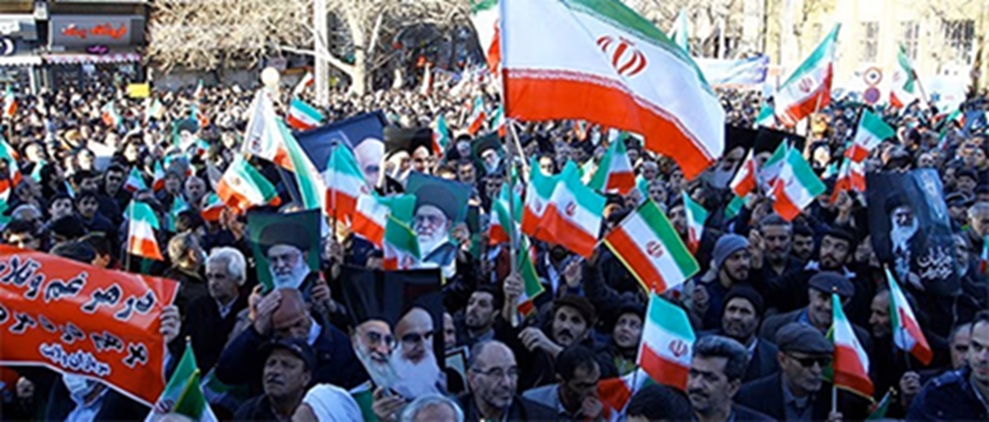
Iran’s domestic unrest over the past few years reflects not episodic dissent but a deeper crisis of governance and legitimacy. Economic grievances remain at the core. Persistent inflation, currency depreciation, unemployment, and shortages of basic goods have eroded living standards across social classes. Sanctions have exacerbated these problems, but structural mismanagement, corruption, and the dominance of semi-state entities linked to the Islamic Revolutionary Guard Corps (IRGC) have compounded the malaise.
Unlike earlier protest waves that were geographically or socially contained, recent unrest has been nationwide and socially diverse. Urban youth, women, workers, ethnic minorities, and segments of the middle class have participated. Crucially, slogans have increasingly targeted the political system itself rather than specific policies or leaders, signalling a deeper erosion of regime legitimacy.
The state’s response has been predictably coercive. The IRGC, Basij militia, and intelligence services have employed lethal force, mass arrests, internet shutdowns, and judicial repression. From a regime survival perspective, these measures have been effective. The security apparatus remains cohesive, well-funded, and ideologically invested in the system’s survival. There is no credible evidence of large-scale defections within the IRGC or regular armed forces, a prerequisite for revolutionary outcomes.
However, repression has costs. It deepens alienation, accelerates elite corruption, and reduces the regime’s adaptive capacity. Iran today resembles what political theorists describe as a “brittle authoritarian state”—strong enough to suppress dissent, yet increasingly incapable of generating consent or delivering economic performance.
Leadership Question: Succession Without Transformation
PC WGI.WORLD
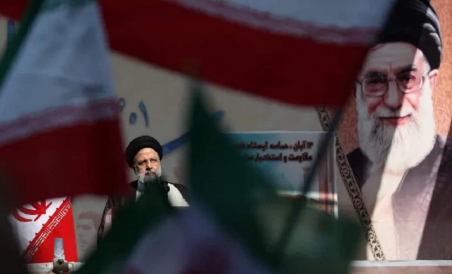
At the centre of Iran’s political system stands Supreme Leader Ayatollah Ali Khamenei, now in his mid-80s. His longevity has provided continuity but has also deferred an inevitable succession question that the system has deliberately avoided addressing openly. The Islamic Republic’s constitution provides mechanisms for succession through the Assembly of Experts, including the possibility of a leadership council. Yet institutional procedures do not eliminate political uncertainty.
Speculation about potential successors often focuses on Mojtaba Khamenei, the Supreme Leader’s son, senior clerics aligned with the conservative establishment, or a collective leadership arrangement that would dilute individual authority. What is striking is the absence of any reformist or pluralistic pathway within these scenarios. Succession, if it occurs, is likely to be managed within the ideological boundaries of the Islamic Republic.
This has important implications. A post-Khamenei Iran may witness tactical adjustments—greater IRGC influence, recalibrated foreign policy signalling, or limited economic pragmatism—but not a fundamental ideological transformation. The system’s survival logic prioritises continuity over reform, even at the cost of long-term legitimacy.
Consequently, while leadership change is possible, even likely over the medium term, it should not be equated with regime change. The Islamic Republic has shown a capacity to mutate institutionally without abandoning its core identity.
Donald Trump’s Strategic Options: Coercion Without Commitment
PC NDTV
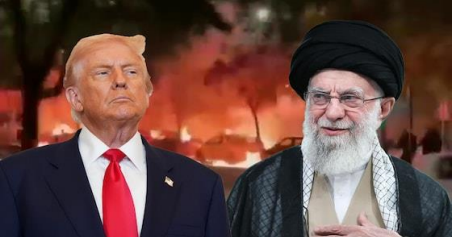
Donald Trump’s approach to Iran is shaped by three defining features: scepticism of multilateral diplomacy, preference for economic and military leverage, and aversion to prolonged ground conflicts. This combination produces a strategy that is confrontational yet bounded.
Economic Pressure
Sanctions remain Trump’s primary instrument. Targeted measures against Iranian officials, financial networks, and energy exports aim to constrain regime resources and signal support for popular dissent. However, sanctions have diminishing returns. Iran has adapted through smuggling, regional trade, and Chinese oil purchases. While sanctions exacerbate economic pain, they have not produced elite fragmentation.
Military Options
Trump retains the option of limited military strikes, particularly against nuclear infrastructure or IRGC assets. Such strikes would aim to restore deterrence rather than trigger regime collapse. Yet they carry risks: escalation, rally-around-the-flag effects within Iran, and regional instability. Trump’s reluctance to commit ground forces suggests that any military action would be calibrated and symbolic rather than transformative.
Regime Change Rhetoric vs Reality
Despite rhetorical hostility, Trump has shown little appetite for overt regime change strategies involving exile groups or nation-building. The memory of Iraq and Afghanistan, combined with domestic political priorities and great-power competition with China, constrains American ambition.
In effect, Trump’s Iran policy seeks to manage, weaken, and deter the Islamic Republic rather than replace it. This creates a prolonged strategic stalemate rather than decisive outcomes.
China’s Role: Stability Over Ideology
China’s engagement with Iran is driven by pragmatism, not ideological alignment. Tehran serves as an energy supplier, a node in China’s Belt and Road vision, and a strategic counterweight to U.S. influence in West Asia. At the same time, China has no interest in revolutionary upheaval or regional chaos that could disrupt energy markets and trade routes.
Beijing’s approach combines economic engagement, diplomatic shielding, and strategic ambiguity. It continues to import Iranian oil at discounted rates, provides diplomatic cover in international forums, and advocates non-interference. However, China avoids overt military commitments or unconditional political backing.
Importantly, China is hedging. It maintains strong relations with Gulf monarchies and Israel, signalling that its partnership with Iran is transactional rather than exclusive. In a scenario of regime collapse or prolonged instability, China would prioritise asset protection and continuity of energy flows over ideological loyalty
Russia’s Role: Alignment Without Obligation
Russia’s relationship with Iran has deepened through shared opposition to U.S. influence, military cooperation, and coordination in theatres such as Syria. Iran’s provision of drones and other military equipment has been particularly valuable to Moscow. Yet this partnership is asymmetrical and opportunistic.
Russia lacks the economic capacity to underwrite Iran’s economy or the strategic incentive to intervene directly in its internal crises. Moscow’s priority is preventing a pro-Western regime from emerging in Tehran, not preserving the Islamic Republic at all costs. Diplomatic support, intelligence cooperation, and limited military coordination define Russia’s role, but its commitment stops short of direct intervention.
In essence, Russia benefits from a sanctioned, adversarial Iran that complicates Western strategy, but it is unwilling to incur high costs for Tehran’s internal stability.
Scenario Assessment: Paths Ahead
Four broad scenarios emerge for Iran over the next two years.
First, authoritarian stabilisation remains the most likely outcome. The regime suppresses dissent, manages succession uncertainty, and avoids major external conflict. Iran becomes more isolated, securitised, and dependent on non-Western partners.
Second, a managed elite transition could occur following Khamenei’s departure. This would produce continuity with modification, potentially increasing IRGC dominance while preserving the Islamic framework.
Third, prolonged instability could result from recurring protests and economic deterioration. While not leading to immediate collapse, this would weaken state capacity and increase the risk of miscalculation.
Finally, regime fracture or collapse, while least likely, would have profound regional and global consequences, including risks to nuclear security and energy markets.
Implications for Regional and Extra-Regional Actors
For West Asia, Iran’s trajectory shapes the security calculus of Israel, Gulf states, and Turkey. Israel remains the most likely external trigger for escalation, particularly over the nuclear issue. Gulf states prioritise stability and de-escalation, fearing spill-over effects. Turkey positions itself as a mediator while pursuing its own regional ambitions.
For India, Iran represents a strategic dilemma rather than an ideological choice. Connectivity initiatives such as Chabahar, energy diversification, and regional stability intersect with sanctions risk and U.S. alignment. India’s optimal strategy lies in cautious engagement, strategic hedging, and avoiding over-commitment amid uncertainty.
Conclusion
Iran today stands at an inflexion point, but not at the brink of collapse. The Islamic Republic retains formidable instruments of control, while its adversaries face strategic constraints and competing priorities. Leadership change is plausible but unlikely to produce immediate transformation. External powers—whether the United States, China, or Russia—can shape Iran’s environment but cannot determine its internal outcomes.
The most probable future is one of authoritarian endurance amid structural fragility. For strategists and policymakers, the challenge lies not in predicting Iran’s collapse, but in managing the consequences of its prolonged resilience in an increasingly contested geopolitical landscape.
Title Image Courtesy: https://knowledge.wharton.upenn.edu/
Disclaimer: The views and opinions expressed by the author do not necessarily reflect the views of the Government of India and the Defence Research and Studies. This opinion is written for strategic debate. It is intended to provoke critical thinking, not louder voices.