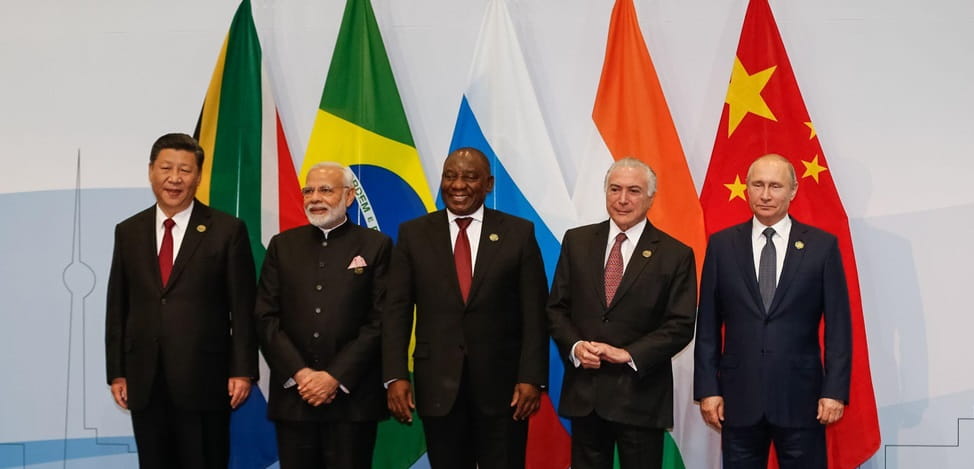
On October 22, 2024, within the walls of the Kazan Palace of Congresses, Vladimir Putin solemnly addressed some thirty heads of state gathered for the sixteenth BRICS summit: “The majority world has become a powerful and independent force. BRICS embodies this new geopolitical reality.” This recognition of the rise of powers once relegated to the Third World constitutes an assertion that crystallises a fundamental question: Does Moscow truly belong to this “Global South” that it now claims to embody?
To understand this issue, it should be recalled that the very concept of “Global South” fits within a terminological genealogy of which the Bandung conference (April 18-24, 1955) constitutes the founding act. On this occasion, twenty-nine recently decolonised Asian and African states laid the groundwork for an autonomous trajectory, escaping East-West polarisation, under the impetus of Nehru, Sukarno, Nasser, Nkrumah, and Zhou Enlai. The Non-Aligned Movement, subsequently formalised in Belgrade in 1961, systematised this approach by establishing five cardinal principles: respect for territorial sovereignty, mutual non-aggression, non-interference, equality and mutual benefit, and peaceful coexistence.
On a terminological level, the expression “Third World,” initially coined by Alfred Sauvy in 1952, gradually gave way to the term “Global South,” popularised by the 1980 Brandt Report, which was less pejoratively connoted. According to UNCTAD, this category geographically encompasses Africa, Latin America, Asia (except Japan, South Korea, and Israel), and Oceania (except Australia and New Zealand). The criteria for belonging converge around quantifiable indicators: Human Development Index generally below 0.800; substantially lower GDP per capita; colonial past structuring international relations; historical dependence vis-à-vis industrial metropoles.
However, what truly cements the Global South transcends economic indicators to anchor itself in a common political posture: the contestation of Western hegemony. This opposition unfolds across three distinct registers: economically, it criticises the 1944 Bretton Woods system (IMF, World Bank), perpetuating relations of domination through structural conditionalities. Dependency theory precisely denounces unequal exchange between the manufacturing “centre” and the raw material-exporting “periphery.” Politically, it demands reform of the Security Council, where five powers, four of them Western, hold veto power.
However, in the contemporary post-2022 context, the question takes on particular acuteness. Indeed, the architecture of Western sanctions, exceeding eleven thousand individual and sectoral measures, including the freezing of approximately three hundred billion dollars in reserves, has forced Russia into a geostrategic pivot toward non-Western economies. Paradoxically, Russia presents a dual face: on one hand, it explicitly adopts Global South rhetoric; on the other, it presents characteristics that structurally align it with the North. This problem therefore questions less Russia’s factual membership than the very heuristic validity of the Global South category in the emerging multipolar architecture.
Russia in the Global South: membership through confrontation and political convergence
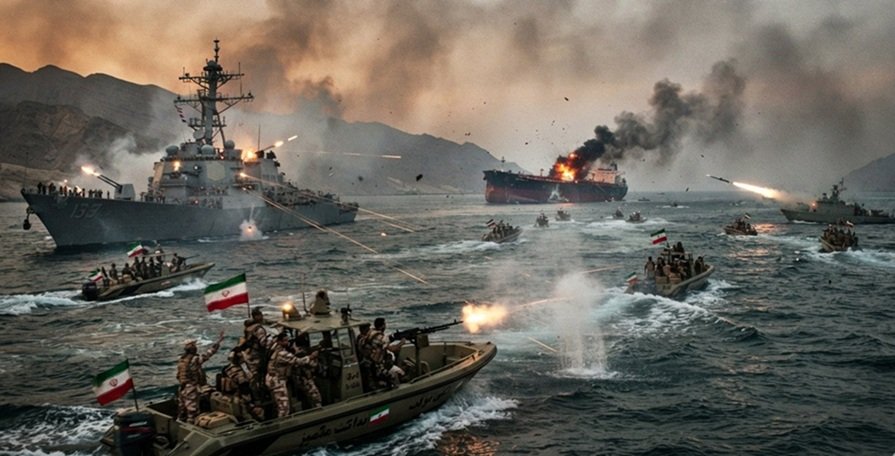
First, Russia’s inscription within Global South dynamics proceeds from an unprecedented geopolitical rupture. The large-scale invasion of Ukraine on February 24, 2022, effectively inaugurated a historically unprecedented sanction sequence: more than eleven thousand restrictive measures now strike Russia, the freezing of three hundred billion dollars in reserves signals that even sovereign assets are no longer protected, while partial exclusion from the SWIFT system aims to asphyxiate payment capabilities. Moreover, the ICC arrest warrant issued on March 17, 2023, against Vladimir Putin formally places the Russian head of state among internationally sought leaders.
In this regard, UN votes offer a particularly revealing barometer. During resolution ES-11/1 of March 2, 2022, demanding the withdrawal of Russian forces, thirty-five countries abstained. Even more significantly, during the vote to suspend Russia from the Human Rights Council (April 7, 2022), fifty-eight countries abstained. This critical mass of abstentions came massively from the Global South: the four other BRICS, seventeen African countries, and most of South and Southeast Asia. In total, of the 193 UN member states, only about forty actually imposed restrictions on Russia, meaning that nearly eighty percent of nations refused to participate in the West’s sanctioning regime.
Secondly, the vector of inscription resides in discursive convergence around criticism of “Westernised” international law. Thus, as Minister Lavrov stated in September 2023: “The so-called ‘rules-based order’ is merely an instrument designed to maintain declining Western hegemony. These ‘rules’ fluctuate opportunistically according to Western interests, while actual international law is systematically violated by those very people who proclaim themselves its guardians.” This double-standard rhetoric strategically relies on a series of contested Western interventions: Kosovo (1999), Iraq (2003), and Libya (2011). Regarding the ICC specifically, the Russian argument emphasises flagrant asymmetry: while an arrest warrant was issued for Putin in 2023, no similar procedure targeted American or British leaders for the invasion of Iraq. This selectivity consequently fuels the perception of instrumentalised international justice.
Moreover, rejection of unilateral sanctions constitutes another terrain of substantial convergence. The 2014 Fortaleza declaration already explicitly stipulated: “We condemn unilateral military interventions and economic sanctions in violation of international law.”
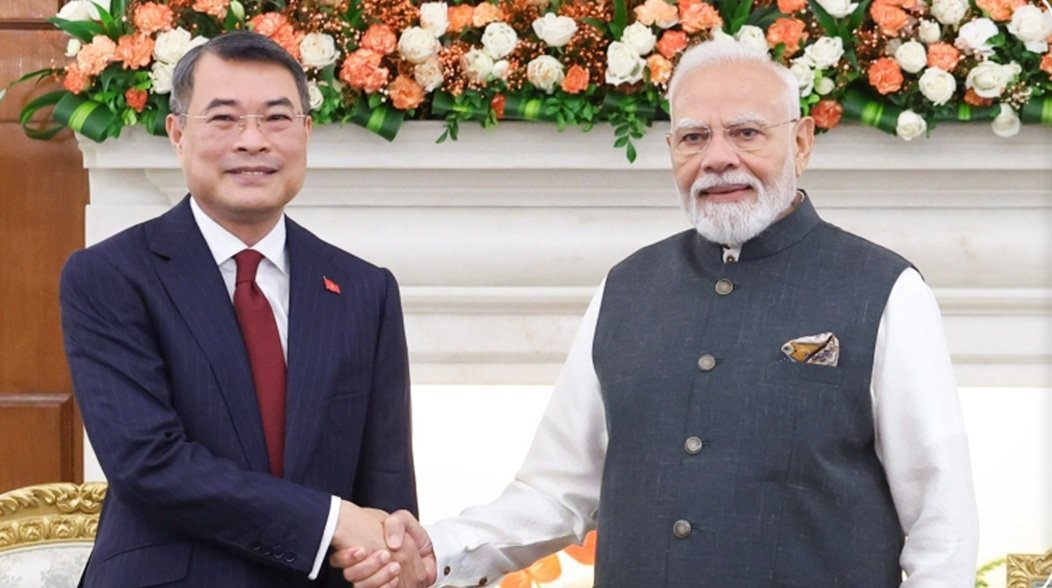
Finally, the fundamental pillar resides in the role of architect of alternative institutions to the Bretton Woods order. Historically, the acronym “BRIC” was transformed into a political grouping by Russian initiative in 2006. The new development bank, created in 2014 with capital of one hundred billion dollars, adopted a strictly egalitarian principle: each of the five founding members holds twenty percent of shares. Significantly, BRICS expansion in 2024 brought membership to ten, collectively representing forty-two percent of global GDP in purchasing power parity and forty-three percent of the world population. Spectacularly, the Kazan summit (October 22-24, 2024) gathered thirty-six heads of state, thus refuting the Western narrative of an isolated Russia.
Concretely, de-dollarisation initiatives progressed: Sino-Russian trade now occurs forty percent in yuan and rubles, versus fifteen percent before 2022. A November 2024 study quantified this process through a composite index reaching seventy-two percent for BRICS as a whole. Empirically, India multiplied its Russian oil imports twentyfold between 2021 and 2023; China increased its energy imports by sixty-seven percent in 2022.
Structural incompatibilities: why Russia does not belong to the Global South
Nevertheless, meticulous examination of data relating to the Russian Federation reveals considerable discrepancy with the defining parameters of the Global South. First, Russia’s 2023 Human Development Index stands at 0.832, placing the country at fifty-sixth rank globally, solidly anchored in the “very high human development” category. By comparison, even within BRICS, Russia surpasses all its partners: Brazil reaches 0.760; China 0.768; India 0.644; South Africa 0.713. Russia is situated more in the vicinity of European nations like Poland (0.876).
Economically, gross national income per capita in purchasing power parity amounts to twenty-seven thousand nine hundred three dollars in 2023, exceeding 3.7 times the estimated Global South average (seven thousand five hundred dollars). Moreover, the public debt-to-GDP ratio reached 20.2 percent in 2024, one of the lowest in the world. Net international creditor status, maintained since 2013, means that the value of Russian assets abroad exceeds that of liabilities.
Furthermore, technological capabilities unquestionably situate Russia in the club of great powers. The Russian space program remains one of only three in the world capable of autonomous manned flights. The nuclear arsenal totals five thousand nine hundred seventy-seven nuclear warheads according to SIPRI 2024, the world’s largest quantitatively. The defence industry, the third-largest global exporter with seven billion dollars in 2022, supplies more than fifty client countries, creating a technological dependence inverse to the centre-periphery relationship postulated by dependency theory.
Secondly, membership in the global south fundamentally proceeds from a historical identity forged in the common experience of colonial domination. However, Russia not only never suffered colonisation but has historically occupied the position of colonising power. The Russian Empire reached 22.4 million square kilometres in 1914, the second-largest territorial empire after the British Empire. This expansion proceeded from systematic military conquests: colonisation of Siberia, conquest of the Caucasus (1817-1864) resulting in the Circassian genocide (between five hundred thousand and one million five hundred thousand victims), and subjugation of Central Asia (1839-1895). Subsequently, the Soviet Union perpetuated this empire, even extending it into Eastern Europe after 1945.
More recently, the post-Soviet Russian Federation reactivated the imperial legacy: Chechen repression (twenty-five thousand to fifty thousand civilian victims), interventions in Georgia (2008), annexation of Crimea (2014), invasion of Ukraine (2022). This historical trajectory consequently produces a collective memory radically opposed to that of the Global South: imperial nostalgia for lost greatness. A December 2020 Levada poll significantly revealed that sixty-six per cent of Russians regretted the dissolution of the Soviet Union. As researcher Anton Shekhovtsov astutely notes: “Contemporary Russia presents itself as leader of the anti-colonial struggle while waging in Ukraine a classically colonial war, aimed at denying the existence of a distinct Ukrainian national identity, a flagrant performative contradiction.”
Thirdly, Russian territory contains exceptional reserves: forty-seven thousand eight hundred billion cubic meters of natural gas (19.9% of world reserves, first rank), one hundred sixty-two billion tons of coal (15.2%, second rank). The estimated total value of these resources would reach seventy-five trillion dollars. However, unlike dysfunctional oil economies of the South (Nigeria, Venezuela, Angola), Russia nationally controls the value chain (Gazprom, Rosneft), efficiently captures the rent (thirty percent of the federal budget), and ensures relatively widespread social redistribution (thirty-six percent of the budget in social spending).
Moreover, the singular geopolitical position of a permanent Security Council member with veto power (exercised one hundred forty-three times since 1991), largest nuclear arsenal, and third-largest global arms exporter, structurally places Russia in the club of great powers of the Global North. These institutional and military attributes, which no other nation of the South cumulatively possesses, position it as an established great power of the Westphalian system rather than as an emerging power contesting this order from outside.
Conclusion
Therefore, the answer must distinguish three levels of analysis. On the structural level, Russia unquestionably belongs to the Global North: objective data unanimously converge. On the political-identity level (discourse, alliances, positioning), Russia claims and tactically acts as a member of the Global South. On the strategic level (motivations, instrumentalisation), Russian affiliation appears fundamentally contingent: for Moscow, it involves breaking post-2022 diplomatic isolation; for the Global South, using Russia as a geopolitical counterweight.
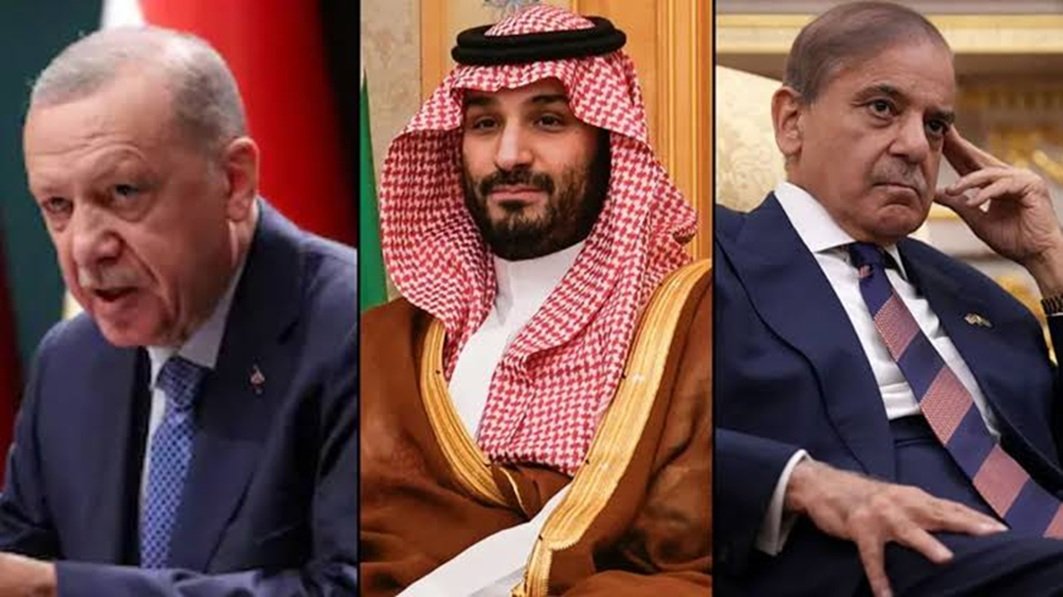
In sum, this reveals the limits of binary categorisations. Membership in the Global South becomes performative and chosen: China, the world’s second-largest economy, claims to be a “developing country”; Saudi Arabia, a wealthy rentier state, joins BRICS, suggesting that the Global South is evolving from an objective structural category toward a subjective political identity.
Title Image Courtesy: Natstrat
Disclaimer: The views and opinions expressed by the author do not necessarily reflect the views of the Government of India and the Defence Research and Studies. This opinion is written for strategic debate. It is intended to provoke critical thinking, not louder voices.