India is emerging as a pivotal global power, leveraging strategic autonomy and multi-alignment to balance relations between the West and the Global South and to establish supremacy in a fragmenting world order.
India at an Inflexion Point
The international system is undergoing structural turbulence. The post-Cold War unipolar moment has eroded, but a stable multipolar order has yet to consolidate. Instead, the global environment is characterised by competitive major power rivalry, technological bifurcation, weaponised interdependence, and institutional fatigue. In this fluid strategic landscape, India occupies a pivotal position. It is no longer peripheral to great power politics; it is central to the geometry of power in the Indo-Pacific and beyond.
India’s geopolitical conduct over the past decade reflects a deliberate effort to convert structural weight—encompassing demographic scale, economic growth, geostrategic centrality, and civilizational capital—into sustained strategic influence. The shift from non-alignment to strategic autonomy and now to multi-alignment diplomacy signals not a doctrinal rupture but an adaptive recalibration to contemporary realities. The core question before policymakers and strategists is whether India can transition from being a balancing power to a system-shaping power within the evolving global order.
The Structural Context: Competitive Multipolarity and Weaponised Interdependence
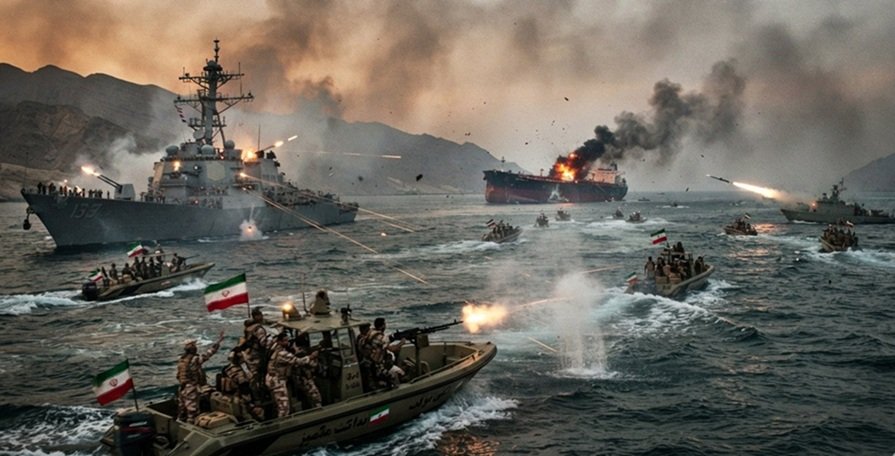
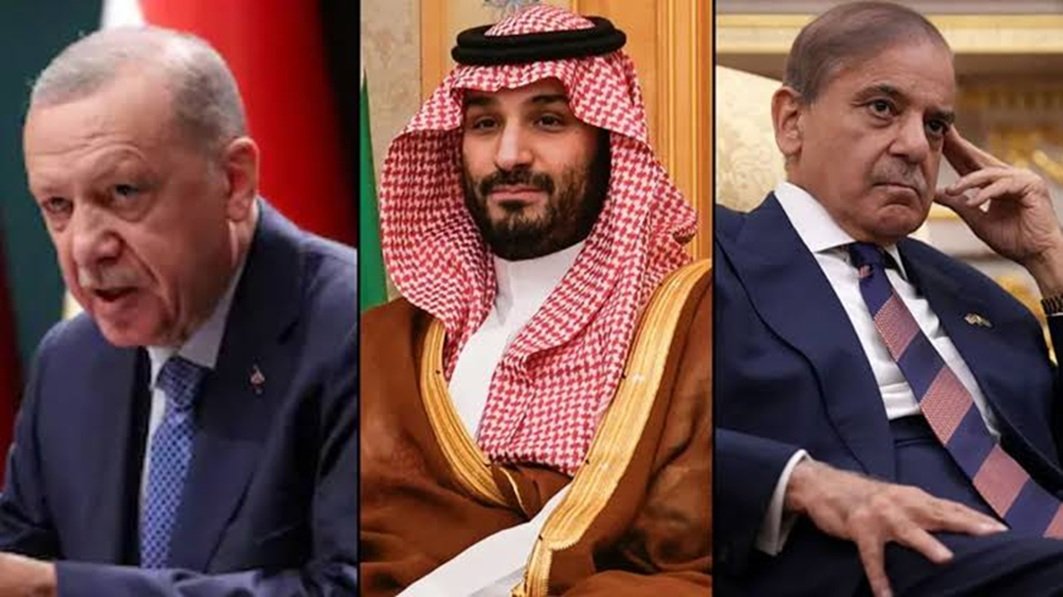
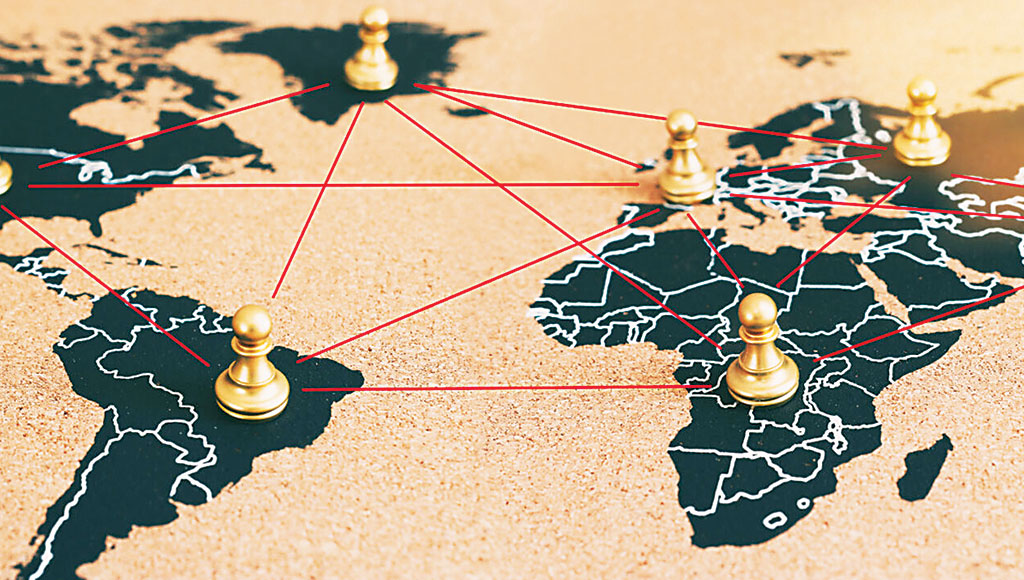
The contemporary international system may best be described as competitive multipolarity under constraints. The United States remains the pre-eminent military and technological power, yet China has emerged as a systemic challenger with revisionist intent. Russia, though weakened economically, retains military leverage and disruptive capacity. The European Union wields regulatory and economic influence but lacks a unified strategic will. Middle powers— from Türkiye to Iran, from Japan to Saudi Arabia—exercise selective autonomy.
PC: New Age
Three structural trends shape this environment. First, strategic competition between Washington and Beijing has become the organising principle of global geopolitics. Second, economic interdependence is increasingly weaponised through sanctions, export controls, and technology denial regimes. Third, globalisation is fragmenting into friend-shoring, de-risking, and supply chain securitisation.
For India, these dynamics present both risks and opportunities. As a large, fast-growing economy situated at the maritime crossroads of the Indo-Pacific, India is indispensable to any strategy seeking to balance China. Simultaneously, India must avoid entrapment in bloc politics that could constrain its strategic autonomy.
From Non-Alignment to Multi-Alignment: Evolution of Strategic Doctrine
India’s diplomatic posture has evolved through distinct phases. Non-alignment during the Cold War sought autonomy through equidistance from rival blocs. Post-1991 liberalisation and nuclear assertion in 1998 introduced strategic autonomy—diversifying partnerships while safeguarding decision-making independence. Today’s multi-alignment represents a more sophisticated iteration: simultaneous engagement with competing power centres on issue-based convergence rather than ideological alignment.
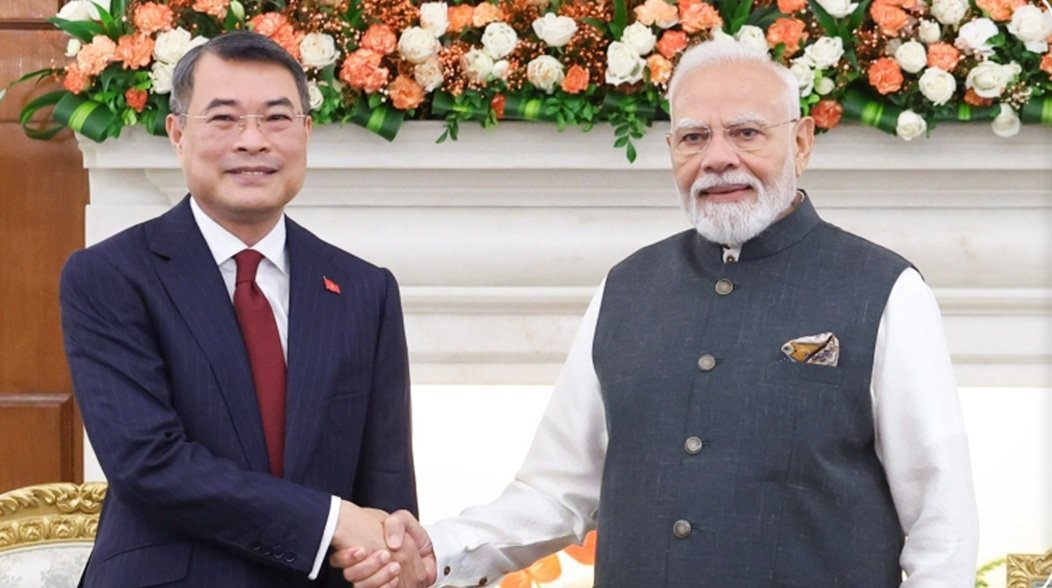
This approach is evident in India’s parallel participation in the Quad and BRICS; deepening strategic partnership with the United States while sustaining defence ties with Russia; maintaining robust relations with Israel and the Gulf while preserving channels with Iran. Such diplomatic elasticity is not inconsistency; it is calculated hedging designed to maximise strategic space.
Multi-alignment is underpinned by three operational principles. First, India avoids formal alliance commitments that could limit manoeuvrability. Second, it pursues functional coalitions on specific issues—maritime security, technology governance, and climate action. Third, it leverages its market size and geopolitical relevance as bargaining capital.
India–United States Convergence: Strategic Partnership without Alliance
The most consequential bilateral development of the past two decades has been India’s rapprochement with the United States. Shared concerns regarding China’s assertiveness, maritime security, and supply chain resilience have accelerated convergence. Foundational
defence agreements—LEMOA, COMCASA, and BECA—have enhanced interoperability. The Initiative on Critical and Emerging Technologies (iCET) signals a shift toward collaboration in semiconductors, artificial intelligence, quantum computing, and space.
However, convergence does not eliminate divergence. India’s continued defence purchases from Russia, its independent stance on sanctions, and its insistence on strategic autonomy occasionally generate friction. The relationship thus reflects managed asymmetry: deepening defence and technological cooperation without alliance formalisation.
For India, the United States is indispensable for high-end technology access and Indo-Pacific balancing. For Washington, India is a demographic and geographic counterweight to China. The durability of this partnership will depend on mutual accommodation of core interests.
Russia and Eurasia: Legacy Dependence and Strategic Recalibration
Russia remains a significant defence supplier and energy partner. Discounted crude imports following the Ukraine conflict have enhanced India’s energy security. Yet structural constraints are evident.
Western sanctions limit Russia’s technological capacity; Moscow’s growing economic dependence on Beijing alters Eurasian power equations.
India’s long-term objective must be diversification of defence procurement and indigenisation under initiatives such as “Atmanirbhar Bharat.” Gradual reduction of legacy dependence without abrupt rupture is the pragmatic course. Russia retains value as a geopolitical interlocutor in continental Eurasia, but it is unlikely to remain India’s principal strategic partner in the coming decades.
The Indo-Pacific and the Maritime Turn
India’s geostrategic centrality lies in the Indian Ocean Region (IOR). Approximately 80 per cent of global maritime oil trade transits these waters. The Andaman and Nicobar Command overlook the Malacca Strait, a critical chokepoint. China’s expanding naval footprint—from Djibouti to Gwadar—has intensified competition.
India’s maritime doctrine, encapsulated in SAGAR (Security and Growth for All in the Region), emphasises cooperative security, capacity building, and maritime domain awareness. Participation in the Quad reinforces deterrence signalling without binding alliance obligations. Naval modernisation, anti-submarine capabilities, and logistics agreements with partners extend India’s operational reach.
Maritime centrality marks a doctrinal shift from continental preoccupation toward integrated theatre awareness. For a trading nation aspiring to global influence, sea power is indispensable.
Trade Partnerships and Economic Statecraft
Trade policy is increasingly an instrument of geopolitical positioning. India’s recent trade agreements—the Comprehensive Economic Partnership Agreement (CEPA) with the UAE and the Economic Cooperation and Trade Agreement (ECTA) with Australia—reflect a recalibration from defensive protectionism toward selective integration.
Negotiations with the European Union and the United Kingdom signal recognition that economic mass underwrites strategic influence. However, integration must be matched by domestic competitiveness— manufacturing scale, logistics efficiency, and regulatory reform.
Economic statecraft extends beyond trade agreements. Lines of credit to Africa, infrastructure projects in South Asia, and digital public goods diplomacy—exporting India Stack technologies such as UPI and Aadhaar—enhance normative and functional influence. Digital infrastructure diplomacy, in particular, positions India as a provider of scalable governance models for the Global South.
Resource Security and Energy Diversification
Energy security remains foundational to India’s growth trajectory. Diversification strategies include long-term LNG contracts, strategic petroleum reserves, renewable expansion, and green hydrogen missions. Simultaneously, India seeks partnerships for critical minerals—lithium, cobalt, and rare earth elements—essential for electric mobility and semiconductor ecosystems.
In a world where supply chains are securitised, control over critical minerals and advanced manufacturing will determine strategic autonomy. Overseas acquisitions in Africa and Latin America, along with participation in mineral security partnerships, are emerging priorities.
Regional Engagement: Balancing Primacy and Competition
South Asia remains India’s immediate sphere of influence but is increasingly contested by China’s Belt and Road Initiative. Political volatility in Sri Lanka, Nepal, and Bangladesh creates openings for external penetration. India’s “Neighbourhood First” policy combines developmental assistance, connectivity projects, and security cooperation. Yet sustained influence requires economic delivery and infrastructure execution at scale.
In Africa, India’s approach emphasises capacity building, pharmaceuticals, IT training, and development partnerships—an alternative model to extractive investment. In Europe, regulatory and technological cooperation complements trade negotiations. In West Asia, trilateral and quadrilateral frameworks such as I2U2 integrate economic and strategic objectives.
Across theatres, India’s engagement reflects differentiated strategies rather than a uniform doctrine.
India in Global Governance: Reformist Pragmatism
India aspires to permanent membership of the United Nations Security Council, citing demographic legitimacy, economic scale, and peacekeeping contributions. However, reform remains constrained by veto politics. Coalition-building through the G4 and outreach to Africa are incremental pathways.
Within the WTO, India balances developmental policy space with integration imperatives. In BRICS, it must manage China’s expanding influence while leveraging the grouping to advocate for financial reform and Global South representation.
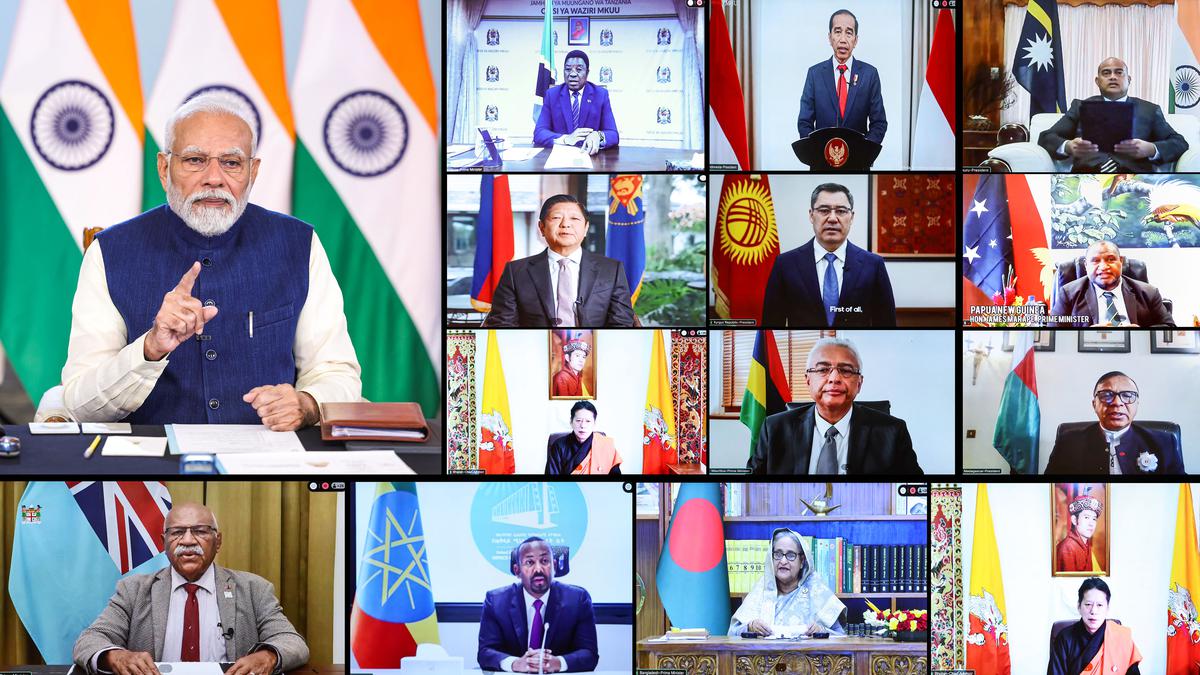
India’s G20 presidency underscored its bridging role—positioning itself as a voice of the Global South while engaging developed
economies. This bridging function may become India’s distinctive diplomatic niche.
Hard Power, Economic Depth, and Normative Capital
Strategic influence rests on three interdependent pillars. First, credible hard power—military modernisation, border infrastructure, maritime expansion—ensures deterrence credibility. Second, sustained economic growth provides material foundations for diplomacy and defence. Third, normative and soft power—diaspora networks, democratic credentials, digital public goods—amplify reach.
India’s challenge is synchronisation. Military modernisation without economic acceleration is fiscally unsustainable; economic growth without security assurance is strategically vulnerable; normative leadership without domestic cohesion lacks credibility.
Constraints and Strategic Risks
India’s ambitions confront structural constraints: defence import dependence, infrastructure deficits, bureaucratic inertia, and social polarisation. Externally, intensifying US–China rivalry may compress diplomatic space. Regional instability—from the Himalayas to the Indian Ocean littoral—demands sustained attention.
Strategic overextension without adequate economic depth risks dilution of influence. The discipline of prioritisation will determine success.
Conclusion: Toward System-Shaping Agency
India stands at a strategic inflexion point. It is no longer merely balancing among powers; it is shaping issue-based coalitions, influencing institutional debates, and exporting governance models. Yet system-shaping status requires more than presence—it demands agenda-setting capacity.
To consolidate its trajectory, India must accelerate economic transformation, indigenise defence production, lead in emerging domains such as AI governance and climate finance, and strengthen regional primacy through connectivity and development.
In an era defined by uncertainty and contested norms, India’s multi-alignment strategy provides flexibility. The ultimate measure of success will be whether India transitions from a pivotal swing state to a principal architect of the emerging multipolar order.
Title Image Courtesy: DD India
Disclaimer: The views and opinions expressed by the author do not necessarily reflect the views of the Government of India and the Defence Research and Studies.


Bibliography
Acharya, Amitav. The End of the American World Order. Polity Press, 2014.
Bajpai, Kanti, and Harsh V. Pant (eds.). India’s Foreign Policy: A Reader. Oxford University Press, 2013.
Jaishankar, S. The India Way: Strategies for an Uncertain World. HarperCollins India, 2020.
Mohan, C. Raja. Samudra Manthan: Sino-Indian Rivalry in the Indo-Pacific. Carnegie Endowment, 2012.
Pant, Harsh V. (ed.). India’s Foreign Policy and Security Strategy: A Reader. Routledge, 2019.
Tellis, Ashley J. “India as a Leading Power.” Carnegie Endowment for International Peace, 2016.
Khanna, Parag. The Future is Asian. Simon & Schuster, 2019.
Ministry of External Affairs, Government of India. Annual Reports (various years).
Ministry of Defence, Government of India. Annual Defence Report (latest editions).
World Trade Organisation. World Trade Report (various years).
United Nations. Reforming the United Nations: A/RES/60/1 World Summit Outcome Document, 2005.
BRICS Joint Declarations (various summit documents).