Machiavelli had his recipes. Some of them have crossed the centuries without so much as a wrinkle. So, as always, here as elsewhere, one divides to rule more effectively; one dominates to last. Because, in any case, the law of the strongest has always had a knack for dressing itself up as a pragmatic choice, duly authorised by law, of course!
It is, in sum, fairly common, and even politically comfortable, to run a raw and unambiguous response through the reassuring filter of legitimation by international law. Some may well repeat that this law is moribund, even discredited; experience nevertheless shows that it remains a precious tool. Each State lays hold of it, with remarkable consistency, to express its violence, or rather, to render that violence speakable. In short, international law is not so much a brake on war as its official language. It does not hinder the ferocity of armed responses; it gives them a framework, a lexicon, sometimes even a form of respectability. And it is within this broad family of variable-geometry self-defence claims and juridically accommodating retaliations that Israel is today being called to the stand.
Before anything else, and in order to avoid a confusion (sometimes conveniently sustained) let us state this plainly from the outset: what follows is an analysis and a critique not of a people, but of a governmental policy, pursued by a given government, at a given moment. That being said, we may begin.
Defending Oneself Against Oneself: The Legal Tightrope
Much has been said, in the aftermath of the October 7 massacre, about the Israeli state’s response being measured, almost reasonable, comfortably settled within the rhetoric of a so-called “proportionate” retaliation. One was expected, it seems, to understand that circumstances required it: after all, on the other side were terrorists. And without in any way minimising the horror or the suffering caused by the October 7 massacre (by definition unjustifiable), there nevertheless remains a faint sense of unease: that of a narrative so reductive that it verges on an insult to intelligence. As though the public were being asked to display an uncommon degree of naïveté. It took a certain amount of imagination to speak of proportionate self-defence in the face of 1,200 deaths, and then to accept, without batting an eye, a response amounting to tens of thousands of victims. Even more imagination was required to view this as a legally exemplary operation conducted on a territory that is, moreover, already occupied.
For those to whom this means little, let us recall a point that is nonetheless elementary: since the 1928 Briand–Kellogg Pact, and even more clearly since the 1945 United Nations Charter, recourse to war and to armed force is, in principle, prohibited under international law. Only two exceptions remain: authorisation by the Security Council and self-defence. The famous one, readily invoked when other options become inconvenient. Yet it must be specified that self-defence was conceived as a response to an external aggression, attributable to another power. And it is precisely this notion of otherness that becomes decisive here. How can one justify a response grounded in self-defence against an entity over which one already exercises control, directly or indirectly? Self-defence presupposes an “other,” an external entity, a distinct power against which protection is sought. But when effective control is exercised over a territory, speaking of external aggression has less to do with law than with conceptual acrobatics.
As early as 2005, the United Nations General Assembly was not persuaded by the narrative of an occupation that had supposedly evaporated overnight. In its report A/60/271 on Israeli practices affecting the human rights of the Palestinian people in the occupied Palestinian territory, including East Jerusalem, it continued to treat the Gaza Strip as an occupied territory under international humanitarian law. An elegant way of reminding us that the withdrawal of troops is not, in itself, sufficient to erase an occupation when effective control remains. And this interpretation was no mere slip of the pen. It was taken up and reaffirmed nearly twenty years later by the General Assembly in its resolution A/79/343 of 10 September 2024. A political text, certainly, but one that is politically consistent, legally coherent, and above all revealing: for the United Nations, Gaza has never ceased to fall within the category of occupied territories.
The paradox is therefore hard to ignore: one claims to defend oneself against what one administers, to contain what one already regulates, to repel what one already holds. At this point, self-defence ceases to be a legal argument and becomes a semantic sleight of hand, convenient enough to sustain a narrative, but far too fragile to withstand even the most elementary logic.
War, or the Art of Staying in Power?
In practice, this invocation of self-defence becomes all the more difficult to sustain when one takes a closer look at the deeper drivers of Israeli military action. Beyond the official narrative, the response undertaken by the IDF sometimes appears to extend well beyond the bounds of a strictly security-based reaction. We will therefore spare ourselves a detour through the discourse of dehumanisation and the firmly entrenched ideological shifts; an issue in its own right, widely documented, and one that alone could shed light on the scale of a military response so massively disproportionate. That is not the core point here. What draws attention above all is the eminently political and institutional nature of the response: a reaction conceived, structured, and assumed at the highest level of the State, less as a momentary reaction than as a fully-fledged strategic choice. Benjamin Netanyahu appears to have found in war something other than a mere reflex of defence… perhaps a lever of power, or even a condition for political survival.
Look more closely, and before 7 October 2023, Benjamin Netanyahu was a politically weakened Prime Minister, confronted with massive social protest and a marked decline in popularity, notably linked to his judicial reform and the extreme polarisation of Israeli society. Many at the time considered him to be nearing the end of his political cycle. But, at bottom, which leader willingly consents to leaving power, especially when the exit promises to be humiliating? And in any case, why accept erosion when levers exist to maintain one’s position? And how does one do so, in such circumstances? Classically. One changes the agenda. One redefines priorities and places national security back at the centre of the game. This is not, of course, to suggest that Benjamin Netanyahu engaged his country in war solely intending to preserve his power. But it would be just as reductive to ignore the fact that conflict can also serve this function.
Faced with an external threat, whether real or constructed, popular reflexes are well known: a surge in patriotism, a closing of ranks, and above all, a temporary marginalisation of internal criticism. Extremely convenient, indeed. This is where the so-called rally ’round the flag effect comes into play, perfectly describing this provisional suspension of contestation in favour of the executive during times of crisis. It is, in fact, one of the central mechanisms of diversionary war theory, developed in particular by Jack S. Levy and Bruce Russett. In short, when domestic legitimacy begins to falter, an external crisis can be converted into a political resource. Nothing fundamentally new, then, except for the intensity with which this mechanism has been reactivated in a context that was particularly conducive to it.
Manufacturing the Enemy, Then Claiming Victimhood
The argument of a strictly defensive war ultimately runs up against an awkward reminder: over the years, Benjamin Netanyahu himself helped to establish Hamas as a central actor in Gaza. Not out of ideological affinity, but out of political calculation, by preferring a radical adversary (and thus a disqualified one) to a Palestinian interlocutor capable of carrying a credible political alternative. The objective was clear: to maintain a lasting fragmentation of the Palestinian camp, thereby rendering any unified political solution impracticable. It would obviously be excessive and intellectually dishonest to claim that Benjamin Netanyahu anticipated or wished for the horror of 7 October. But it is just as difficult to sustain the idea of a sudden awakening in the face of a threat that emerged by chance. The violence being confronted today is also the product of long-standing strategic choices, assumed and repeated. It is therefore hard to portray the Prime Minister as a startled sentinel, suddenly discovering a danger he himself helped to shape over more than twenty years.
In reality, since the late 2000s, the policy pursued by Benjamin Netanyahu’s governments has consisted in elevating Hamas, entrenched in Gaza, into a lasting counterweight to Fatah, which dominates the Palestinian Authority in the West Bank. Officially, this was about containing tensions and preserving a form of stability. In practice, and this is the most coherent hypothesis, this strategy above all served to durably fragment the Palestinian camp by weakening any authority capable of speaking on behalf of all the territories.
The Palestinian Authority, led by Mahmoud Abbas and perceived as politically acceptable on the international stage, thus found itself marginalised, while Hamas, classified as a terrorist organisation, was maintained as an autonomous political force in Gaza. An ideal configuration from the Israeli point of view: on the one hand, a weakened interlocutor, discredited by its impotence; on the other, a radical adversary, disqualified in advance from any negotiation. In short, as long as Fatah governed the West Bank and Hamas controlled Gaza, Palestine was condemned to speak with two voices, and therefore to speak effectively with none. For which voice could have been judged legitimate, representative, and acceptable both to the Palestinian people and to the international community? To that question, the carefully maintained division provided an obvious answer: none.
Concretely, this policy translated, from 2018 onwards, into tolerance of the influx of Qatari funds into the Gaza Strip. Israel thus authorised the entry of suitcases containing millions of dollars in cash, officially intended to prevent a humanitarian collapse and to maintain a ceasefire with Hamas that was as fragile as it was provisional. The humanitarian argument was convenient, but not necessarily false. Yet it would be at the very least naïve to believe that Benjamin Netanyahu, a seasoned observer of regional power dynamics, was unaware of the political and military effects of such an influx of liquidity. That these funds contributed, directly or indirectly, to strengthening Hamas was less a surprise than an accepted risk. Once again, the calculation appeared clear: better a Hamas strong enough to govern Gaza, yet internationally disqualified, than a strengthened Palestinian Authority capable of claiming unified political legitimacy.
Conclusion
In short, the point here is not to deny the existence of a real threat, nor the horror of 7 October. It is simply to recall an all-too-often overlooked reality: the war waged against Hamas cannot be reduced to a pure and simple war on terrorism. It is also part of a long political sequence marked by calculations, carefully maintained divisions, and the deliberate use of conflict as an instrument of power. A coherent fight against terrorism would have consisted of drying up the conditions of its existence, not in tolerating, for years, the financial flows that contributed to its consolidation. In brief, one does not discover terrorism by surprise after having long tolerated its rise.
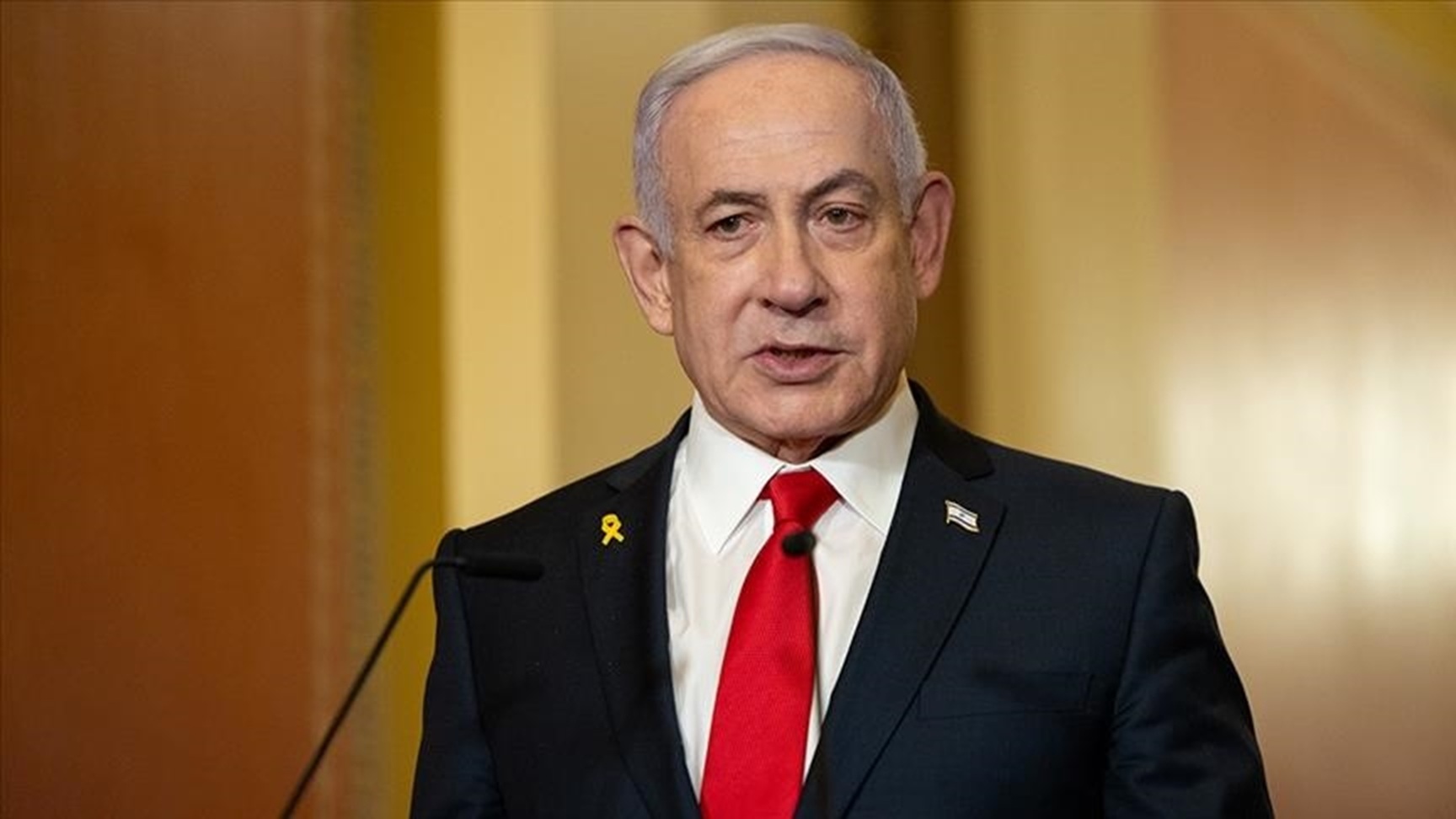
Title Image Courtesy: Anadolu
Disclaimer: The views and opinions expressed by the author do not necessarily reflect the views of the Government of India and the Defence Research and Studies. This opinion is written for strategic debate. It is intended to provoke critical thinking, not louder voices.