India’s relation with West Asia is strategic, focused on energy security, economic investment, defence cooperation and the welfare of the diaspora.
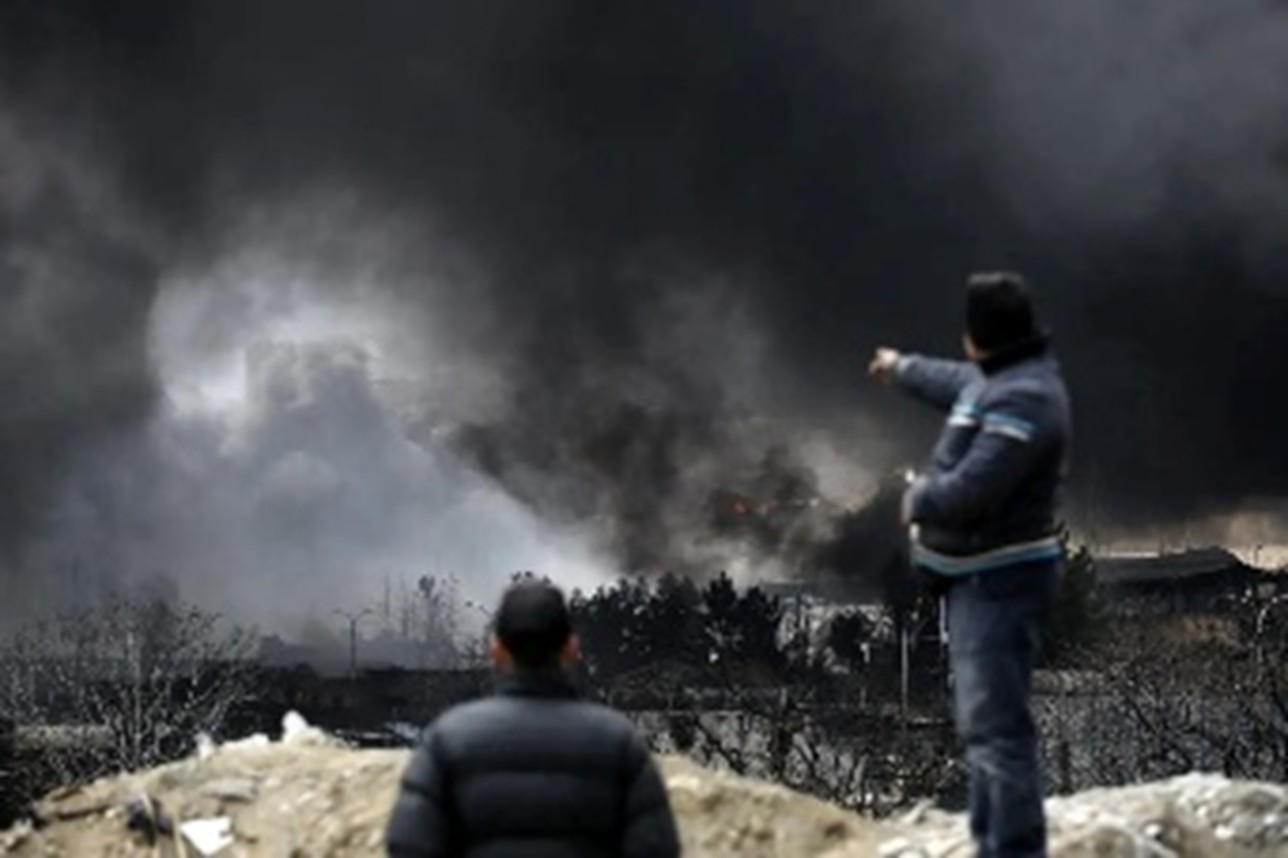
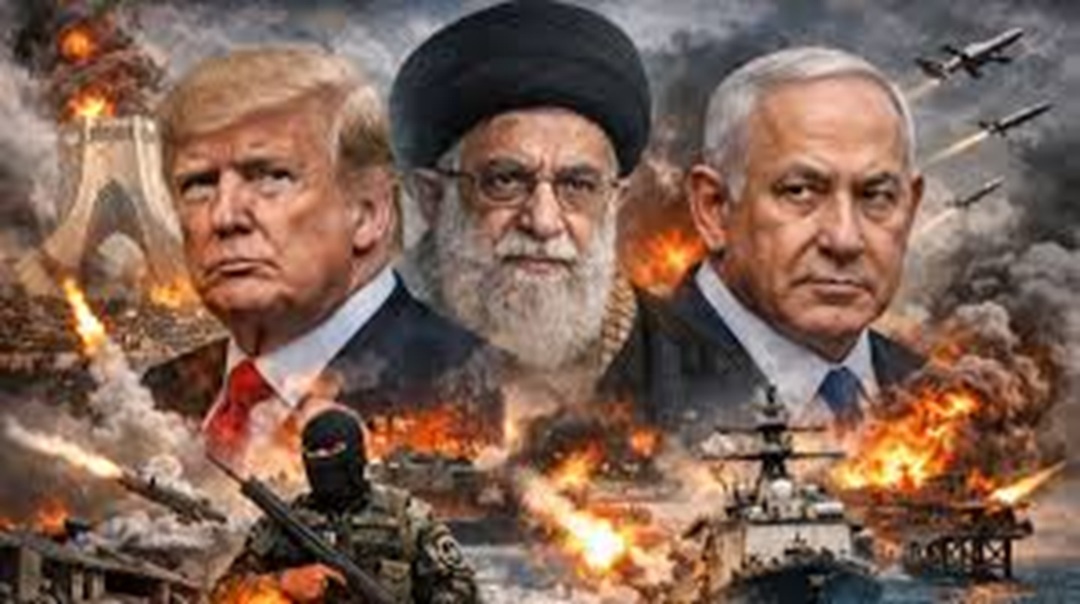
History arrived in Tehran on the night of February 28, 2026, not with a whisper, but with the roar of a region-altering transition. The death of Supreme Leader Ayatollah Ali Khamenei has left a vacuum at the heart of the ‘Axis of Resistance,’ plunging West Asia into its most volatile era since 1979. As the Assembly of Experts grapples with a succession that could lean toward hardline militarism or pragmatic evolution. The international community stands at a crossroads between further escalation and a fragile opportunity for peace, as Iran dips into deeper turmoil. In this storm, India emerges as the indispensable ‘Stabilising Pivot.’ Bound to Iran by centuries of civilisational ties and to the West by strategic necessity, New Delhi is uniquely positioned to move beyond the hard reality of regime change. Through a combination of sophisticated diplomacy and a blueprint for economic reconstruction centred on the Chabahar corridor are immediate opportunities for India. Beyond these, the ‘stabilising pivot’ has the chance to steer a post-transition in Iran through regional integration, providing the path to a stable West Asia. While the world watches the military fallout, India is uniquely positioned, not as a “combatant”, but as a “civilisational anchor” capable of facilitating stability and leading the humanitarian and economic reconstruction of Iran. New Delhi’s “Strategic Autonomy” is its greatest asset in a region wary of Western intervention.
US-Israeli Joint Operations and Iranian Retaliation
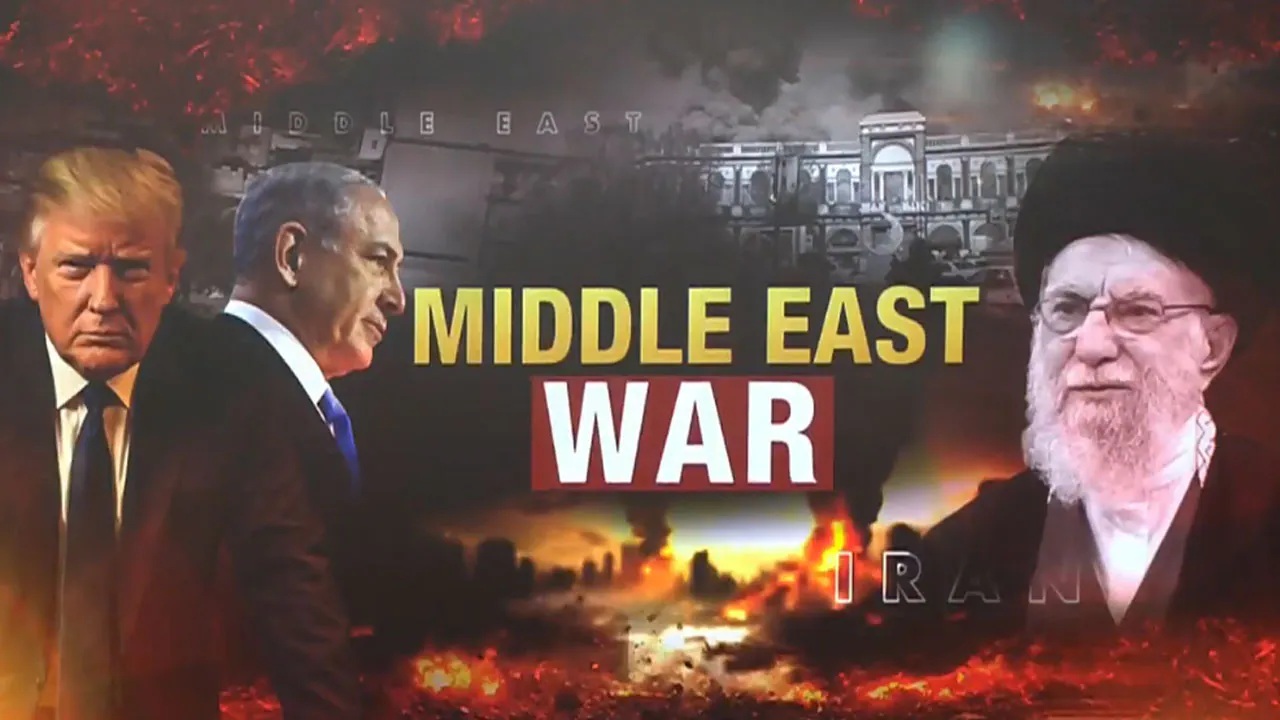
The joint US-Israeli operation, dubbed “Operation Epic Fury” by the US and “Roaring Lion” by Israel since 28th Feb 26 so far afflicted heavy damage; to the political leadership, missile and drone manufacturing facilities, nuclear facilities (in Fordow, Isfahan and Natanz), Navy and Iran’s proxy’s (Hamas, Hezbollah and Houthis) arsenal and infrastructure, besides cajusing heavy human casualties. This US-Israel combined operation has triggered immediate military retaliation across the Middle East. The IRGC has launched what they call ‘the most ferocious offensive operation in history’. Iranian Force The IRGC has moved beyond symbolic gestures, launching what it calls its “most ferocious” offensive in history. The key details of the targets attacked, casualties, counterattack, and types of missiles used, etc., are as follows:-
- Targeting 27 US Bases. Strikes have been reported on US assets across the region, including in Jordan, Kuwait, Bahrain, Qatar, Iraq, Saudi Arabia, and the UAE.
- Casualties: The Pentagon has confirmed the first American fatalities of the conflict—three service members were killed and five wounded in an attack on a base in Kuwait.
- Attacks on Israel: IRGC Aerospace Forces launched extensive missile and drone barrages targeting the Tel Nof Airbase and the HaKirya military headquarters in Tel Aviv.
- Hypersonic Deployment: For the first time in active combat, Iran reportedly deployed the Fattah-2 hypersonic missile to bypass regional air defence systems.
The IRGC’s strategy is not just military; it is aimed at making the war ‘prohibitively expensive’ for the world:-
- The Strait of Hormuz: The IRGC has begun a maritime blockade, targeting commercial vessels. An oil carrier, the Skylight, was severely damaged and is reportedly sinking.
- Gulf Aviation Hubs: Missile debris and direct drone strikes have caused fires and disruptions at international airports in Dubai and Abu Dhabi. Notable property damage was reported near the Burj Al Arab and The Palm in Dubai.
- The ‘Axis of Resistance’. Hezbollah (Lebanon) and various militias in Iraq have increased their kinetic engagements, launching rockets into northern Israel and mobilising toward the US Embassy in Baghdad
International Reactions
The international community is currently split into three distinct camps: those celebrating the potential for ‘regime change’, those condemning the violation of sovereignty, and those (like India) desperately trying to prevent a total regional collapse. The US and Israel have framed the strikes as a preemptive necessity to dismantle Iran’s nuclear and missile infrastructure. President Trump declared the strikes as the “greatest chance for the Iranian people to take back their country,” terming the mission a liberation effort. US Ambassador Mike Waltz defended the legality of the strikes at the UN, citing the fundamental duty to prevent a nuclear-armed Iran. Whereas Israeli Prime Minister Netanyahu has urged the Iranian people to rise and join mass demonstrations, stating that Israel will continue to strike “thousands of targets” until the threat is removed. The ‘Neutralists’, including India, are focused on de-escalation rather than taking sides, primarily due to economic and diaspora concerns. New Delhi’s reaction has been “carefully calibrated.” The Ministry of External Affairs (MEA) expressed “deep concern” and emphasised that “sovereignty and territorial integrity of all states must be respected.”
During an emergency Security Council meeting on March 1, UN Secretary General Antonio Guterres condemned the original US-Israeli strikes as a violation of the UN Charter, but also condemned Iran’s retaliation against its neighbours. He warned that the world is “on the brink” of a chain of events that no one can control.
Notwithstanding deep anguish expressed by the UN Secretary General at the current situation in Iran and West Asia, the UN must get its act together and rally its members for an immediate cease-fire and reconstruction of Iran so that people of the country can live their lives peacefully and work for a progressive and liberal society.
Post Ayatollah Ali Khamenei
As of March 2, 2026, the situation in Iran is incredibly volatile following the confirmed death of Supreme Leader Ayatollah Alireza Arafi (currently serving as the supreme leader) and Mojtaba Khamenei (second son of Ayatollah Ali Khamenei). Mojtaba Khamenei, the 56-year-old son of the late leader, is widely reported as the preferred choice of the Islamic Revolutionary Guard Corps (IRGC). Under the Iranian constitution, the process of selection of a successor to the Supreme Leader is as follows:-
- The Assembly of Experts. This 88-member body of senior clerics is constitutionally mandated to pick a successor “as soon as possible.” However, reports indicate that several high-ranking members of the assembly might have also been killed or are in hiding.
- Temporary Leadership Council. Until a permanent leader is chosen, a council consisting of the President (Masoud Pezeshkian), the Head of the Judiciary, and a member of the Guardian Council is supposed to govern. However, President Pezeshkian was also reportedly a target of the strikes, and his status remains unverified.
- Potential Successors. Ayatollah’s son was long rumoured to be a successor, but his daughter and other family members were confirmed killed in the same strike. His current status is unclear. The former judiciary chief is being watched as a possible clerical candidate.
The internal situation in Iran following the death of its spiritual leader is chaotic. Analysts suggest that the Islamic Revolutionary Guard Corps (IRGC) may bypass the religious process entirely to consolidate military control. The internal situation in Tehran is described by intelligence sources as “chaos.”:-
- Prominent Leaders Eliminated. Along with Ayatollah Khamenei, reports confirm the deaths of Ali Shamkhani (Top Advisor) and General Mohammad Pakpour (IRGC Ground Forces Commander).
- The Assembly in Hiding: The Assembly of Experts has been unable to officially convene to name a successor because many senior clerics have fled Tehran or are in secure bunkers.
- Martial Law: The IRGC has effectively taken over administrative duties in major cities, declaring a “State of War” and threatening immediate execution for any “pro-Western insurgents” celebrating the strikes.
Iran has declared 40 days of national mourning, and a 7-day public holiday has been declared. While state media shows mourning, there are scattered reports of celebrations in the diaspora and certain Iranian provinces, though the IRGC has threatened “severe punishment” for any dissent.
IRGC has also declared the Strait of Hormuz—the world’s most vital oil chokepoint—officially ‘clamped’ or closed, thus impacting global trade and economy:-
- Radio Warnings. International shipping groups (including France’s CMA CGM) have suspended navigation after receiving VHF radio transmissions from the IRGC stating that “no ship is allowed to pass.”
- Physical Blockade. The US and UK maritime authorities argue the closure is not legally binding under international law, but the threat of Iranian anti-ship missiles and sea mines has brought commercial traffic to a virtual standstill.
- Global Impact. Nearly 20 million barrels of oil per day (about 20% of global consumption) are currently trapped or diverted. Brent crude prices are already spiking toward $80 per barrel, with analysts warning of a leap to $100+ if the blockade persists.
- Regional Fallout. India, which relies on the Strait of Hormuz for 50% of its crude, has activated contingency plans and is looking to bypass the route using pipelines in Saudi Arabia (East-West Pipeline) and the UAE (Habshan-Fujairah). This transition would take time, thus affecting the supply of crude oil to government-owned and privately-owned refineries.
Role of India for Peace in the Middle East and Rebuilding Iran
Following the continuous strikes on Iran by the US and Israel combined forces since 28th Feb 26, India’s role in West Asia has shifted from ‘ passive observer’ to a critical ‘Strategic Bridge’ as the voice of the Global South. India is one of the few global powers that maintains high-level trust with the U.S., Israel, and the Iranian state. What are the risks and opportunities for India in Iran? We need to look from various angles:-
- Diaspora at Risk. With over 10 million Indians in the Gulf, the IRGC strikes on Dubai, Kuwait, and Qatar directly threaten Indian lives. PM Modi has already conveyed concerns to PM Netanyahu and the UAE leadership.
- Economic Interest. The damage to Gulf ports and the sinking of tankers in the Strait of Hormuz threaten India’s energy security and the viability of the IMEC (India-Middle East-Europe Economic Corridor).
- The Mediation Opportunity. While the US and Israel focus on ‘decapitation’ and the IRGC focuses on ‘ revenge’ , India is the only major power that can talk to both the Interim Leadership Council in Tehran and the White House to negotiate a ‘de-escalation corridor’.
- India as a Diplomatic Mediator. India is uniquely positioned to act as a ‘neutral interlocutor’ because it does not have a history of interventionism in the region.
- ‘Hotline” Diplomacy’. External Affairs Minister S. Jaishankar has already held emergency calls with the foreign ministers of Iran (Seyed Abbas Araghchi) and Israel (Gideon Sa’ar). India’s goal is to prevent a ‘Total War’ by conveying red lines between the two sides.
- UN Security Council Role. India is expected to use its influence within the Global South to push for a UN-monitored ceasefire, emphasising the ‘Sovereignty and Territorial Integrity’ of Iran while acknowledging Israel’s security concerns.
- Succession Influence. India may quietly support a pragmatic, more ‘ reformist’ clerical or military transition in Tehran to ensure that the new leadership remains open to international trade and regional stability.
- Rebuilding Iran. If a new government emerges in Tehran that is less isolated, India is the primary candidate to lead the economic reconstruction of Iran:-
- Chabahar Port Expansion: India has already invested heavily in the Chabahar Port. In a post-conflict scenario, this port would become the “Lung of Iran,” allowing the country to bypass the blocked Strait of Hormuz and reconnect with global markets via India.
- Infrastructure & Energy: India’s public sector giants (like ONGC and IRCON) have long-standing, shelf-ready plans for the Farzad-B gas field and the Zahedan railway line. India could lead a “Marshall Plan” for Iranian infrastructure in exchange for long-term energy security.
- Pharma & Food Security: India is the “Pharmacy of the World.” In the immediate aftermath of the strikes, India is likely to be the first to provide massive shipments of medicines and grain to stabilise the Iranian civilian population.
- Stabilising the ‘Connectivity Corridors’. India’s long-term economic interests are tied to two major projects that are currently ‘on ice’ due to the war:-
- IMEC (India-Middle East-Europe Economic Corridor). To make this work, India needs the Gulf to be stable. India may offer Maritime Security assistance (Indian Navy patrols) to help reopen commercial shipping lanes.
- INSTC (International North-South Transport Corridor): This route goes directly through Iran to Russia and Europe. Rebuilding this would be India’s primary tool for integrating a “New Iran” back into the global economy.
- Possible Roles. Despite these possible roles, India will have to navigate US and many domestic challenges: –
- President Trump’s ‘ Maximum Pressure’ campaign and the push for regime change make it difficult for India to rebuild Iran without risking secondary U.S. sanctions.
- India must manage its own large Shia population, which is mourning the death of Khamenei, to ensure that regional anger does not spark internal unrest.
Conclusion
As the dust settles over Tehran following the seismic events since 28th February, the world finds itself at a historical crossroads where the old certainties of West Asian geopolitics have been replaced by a volatile vacuum. While other global powers may view this transition through the narrow lens of military gain or ideological triumph, India’s ‘Strategic Autonomy’ allows it to see a more profound opportunity; the chance to act as a civilizational bridge. By leveraging its unique trust with both the new Interim Leadership Council in Iran and the Western coalition, New Delhi is positioned to be more than just a spectator; it is the essential ‘Stabilising Pivot.’ Through the revitalisation of the Chabahar corridor and a leadership role in Iran’s economic and social reconstruction, India can help steer the region away from the precipice of a ‘forever war’ and toward a sustainable, inclusive peace. Ultimately, the success of a post-transition Iran—and the stability of the entire West Asian landscape—will depend on a power that builds rather than breaks. In this new era, India is not merely protecting its own interests; it is providing the blueprint for a responsible, multipolar world order.
Title Image Courtesy: Indian Express
Disclaimer: The views and opinions expressed by the author do not necessarily reflect the views of the Government of India and the Defence Research and Studies.