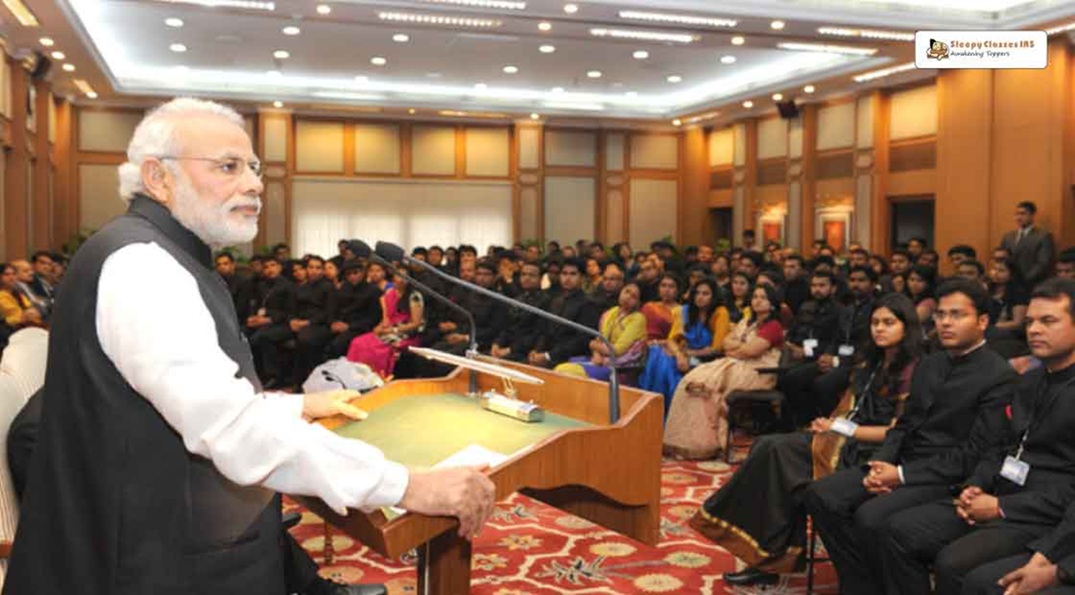
Recently, I had the opportunity to participate in a panel that conducted mock interviews for candidates who had passed the written civil service exams and were awaiting their interview calls. It was indeed a valuable experience for me to gain insights into the interviewing process, which prompted me to consider the efficacy of the entire selection system for the civil servants under the auspices of the Union Public Service Commission.
For decades, clearing the Civil Services Examination conducted by the Union Public Service Commission (UPSC) has symbolised intellectual excellence, perseverance, and public service commitment. The Indian Administrative Service, Police Service and Foreign Service—often described as the “steel frame” of the Republic—continue to attract the country’s brightest young minds. Yet, an uncomfortable question must be asked: Does India’s current civil services selection system still recruit the kind of administrators the country now needs?
The issue is not about diminishing the prestige of the UPSC or questioning its integrity. Rather, it is about relevance. India in 2025 is not the India of the 1950s. Governance today is more complex, technology-driven and globally embedded than ever before. A recruitment system designed for a paper-based, rule-bound state must evolve to serve a digital, outcome-oriented and strategically competitive India.
A System Built for a Different Era
India’s civil services recruitment model has its roots in the colonial Indian Civil Service, which was designed to produce generalist administrators capable of maintaining law, order and revenue collection over a vast territory. After Independence, this model was consciously retained to ensure unity, stability and administrative continuity.
The three-stage examination—Prelims, Mains and Interview—has ensured merit-based, politically insulated recruitment. These strengths remain vital. However, the underlying philosophy of selection has remained largely unchanged even as governance challenges have multiplied.
Today’s administrators must deal with climate change, cybersecurity, artificial intelligence, complex financial systems, urbanisation, public health emergencies and geopolitical competition. The skills required go well beyond the ability to recall information or write structured answers under exam conditions.
The Problem of Exam-Centric Merit
At the heart of the problem lies an excessive emphasis on rote learning and examination performance. Despite syllabus reforms, the system continues to reward memorisation, coaching-driven preparation and answer-writing techniques rather than applied problem-solving or real-world reasoning.
Most successful candidates spend four to six years exclusively preparing for the examination. While this demonstrates commitment, it also creates distortions. Those years are often detached from professional experience, field exposure or skill development. The opportunity cost—for both individuals and society—is high.
Moreover, the rise of a massive coaching industry has subtly altered the nature of competition. Access to expensive coaching, standardised notes and “predicted questions” has created a degree of homogenisation in thinking and expression. Merit, increasingly, risks being conflated with mastery of examination strategies rather than governance aptitude.
Generalists in an Age of Specialisation
India’s administrative system continues to prize the generalist officer—someone who can move seamlessly from district administration to finance, health, infrastructure or technology. While adaptability is important, the complexity of modern governance demands deep domain knowledge.
Consider areas such as climate policy, digital regulation, defence economics, public health systems or financial markets. These are not fields where on-the-job learning alone is sufficient. The absence of systematic domain-based recruitment means the state often relies on external consultants or ad hoc expert committees, weakening institutional memory and accountability.
Ironically, many candidates entering the civil services already possess technical or academic expertise, but the selection system neither prioritises it nor ensures its effective utilisation once they are in service.
Ethics Cannot Be Reduced to an Answer Script
The introduction of an ethics paper was a welcome reform. However, ethical conduct in public office cannot be adequately assessed through theoretical responses or model case studies alone. Real ethical challenges involve political pressure, career risks, institutional constraints and moral ambiguity.
Many of India’s governance failures—corruption, regulatory capture, misuse of authority—stem not from lack of intelligence, but from ethical collapse under pressure. Recruitment must therefore place far greater emphasis on integrity, moral courage and accountability orientation, using tools that go beyond written examinations.
The Limits of the Interview
The personality test, though important, remains a short and highly subjective assessment. In a ranking system where fractions of marks can determine an officer’s entire career trajectory, this subjectivity raises concerns about reliability and consistency.
Interviews should complement, not disproportionately influence, the overall assessment. Globally, civil service recruitment is increasingly moving towards assessment centres, situational judgement tests and simulated decision-making exercises that offer a more rounded evaluation of leadership and temperament.
Why Reform Is Now Essential
Persisting with the status quo has consequences. Talented officers are often underutilised. Administrative responses to emerging challenges remain slow. Young civil servants increasingly seek deputations, international postings or exits, reflecting frustration with role mismatch and rigid structures.
More importantly, public trust in institutions depends on their ability to deliver outcomes. A recruitment system misaligned with governance needs ultimately weakens state capacity.
The Way Forward
Reforming the civil servants’ selection system does not mean abandoning merit or politicising recruitment. It means redefining merit in line with national priorities. Any reform must preserve UPSC’s independence and transparency while modernising its tools.
Key changes could include competency-based assessments, multiple entry tracks for generalists and specialists, greater use of simulated governance scenarios, stronger ethical vetting mechanisms and better alignment between recruitment background and early career postings.
Countries such as the UK, Singapore and France have already moved in this direction without compromising fairness. India can adapt these lessons to its own constitutional and administrative context.
Conclusion- A Strategic Imperative
The civil services remain one of India’s greatest institutional assets. But institutions, like nations, must evolve or risk irrelevance. Reforming how India selects its civil servants is not a technocratic exercise—it is a strategic necessity. If India aspires to be a leading power with effective, responsive and ethical governance, it must ensure that the process of selecting its civil servants is as forward-looking as the challenges they will be asked to confront.
Title Image Courtesy: Clear IAS
Disclaimer: The views and opinions expressed by the author do not necessarily reflect the views of the Government of India and the Defence Research and Studies


References
1. Union Public Service Commission, Annual Reports, Government of India, New Delhi.
2. Second Administrative Reforms Commission, Refurbishing of Personnel Administration, Government of India, 2009.
3. Ministry of Defence, Government of India, Services Selection Board: Selection Procedures and Officer Like Qualities.
4. Defence Institute of Psychological Research (DIPR), DRDO, Psychological Assessment in Military Selection, New Delhi.
5. Paul H. Appleby, Public Administration in India: Report of a Survey, Government of India.
6. Max Weber, From Max Weber: Essays in Sociology, Oxford University Press.
7. OECD, Public Service Leadership and Capability: A Framework for Success, OECD Publishing.
8. Lant Pritchett, Michael Woolcock and Matt Andrews, Building State Capability, Oxford University Press.
9. Pratap Bhanu Mehta, The Burden of Democracy, Penguin India. 10.World Bank, World Development Report: Governance and the Law. 11.Ministry of Personnel, Public Grievances and Pensions, Civil Services Reform Reports, Government of