Venezuela occupies a paradoxical position in contemporary international politics. Endowed with the world’s largest proven oil reserves and located in the strategic heart of the Western Hemisphere, it should have been a pillar of regional prosperity and influence. Instead, Venezuela has become a symbol of state collapse, ideological contestation, and great-power rivalry. For the United States, Venezuela represents both a challenge to hemispheric primacy and a test case for managing decline, sanctions, and regime pressure close to home. For external powers such as Russia, China, and Iran, it has served as a low-cost opportunity to contest U.S. dominance in its traditional sphere of influence.
The Venezuelan crisis is therefore not merely a domestic political or economic tragedy; it is a question of power, precedent, and norms in the Western Hemisphere. How far can the United States go in coercing or reshaping regimes in its near abroad? To what extent can extra-regional powers establish durable footholds in Latin America? What lessons does Venezuela offer about sanctions, energy geopolitics, and regime survival? These questions resonate far beyond the Americas. It is rooted in history, geography, security perceptions, and the enduring sensitivities of great powers regarding influence close to their borders.
For India, Venezuela may appear geographically distant and strategically peripheral. Yet the Venezuelan case intersects with several Indian interests: energy security, adherence to sovereignty and non-intervention norms, relations with the United States and Russia, engagement with the Global South, and the evolving architecture of a multipolar world. This article analyses Venezuela as a case study of power and precedent in the Western Hemisphere and assesses its broader implications for India’s foreign and strategic policy.
Venezuela’s Strategic Significance in the Western Hemisphere
Venezuela’s importance is rooted in three structural factors: geography, energy, and ideology.
PC: Wiki
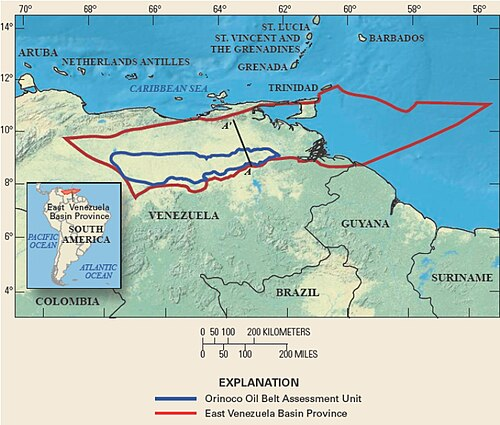
Geographically, Venezuela sits astride the Caribbean Basin, proximate to U.S. maritime approaches, the Panama Canal sea lanes, and northern South America. Historically, the Caribbean has been viewed by Washington as a vital security buffer, a perception dating back to the Monroe Doctrine and reinforced during the Cold War. Instability or hostile external influence in this space has therefore been treated as a strategic concern rather than a distant problem.
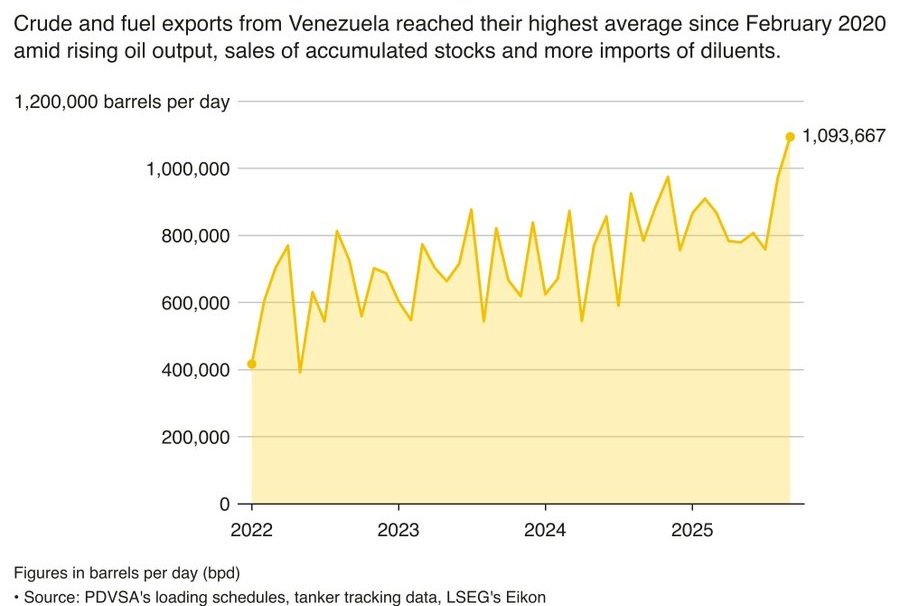
Energy has amplified this importance. For decades, Venezuela was one of the world’s leading oil exporters and a major supplier to the United States. The country’s heavy crude shaped refinery investments in the U.S. Gulf Coast, creating deep interdependence. Control, access, and alignment regarding Venezuelan energy resources continue to matter in global oil markets.
Ideologically, Venezuela under Hugo Chávez positioned itself as the spearhead of a left-wing, anti-imperialist movement in Latin America. Through initiatives such as ALBA (Bolivarian Alliance for the Peoples of Our America) and subsidised oil diplomacy, Caracas sought to reshape regional politics and reduce U.S. influence. While this project has weakened, its legacy persists in the polarisation of regional alignments and in Washington’s perception of Venezuela as a defiant outlier.
Internal Collapse and Regime Survival
The Venezuelan crisis is often attributed to ideological excess, particularly the failures of “21st century socialism.” While policy choices under Chávez and Nicolás Maduro were undeniably damaging, a more nuanced analysis reveals a complex interaction of structural dependence on oil, institutional decay, elite fragmentation, and external pressure.
PC: National Geographic
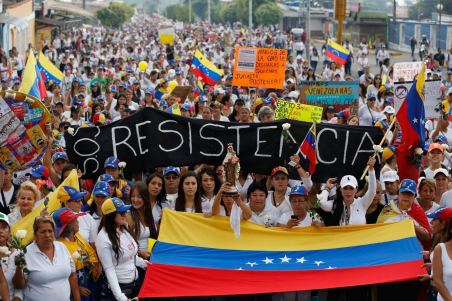
Oil dependency created a rentier state highly vulnerable to price shocks. When global oil prices fell after 2014, the fiscal foundation of the Venezuelan state collapsed. Instead of reforming, the Maduro government resorted to monetary expansion, price controls, and repression, triggering hyperinflation and mass emigration.
Institutionally, the erosion of checks and balances, politicisation of the armed forces, and weakening of professional bureaucracies hollowed out state capacity. Yet paradoxically, these same processes strengthened regime survival. Control over the military, intelligence services, and key economic chokepoints allowed the Maduro government to withstand both domestic protests and external pressure.
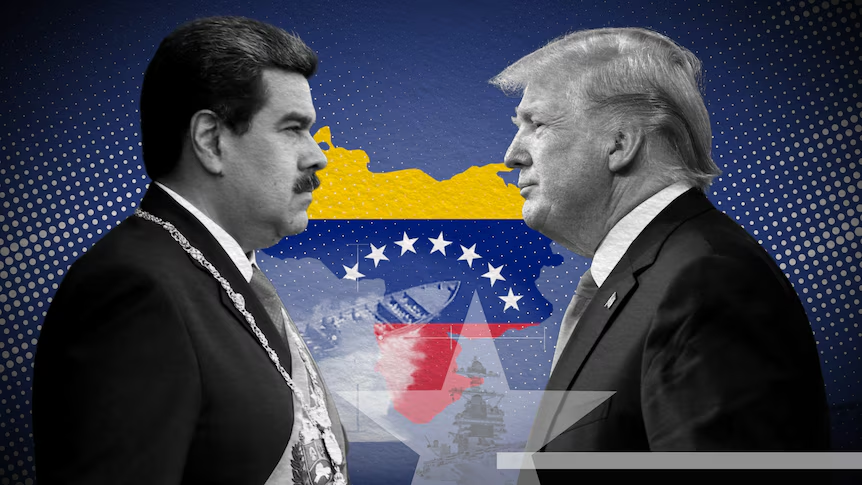
Externally backed opposition movements, including the recognition of an alternative interim president by the United States and several allies, failed to translate diplomatic support into effective internal leverage. This outcome underscored a recurring lesson in international politics: regimes with coercive capacity and elite cohesion can survive even profound economic collapse if external intervention remains limited or fragmented.
U.S. Power, Sanctions, and Precedent
The United States has demonstrated from Chile in 1973, to Grenada in 1983, and Panama in 1989 that its tolerance to outside interventions cannot be taken for granted. The US has historically treated the Western Hemisphere as a core strategic space where hostile political alignment is unacceptable.
The United States’ approach to Venezuela has combined economic sanctions, diplomatic isolation, and rhetorical support for regime change. This strategy reflects both continuity and constraint in U.S. hemispheric policy.
On one hand, sanctions and recognition of opposition figures demonstrated Washington’s willingness to use coercive tools to shape political outcomes in its near abroad. The extensive use of financial sanctions against Venezuela’s oil sector aimed to deprive the regime of resources and force elite defections. In this sense, Venezuela became a test case for “maximum pressure” short of military intervention.
On the other hand, the limits of U.S. power were equally evident. Despite severe economic damage, sanctions did not produce regime collapse. Instead, they incentivised the Maduro government to seek alternative partnerships, deepen illicit networks, and rely on non-Western actors. Regional support for U.S. policy was uneven, reflecting Latin America’s historical sensitivity to interventionism.
PC: Al Jazeera
The Venezuelan case thus sets an ambiguous precedent. It signals that the United States retains significant coercive capacity in the Western Hemisphere, particularly through financial dominance. Yet it also reveals diminishing effectiveness when sanctions are not paired with credible political pathways or when rival powers provide lifelines. For the broader international system, this raises questions about the future utility of sanctions as a primary instrument of statecraft.
Extra-Regional Powers and Hemispheric Contestation
Venezuela has emerged as a focal point for extra-regional engagement in Latin America, especially by Russia, China, and Iran. Russia’s involvement has been strategic rather than economic. Through military advisers, arms sales, and symbolic deployments, Moscow has sought to demonstrate its ability to challenge U.S. influence close to American shores. Venezuela offers Russia geopolitical signalling value disproportionate to its economic returns.
China’s role has been more substantial economically. Through oil-backed loans and infrastructure projects, Beijing became Venezuela’s largest creditor during the Chávez era. While China has since reduced its exposure, its engagement illustrates how economic statecraft can extend influence without overt military presence. Importantly, China has been cautious, prioritising debt recovery and stability over ideological alignment.
Iran’s engagement reflects a shared experience of sanctions and isolation. Cooperation in energy, trade, and sanctions evasion has been mutually beneficial, albeit limited in scale. For the United States, such linkages reinforce concerns about the erosion of sanction regimes.
Collectively, these engagements underscore a key shift: the Western Hemisphere is no longer an uncontested U.S. sphere. While Washington remains dominant, its exclusivity has eroded. Venezuela exemplifies how regional crises can become entry points for multipolar competition. Also, Venezuela’s role in narcotics trafficking, organised crime and the erosion of institutional controls, adding a security dimension to what had initially been an ideological disagreement.
Regional Order and Latin American Responses
Latin American responses to Venezuela reveal deep divisions over sovereignty, democracy, and intervention. Some governments aligned with U.S. efforts to isolate Maduro, framing the crisis as a moral and democratic imperative. Others emphasised non-intervention and dialogue, wary of legitimising external regime change.
This divergence reflects broader trends in Latin American diplomacy: a resurgence of sovereignty norms, fatigue with U.S. interventionism, and limited appetite for collective enforcement mechanisms. Regional organisations proved unable to resolve the crisis, highlighting institutional weakness. For the Western Hemisphere, Venezuela represents a stress test of regional order. The inability to manage the crisis internally has increased reliance on extra-regional actors and reduced confidence in collective security and governance mechanisms.
Implications for India: Strategic and Normative Dimensions
Although India has limited direct stakes in Venezuela, the broader implications are significant across several dimensions.
Energy Security: India once imported substantial quantities of Venezuelan crude, particularly heavy grades suitable for Indian refineries. Sanctions and production decline disrupted these flows, compelling India to diversify suppliers. The episode reinforced the vulnerability of energy imports to geopolitical disruptions and highlighted the importance of diversified sourcing and strategic petroleum reserves.
Norms of Sovereignty and Non-Intervention: India has traditionally emphasised sovereignty and non-intervention, shaped by its own post-colonial experience. The Venezuelan case aligns with India’s cautious stance on externally driven regime change. While New Delhi did not endorse the Maduro government’s policies, it avoided overt support for regime change, reflecting consistency with its broader diplomatic principles.
Relations with the United States: As India’s strategic partnership with the United States deepens, cases like Venezuela illustrate potential divergences. Washington expects alignment on issues framed as democracy versus authoritarianism, while India prioritises strategic autonomy. Managing such differences without undermining broader cooperation will remain a recurring challenge.
Engagement with Russia and the Global South: India’s continued engagement with Russia and advocacy of multipolarity finds resonance in the Venezuelan context. The ability of sanctioned states to survive with alternative partnerships underscores both the resilience and the risks of multipolar alignments. For India, this reinforces the value of diversified relationships while cautioning against over-reliance on politically unstable partners.
Sanctions and Economic Statecraft: The Venezuelan experience offers lessons on sanctions efficacy. For India, which could itself face coercive economic measures in certain contingencies, understanding how states adapt to sanctions is strategically relevant. The limits of sanctions in producing political outcomes suggest that resilience, diversification, and domestic capacity remain critical.
Venezuela as a Precedent in a Multipolar Order
At a systemic level, Venezuela illustrates the transitional nature of the current international order. The United States remains the most powerful actor in the Western Hemisphere, yet its ability to shape outcomes unilaterally has diminished. Extra-regional powers can exploit regional crises, not to replace U.S. dominance, but to complicate it.
For middle powers like India, this environment offers both risks and opportunities. The erosion of rigid spheres of influence creates space for diversified engagement, but it also increases instability and uncertainty. Venezuela’s prolonged crisis demonstrates how local failures can acquire global significance in a contested order.
Conclusion
Venezuela’s trajectory from regional energy power to geopolitical battleground encapsulates the evolving dynamics of power and precedent in the Western Hemisphere. The crisis highlights the limitations of coercive statecraft, the persistence of sovereignty norms, and the increasing influence of extra-regional actors in traditionally closed strategic spaces.
For India, Venezuela is less about immediate bilateral stakes and more about systemic lessons. Energy vulnerability, sanctions resilience, strategic autonomy, and the management of great power competition are all themes that resonate with India’s own strategic environment. As India navigates a multipolar world, the Venezuelan case underscores the importance of principled pragmatism: engaging with global power shifts without becoming entangled in distant conflicts, while safeguarding core interests and normative commitments.
In this sense, Venezuela is not merely a Latin American crisis. It is a mirror reflecting the challenges of power, precedent, and policy in an increasingly fragmented international system— one that India must understand carefully as it shapes its role on the global stage.
The US interventions in Afghanistan and Iraq, alongside sustained pressure on Iran, are frequently cited examples. Venezuela now appears to sit within this same category of strategic exception. What is clear is that Venezuela’s population, estimated at around 27 million, continues to face uncertainty.
Title Image Courtesy: ABC News
Disclaimer: The views and opinions expressed by the author do not necessarily reflect the views of the Government of India and the Defence Research and Studies. This opinion is written for strategic debate. It is intended to provoke critical thinking, not louder voices.


Bibliography
1. Bull, Hedley. The Anarchical Society: A Study of Order in World Politics. Columbia University Press.
2. Gilpin, Robert. War and Change in World Politics. Cambridge University Press.
3. Levitsky, Steven, and Daniel Ziblatt. How Democracies Die. Crown Publishing.
4. OPEC. Annual Statistical Bulletin. Various editions. 5. Sachs, Jeffrey. “Sanctions and Sovereignty in a Multipolar World.” World Politics Review.
6. U.S. Energy Information Administration. Country Analysis Brief: Venezuela.
7. United Nations Economic Commission for Latin America and the Caribbean (ECLAC). Economic Survey of Latin America.
8. Waltz, Kenneth. Theory of International Politics. McGraw Hill.
9. Zakaria, Fareed. The Post-American World. W.W. Norton & Company.
10. Indian Ministry of External Affairs. Annual Reports.