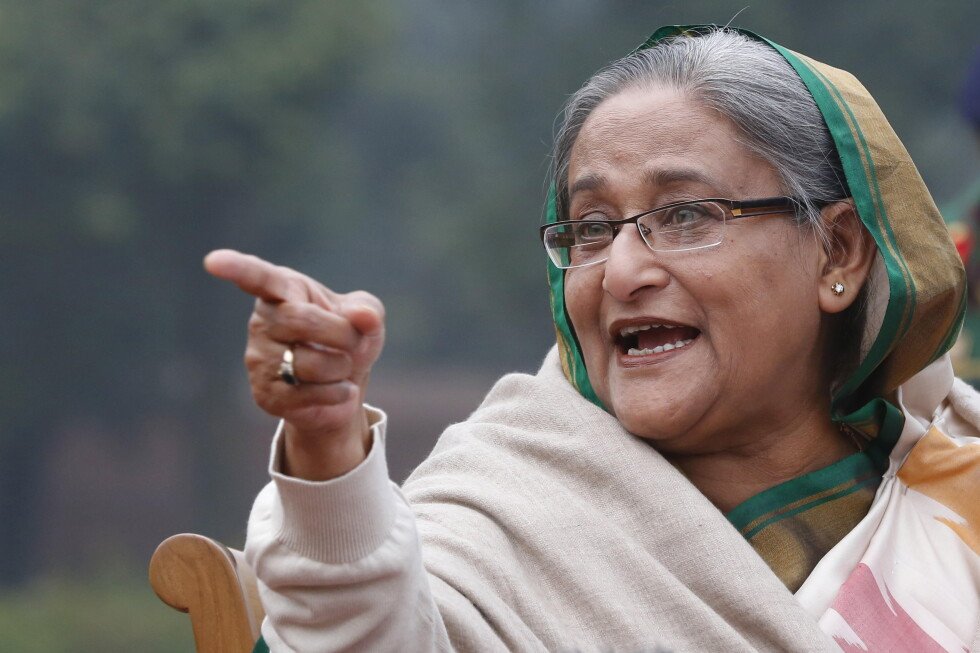
Ousted former Prime Minister Sheikh Hasina, currently in India, has announced plans to return to Bangladesh on December 16, 2026 (Victory Day), despite facing a death sentence from Bangladesh’s International Crimes Tribunal and a ban on her Awami League party.
Arson in 28 districts, 4 people dead. A bus worker was killed when his vehicle was set alight. Set against the 1,400 or so people the United Nations estimates died in the 2024 uprising, the toll in Bangladesh since November 14 looks modest. That is exactly why it deserves a careful read. Small, well-placed violence tells you what a political class fears, and who is testing it.
The spark was a passport. Sheikh Hasina told Reuters on November 9 that she wanted to come home and surrender before a court. Dhaka rejected her request for a new passport and identity card, and the protests followed. The government’s legal position is tidy. The International Crimes Tribunal sentenced her to death in absentia for crimes against humanity over the 2024 crackdown, and she can return only through extradition from India.
Dhaka’s refusal to grant Hasina travel documents gave the banned Awami League a rallying grievance, putting the government in a no-win bind over her potential return
The prosecutor who won that verdict says it will be carried out if she lands in Bangladesh. Her Awami League answered with a week of rallies and a nationwide shutdown on November 19, which bit in some places and fizzled in others. Notice what her announcement does. Whatever Dhaka replies, she gains something. Refuse her and her party has a grievance to organise around. Let her in, and the government owns everything that follows: a trial, an execution or a funeral procession.
Whether she truly means to travel is unclear. A senior Bangladeshi diplomat told Al Jazeera he reads the talk of return as a device to rally supporters and unsettle the country. Geography tells its own story. The worst trouble is clustered in Gopalganj, Faridpur and Madaripur, all Awami League strongholds. Khandakar Tahmid Rejwan of Independent University, Bangladesh, reads this as localised unrest rather than a national wave.
The party can still hurt the state. It cannot yet move the country. Even so, consider what a banned party, with leaders jailed or abroad, still managed: attacks on police stations and banks, burnt buses, a reported hospital fire, and arson at 22 Grameen Bank branches.
Shutting a party with a genuine grassroots base out of legal politics risks pushing frustrated supporters toward underground violence rather than peaceful accountability
Dhaka says opposition leaders abroad are inciting it. In the public reporting so far, there is more accusation than evidence, and rumour grows in that gap.
The episode that should worry Dhaka more than what happened in Narail. Two activists of the ruling Bangladesh Nationalist Party (BNP) were killed. In retaliation, BNP supporters burned more than a dozen homes belonging to Awami League families, and one resident told AFP that as many as 50 houses were damaged.
The first killings came from an insurgent party. The burning came from the government’s own side. Bangladesh has a long habit of the winner taking office while local cadres take the neighbourhood, and each such night wears down the one thing a government cannot do without: its claim to be the referee.
Prime Minister Tarique Rahman’s talks with Jamaat-e Islami leader Shafiqur Rahman are a sensible instinct. But a front built mainly to contain the Awami League is a narrow base. Jamaat has a disciplined grassroots network of its own, and that cuts both ways.
Then there is the ban. Hasina’s nearly fifteen years of unbroken rule drew heavy criticism from rights groups, and the families of the 2024 dead are owed accountability. None of that changes the arithmetic.
A party with a real base, shut out of legal politics, has fewer ways to speak, and arson is one of them. That is an explanation, not an excuse. Those who burned buses should be prosecuted. But a state that treats every Awami League supporter as a suspect will produce the very cadre it fears.
With inflation, fuel shortages and garment-worker protests already testing the ten-month-old government, political arson further threatens Bangladesh’s fragile supply lines
Some international voices have urged letting the party return to politics once those responsible for the 2024 atrocities are tried and sentenced. Dhaka should at least keep that door visible.
Underneath all this sits a tired economy. Nearly ten months into its term, the government faces inflation, stagnation and a fuel crisis, and workers in the world’s second-biggest garment-exporting country were already protesting over wages earlier this month.
Political violence is cheap to start and expensive to repair, and every burned bus lands on the same fragile supply lines. A government under that strain will find it easier to blame a neighbour than to explain a fuel queue.
That neighbour is India. Rahman has blamed the country across the border without naming it, and Hasina has lived there since August 2024. Delhi’s public choices look poor: hand her over, and it abandons an old partner; keep her, and it carries the blame for every fire.
India’s real interest is a stable Bangladesh, not a vindicated Hasina. Two steps would serve that. Delhi should make sure, quietly and verifiably, that no mobilisation is directed from Indian soil. And it should open a genuine conversation on the extradition route Dhaka itself invokes, even if the answer is slow and uncomfortable.
Dhaka, for its part, should drop the language of conspiracy, show what it knows about who ordered the violence, and restrain its own cadres.
Her return, reportedly planned for December, is the date to watch. She may never board a plane. The violence has already shown what her name can still do.
Title Image Courtesy: AP News
Article Courtesy: Raksha Anirveda
Disclaimer: The views and opinions expressed by the author do not necessarily reflect those of the Government of India or the Defence Research and Studies.