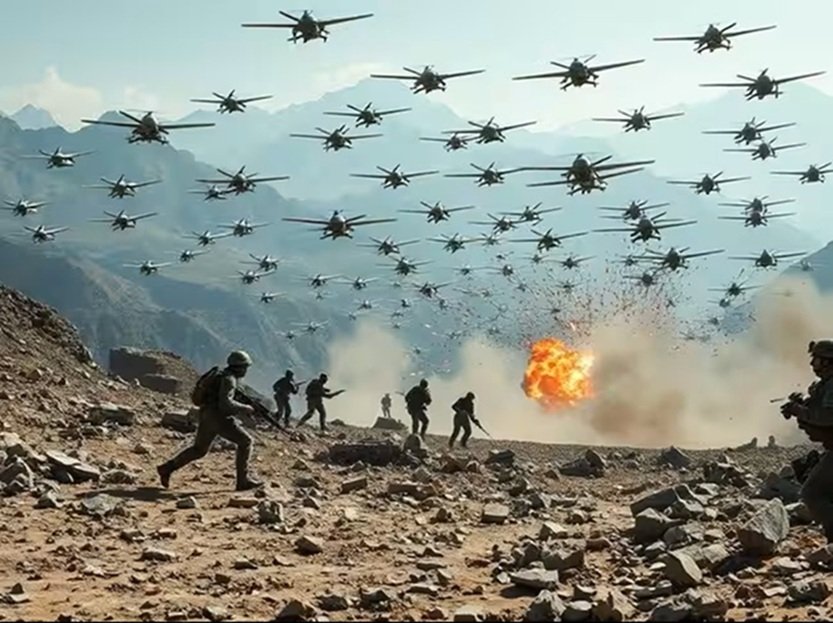
The Western international order is transitioning into a fragmented, multi-aligned landscape that is against globalism, characterised by great-power rivalry and transactional diplomacy with the rise of assertive middle powers.
Introduction: Oil as the Ultimate Catalyst for Change
There is arguably no more brutally effective lens through which to observe the true face of geopolitics than a sudden, systemic energy crisis. When access to hydrocarbons is unexpectedly and severely threatened, the grand diplomatic speeches, historical alliances, and sweeping commercial treaties all crash against the same unforgiving wall of reality. The question always boils down to this: just how much economic pain is a sovereign state genuinely willing to endure in order to remain faithful to its stated principles? If one closely examines the divergent ways in which Washington and Paris reacted to the recent, crippling supply tensions in the global diesel market, the contrast is not merely striking. It is entirely emblematic of a shifting world order.
Let us cast our minds back to the pivotal events of the 9th of October 2026. On that day, Donald Trump caught the international community completely off guard by announcing that the Russian Federation would immediately inject more than 300,000 tonnes of diesel into the American and international markets, an amount roughly equivalent to 2.25 million barrels. To facilitate this massive logistical and commercial manoeuvre, he did not hesitate to temporarily relax the stringent American sanctions that had hitherto paralysed the trade of Russian fossil fuels. His primary, overriding objective was simple: to break the back of skyrocketing prices at the petrol pump, which were threatening domestic political stability and consumer confidence.
This unilateral decision, which understandably provoked the fierce ire of Ukrainian President Volodymyr Zelensky, speaks volumes about the current trajectory of American foreign policy. For Washington, guaranteeing a vital strategic resource at an affordable price for the American citizen now takes precedence, at least temporarily, over the geopolitical coherence of an economic punishment inflicted upon Moscow. The ideological rigidities of the past have been swiftly replaced by a ruthless, transactional domestic pragmatism.
Just a few days prior to this American pivot, the French government was playing an entirely different geopolitical partition. Paris officially announced the opening of its national energy valves, authorising the release of ten million barrels of diesel drawn directly from its strategic national reserves. However, this was no solitary, sovereign gamble. The initiative was deeply embedded within a collective, highly coordinated effort orchestrated by the G7 to pacify overheating global markets. As Prime Minister Sébastien Lecornu meticulously explained at the time, the underlying rationale was to trigger a coordinated drop in the price per litre, estimated at between 12 and 18 cents, in order to provide immediate relief to struggling motorists and hauliers, without violating the established sanctions regime.
Naturally, one cannot compare these two gestures stroke for stroke; they are not strictly equivalent. The United States quite literally reopened a commercial channel with a designated geopolitical adversary, whilst France played the quintessential team game within the G7 framework to stabilise the systemic macroeconomic ship. Yet, this glaring discrepancy is intellectually fascinating because it lays bare two diametrically opposed visions of what constitutes international power in the twenty-first century.
On one side, we witness an American pragmatism that demands immediate, tangible results, even if it necessitates negotiating directly with a sanctioned autocracy. On the other, we see a European approach, viscerally attached to multilateral teamwork, to the unwavering strictness of legal sanctions, and to the preservation of a world governed by common, predictable rules.
The central thesis defended in this analysis is that this fracture tells a much broader and more profound story. Today, France and the wider European Union appear almost as the last remaining resistors of a regulated, institutionalised globalisation, standing firm against a United States that has fully embraced a pragmatism rooted in pure, unadulterated haggling. This principled stance is entirely to Europe’s credit, yet it simultaneously generates a formidable strategic rigidity, all against a deeply concerning backdrop of relative economic deceleration. The fundamental question, therefore, is no longer whether Europe still believes in multilateralism, but whether it still possesses the financial, industrial, and material means to afford the luxury of its soaring diplomatic ambitions.
From the Morality of Sanctions to Chequebook Diplomacy: The American Pivot
Ever since Russian tanks rolled across the Ukrainian border in February 2022, the overarching strategy of the Western alliance was crystal clear: to completely drain Moscow’s financial lifeblood. The foundational logic of this economic warfare was relatively straightforward. If the financial and systemic cost of the war became too exorbitant for Russia, the Kremlin would eventually be forced to revise its military calculations. Consequently, the European Union implemented a draconian ban on Russian crude oil and refined petroleum products arriving by sea, setting a clear, unwavering objective to wean itself definitively off Russian energy. By June 2026, these sweeping sanctions had been officially prolonged until the summer of 2027, demonstrating a seemingly ironclad European resolve.
However, for this type of punitive geopolitical strategy to function effectively and maintain its deterrent value, the coalition enforcing it must remain utterly irreproachable. If an alliance proclaims loudly that military aggression will incur an astronomical economic price, it cannot simply throw in the towel the moment energy prices become politically uncomfortable at home. Without a willingness to absorb domestic pain, the entire architecture of deterrence evaporates.
It is precisely within this fragile psychological framework that Trump’s geopolitical poker move in October 2026 raises profound questions. By authorising the importation of Russian diesel until April 2027, with thinly veiled promises of further extensions, simply to drag down a domestic gallon price that was hovering dangerously close to $6.28, the message broadcast to the world was unequivocal. America is not explicitly stating that it is abandoning the sanctions regime entirely, but it is demonstrating a willingness to pause it the moment its own domestic wallet suffers too acutely. This marks the triumphant return of classical realpolitik: a head of state must, above all else, protect their domestic factories, their supply chains, and their citizens.
We are thus witnessing a transition from a diplomacy based on ideological blocs and shared moral values to a diplomacy that is purely transactional. It matters little to the current administration that the agreement with Russia causes immense friction in European capitals or in Kyiv. What matters to Trump is the immediate, tangible domestic dividend.
From a purely macroeconomic perspective, energy experts at Reuters noted the irony of the situation. The Russian volumes announced, whilst politically explosive, actually carry little weight compared to massive American domestic exports, which already stand at roughly 1.5 million barrels per day. The enduring impact on structural market prices remains highly debatable. Yet, the geopolitical shockwave is monumental. By explicitly decoupling its short-term energy requirements from the collective punishment strategy deployed against Russia, Washington has shattered the long-standing taboo of unconditional Western solidarity.
France: Playing the Collective Game Rather than Pacting with the Devil
In Paris, the strategic approach resides at the absolute antipodes of the American methodology. By unlocking its ten million barrels, France is strictly applying the classical, orthodox doctrine of collective security. There is absolutely no question of engaging in backdoor negotiations with Moscow. Instead, the French state utilises the established, institutional fire extinguisher provided by the international community, specifically the G7, to douse the flames of inflation and protect French enterprises and households.
This represents a fundamental, irreconcilable difference in geopolitical philosophy. Strategic reserves exist precisely for this purpose: to allow a nation to weather a severe macroeconomic storm without having to betray its historical allies or compromise its core diplomatic values overnight. By leaning on these reserves, France seeks to preserve the coherence of its foreign policy whilst artificially dampening the domestic cost of that very coherence.
One must be careful, however, not to over-interpret this gesture. To state that France has opened its reserves does not imply that the nation would run entirely dry in three months if it were suddenly cut off from the rest of the world. The European Union and the International Energy Agency mandate strict security buffers, specifically, the equivalent of 90 days of net imports. Yet, these are global, aggregated volumes. In reality, a genuine physical shortage depends on a multitude of complex variables: the specific chemical nature of the stored products, the operational state of domestic refineries, distribution bottlenecks, and the precise nature of the crisis. Furthermore, the 10 million barrels released by Paris represent merely a fraction of the country’s total strategic stockpiles.
Nevertheless, this mechanism highlights a deeply uncomfortable truth. An emergency stockpile serves to absorb a shock, not to produce sustainable wealth. When a sovereign state is forced to dip into its ultimate reserves merely to calm volatile markets, it is a tacit admission that the nation remains terribly vulnerable to the unpredictable convulsions of the globalised world.
Ultimately, the United States and France are confronting the exact same problem of structural global dependency, but they are utilising two vastly different toolkits. America cuts straight to the chase, slicing through diplomatic red tape to negotiate directly with an adversary if it serves its immediate interests. France and Europe, conversely, attempt to bandage the wound with their strategic reserves in order to avoid fracturing a beautifully crafted diplomatic unity. Yet, by perpetually playing on the defensive, whilst other global powers aggressively redraw the maps of global commerce, Europe risks cementing its reputation as a continent that knows exactly how to manage a crisis, but has entirely lost the raw power required to prevent one.
Europe: The Ultimate Fortress of a Rule-Based World?
The term globalism is frequently utilised as an imprecise catch-all phrase. However, if we define it rigorously as a steadfast belief in a highly interdependent world, meticulously managed by supranational institutions, common international law, and multilateral consultation, then the current European political landscape proves that the continent still believes in it with an almost religious fervour.
The European Union treats the energy crisis not as a chaotic free-for-all, but as a complex legal and collective challenge that must be resolved through legislation. This is the very essence of the ambitious European plan of 2025 to definitively eliminate reliance on Russian gas and oil by the end of 2027. Europe asks its sovereign member states to subordinate their immediate, panicked national emergencies to the greater common good, even if it means paying a premium in the short term.
It is precisely here that the ideological chasm with the America of October 2026 widens into an abyss. By brokering a side deal for Russian diesel, Washington demonstrates that its immediate commercial and political interests will perpetually trump the abstract rules of the international community. Consequently, Europe finds itself standing almost entirely alone, carrying the flickering torch of a world order founded upon institutional principles rather than raw power dynamics.
This does not imply, of course, that the United States is retreating into isolationism or withdrawing from global trade. Quite the contrary. Trump’s diesel agreement is the ultimate proof that America continues to play the game of globalisation. But it twists and bends that globalisation entirely to its own asymmetric advantage, whereas Europe exhausts itself trying to regulate and civilise it.
The underlying tragedy is that an international order based on noble, equitable rules can only survive if it consistently delivers prosperity to its citizens. When energy bills explode, when heavy industry relocates, and when the working class suffers, attempting to explain to citizens that they are paying the price for high moral values becomes politically explosive, fuelling populist backlashes. Multilateralism must urgently prove that it is not merely a synonym for perpetual economic sacrifice.
The Silent Relativisation: When Europe Loses its Economic Footing
It is impossible to fully comprehend this strategic European paralysis without lifting the bonnet and examining the engine of the European economy. In this regard, the much-discussed report by Mario Draghi in the autumn of 2024 served as a brutally cold shower for policymakers in Brussels and Paris.
Draghi articulated with clinical precision what economists had whispered for years: Europe is structurally falling behind. Whereas in 1995, the labour productivity of the European Union rivalled that of the United States, hovering at around 95 percent, it has today plummeted below the 80 percent mark. This is the crux of the existential European crisis. Productivity is not merely dry economic jargon; it is the fundamental engine that allows a society to sustainably increase real wages, finance world-class hospitals, fund the green transition, and invest in future technologies. A nation can always borrow money for a time to maintain the illusion of its standard of living, but without creating real, tangible wealth, it will inevitably hit a fiscal brick wall.
Consider the stark macroeconomic data from the third quarter of 2025. Whilst American real GDP per capita climbed by 0.9 percent, France languished at a mere 0.4 percent. Europe is not collapsing overnight, but it is demonstrably failing to keep pace with an American juggernaut that continues to innovate, attract capital, and scale technologies at an unprecedented rate.
This presents a terrifying strategic conundrum. Europe desperately wishes to remain a moral superpower, boasting generous public services, a highly protective welfare state, and a demanding, ethical diplomacy. But to finance this utopian model, it requires an economy forged of steel. If the productivity gap with the United States continues to widen, Europe will soon lack the financial ammunition required to pay for its climatic, social, and diplomatic principles.
France serves as the perfect, poignant example of this tension. The country possesses incredible structural assets: a robust nuclear infrastructure, brilliant engineers, and a highly respected diplomatic corps. Yet, the state cannot perpetually write cheques funded by debt to mask a chronic lack of underlying growth. This is where the divergence with the United States becomes painful. Faced with a crisis, Washington has the fiscal and industrial elbow room to aggressively alter reality. France, meanwhile, respects the rules meticulously, but watches its influence over the course of world events slowly evaporate.
The American Economy: Unyielding Strength Beyond the Political Myths
In the interest of rigorous analysis, it is necessary to dispel a persistent urban legend. No, the standard of living for every single American did not miraculously leap by 10 percent solely due to the magic of Donald Trump’s policies. Such an assertion is a gross statistical caricature.
However, the actual empirical data remains deeply impressive and warrants close attention. According to the United States Federal Reserve’s Survey of Consumer Finances, the real median family income, which is the exact midpoint of the socioeconomic ladder, climbed by an impressive 7 percent between 2022 and 2025, adjusting for inflation, to reach $82,200. Even acknowledging the inevitable economic fluctuations, including a sluggish 2024 that struggled to recapture pre-pandemic momentum, the overarching macroeconomic trend proves that the American economy consistently manages to generate genuine, tangible purchasing power for its vast middle class.
Naturally, this picture is not universally rosy. Whilst nominal wages have risen, the structural cost of living, particularly regarding healthcare, higher education, and housing, has also skyrocketed, and deep-seated inequalities in accumulated wealth remain a gaping wound in the American social fabric. The Fed noted that whilst incomes rose, median net wealth only increased by a marginal 2 percent, and the proportion of highly leveraged families grew concerningly.
Nevertheless, the fundamental fact remains. America generates sufficient aggregate wealth to absorb massive geopolitical shocks, granting Washington a monumental freedom of action on the international stage. Meanwhile, France is forced to fight a desperate war on multiple fronts: attempting to save its generous social security system, desperately trying to reindustrialise its heartlands, and fighting to maintain a voice in global diplomacy. Europe’s relative decline stems not from the fact that the United States is a flawless utopia, but from Europe’s chronic, systemic inability to transform its beautiful social models into genuine, aggressive economic dynamism.
The Cost of Multilateralism: A Noble Virtue or a Strategic Millstone?
Refusing to purchase Russian fuel in order to remain morally upright and faithful to international law is undeniably noble. But this geopolitical virtue comes at a staggeringly high price. It is paid for daily in inflated transport costs, in the slow asphyxiation of energy-intensive industries, such as the German and French chemical sectors, and in the insidious erosion of household purchasing power through inflation.
The American government, facing this dilemma, made a decisive, ruthless choice. It preferred to temporarily dent its diplomatic reputation rather than allow its domestic economy to suffocate under the weight of high energy prices. One may categorise this as cynical, selfish, or short-sighted, but it is undeniably, brutally effective in the short term.
If Europe wishes to avoid becoming a mere footnote in 21st-century history, it cannot content itself with delivering moral lectures to the rest of the world. Proclaiming grand, universal principles is entirely useless if one lacks the hard industrial, military, and energy power to back them up. As Mario Draghi so urgently highlighted, it is time for a brutal awakening. Europe must invest massively, deregulate its suffocating internal market, foster disruptive innovation, and put an end to a system where it takes three years to make a decision that other superpowers execute in three days.
Playing the collective game is not inherently a weakness; the G7 proved its efficacy with the coordinated release of strategic reserves. However, when multilateral cooperation becomes a convenient excuse for bureaucratic sluggishness, institutional paralysis, and an aversion to risk, it morphs into a heavy millstone. The grand challenge for France and Europe is not to abandon their cherished values, but to stop treating them as a blind, inflexible religion. Europe must rediscover a sense of strategic agility, learning once again how to negotiate with teeth and exert genuine leverage. Otherwise, the continent will end up as a beautifully curated museum of geopolitics: housing very noble principles, but wielding absolutely no real power.
Conclusion: Europe, a Relic of Yesterday or a Power of Tomorrow?
Ultimately, the great diesel affair of October 2026 will serve as a magnifying glass for future historians. Trump’s America emerges from it entirely uninhibited, perfectly willing to smash moral locks and bypass international sanctions to secure a rapid supply of resources and pacify its domestic electorate. Standing in stark contrast, France and its G7 partners embody institutional constancy, preferring to drain their own strategic reserves rather than betray an established, rules-based world order.
In this shifting geopolitical landscape, yes, Europe increasingly resembles the last great bastion, the final defender of a world governed by predictable laws and multilateral institutions. This is a source of immense historical pride, yet it is simultaneously our greatest Achilles heel. For beautiful principles and noble treaties cannot hold the line for long when the underlying economic engine begins to fail. The stagnation of European productivity, especially when juxtaposed against the relentless dynamism of an America that, despite its deep internal fractures, continues to boost the real income of its population, must serve as a profound electroshock. France is not fundamentally weak simply because it opens its reserves, just as America is not inherently genius because it strikes a cynical deal with Moscow. But Europe must urgently, desperately prove that its strict adherence to the rules does not condemn its economy to perpetuals.
Title Image Courtesy: FISMA
Disclaimer: The views and opinions expressed by the author do not necessarily reflect those of the Government of India or the Defence Research and Studies.