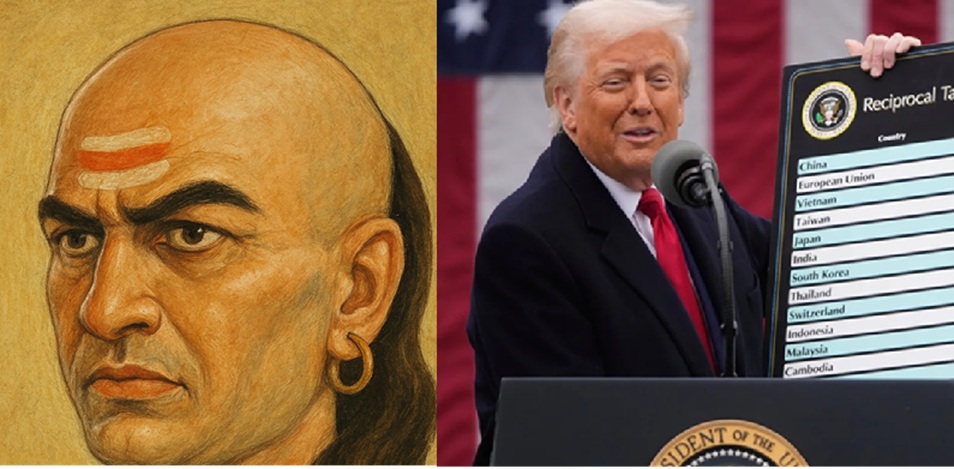
This article, ‘Mandala Theory Meets Washington DC’, applies Arthashastra as an analytical lens to interpret state behaviour and governance choices in the United States across three political phases: Donald Trump (2017–2021), Joe Biden (2021–2025), and Donald Trump’s second term beginning in 2025. It frames U.S. decisions as modern manifestations (or deviations) of Kautilyan doctrines, especially Mandala Theory, Sadgunya, Upayas, Dandaniti, and the state’s reliance on economic resilience and intelligence as instruments of power. The core argument is that many contemporary U.S. policy choices, whether in foreign policy, domestic governance, immigration, trade, military posture and diplomacy, can be mapped onto or analysed based on Kautilya’s teachings to reveal continuities, misapplications and strategic trade-offs that transcend political ideology. A central thread is Indo-Pacific power geometry; China as a natural rival and India as a balancing partner through the Quad, alongside alliance contrasts via NATO and resource/chokepoint cases like Greenland and the Panama Canal. The findings assess Trump I as Danda/Bheda-heavy, Biden as Sama/Sandhi/Samsraya-oriented, and Trump II as reverting toward Danda, concluding that outcomes hinge on balance, legitimacy and institutional integrity.
Introduction
1. The Arthashastra, composed by the ancient Indian strategist and royal advisor Kautilya (also known as Chanakya or Vishnugupta), is one of the earliest known treatises on statecraft, economics, military strategy, espionage and governance. Written around the 3rd– 4th century BCE, its pragmatic, often realpolitik-driven doctrines offer a rich framework for analysing the behaviour of modern nation-states[1].
2. This study undertakes a unique intellectual endeavour; applying the strategic principles embedded in the Arthashastra to critically analyse the governance of the United States across three presidential administrations – Donald Trump (2017–2021), Joe Biden (2021–2025) and Donald Trump’s second term beginning in 2025. It draws correlations between ancient principles and contemporary policies, identifying convergences and divergences across key domains like foreign policy, domestic governance, immigration, trade, military strategy and diplomacy[2].
3. The comparative analysis is structured around Kautilya’s core principles, particularly the Mandala Theory of interstate relations, Sadgunya (six diplomatic strategies), Upayas (four means of achieving objectives), Dandaniti (force and punishment) and the emphasis on economic resilience and espionage as tools of governance[3]. Each section will map policy decisions in the United States to these doctrines, assessing how closely they align with or deviate from Kautilya’s recommendations for kings and statesmen.
4. As modern democracies grapple with strategic competition, multipolarity and internal polarisation, revisiting ancient strategic wisdom like the Arthashastra can illuminate persistent patterns of power, ethics and survival in the international arena.
Understanding Kautilya’s Arthashastra
5. Kautilya’s Arthashastra is not merely a treatise on administration but a comprehensive manual for the ruler – a handbook detailing how to acquire, expand and consolidate power while maintaining internal order and public prosperity. The text synthesises multiple disciplines: political science, economics, sociology, law and military science[4]. The Arthashastra advocates for a realist approach to governance. Unlike idealistic doctrines that emphasise morality or divine authority, Kautilya’s recommendations are rooted in practicality. He argues that the state (rajya) must be preserved at all costs, as it is the foundation of human welfare.
6. Key doctrines relevant to this study are:-
(a) Mandala Theory. A geopolitical doctrine that divides neighbouring and distant kingdoms into concentric circles of enemies, allies and potential allies. The state must always assume that its immediate neighbour is a natural enemy, while a neighbour’s neighbour could be a friend.
(b) Sadgunya (Six-Fold Policy). The six strategic postures a state can adopt are peace (Sandhi), war (Vigraha), neutrality (Asana), alliance (Samsraya), dual policy (Dvaidhibhava) and preparing for war (Yana).
(c) Upayas (Four Means of Influence). Sama (conciliation), Dana (gifts), Bheda (division) and Danda (force). These are tools of both internal and foreign policy to secure compliance or strategic advantage.
(d) Dandaniti. The rule of law backed by force. Kautilya considers punishment essential for justice and order – a means of deterring rebellion and corruption.
(e) Economic Sovereignty. Kautilya dedicates substantial text to economic management – taxation, trade regulation, mining, agriculture and market oversight – asserting that the treasury is the backbone of the state.
(f) Espionage & Secret Service. One of the most sophisticated early treatments of intelligence operations. Spies are vital to internal stability and foreign infiltration.
This conceptual framework will serve as the lens through which each administration’s strategic choices are evaluated in the pages ahead.
U.S. Governance under Donald Trump (2017–2021)
7. The presidency of Donald J. Trump from January 2017 to January 2021 was marked by a sharp reorientation of American domestic and foreign policy. Trump’s administration operated under the banner of ‘America First,’ a doctrine that privileged national sovereignty, economic protectionism and strategic disengagement from multilateral obligations. Through the lens of Kautilya’s Arthashastra, this period offers multiple instances where Trump’s policies resonate with the strategic realism and nationalist statecraft advocated by Kautilya, while also highlighting some critical divergences.
8. Immigration and Internal Order (Dandaniti and Bheda). One of the cornerstones of Trump’s domestic policy was immigration restriction. The administration implemented a ‘zero tolerance’ policy that led to family separations at the border, attempted to end the DACA (Deferred Action for Childhood Arrivals) programme[5], banned travellers from several countries and pursued mass deportation programmes[6]. From a Kautilyan perspective, these actions align partially with Dandaniti (the rule of law backed by force), especially the emphasis on protecting internal order from perceived foreign disruption.
9. However, Kautilya also emphasised the strategic use of Bheda – the policy of division – to create internal dissension within enemy states. While Bheda was frequently applied to foreign adversaries, Kautilya also recommended its covert use internally to divide conspirators or corrupt officials[7]. Trump’s approach, which led to heightened polarisation and civil unrest, including the George Floyd protests and Capitol insurrection, arguably undermined the Arthashastra‘s counsel to preserve internal harmony through covert control and measured statecraft[8].
10. Economic Policy – Tariffs, Taxation and Deregulation (Danda and Economic Sovereignty). Trump’s economic nationalism manifested in aggressive tariff policies, particularly targeting China, with duties imposed on over $360 billion worth of goods[9]. This aligns with Danda (coercion) and Upayas, particularly Dana (incentives to U.S. manufacturers) and Danda (punishment to foreign competitors). The 2017 Tax Cuts and Jobs Act, which slashed corporate tax rates, reflects Kautilya’s principle that a prosperous private sector increases royal revenue indirectly. However, Kautilya warned against unsustainable reductions in state revenue and advocated a balance between wealth accumulation and redistribution. Critics argue the tax law disproportionately benefited the wealthy and ballooned the fiscal deficit, a variance with Kautilya’s model of prudent and redistributive economic management. While tax incentives to promote productivity are supported, the Arthashastra cautions against favouring elites to the detriment of the treasury balance and public equity.
11. Foreign Policy and the Mandala Theory. Trump’s foreign policy reshaped U.S. relations with allies and adversaries alike. Few examples are:-
(a) China. Designated as a strategic rival, subjected to tariffs, technology bans (e.g. Huawei) and diplomatic isolation. This aligns with Kautilya’s Mandala Theory, which warns that immediate neighbours are potential threats and must be counterbalanced through distant alliances (e.g. strengthening ties with India and Japan).
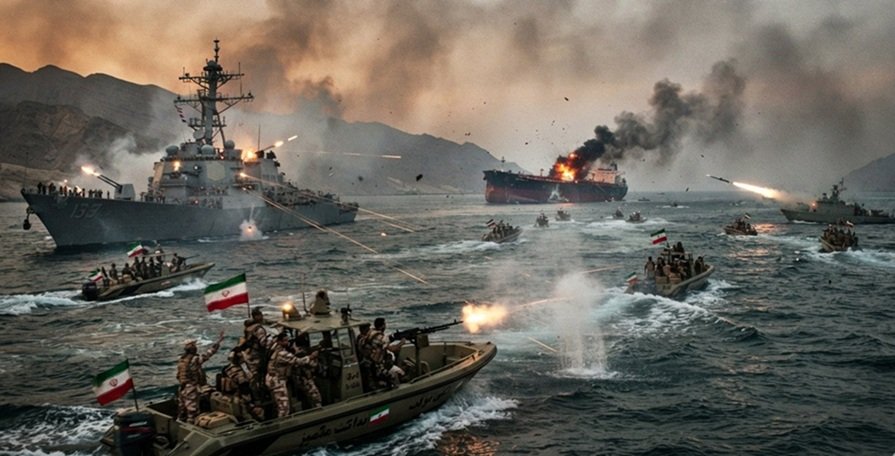
(b) Iran. The U.S. withdrew from the Joint Comprehensive Plan of Action (JCPOA – Iran Nuclear Deal) and applied ‘maximum pressure’ via sanctions[10]. This is a textbook Danda strategy – use of coercion and isolation to weaken an adversary.
(c) Venezuela. Support for opposition leader Juan Guaidó and sanctions on Nicolás Maduro mirror Kautilyan tactics of Bheda (causing division in enemy leadership) and Samsraya (supporting proxies).
(d) Israel. Unwavering support, including the relocation of the U.S. Embassy to Jerusalem, exemplifies Samsraya (forming alliances for strategic leverage).
(e) India. Strategic engagement with India as a counterweight to China, part of a Dvaidhibhava (dual policy) strategy – balancing confrontation with China and cooperation with India.
(f) Canada. Trump’s renegotiation of NAFTA into the USMCA[11] illustrates Danda and Dana used in sequence – pressure and bargaining leverage applied to secure more favourable terms, followed by Sandhi (settlement) to preserve continental economic integration. The approach aligns with Kautilya’s belief that treaties are instruments of advantage, not sentiments.
12. Arms Lobby and Military Posture (Force and Espionage). Trump expanded military budgets and championed arms sales globally, especially to Middle Eastern allies like Saudi Arabia[12]. This reflects Kautilya’s emphasis on maintaining military superiority and exporting weapons for profit and influence[13]. However, the Trump administration’s erratic diplomacy – withdrawing from the Kurds in Syria, hostility toward NATO – contrasts with Kautilya’s nuanced view that allies and vassals should be maintained through Sama (conciliation) and Dana (strategic support), not sudden abandonment.
13. Intelligence and Internal Surveillance. Trump’s open antagonism toward the intelligence community, particularly the CIA and FBI, represents a deviation from the Arthashastra‘s foundational principle of secret service as the lifeline of the state. While Kautilya emphasised the king’s supreme control over spies, he also advocated trust in their machinery and internal oversight – not public delegitimisation.
14. Summary. Trump’s first term frequently mirrors Kautilya’s emphasis on strength, coercion and pragmatic diplomacy. His policies on China, Iran and economic nationalism align with ancient doctrines of Danda, Mandala and Bheda. However, his disregard for internal harmony, legal stability and institutional trust presents a significant departure from the holistic realism of the Arthashastra.
U.S. Governance under Joe Biden (2021–2025)
15. The presidency of Joe Biden marked a strategic shift in tone and policy following the disruptive tenure of Donald Trump. Biden’s leadership emphasised the restoration of international alliances, multilateral diplomacy, social equity and a strong post-pandemic economic recovery. His governance model, more deliberative, institutionally driven and coalition-based, allows for a fresh application of Kautilyan principles that focus on state stability, consensus building and calibrated statecraft.
16. Immigration Reform and Internal Harmony (Sama and Dana). In contrast to Trump’s enforcement-heavy approach, Biden’s administration adopted a more reconciliatory immigration strategy[14]. Key moves included the preservation of DACA, halting border wall construction and proposing comprehensive immigration reform. These policies align with Sama (conciliation) and Dana (offering incentives), two of the Upayas for winning over disaffected populations without resorting to coercion.
17. Kautilya advised that the wise ruler should integrate outsiders who show loyalty, using social incentives and structured assimilation to reinforce stability; an approach that Biden’s moderate stance reflects. However, the administration still faced criticism for its handling of border surges and enforcement policies, revealing the enduring complexity of balancing compassion and order, even within a Kautilyan framework.
18. Economic Policy – Infrastructure, Redistribution and Recovery (Artha and Rajkosha). Biden’s economic policy, particularly the $1.9 trillion American Rescue Plan and $1.2 trillion Infrastructure Investment and Jobs Act, was focused on job creation, healthcare and public infrastructure[15]. Kautilya emphasised Rajkosha (treasury) as the bedrock of national power and advocated investment in irrigation, roads, fortifications and economic security. Biden’s focus on long-term infrastructure aligns strongly with this principle. Moreover, progressive taxation measures and proposals to raise corporate tax rates signal a return to redistributive economics, echoing Kautilya’s advice to tax the wealthy proportionately to fund public welfare. While some critics view this as anti-business, from a Kautilyan lens, this constitutes prudent financial stewardship to maintain social harmony and prevent discontent.
19. Foreign Policy – Strategic Realignment and Mandala Diplomacy. Biden’s foreign policy sought to reclaim U.S. leadership in global affairs. Major efforts included restoring ties with NATO, rejoining the Paris Climate Accord and reaffirming support for multilateral institutions[16]. Few examples are:-
(a) China. While the tone shifted from Trump’s aggression to competition with guardrails, Biden maintained tariffs and imposed new tech export restrictions, a continuity of Danda and Mandala logic.
(b) Russia. Sanctions following the Ukraine invasion reflect Danda and Bheda, attempting to isolate and divide Russia’s support base while strengthening alliances.
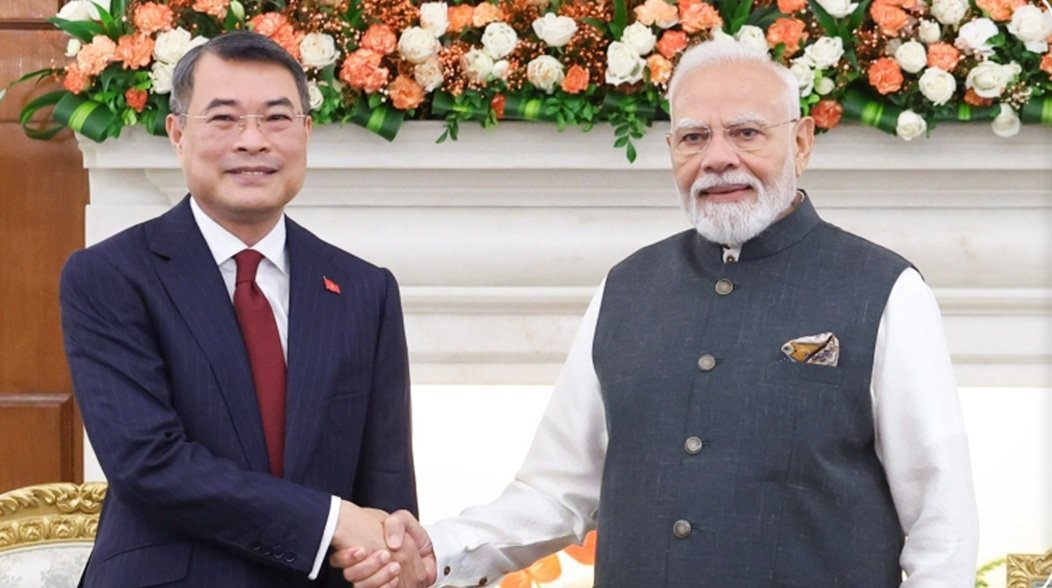
(c) India. Relations with India remained strong under Biden, especially in the context of the Quad alliance (U.S., India, Japan, Australia), consistent with Samsraya (forming coalitions) and Dvaidhibhava (dual-track policy with China).
(d) Iran. Biden attempted to revive the JCPOA through negotiations, aligning with Sama and Sandhi (peace agreements), though domestic and regional politics stalled progress.
(e) Israel and the Middle East. Support for Israel remained steady, though the administration attempted to rebalance by reopening aid to Palestinians and promoting ceasefire diplomacy, demonstrating Dvaidhibhava and Asana (neutrality).
(f) Canada. The Biden administration broadly treated Canada as a stable ‘mitra-neighbour’, favouring institutional coordination and predictable diplomacy over disruption. This aligns with Sama and Sandhi – repairing trust, preserving alliances and lowering the transaction costs of cooperation across the world’s most integrated bilateral economic relationship.
20. Arms Control, Diplomacy and Military Doctrine. While defence budgets remained high, Biden pushed for nuclear arms reduction talks, including the New START (New Strategic Arms Reduction Treaty) extension with Russia[17]; a step aligning with Sandhi (peace) and Sama (dialogue), rather than the Danda heavy posture of the Trump era. However, the US still used drones and other ‘over-the-horizon’ strike options for counterterrorism and limited military actions, though with more oversight, tighter approvals and civilian-harm safeguards. Also, the military withdrawals from Afghanistan were executed (albeit chaotically), reflecting a desire for disengagement from endless war – a concept echoed in Kautilya’s selective war doctrine – war only when diplomacy fails, and cost-benefit calculus supports it.
21. Intelligence, Cybersecurity and Internal Surveillance. The Biden administration embraced a technocratic and institutional approach to cybersecurity and intelligence coordination[18]. Major initiatives included a national cybersecurity strategy following the SolarWinds debacle and increased cooperation with allies on cyber threats[19]. This aligns with Kautilya’s emphasis on a robust internal spy network and strategic use of surveillance to preempt disorder. Importantly, Biden restored trust in the intelligence community, respecting its advisory role; unlike Trump, whose confrontational stance toward intelligence agencies contradicted Arthashastra’s vision of informed rulership.
22. Summary. Biden’s tenure leaned heavily into Sama, Dana, Sandhi and Samsraya; the soft power instruments within Kautilyan philosophy. His administration emphasised domestic cohesion, strategic alliances and cautious power projection. However, his occasional indecision and overreliance on institutional processes may represent a blind spot within the Arthashastra’s framework, which valorises timely action and ruler-led decisiveness in times of uncertainty.
Trump Administration (2025–Present) – Assertive Chanakyan Tactics and the Risk of Overreach
23. The return of Donald Trump to the presidency in January 2025 marked the resurgence of ‘America First’ principles amidst a deeply polarised domestic landscape and evolving global power dynamics[20]. While still in the early stages, the administration’s initial actions signal a continuity of the themes from Trump’s first term – coercive diplomacy, assertive economic nationalism, border control and institutional restructuring. From a Kautilyan lens, the renewed Trump presidency offers an opportunity to assess whether these revived strategies reinforce state stability and power or risk institutional erosion and internal disorder.
24. Executive Orders and Domestic Control (Danda and Internal Order). Trump’s first months in office saw a flurry of executive orders aimed at border security, bureaucratic deregulation and restructuring federal law enforcement priorities. The reintroduction of aggressive deportation policies and the proposed use of the military for internal immigration enforcement are strongly aligned with Dandaniti, which promotes the use of force as a tool of state order when laws are breached. However, Kautilya cautioned against excessive or poorly calibrated punishment, advocating proportionality and long-term stability over political theatrics. The challenge for the administration lies in ensuring that these policies do not inadvertently create internal unrest or disaffection; outcomes that the Arthashastra identifies as threats to rajya (state integrity).
25. Foreign Policy Signals – Strategic Posturing and Danda Diplomacy. Early indications point to renewed friction with China and a more transactional approach to alliances. Tariff reinstatements, scrutiny over Chinese technology firms and increased military exercises in the Indo-Pacific reinforce Danda and Mandala Theory logic – perceiving China as a natural adversary requiring containment through nearby coalitions (India, Japan, Australia)[21]. With Iran, the administration has shifted toward a maximalist stance once again, threatening escalated sanctions and scrapping any remnants of diplomatic engagement. This coercive posture reflects Kautilya’s Danda first strategy against persistent adversaries who reject diplomatic overtures. As of 2026, the U.S. has formalised and escalated its regime change posture against Iran, with overt financing of dissident factions operating from Northern Iraq and Azerbaijan, targeted cyber warfare on energy systems and expanded sanctions beyond traditional frameworks. This marks a full activation of Danda (force), Bheda (internal destabilisation) and Dvaidhibhava (keeping war and peace options open). Kautilya endorsed such complex stratagems but emphasised realistic assessments of enemy resilience. Prolonged confrontation without multilateral support could violate Chanakya’s strategic principle: attack only when the enemy is internally weak or diplomatically isolated. Relations with Israel have deepened further, with strong endorsements of Israeli operations and an increase in military aid. This is a classic Samsraya (strategic alliance), with the U.S. acting as the dominant suzerain in a mutual defence partnership. On Russia and Ukraine, ambiguity remains. Should Trump adopt a posture of neutrality (Asana) or seek rapprochement (Sama), it would represent a shift from previous Danda-centric strategies – a test of Arthashastra’s flexible diplomacy doctrine, Sadgunya. A parallel implication is also visible with Canada. A Danda-first, transactional approach to alliances risks extending coercive trade bargaining to a neighbour that functions as a strategic depth provider for the continental homeland. In Kautilya’s terms, indiscriminate Danda against a ‘mitra-neighbour’ can be strategically self-harming; it weakens Rajkosha through supply chain shocks and encourages hedging behaviour, thereby reducing long term leverage.
26. Economic Direction – Protectionism Reloaded (Artha and Danda). Trade protectionism has re-emerged through new tariffs on foreign vehicles and talks of ‘supply chain patriotism.’ Such policies fit squarely within Kautilya’s Danda doctrine, aimed at preserving internal wealth and economic sovereignty. However, Kautilya also emphasised maintaining trade routes and international markets for long-term prosperity[22]. The Trump doctrine’s tendency toward decoupling and isolationism could contradict Arthashastra’s nuanced views on balanced trade strategy, which combined control with expansion. In Q1 2026, the Trump administration formally imposed tariffs on Indian textiles, jewellery, etc., invoking national security and market fairness[23]. This violates the Mandala principle of supporting the ‘neighbour’s neighbour’ – India being a key counterweight to China in the Indo-Pacific. From Kautilya’s lens, such punitive action against a friendly ally weakens the regional power balance and may alienate potential cooperative states. It suggests a strategic misstep in the application of Danda without sufficient Sama or Dana preceding it. This may contravene Mandala logic, as India represents a neighbour’s neighbour to China and should be treated with strategic favour, not coercion.
27. Intelligence, Surveillance and Statecraft. Trump’s ongoing critique of federal agencies, particularly the DOJ (Dept. of Justice) and the intelligence community, has sparked concerns of politicisation. From Kautilya’s perspective, these institutions are not to be weakened but strategically harnessed for state continuity. The espionage system, in Arthashastra, is depicted as critical infrastructure, functioning independently of personal politics to ensure the ruler’s grasp on truth and order. Any move to purge or restructure the intelligence community along partisan lines would represent a grave deviation from Arthashastra’s counsel on institutional neutrality and secrecy.
28. Summary. The early trajectory of the Trump 2025 administration indicates a reassertion of force-based diplomacy, economic nationalism and internal control – largely consistent with Danda, Mandala and Upayas (particularly Danda and Bheda). However, the Venezuela and Iran developments show the risk of overuse of coercion, while trade threats to India undermine strategic consistency. Kautilya’s deeper wisdom lies in balance and sequencing; force guided by foresight, diplomacy guided by subtlety and economic policy guided by sustainability. A comparative analysis of the three administrations through the Kautilyan Framework is tabulated below.
| Kautilyan Principle | Trump I (2017 – 2021) | Biden (2021 – 2025) | Trump II (2025 – Present) |
| Dandaniti (Law & Punishment) | Heavy use of force in immigration & law enforcement; travel bans; zero tolerance. | Moderate enforcement with humane immigration policies. | Renewed hostility to China; deepened alliance with Israel. Tariffs on India contradict Chanakya’s strategic ally principle; it represents deviation from power balancing logic. Assertive reassertion of hemispheric dominance (Panama Canal) and Arctic expansionism (Greenland), reflect Mandala style power perimeter consolidation |
| Upayas (Sama, Dana, Bheda, Danda) | Counterbalancing China with India, Japan, transactional alliances. | Greater use of Sama (conciliation) and Dana (welfare); reduced use of Danda. | Danda-heavy reassertion; Bheda visible in foreign policy postures. |
| Mandala Theory (Alliances & Enemies) | Politicisation risks; potential restructuring of intelligence. Confirmed high-level operations in Iran and Venezuela mark overt usage of Arthashastra’s Bheda and Danda doctrines. | Strengthened Quad, NATO; rejoined global accords; strategic coalition building. | Danda (force) & Bheda (division) dominate, especially toward rivals like China and Iran. |
| Sadgunya (Six-Fold Diplomacy) | Primarily Vigraha (war) and Danda; minimal use of Sama or Sandhi. | Sama, Sandhi, Samsraya dominate; diplomatic multilateralism. | Unclear posture; likely continuation of Vigraha & Dvaidhibhava. |
| Economic Sovereignty (Rajkosha) | Corporate tax cuts; tariffs; protectionism; favoured short-term gains. | Large-scale investment in infrastructure and public goods. | Protectionist revival; trade tariffs and industrial focus. |
| Espionage & Surveillance | Antagonised intelligence agencies; weakened institutional trust. | Restored trust in intelligence and cybersecurity cooperation. | Counterbalancing China with India, Japan, and transactional alliances. |
| Internal Harmony & Order | High polarisation; civil unrest; weak integration approach. | Focus on healing divisions; broader social inclusion efforts. | Aggressive rhetoric risks renewing domestic division. |
| Neighbour Management (Mitra-Neighbour Doctrine) | Coercive renegotiation (USMCA) + episodic tariff pressure; alliance security baseline intact. | Institutional stabilisation; disputes managed without strategic rupture. | Risk of Danda spillover onto Canada; potential self-harm to Rajkosha and continental strategic depth. |
Comparative Analysis through the Kautilyan Framework
29. Key Takeaways from the Matrix are:-
(a) Trump I leaned heavily into Danda and Bheda, reflecting a force-driven and coercive strategy, especially in foreign policy and trade. However, it clashed with Kautilya’s emphasis on internal unity and institutional continuity.
(b) Biden embraced Sama, Dana and Sandhi; aligning closely with Kautilya’s ‘soft power’ doctrines. While more balanced, it occasionally lacked the decisiveness Kautilya prescribes in moments of crisis.
(c) Trump II, though still early, shows a reversion to a Danda-heavy, protectionist strategy. If unchecked, it risks diverging further from Kautilya’s vision of sustainable, well-calibrated statecraft.
30. Key doctrines evaluated are:-
(a) Dandaniti – Enforcement and law.
(b) Upayas – Conciliation, gifts, division and force.
(c) Mandala Theory – Strategic mapping of enemies and allies.
(d) Sadgunya – Six modes of foreign policy.
(e) Rajkosha – Economic base and wealth strategy.
(f) Espionage – Internal surveillance and intelligence management.
(g) Internal Harmony – Civil unity and societal balance.
31. Mandala Theory and Contemporary U.S. Foreign Policy. The Mandala Theory, arguably the most recognised geopolitical doctrine from the Arthashastra, lays out a concentric model of interstate relationships – a ruler’s immediate neighbour is a natural enemy, while the neighbour’s neighbour is a potential ally. Kautilya’s model encourages a dynamic understanding of power proximity, requiring continual reassessment of alliances and rivalries. In this view, no alliance is permanent, and each foreign relation must be judged based on strategic utility and power equilibrium, rather than idealism or ideology.
32. Application to the U.S.-China-India Triangle. Under both Trump and Biden, and now again under Trump’s second term, the most vivid application of the Mandala Theory is the U.S.-China-India triangle. Salient observations are:-
(a) China is treated consistently as a ‘natural rival’, a direct economic and military competitor that needs containment. This mirrors Mandala’s enemy-neighbour principle in a functional sense – China is the U.S.’s nearest peer rival within the Indo-Pacific strategic geography. For the United States, China is not a border neighbour. But in the Indo-Pacific strategic theatre, China is the nearest peer competitor in the same operating space (economic, tech, military, influence networks). That makes China a ‘neighbour’ in the Mandala sense of immediate strategic contact; hence a ‘natural enemy/ rival’. Neighbour here is functional, not literal and ‘Enemy’ is an assumption for planning, not a moral label. Kautilya’s point is prudential; proximity produces recurring friction (security dilemmas, competition for influence, control of routes/markets). Hence, the defaultassumption that the nearest strong competitor will behave adversarially when interests clash.
(b) India, by contrast, has been courted as a strategic partner, especially within the Quad alliance (U.S., India, Japan, Australia), echoing Kautilya’s view that alliances should be formed with the neighbour’s neighbour.
(c) U.S. support for India in military, technological and diplomatic forums, especially under Trump I and Biden, reflects a Mandala-style power balancing against China.
33. Kautilya’s recommendation that the ruler seek to empower allies at a safe distance while constraining neighbouring threats finds near-direct parallel in the Indo-Pacific strategies adopted by the U.S.
34. NATO and Transatlantic Alliances. The U.S. role in NATO presents a challenge to Mandala logic. According to the Arthashastra, the ideal ally is one whose distance does not threaten the ruler’s core domain. During Trump I, this philosophy played out via reduced NATO commitments and criticism of burden sharing, suggesting a scepticism of alliances that do not yield immediate strategic benefit. Biden reversed this trend, emphasising multilateral partnerships based on shared democratic norms. From a Kautilyan perspective, Biden’s approach reflects Samsraya (seeking shelter in alliances), though it may risk strategic overreach if not calibrated with national interest. Trump II appears poised to return to transactional diplomacy, closer to Kautilya’s pragmatic use of alliances for immediate gain, rather than enduring loyalty.
35. Greenland. The Greenland issue resurfaced in 2025, with U.S. discussions on expanded security access and deeper minerals cooperation encountering Danish and Greenlandic sovereignty pushback, amid heightened controversy over China-linked mineral exploration activity and licensing disputes. The episode reflects an extension of Mandala Theory beyond military alliances into resource geopolitics. In Kautilya’s terms, Greenland functions as a strategic ‘buffer state’ in proximity to rival power zones. Kautilya would interpret U.S. persistence here as a pursuit of Arthashastra’s Rajmandala imperative – to control chokepoints and economic arteries critical to the state’s survival. Yet the failure to secure local consent echoes his caution that acquisition without legitimacy provokes resistance and weakens suzerainty.
36. Middle East and Israel – Samsraya in Action. Across all administrations, the U.S. relationship with Israel remains one of consistent strategic backing, particularly under Trump, who recognised Jerusalem as Israel’s capital and supported the Abraham Accords. This sustained alliance aligns with Samsraya, where a powerful state supports a smaller but strategically located ally to extend its influence. The U.S.–Israel relationship showcases how suzerain-vassal dynamics, as discussed in the Arthashastra, persist in modern international relations.
37. Russia and Iran – Dual Strategies and Dvaidhibhava. With Russia and Iran, U.S. policy oscillated between confrontation and limited engagement. Under Biden, sanctions coexisted with diplomacy (Sadgunya’s dual policy). Under Trump I, hostility toward Iran dominated, aligning with Danda, while Russia saw inconsistent engagement. Kautilya’s Dvaidhibhava strategy, keeping both peace and war options open, reflects this duality, where a ruler avoids full-scale war but uses tools of pressure and persuasion in parallel.
38. Panama Canal. In 2025–early 2026, U.S. officials publicly raised national security concerns about China-linked influence over strategic port infrastructure at the approaches to the Panama Canal, including the control and prospective sale of the Panama Ports Company concession. The move was viewed in Washington as a direct challenge to hemispheric influence and maritime logistics sovereignty. Through a Kautilyan lens, this represents a textbook Mandala dilemma; the neighbour’s ally (China in Latin America) encroaching upon vital trade arteries. Kautilya would classify this as a threat requiring both Bheda (division – isolating China diplomatically through regional partners) and Samsraya (alliances with intermediary states such as Colombia and Brazil). The U.S. response – sanctions threats and naval patrol expansions – aligns with Danda, yet its failure to anticipate Chinese investment diplomacy exposes a lapse in pre-emptive Sama and Dana, contrary to Kautilya’s counsel on forethought before force.
39. Venezuela and Proxy Politics – Bheda and Samsraya. Trump’s support for Juan Guaidó and sanctions against Nicolás Maduro reflect Bheda (division) and Samsraya tactics – weakening enemy leadership from within while supporting friendly claimants. Kautilya encouraged the ruler to foment rebellion within enemy territory, either through propaganda or incentivised alliances – a principle that finds eerie resonance in modern covert support and regime change efforts[24].
40. Canada. In the contemporary Mandala of United States foreign policy, Canada is a proximate, economically interdependent neighbour that functions as a ‘mitra rather than a conventional rival. Through a Kautilyan lens, this relationship is best understood as calibrated Dvaidhibhava – a dual policy in which Sandhi/Sama must remain the default to preserve continental stability. At the same time, Dana/Danda are applied selectively to resolve discrete trade and industrial disputes. The transition from NAFTA to USMCA demonstrates how coercive bargaining can be used to renegotiate advantage. However, coercion against a tightly coupled neighbour risks self-harm to Rajkosha through supply chain disruption and loss of confidence. Strategically, Canada provides depth and amplifies U.S. leverage in the wider Mandala, especially when the principal contest is with a peer rival elsewhere. A Chanakyan approach would preserve treaty stability and institutional coordination, employ pressure only when net gain is demonstrable, and prioritise predictability in domains that sustain state power – revenue, resilience and alliance credibility.
41. Summary. U.S. foreign policy over the last decade reveals a striking compatibility with Mandala Theory, whether in managing rivals such as China and Iran, bolstering distant allies such as India and Israel, or navigating ambiguous ties with Russia. Despite different rhetorical styles, both the Trump and Biden administrations have, perhaps unwittingly, embodied the strategic realism that Kautilya codified over two millennia ago.
42. Espionage, Surveillance and Internal Stability. Few aspects of Kautilya’s Arthashastra are as developed and methodical as his vision of a secret service. The treatise lays out one of the earliest and most intricate models of espionage, not merely for wartime intelligence, but as a constant instrument of governance. Spies, according to Kautilya, serve to assess loyalty, uncover plots, manipulate enemy courts and monitor internal dissent. The 2026 Maduro operation shows modern espionage not only collecting intelligence but reshaping leadership landscapes, mirroring Kautilyan spy-led regime sabotage in enemy territory. He advocates for a multi-tiered spy system, including double agents, religious pretenders, merchants and wandering ascetics; each selected for their cover identities and strategic reach. Most importantly, Kautilya emphasises not only surveillance but also discretion, loyalty and accuracy in intelligence. Any ruler, he warns, who ignores or politicises the intelligence apparatus risks the disintegration of internal stability and state authority.
43. Trump I and Intelligence Confrontation. Under Trump’s first administration, relations with U.S. intelligence agencies were publicly strained. Trump’s scepticism over findings about Russian election interference, his dismissal of CIA assessments and his comparisons between intelligence leaders and historical authoritarian regimes created an unprecedented rift. From a Kautilyan standpoint, this was a direct violation of strategic doctrine. The king must command intelligence, not alienate it. Intelligence is an extension of the ruler’s own senses; any distrust weakens the capacity for early warning and proactive control. Trump’s disbanding of certain advisory units and sporadic handling of cybersecurity threats undermined institutional coherence in this domain.
44. Biden and Institutional Reintegration. President Biden prioritised restoring trust in the intelligence community. His administration reinstated expert-led advisory bodies, responded to major cyber threats like SolarWinds and Colonial Pipeline with formal national cybersecurity frameworks and increased international intelligence cooperation. This approach is more in line with Kautilya’s model of coordinated espionage and pre-emptive defence. In the Arthashastra, spies are to report directly to trusted ministers, and their findings must influence state strategy; not be politically contested in public discourse. Biden’s model, while not covert in the Kautilyan sense, restored the principle that intelligence serves state stability, not party interests.
45. Trump II and Politicisation Risks. In his return to office, Trump has resumed critiques of federal agencies, including the DOJ and FBI. Proposed restructuring and loyalty tests for agency heads mirror a centralisation of power, but also risk politicising neutral institutions. Kautilya warns explicitly that the king must preserve institutional independence in intelligence to ensure honest feedback and adaptability. Political interference in intelligence work leads to information asymmetry, a strategic blind spot that historically leads to miscalculations in both internal and external affairs.
46. Surveillance, Cybersecurity and Modern Intelligence. All three administrations have contended with rising threats from cyber warfare, disinformation and digital espionage – modern equivalents of Kautilya’s covert surveillance and counterintelligence networks.
(a) Trump I emphasised punitive responses, often reactive.
(b) Biden focused on defensive resilience and cyber alliances.
(c) Trump II is veering toward inward-focused surveillance and control of federal agencies.
47. Kautilya advocated a 360-degree intelligence network, both foreign and domestic, to pre-empt, not merely respond to, threats. In this respect, Biden’s strategies align more closely with Arthashastra’s spirit, while Trump’s approach has so far emphasised control over foresight.
48. Summary. Espionage and surveillance, in the Arthashastra, are vital pillars of state survival; not merely tools of war, but engines of informed governance. The modern U.S. experience shows fluctuating adherence to this principle. Where Trump emphasised domination and occasionally sidelined intelligence, Biden restored cooperation and systemic depth. As Trump II unfolds, the test will be whether intelligence is used for statecraft or subordinated to personal authority, a move Kautilya would view as strategically ruinous.
Economic Governance and Taxation: Arthashastra vs. U.S. Practice
49. Kautilya’s Arthashastra dedicates substantial attention to Artha (wealth) as the foundation of state power. Economic governance is not merely a technical matter but a strategic imperative. The king must build a prosperous treasury (Rajkosha), encourage agriculture, regulate trade, invest in infrastructure and collect taxes fairly but efficiently. Economic failure, Kautilya warns, is the beginning of political instability. In analysing U.S. economic governance across the Trump and Biden administrations through this lens, both convergence and deviation become clear.
50. Revenue and Taxation Principles. Kautilya prescribed a tax system that was proportional, transparent and minimally disruptive. Taxes were to be collected without causing suffering, and exemptions were allowed in times of distress (e.g. floods, famine). A few salients that emerged from analysing the American administration from this perspective are:-
(a) Trump I implemented the 2017 Tax Cuts and Jobs Act, drastically reducing corporate taxes from 35% to 21%, while offering modest individual benefits[25]. This stimulated investment but also increased the national deficit. From a Kautilyan view, lowering taxes to boost economic activity aligns with incentivising production, but imbalanced relief for elites while compromising revenue contradicts the principle of sustainability and equity.
(b) Biden reversed course by proposing higher taxes on corporations and wealthy individuals, aiming to fund social programmes and infrastructure. This more redistributive approach echoes Kautilya’s directive that the king must extract wealth like a bee, without harming the flower. In other words, taxation must nourish the state while maintaining the vitality of its economic actors.
(c) Trump II, in early moves, signals a return to tax cuts and deregulation. If unchecked, this may again prioritise short-term stimulation over long-term fiscal stability, a red flag in Kautilya’s economics.
51. Infrastructure and Investment Strategy. Kautilya emphasised public investment in irrigation, roads, ports and fortifications as means to increase productivity and protect trade. This was considered an essential royal duty.
(a) Biden’s Infrastructure Investment and Jobs Act (2021), which included over $1 trillion for roads, broadband, energy and clean water, aligns directly with this vision[26]. Kautilya would see this as a wise use of surplus, investing in durable, growth-enhancing assets.
(b) Trump I campaigned on infrastructure, but failed to deliver substantive legislation. His economic emphasis lay more in deregulation and capital market incentives than in public works.
(c) Trump II’s infrastructure approach remains undefined at this stage, though early rhetoric suggests a focus on industrial self-reliance and defence investment, consistent with Arthashastra’s call for economic sovereignty, though not necessarily its balanced investment model.
52. Trade and Tariff Policy. Kautilya endorsed a controlled but open economy, where trade was encouraged under vigilant regulation. Border tolls, inspections and pricing caps were standard tools to prevent hoarding and exploitation.
(a) Trump I’s tariffs on China, steel, and aluminium reflect a strong Danda approach to trade – aligning with the Arthashastra’s endorsement of tariffs as a means of protecting internal producers. Yet, indiscriminate tariffs may hurt consumers and exporters alike, an outcome Kautilya warned against.
(b) Biden maintained some tariffs while seeking multilateral resolution; combining protectionism with diplomacy, echoing a dual approach Kautilya might support.
(c) Trump II appears to be reviving tariff-based pressure, especially targeting EVs and high-tech imports. If implemented judiciously, this could mirror Kautilyan’s strategic use of customs and trade restrictions, but excess could lead to retaliatory trade wars, undermining state prosperity. In 2025–2026, trade and tech tensions escalated further, with the U.S. imposing severe export restrictions on semiconductors and electric vehicle components, alongside expanded bans on Chinese fintech apps. China retaliated by restricting access to rare earth metals. These tit-for-tat moves, while aligned with Danda, risk mutual harm and violate Kautilya’s warning – ‘The king should not strike if the benefit does not outweigh the cost.’ A more calibrated mix of Bheda and Sama could have preserved deterrence without sparking a full economic standoff.
53. Economic Welfare and Redistribution. Kautilya encouraged the king to support the vulnerable during crises, including grain distribution, tax relief and public employment; not out of altruism but to preserve state functionality.
(a) Biden’s COVID stimulus and child tax credits reflect such proactive redistribution. They are in keeping with the Arthashastra‘s warning that neglecting economic distress could lead to rebellion or mass migration.
(b) Trump I supported business-focused stimulus packages but was less proactive on direct welfare. Trump II seems set to repeat this emphasis on corporate stimulation over public welfare, diverging from Kautilyan prudence.
54. Summary. From the perspective of the Arthashastra, economic policy must combine pragmatic taxation, intelligent public investment, strategic trade regulation and targeted welfare. Biden’s policies come closest to this holistic vision, while Trump’s approaches, especially in tax and welfare, diverge due to an overemphasis on elite incentives and underinvestment in systemic resilience.
Chanakyan Lessons for Modern Governance
55. The Arthashastra remains one of the most enduring works of political philosophy, notable not just for its historical significance but for its strategic realism, adaptive diplomacy and multi-dimensional statecraft. This study has endeavoured to apply Kautilya’s doctrines to three phases of American governance: Trump I (2017–2021), Biden (2021–2025) and Trump II (2025–present). The result is a deepened understanding of how ancient wisdom can illuminate the motives, strengths and vulnerabilities of modern leadership.
56. Strategic Alignment with Kautilya.
(a) Trump I and II reflect Danda, Bheda and economic nationalism, tools validated in principle by Arthashastra, but at times taken to extremes, risking the very stability Kautilya sought to preserve.
(b) Biden, conversely, leans toward Sama, Sandhi and Samsraya; methods that prioritise consensus, diplomacy and systemic investment. This balanced governance is closest to Kautilya’s model, though sometimes slow to act or vulnerable to external shocks.
(c) Both administrations exhibit elements of Mandala Theory, strategic coalitions and calibrated foreign alignments; often intuitively replicating Kautilya’s dynamic geopolitical chessboard.
57. Key Chanakyan Insights.
(a) Power Must be Informed. Intelligence and espionage must serve the ruler’s foresight, not personal whims or vendettas.
(b) Welfare Is Strategic. Economic justice is not idealism; it is statecraft. The ruler who neglects the hungry weakens the state’s foundations.
(c) Diplomacy Precedes War. The king must exhaust Sama, Dana and Bheda before choosing Danda.
(d) Alliances are Functional. No permanent friends or enemies exist; only interests and their management.
(e) Institutions are Extensions of the Ruler. Weakening them weakens state coherence. The wise ruler governs through empowered systems, not chaos.
58. Final Reflection. As the U.S. navigates a multipolar, technologically volatile and socially complex future, the Arthashastra offers timeless guidance. It teaches that strategic wisdom lies not in ideology, but in adaptability, restraint and foresight. The comparison of these three administrations shows that neither rhetoric nor partisanship determines good governance; only the ruler’s capacity to act with informed prudence, calibrated strength and long-term vision.
Disclaimer: The views and opinions expressed by the author do not necessarily reflect the views of the Government of India and the Defence Research and Studies.


References
[1] Patrick Olivelle, King, Governance, and Law in Ancient India: Kauṭilya’s Arthaśāstra—A New Annotated Translation (Oxford: Oxford University Press, 2013).
[2] Boesche, Roger. 2002. “Kautilya’s Arthashastra on War and Diplomacy.” The Journal of Military History.
[3] Kangle, R. P. 1960. The Kautilya Arthashastra (Part II – English Translation). University of Bombay.
[4] Rangarajan, L. N. 1992. Kautilya: The Arthashastra. New Delhi: Penguin Books India.
[5] U.S. Department of Homeland Security, “Memorandum on Rescission Of DACA,” September 5, 2017.
[6] U.S. Department of Homeland Security, Office of Inspector General, Special Review – Initial Observations Regarding Family Separation Issues Under the Zero Tolerance Policy (Washington, DC, 2019);
[7] Kangle R.P, The Kauṭilīya Arthaśāstra, Part II (Bombay: University of Bombay, 1963) (sections on the four upāyas, including bheda, and their internal application).
[8] Pew Research Centre, “Political Polarization in the American Public,” June 12, 2014; U.S. House of Representatives, Select Committee to Investigate the January 6th Attack on the United States Capitol, Final Report (Washington, DC: U.S. Government Publishing Office, December 22, 2022).
[9] Congressional Research Service, reports on U.S.–China Section 301 tariffs and escalation in 2018–2019; Office of the United States Trade Representative, Section 301 tariff actions (2018–2019).
[10] U.S. Department of the Treasury, Office of Foreign Assets Control, “Notice: Re-imposition of the Sanctions on Iran that had Been Lifted or Waived Under the JCPOA,” November 4–5, 2018.
[11] Office of the United States Trade Representative, ‘USMCA to Enter Into Force July 1 After United States Takes Final Procedural Steps for Implementation,’ press release, April 24, 2020; United States–Mexico–Canada Agreement Implementation Act, Pub. L. No. 116–113 (2020).
[12] U.S. Department of State, Office of Inspector General, Review of the Department of State’s Role and Responsibilities in the Transfer of Arms to Saudi Arabia and the United Arab Emirates (Washington, DC, 2020).
[13] Kangle P. R., The Kauṭilīya Arthaśāstra, Part II (Bombay: University of Bombay, 1963) (sections on military preparedness, coercive power, and state advantage).
[14] Presidential Proclamation 10142, “Termination of Emergency with respect to the Southern Border of the United States and Redirection of Funds Diverted to Border Wall Construction,” January 20, 2021.
[15] American Rescue Plan Act of 2021, Pub. L. No. 117–2 (2021) and Infrastructure Investment and Jobs Act, Pub. L. No. 117–58 (2021).
[16] Executive Order 13990, “Protecting Public Health and the Environment and Restoring Science to Tackle the Climate Crisis,” January 20, 2021.
[17] U.S. Department of State, Press Statement, “United States and Russia Agree to Extend the New START Treaty,” February 3, 2021.
[18] Executive Order 14028, “Improving the Nation’s Cybersecurity,” May 12, 2021
[19] “AA20-352A: Advanced Persistent Threat Compromise of Government Agencies, Critical Infrastructure, and Private Sector Organizations” (Cybersecurity Advisory, updated April 15, 2021)
[20] Federal Register (Presidential Document), “Adjusting Imports of Automobiles and Automobile Parts into the United States,” March 26, 2025
[21] “USTR Extends Exclusions from China Section 301 Tariffs Related to the Forced Technology Transfer Investigation,” press release, November 26, 2025. U.S. Department of Commerce, Bureau of Industry and Security, “Commerce Further Restricts China’s Artificial Intelligence and Advanced Computing Capabilities,” press release, March 25, 2025.
[22] Kangle R.P. The Kauṭilīya Arthaśāstra, Part II (Bombay: University of Bombay, 1963) (sections on trade, markets, and revenue as state power).
[23] The Guardian, “Trump imposes new tariff on India of 50%,” August 7, 2025.
Reuters, “Indian textiles, jewellery slapped with 50% Trump tariff; pharma, phones exempt,” August 27, 2025.
[24] Kangle, R.P., The Kauṭilīya Arthaśāstra, Part II (Bombay: University of Bombay, 1963) (sections on intrigue, fomenting dissension, and covert action).
[25] Tax Cuts and Jobs Act, Pub. L. No. 115–97, 13001 (21-PERCENT CORPORATE TAX RATE), 131 Stat. 2054, 2096 (Dec. 22, 2017) (amending Internal Revenue Code – 11(b) to set the corporate tax rate at 21% for taxable years beginning after Dec. 31, 2017).
[26] Infrastructure Investment and Jobs Act, Pub. L. No. 117–58, 135 Stat. 429 (Nov. 15, 2021); U.S. Department of Transportation, Pipeline and Hazardous Materials Safety Administration