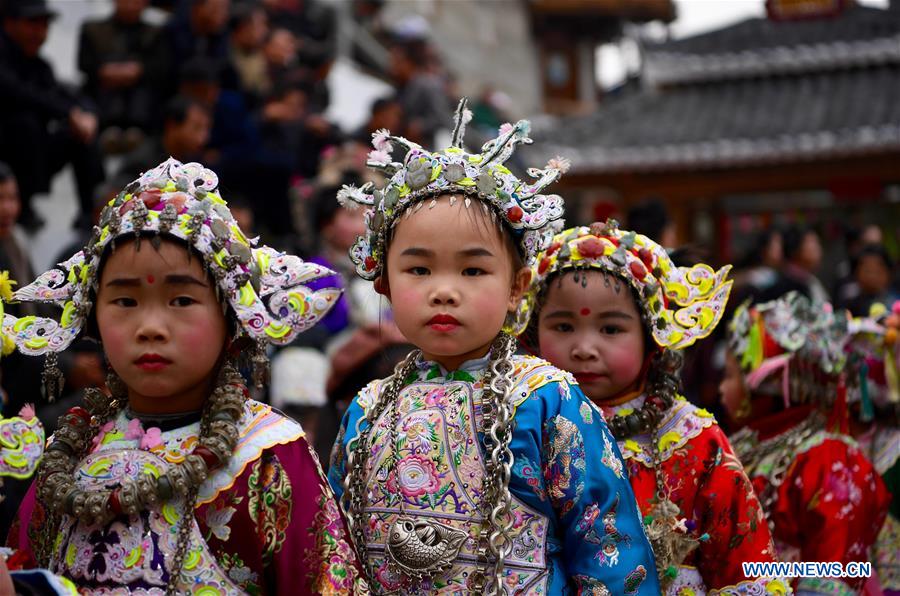
China officially recognises 55 ethnic groups. Uyghurs, Kazakhs, Kyrgyz, and other mostly Muslim minority groups are subjected to abuse and discrimination in places like the XUAR and elsewhere in the country.
In May 1947, two years before there was even a People’s Republic to speak of, the Inner Mongolia Autonomous Region was proclaimed. The promise it carried was not trivial. Mongols would govern themselves, in Mongolian, on Mongolian territory, as a fully recognised nationality within a multinational state. Tibet, Xinjiang, Guangxi, and Ningxia: the model would replicate. Every minority, in principle, was guaranteed the institutional space to persist as a distinct people.
Fast-forward sixty years. A Mongol township secretary sits at his desk writing administrative reports in Mongolian. He has a constitutional right to do this. But the reports go nowhere. Higher levels of government do not process Mongolian-language documentation. No budget follows. He enrols in Mandarin classes. His children attend Chinese schools. Nobody forced him. The logic is impeccable, and the outcome is capitulation (Bulag 2009, p. 275).
What separates these two moments is not a change in the law. The gap between institutional promise and what people actually experience is not a regrettable side effect of incomplete implementation. It is structural. The state guarantees linguistic rights while its own economic and political machinery makes those rights inoperable. A minority can vanish without anyone having to outlaw it.
The theoretical implications run deeper than ethnic policy alone. What is underway across China’s autonomous regions amounts to a conversion: recognised nationalities with territorial and political standing are being reduced to ethnic groups with only cultural recognition. Uradyn Bulag’s distinction is useful here, a shift from “society” to “category”, driven by economic development, language policy, and demographic transformation. Nobody has repealed regional autonomy. The material conditions that would give it substance have been taken apart piece by piece.
The Formal Architecture of Autonomy and Its Built-In Contradictions
Start with the legal framework. Article 4 of the Constitution guarantees all nationalities “the freedom to use and develop their own spoken and written languages.” The 1984 Law on Regional Ethnic Autonomy, revised in 2001, establishes self-government organs and the right to preserve minority languages and customs. Five provincial-level autonomous regions exist: Inner Mongolia (1947), Xinjiang (1955), Guangxi and Ningxia (1958), Tibet (1965), alongside numerous autonomous prefectures and counties. The titular minority in each region received guaranteed government representation, with the top government post formally reserved for one of its members.
None of this was empty posturing, not originally. These provisions came out of real debates within the Communist Party over how to integrate territories whose peoples had their own histories and claims. But a fundamental design flaw was baked in from the start.
Every government office in China has its shadow: a parallel Party committee where actual decisions get made. Government executes. The Party decides. The Party secretary outranks the government head in practice, whatever the org chart says. Shi-Kupfer and Heilmann put it plainly: this dual structure “has proved to be particularly problematic when it comes to how regional autonomy functions daily” (Shi-Kupfer and Heilmann 2017, p. 282). Tibet’s regional government chairman has always been Tibetan, a reassuring surface. The Party secretary who actually runs Tibet has never been Tibetan. Same story in Xinjiang and Inner Mongolia, where Party secretaries have been Han Chinese since 1966. What self-government can mean under these conditions is an open question, given that Party organs steering all major decisions are dominated by Han Chinese and embedded in a centralised chain of command.
The downstream consequences are mechanical and predictable. Official Party documents circulate in Chinese. A Tibetan who speaks only Tibetan, a Mongol who speaks only Mongolian, cannot read policy directives, cannot participate in Party meetings. He is shut out of governance in his own autonomous region, not by any rule that says so, but by the way things work.
Consider Ulanhu. Founding leader of Inner Mongolia, Politburo member, arguably the most powerful minority cadre the PRC ever produced. He did not speak Mongolian. Educated in Chinese, fluent in Russian from years in Moscow, he had to read from a Cyrillic transliteration to deliver a Mongolian speech in 1957. The audience was moved. The reality was bleaker: the paramount leader of Mongol autonomy was himself a product of sinicisation. His career is a case study in how the system actually operates. Minority cadres achieve formal authority precisely by working within Chinese institutional frameworks. Those who take the language guarantees at face value get sidelined.
This was visible early on. By 1953, Ulanhu himself was reporting that Chinese cadres treated Mongolian language use as “narrow nationalism.” In the Ulanchab League, when someone suggested a public security officer might speak Mongolian rather than Chinese, a cadre shouted: “Oppose narrow nationalism!” (Bulag 2002, p. 272). Using the minority language in a region where it holds official status could be treated as a political offence.
Behind the mechanics sits something harder to pin down but no less powerful. Bulag calls it an “ideology of contempt” built into nationality policy from the outset (Bulag 2002, p. 270). The system practices affirmative action in favour of minorities while treating their languages and cultures as relics. This crystallised around the term minzu (民族). Constitutionally, it
covers all nationalities, Han included. In practice, it came to mean minorities specifically. Han Chinese were “the people” (renmin). Everyone else was a “minority nationality” (shaoshu minzu). Mandarin became the language of science, modernity, and what comes next. The choice confronting minorities was put in stark terms: stay “backward” or “catch up,” which meant, concretely, borrowing vocabulary from Chinese, then abandoning the mother tongue entirely. As Bulag writes, the framing was whether “to remain politically and scientifically backward or to catch up, in the first instance by incorporating key loan words from Chinese”. The prejudice manufactured the conditions that seemed to validate it.
Economic Development as a Vehicle of Linguistic Displacement
If institutional design explains why linguistic rights are hollowed out politically, the economy is what makes them irrelevant in daily life. Reform-era China after 1978 transformed at a speed without precedent. That transformation was not linguistically neutral. The growth sectors, extraction, manufacturing, and urban commerce, all ran in Chinese.
Xinjiang’s oil fields are the sharpest case. The region sits on 25 percent of China’s oil and natural gas reserves. Petroleum extraction expanded dramatically from the 1990s onward, generating tens of thousands of well-paid jobs. Uyghurs were almost entirely shut out. In 1993, Xinjiang’s Party secretary Wang Lequan offered this explanation: workers had been
brought in “from oil fields elsewhere in the country, so no locals of any sort were hired” (Bovingdon 2010, p. 498). The claim did not hold up. Han residents of Xinjiang did find petroleum work. A more honest answer came from an industry official the following year: Uyghurs failed to meet “basic standards” because of low education levels. Which raised an obvious follow-up. Why were education levels so different? Because decisions about where to build schools and what language to teach in had already been made. Chinese was the language of petroleum engineering. A Uyghur trained entirely in Uyghur-language schools had no way in.
This was not limited to oil. Between 1995 and 2000, restructuring eliminated at least 600,000 jobs across Xinjiang, and evidence points to Uyghurs being laid off disproportionately. In Kashgar, a city that is 90 percent Uyghur, half the civil service positions advertised in 2013 required applicants to be Han or native Mandarin speakers. Xiaowei Zang’s research showed that education alone could not explain the disparities. Comparing young Uyghurs and Han Chinese with equivalent credentials, he found Uyghurs still earned less, a “cost of being Uyghurs” that persisted regardless of qualifications (Bovingdon 2010, p. 499). Ilham Tohti, the Uyghur economist who would later be sentenced to life in prison, conceded that cultural factors played some role in economic difficulties. But he insisted they could not account for the scale of the gap. Hiring discrimination, unequal educational investment, development strategies channelling resources toward Han-dominated industries: all of this mattered.
And the development strategies did channel. In Xinjiang, the “one black, one white” approach poured state money into petroleum and cotton, two sectors where Han Chinese predominated. In 1998 alone, Beijing spent 5.5 billion yuan purchasing cotton at below-market rates, matching Xinjiang’s entire previous year’s revenue. GDP numbers looked impressive: 3.9 billion yuan in 1978, over one trillion by 2017. But aggregate statistics hid more than they revealed. Karamay, the oil hub, recorded a per capita GDP of 137,307 yuan in 2016. Khotan, a 95 percent Uyghur agricultural area, recorded 9,901 yuan. A nine-to-one ratio within the same autonomous region (Bovingdon 2010, p. 499).
Then there is the Bingtuan. Created in 1954 from demobilised soldiers, by 2013 it had grown to encompass 2.7 million people, control 3.1 million acres, and handle roughly 80 percent of Xinjiang’s foreign trade. It operated as a parallel administration reporting straight to Beijing,
sidestepping even the limited minority influence that existed in regional institutions. Strategically positioned at river sources, Bingtuan units held effective control over surface water, and therefore leverage over downstream Uyghur farmers. One veteran stated the purpose without circumlocution: ensuring “the whole of Xinjiang’s territory is forever surnamed 中,” forever Chinese.
Inner Mongolia followed a recognisable pattern. The Erdos Group built China’s most valuable textile brand on cashmere, adopted a Mongol tribal name for marketing cachet, and remained
overwhelmingly Han in its workforce and ownership. Meanwhile, Mongolian administrative geography was being erased: the Jo’uda League became Chifeng in 1981, the Jerim League became Tongliao in 1999. The new municipalities ran entirely within Chinese frameworks. Every factory, every oil field, every commercial district that opened created jobs for Chinese speakers and closed doors for everyone else. Development, structurally speaking, functioned as a mechanism of linguistic displacement. It did not need to intend this. It simply did it.
Family Rationality and the Conversion of Resistance into Complicity
The double bind does its deepest work not through state coercion but through family decisions. A family assessing their children’s prospects faces no real ambiguity. Speaking only a minority language means exclusion from employment and marginalisation from power. Chinese opens doors. When millions of families independently arrive at the same rational conclusion, the aggregate effect is the erosion of the very cultural distinctiveness that autonomy was supposed to protect.
The dynamic set in early. In 1952, the government seat shifted to Hohhot. The capital was filled with Chinese-speaking workers and officials almost overnight. Children of Mongol cadres and intellectuals began losing Mongolian within a few years. By the next generation, the children of the autonomous region’s own Mongol leadership could not speak the language. During the Hundred Flowers Campaign in 1957, this provoked sharp public criticism. Mongol officials posed an uncomfortable question: if Mongols lost their language under the old China because of Han chauvinism, what exactly explained the same loss under the new China, where ethnic oppression had supposedly been abolished? The question was good. Within a month, those who asked it were crushed as enemies of the Party.
The Tumed Mongols, who had lost Mongolian over a century earlier, mounted what may be the most ambitious language reclamation attempt in PRC history. In September 1979, the Tumed Left Banner opened an experimental kindergarten: 59 children, everything taught in Mongolian. By 1982, it had expanded into a full primary school, with 201 boarding students, and Chinese was introduced only in fifth grade and taught as a foreign language. During school breaks, children were sent to pastoral areas to learn from Mongol-speaking herders, to keep them from being “contaminated” by Chinese-speaking parents and neighbours (Bulag 2002, p. 273). Many Mongols hailed the project. Proof, they said, that even deeply sinicised communities could reclaim their heritage.
It failed. Graduates emerged fluent in Mongolian and halting in Chinese. They could not find work in an economy that operated almost entirely in Mandarin. Enrollment collapsed through the 1990s. Bourdieu’s concept of linguistic capital is illuminating here: such capital retains value only within the field that recognises it. When the arena shifted from socialist nationality-building to a market economy where ethnicity was liability rather than asset, Mongolian linguistic capital lost its exchange rate. Those who had invested in it found themselves, in Bulag’s word, “bankrupt”.
Perhaps nothing captures the trap more precisely than this: Mongol linguistics professors at elite universities in Hohhot, people whose entire professional existence is bound up with defending and promoting the Mongolian language, send their own children to Chinese language schools (Bulag 2002, p. 275). This is not hypocrisy. It is the sharpest possible
reading of structural reality, performed by the people best positioned to understand it. Their decision undermines from within the very cause they champion publicly. Bourdieu described this as being “induced to collaborate in the destruction of their instruments of expression.” Rather than insist on Mongolian, cadres and intellectuals quietly got better at Chinese. Each accommodation was individually sensible. Together, they demolished the foundations of minority language survival.
Divergent Trajectories Across Autonomous Regions
The double bind has not played out identically everywhere. Two factors produce divergent trajectories: the relationship between economic mode and geography, and the degree of sinicisation already achieved before 1949.
In Inner Mongolia, the link between pastoralism and linguistic preservation is striking. During the late Qing and Republican eras, Mongols who turned to agriculture lost their language within a generation or two. Those in pastoral regions kept Mongolian, because Chinese settlement had barely reached them. This created a paradox worth sitting with: the most linguistically sinicised groups became the fiercest nationalists. The Harchin, deeply sinicised, founded the Inner Mongolian People’s Revolutionary Party in 1925. The Tumed, who had lost Mongolian altogether, provided communist leadership, Ulanhu included. They became nationalists precisely because they had been severed from their language. But the pastoral identity they romanticised bore little resemblance to how most modern Mongols actually lived or wanted to live. Bulag identifies a “striking disjuncture of increasing urbanisation and sinicisation together with the increasing romanticisation of the pastoral”. The symbol and the substance were pulling in opposite directions.
Tibet is the other end of the spectrum. The Qing claimed suzerainty but left a minimal footprint. After 1911, Tibet functioned as a de facto independent state until the PLA arrived in 1950 (Barnett 2019, p. 464). What the Chinese encountered was a society with intact traditional structures and powerful Buddhist institutions, a degree of cultural cohesion that has produced over 150 self-immolations between 2009 and 2018, a form of resistance without equivalent in Inner Mongolia.
Xinjiang falls somewhere between. In 1945, Han constituted just 6.2 percent of the population. The Bingtuan and sustained migration pushed the Han share to 36 percent by 2016; Uyghurs dropped to 49.6 percent (Bovingdon 2010, p. 491). This demographic upheaval happened within living memory. That is part of why the reaction has been so intense, and part of why state repression since 2014 has been so severe.
Hu Yaobang’s trajectory shows how these regional differences conditioned policy. Arriving in Tibet in May 1980, genuinely shocked by the poverty and alienation he found despite decades of financial support from Beijing, he proposed “ample autonomy”: two-thirds of cadre positions to be filled by Tibetans, large numbers of Han cadres transferred out. He extended similar policies to Inner Mongolia in 1981, reassigning over seven thousand Han cadres. Han cadres, predictably, were furious. When protests broke out across Tibet and elsewhere in the mid-to-late 1980s, Hu’s accommodationist line took the blame. He was removed as General Secretary in 1987. The Soviet Union’s dissolution in 1991, along ethnic lines, crucially handed hardliners exactly the argument they needed. Liberalisation was rolled back systematically (Barnett 2019, p. 472).
The Reduction of Nationalities to Ethnic Categories
The mechanisms traced above have produced consequences that go well beyond language loss. They have transformed what it means to be a minority in China. Recognised nationalities with territorial claims and political standing have been converted into ethnic groups carrying cultural recognition and not much else.
Bulag is direct about what has been forfeited: Mongols have lost the political and linguistic capital accumulated over generations (Bulag 2002, p. 276). Under the Qing, Mongols controlled their own territories and constituted what Bulag calls a “society,” a people with a functional division of labour, intact social structures, and a material base. The autonomy system appeared to restore something of this status. What it actually created was quite different. Minzu is now, as Bulag puts it, “no longer a ‘society’ in its own right, but a minority location or positioning within the political economy of a nation-state” (Bulag 2002, p. 278). Mongols exist not as a people with their own economic foundations and territorial reality, but as a category defined by their relationship to the Han majority.
A deliberate terminological shift accompanied this erosion. In the 1990s, shaken by the Soviet collapse, Chinese officials began systematically reframing minorities, from nationalities with political and territorial entitlements to ethnic groups with cultural recognition only. In 1995, the journal Minzu Tuanjie switched its English name from Nationality Unity to Ethnic Unity. Scholars adopted zuqun (族群) for ethnic group, distinguishing it from minzu as a nation. The reasoning was explicit: recognising distinct nationalities with territorial claims had, in the Soviet case, created the conditions for dissolution.
What emerged in place of nationality politics was a new “multiculturalism” (duoyuan wenhua) celebrating the diverse cultures of minority peoples. Mongolian horsemanship, Tibetan Buddhism, Uyghur dance: all became symbols of China’s rich diversity, staged for both domestic and international audiences. But this celebration came with a hard boundary. Minority cultures were to be understood as apolitical, non-territorial cultural expressions, never as foundations for political autonomy. Chinese multiculturalism, Bulag observes, is “anchored to Chinese nationalism” and works to transform nationalities into “non-territorial, apolitical, cultural” ethnic groups integral to the Chinese nation. Celebrate the culture. Suppress the politics. Promote minority languages at folk festivals. Marginalise them in schools and government offices.
The constitutional guarantees remain on the books. The cultural performances continue. But the material conditions that would allow minorities to reproduce themselves as distinct peoples have been hollowed out. Neither more investment nor harder repression addresses the fundamental problem: a system that promises autonomy while systematically eliminating the conditions for its realisation. Something, inevitably, gives. What is given, quietly and without ceremony, is the minorities themselves.
Title Image Courtesy: https://global.chinadaily.com.cn/
Disclaimer: The views and opinions expressed by the author do not necessarily reflect the views of the Government of India and the Defence Research and Studies.


Bibliography
Barnett, Robert. 2019. “Tibet.” In Ethnic China: Identity, Assimilation, and Resistance, edited by Lionel M. Jensen and Timothy B. Weston. Lanham: Lexington Books, pp. 461–502.
Bovingdon, Gardner. 2010. The Uyghurs: Strangers in Their Own Land. New York: Columbia University Press.
Bulag, Uradyn E. 2002. The Mongols at China’s Edge: History and the Politics of National Unity. Lanham: Rowman and Littlefield.
Bulag, Uradyn E. 2009. “Dangerous Liaisons: Minority Nationalities and Nationalist Collaboration in Twentieth-Century China.” Modern China 35 (3): 263–291.
Shi-Kupfer, Kristin, and Sebastian Heilmann. 2017. China’s Political System. Lanham: Rowman and Littlefield.
Tohti, Ilham. 2006. “Present-Day Ethnic Problems in Xinjiang Uyghur Autonomous Region: Overview and Recommendations.” Translated by Cindy Carter. Available at: chinachange.org.