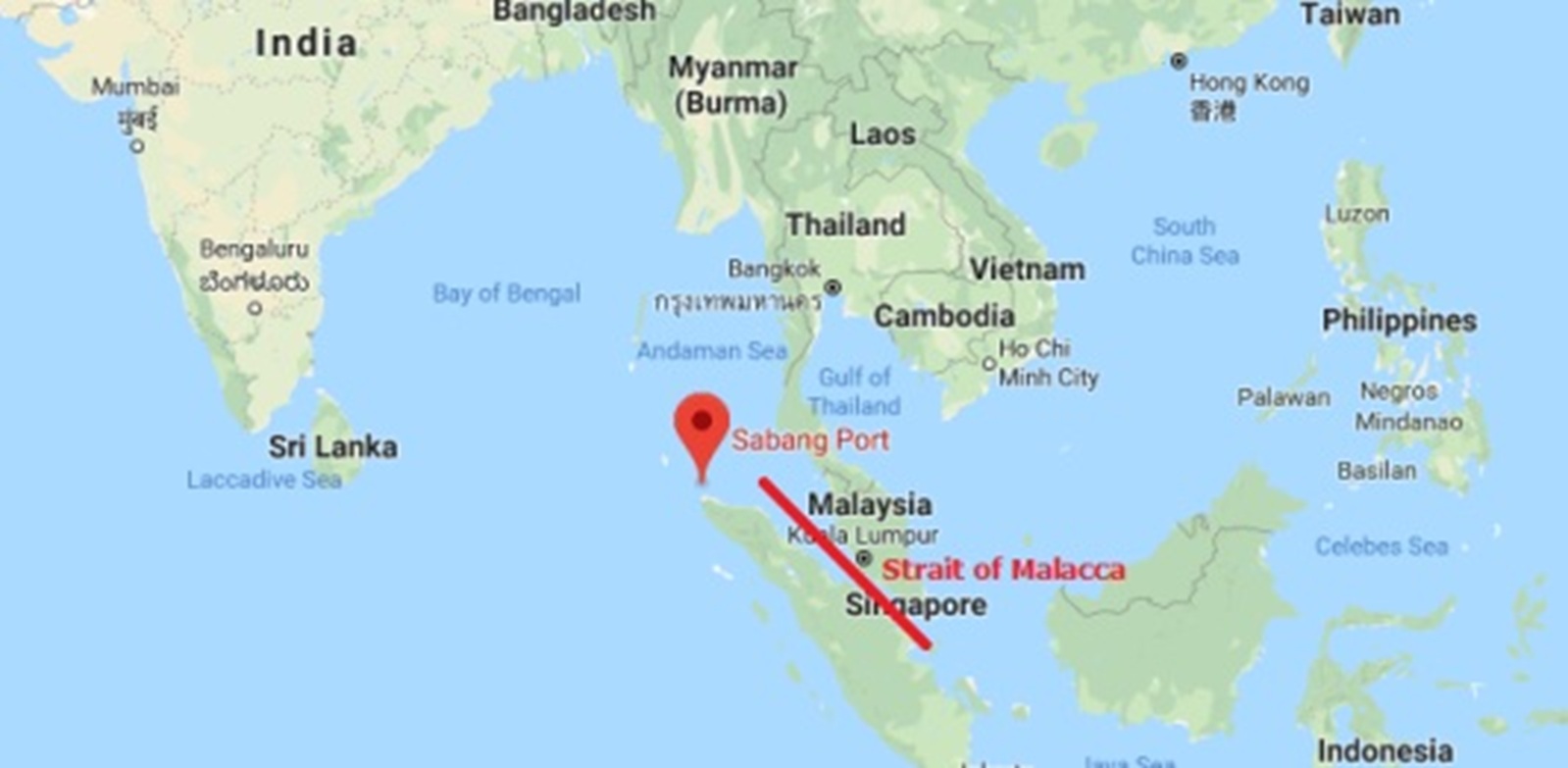
A recent article published on the Defence Research and Studies (DRaS) platform carried a headline that could have been written at any point in the past decade: India, it declared, sits at the fulcrum of Indo-Pacific sea control, indispensable to the future of the Strait of Malacca.[1] The geography is uncontested. The logic, however, deserves scrutiny — for precisely when the article appeared, a very different set of assessments was circulating in the journals that shape strategic discourse.
In the March/April 2026 issue of Foreign Affairs, Zack Cooper pronounced the Obama pivot to Asia dead — not stalled, not underfunded, but structurally failed across all three of its original pillars: security, prosperity, and governance.[2] In an April podcast for the same journal, Kishore Mahbubani and Matias Spektor argued that Washington’s decision to attack Iran is accelerating a process already underway — the receding of both the inspiration and the reality of American power.[3] The 2026 State of Southeast Asia survey, produced by Singapore’s ISEAS-Yusof Ishak Institute, found that China had overtaken the United States as the ‘preferred superpower’ for a majority of ASEAN states — a first — and that more than half of regional opinion leaders now regard US global leadership as their biggest geopolitical concern.[4]
These are not fringe assessments. They are considered judgments of the most authoritative voices in the field, published in the same fortnight as the DRaS piece. The gap between the two conversations — one in which India sits at the fulcrum of a US-anchored Malacca architecture, another in which that architecture’s anchor is pulling out — is not a difference of emphasis. It is a difference of strategic worlds.
That gap is what this essay is about. The DRaS article is a useful foil — not because it is careless, but because it is representative. The habit of reaching for geographic destiny and great-power adjacency as substitutes for operational thinking is not unique to this article. It runs through much of India’s maritime strategic discourse. Before India can develop a coherent strategy for Malacca, it needs to start from a more honest picture of the environment it is actually in.
Assumptions Vs Evidences
The DRaS article is built on a foundational premise: that the United States is executing, or contemplating, a strategic shift from the Strait of Hormuz to the Strait of Malacca — moving, in its formulation, from energy-centric coercion to systemic leverage over global trade. This is presented as the context within which India’s positional advantage becomes strategically transformative.
The premise is asserted without evidence, and the evidence runs the other way.
The Trump administration’s National Security Strategy, published in December 2025, designates the Western Hemisphere as the most important region for US interests, with the Indo-Pacific second. It does not present Malacca as a successor pressure point to Hormuz. In the first year of Trump’s second term, senior administration officials visited Europe seventeen times and Asia twice.[5] Whatever the stated strategic logic, the revealed preference is clear.
More concretely: the United States has begun relocating THAAD and Patriot missile defence systems out of South Korea, redirected roughly 5,000 Marines from Japan to the Persian Gulf, and pulled the USS Abraham Lincoln carrier strike group from the South China Sea to the Middle East. These are not the movements of a power pivoting toward Malacca. They are the movements of a power that, as The Diplomat noted in March 2026, can shift its strategic focus to the Indo-Pacific only when it is not heavily preoccupied elsewhere — and is presently as preoccupied as it has been since 2003.[6]
The Obama pivot was made possible by specific conditions: Europe at peace, the US exiting Iraq and Afghanistan. Those conditions do not currently exist, and there is no near-term prospect of their return.
Cooper’s Foreign Affairs verdict is the sharpest formulation: the pivot failed not because any single administration abandoned it, but because successive US administrations never matched words with resources across all three of its targeted pillars. The Security Pillar relied on forward presence that the military services never fully funded. The Prosperity Pillar collapsed when the Trans-Pacific Partnership died in the Senate in 2016 and was never replaced. The Governance Pillar — democracy promotion, anti-corruption, human rights — has aroused suspicion across much of Asia, where fewer than half of the people live in free societies, and has now been set aside by an administration for which values-based diplomacy holds little strategic currency.
The argument that Trump’s Middle East actions ultimately serve to counter China — by dealing with Beijing’s proxies sequentially — has its proponents in Washington. But even on that logic, the sequencing leaves Asia exposed in the interim, and the interim is what strategic planning has to work with. A Malacca strategy premised on US attention and resources moving toward the strait is not a premise India can afford to build on.
Gatekeepers of Malacca: Their Preferences
Even if US strategic attention were to return to the Indo-Pacific, it would find a regional landscape significantly different from the one the pivot originally envisaged. The DRaS article treats ASEAN littoral states — Indonesia, Malaysia, Singapore — largely as the backdrop against which US-India sea control architecture is constructed. The actual disposition of those states deserves more than a footnote. Indonesia and Malaysia hold sovereign jurisdiction over the territorial sea within the strait; Singapore controls the logistics infrastructure on which any sustained external naval presence in the region depends.
None of the three is a passive backdrop — each has the practical capacity to deny, constrain, or delegitimise any coercive architecture, and their current political direction of travel runs against the one the DRaS article assumes.
The 2026 ISEAS State of Southeast Asia survey was conducted before the war in Iran began. Even so, it recorded a historic shift: China had overtaken the United States as the preferred strategic partner for a majority of Southeast Asian elites. More than half of respondents identified US global leadership as their biggest geopolitical concern — not China’s rise, not regional instability, but Washington’s reliability. These are the gatekeepers of Malacca expressing their preferences.[7]
The war in Iran has since accelerated each of these trends. Southeast Asia is the world’s most energy-import-dependent region; the closure of the Strait of Hormuz has led to reported fuel shortages in states like Bangladesh and the Philippines, and to near-crisis conditions across the wider region. The United States, whose military operations have directly contributed to the energy crisis now facing the region, is not well-positioned to present itself as a stabilising maritime power to states it has simultaneously placed under energy stress. China, despite its own opportunistic hoarding of energy reserves and ban on fertiliser exports that have left neighbours worse off, is still benefiting from the contrast — because it is not the author of the current disorder.[8]
In the South China Sea, the redeployment of US aircraft carrier assets to the Middle East has reduced Beijing’s perceived urgency to conclude a Code of Conduct with ASEAN. China may instead pursue joint development arrangements with Indonesia and the Philippines that sidestep legal questions of maritime entitlement — advancing its grey-zone strategy of promoting cooperation while deferring jurisdiction questions indefinitely. The Philippines, ASEAN’s 2026 chair, had prioritised negotiations on the Code of Conduct; the changed environment has considerably reduced its leverage.[9]
The historical arc of India’s relationships with Indonesia and Malaysia deserves more than a passing acknowledgement. It is evident that geography, without sustained diplomatic investment, produces nothing and sometimes it could produce the opposite of what is intended.
Consider Indonesia. In 1965, under Sukarno’s pro-Pakistan, pro-Beijing orientation, there were credible fears of Indonesian submarines operating in the approaches to the Andaman and Nicobar Islands in support of Pakistan — the very waters from which India today seeks to project strategic influence toward Malacca. The threat did not materialise, but the disposition was real. By 1971, Suharto had replaced Sukarno, yet Jakarta remained cool toward Soviet-backed India, and the relationship stayed distant for nearly two decades after the Bangladesh war.[10] It took the full arc of Indonesia’s democratic transition after 1998, India’s Look East policy, a 2005 Strategic Partnership, and then patient layering of joint patrols, exercises, and connectivity initiatives to reach the current depth — President Prabowo as Chief Guest at India’s Republic Day in January 2025, 44 editions of the IND-CORPAT bilateral patrol series covering the Andaman Sea and Malacca approaches, and the Sabang port access arrangement at the northern tip of Sumatra.[11]
That transformation took the better part of six decades. It was not produced by geographic proximity. It was produced by consistent, patient investment in the relationship, independent of great-power frameworks.
Malaysia presents a different and more instructive tension. The bilateral relationship has never been closer in formal terms — elevated to a Comprehensive Strategic Partnership in August 2024, further consolidated by PM Modi’s visit to Kuala Lumpur in February 2026, with joint exercises across all three services and Malaysia as a potential market for Tejas aircraft and BrahMos missiles.[12] And yet Kuala Lumpur has been the most vocal critic within ASEAN of the US-Israel strikes on Iran, reflecting Malaysia’s extensive political, economic, and social ties with Tehran and the largest Persian diaspora in Southeast Asia. Iran has reciprocated by reportedly granting Malaysian ships passage through the Strait of Hormuz while denying it to many others.[13] This is not a contradiction — it is Malaysia exercising exactly the sovereign calculus that every ASEAN state reserves for itself. A state that is a genuine partner on maritime exercises and the defence industry in peacetime will not subordinate its own regional equities to a US-led coercive scheme in crisis. India needs to plan accordingly.
The lesson from both cases is the same: the gatekeepers of Malacca are neither adversaries nor instruments. They are states with their own histories, interests, and room to manoeuvre — and India’s influence at Malacca will rise or fall on how well it understands and respects that fact. The transformation of Indonesia from a potential threat at ANI in 1965 to a Comprehensive Strategic Partner in 2025 is India’s most instructive maritime diplomatic achievement. It should be the model, not the exception. Any genuine role at Malacca’s western approaches depends on sustaining that model — relationships built on independent credentials as a resident power, not on association with a strategic architecture that regional elites have already begun to hedge against. The geography is fixed; the politics that determine whether it translates into influence are not.
The Vocabulary Gap
India’s maritime strategic vocabulary is extensive and, by the standards of the broader discourse, sophisticated. SAGAR — Security and Growth for All in the Region. MAHASAGAR. Net Security Provider. Free, Open, and Inclusive Indo-Pacific. These formulations have a coherent diplomatic logic: they position India as a constructive, rules-based power in a region where both great-power competition and the memory of colonial maritime dominance make any more assertive framing politically costly.
The problem is that vocabulary without operational content is not a strategy. It is an aspiration, and sometimes it is an alibi.
The DRaS article illustrates the gap precisely. It invokes India’s proximity to Malacca’s western approaches, the deep-water port access at Sabang, and the forward-positioning potential of the Andaman and Nicobar Islands, and from these geographic facts concludes that India is indispensable to Malacca’s future. The operational questions that sit between the geography and the conclusion are not asked.
In 2023, this author examined the specific military-strategic and operational considerations posed by the Andaman and Nicobar Islands for planners, writing for the publication Gyan Chakra, the Western Army Command’s think tank.[14] The concerns identified then remain as relevant today. The Bay of Bengal covers approximately 2.2 million square kilometres and is subject to the operational demands of both the southwest and northeast monsoons. The Andaman Sea, as a marginal sea, has distinct bathymetry, acoustic conditions, and coastal complexity that materially differentiate naval and air operations from those in the open ocean.[15] The distances involved are not trivial: from the east coast of India to the approaches to the Andaman Islands is approximately 700 nautical miles. The distance from the East Coast to the approaches to the Strait of Malacca south of Great Nicobar is approximately 900 nautical miles. By comparison, Argentine air bases from which strikes were launched during the Falklands War were 300 to 500 nautical miles from their targets — and that campaign exposed severe limits in sustaining air operations at distance, even over those shorter ranges. The Andaman and Nicobar Islands could be the Achilles heel rather than the unsinkable aircraft carrier some are inclined to call them. What it becomes depends entirely on the operational investment India makes.
Vocabulary without operational content is not a strategy. It is an aspiration, and sometimes it is an alibi.
India is investing in the infrastructure of Great Nicobar Island — a transhipment terminal, dual-use international airport, township, and power plant, at a projected cost of Rs 72,000 crore. The strategic intent may be correct, and the location is unambiguously significant. But the investment raises questions that its proponents have not adequately addressed publicly, and which the DRaS article does not consider at all.
Great Nicobar sits on the Sunda megathrust — the same subduction zone that produced the catastrophic earthquake and tsunami of December 2004, which caused severe and permanent damage across the island chain, including Great Nicobar itself. Building major port and airfield infrastructure on a seismically active island in one of the world’s most hazardous geological zones is a strategic risk as much as an engineering one. Infrastructure rendered non-operational by a seismic event — precisely the kind of low-probability, high-consequence disruption that strategic planners must account for — is not a forward base; it is a forward liability.
Beyond geology, the logistics chain sustaining operations from Great Nicobar runs approximately 1,300 nautical miles to Port Blair and a further 1,200 nautical miles to Visakhapatnam. Protecting that chain under contested conditions will itself be a major operational requirement that the infrastructure investment does not resolve. And once built, a transhipment terminal and dual-use airfield become high-value targets requiring layered defence — surface, subsurface, and air — that the Andaman and Nicobar Command’s current order of battle cannot provide and that is not part of the published project scope. Infrastructure that cannot be defended during crises is a strategic liability, not an asset.
The broader point stands: infrastructure is an input, not an output. The output — credible operational capacity at and around the western approaches to Malacca — requires a joint force architecture, a doctrine for sustained maritime operations at distance, and an air support concept that addresses tanking, base survivability, and the actual extent of the Indian Air Force’s maritime strike orientation. Milan Vego’s foundational work on Naval Strategy and Operations in Narrow Seas remains the right analytical framework: control of a marginal sea like the Andaman Sea requires close cooperation among all services and is directly affected by the situation on the land front and in the air.
The article’s specific claims about Sabang warrant examination on the same terms. It describes India’s access to the deep-water port at Sabang as a facility that “can accommodate naval vessels, including submarines, thereby enhancing India’s capacity to monitor the region.” A submarine berthing alongside requires water depth sufficient to keep the keel clear of the bottom at low tide — typically 12–15 metres for most conventional submarines, so 40 metres is more than adequate for berthing. But berthing is the least demanding of submarine port requirements. What the article implies — that depth enables submarines to monitor the region — requires the submarine to operate submerged in the approaches, which demands water depths well in excess of the port’s 40 metres for safe submerged manoeuvre and for tactical advantage, depending on the submarine type. The Andaman Sea has variable bathymetry — some areas are deep enough, others are not — but that is a separate question from what Sabang’s port depth enables. It is also worth noting that under Article 39 of UNCLOS, submarines exercising transit passage through Malacca may do so in their normal submerged mode — one of the specific distinctions between transit passage and innocent passage that the DRaS article’s legal framing obscures.
Further, submarine basing requires specialised maintenance infrastructure, weapons and torpedo handling facilities, dedicated communications, crew support arrangements, and security provisions that do not currently exist at Sabang. The 2018 Modi-Widodo agreement established a Joint Task Force on ANI-Aceh connectivity and opened discussions on port development; what it produced is port access for replenishment visits, not a forward submarine base. The distinction is operationally significant. A submarine that can refuel at Sabang is not the same as one that can conduct sustained patrols and operational cycles from Sabang — the latter is what enhancing India’s capacity to monitor the region actually requires. The article’s figure of India covering 85 per cent of Sabang’s construction costs also requires a caveat: it has circulated in Indian media reporting but has not been confirmed in official bilateral statements or Joint Task Force communiqués available in the public domain. The scope and financing of Sabang development remain under negotiation.
There is a legal dimension that deserves equal attention. The DRaS article treats selective interdiction, boarding, and inspection regimes as almost purely operational choices — measures that the United States, with Indian support, can dial up or down as required. But India’s own UNCLOS posture is relevant here. India has long maintained that foreign military activities in its Exclusive Economic Zone require consent — a position the United States and other major maritime powers reject.[16] If India were to participate in selective interdiction of commercial traffic near Malacca under a US-led framework, it would invite an uncomfortable question: on what legal theory do we help police another state’s maritime approaches while insisting that others respect our own restrictive reading of UNCLOS in our own EEZ? That is not merely a debating point; it is a tension that would need to be resolved before any coercive role at Malacca could be sustained politically and legally.
There is a further layer of legal imprecision in the article that compounds the strategic confusion. The piece describes Malacca as an “international waterway” whose transit passage regime “guarantees” free passage to all vessels and thereby limits any external power’s ability to “control” the strait in peacetime. Each element of this formulation requires correction.
Malacca and Singapore are straits used for international navigation under Part III of UNCLOS—specifically, the transit passage regime in Articles 37 to 44. UNCLOS does not use the term “international waterway,” which carries no specific legal meaning in the Convention. Transit passage cannot be suspended by coastal states, but it does not extinguish the sovereignty of littoral states over the territorial sea within the strait. Littoral states retain the right to designate sea lanes, prescribe traffic separation schemes, and enforce safety and environmental regulations — rights that Indonesia and Malaysia have actively exercised through the Malacca Strait Patrols and associated cooperative mechanisms. The article’s suggestion that this regime simply prevents external navies from controlling the strait conflates a coastal state’s constraint with a constraint on external naval powers, which are entirely different.
More significantly, the transit passage regime is a peacetime construct. In armed conflict, it is overlaid — not replaced — by the Law of Naval Warfare and the Law of Neutrality. These are distinct legal bodies with their own logic, addressed in the San Remo Manual on International Law Applicable to Armed Conflicts at Sea and in the Newport Manual on the Law of Naval Warfare, to which an Indian Navy officer has been a direct contributor.[17] A belligerent power retains rights of visit and search, interception of contraband, and blockade, even in waters that carry transit passage rights in peacetime. The Corfu Channel judgment established that an international strait does not become immune from the consequences of armed conflict in its approaches. The tanker war of the 1980s demonstrated operationally what belligerent interference with strait transit produces in practice — and Iran’s current closure of Hormuz confirms that the lesson remains live.
The article’s treatment of distant blockade repeats the same conflation. It presents a US distant blockade of Malacca-bound shipping as a convenient legal workaround — achieving the strategic outcome while “avoiding legal complications within the strait.” The legal picture depends critically on whether the United States and China are at peace or at war. In peacetime, selective interdiction of Chinese-flagged or China-bound vessels without a formal legal basis would constitute illegal discrimination under the law of the sea. In armed conflict, a declared blockade of Malacca-bound shipping would acquire legal standing under the law of naval warfare — but it would simultaneously strangle the energy supplies of Japan, South Korea, and Taiwan, all of whom import the overwhelming majority of their Gulf oil through the strait. India itself is a major user of the Strait of Malacca. The political cost to US alliances in Asia could be severe. US doctrine points to distant blockade options targeting Chinese ports directly rather than chokepoints that choke allies simultaneously. The article treats a distant Malacca blockade as a clean operational workaround; the law of naval warfare and the strategic arithmetic both suggest otherwise.
The point is not that control of Malacca is legally impossible. It is that the legal framework governing the strait in both peace and conflict is considerably more layered than the article allows — and that any Indian strategic engagement with Malacca, whether in support of or in opposition to coercive schemes, must engage seriously with that framework rather than assume it away.
And then there is escalation. India has experienced simultaneous continental and maritime strain. The LAC and the Indian Ocean are not separate strategic theatres; they are levers in the same Chinese risk calculus. If Beijing concludes that Indian forces are materially assisting a US campaign to squeeze Chinese commercial lifelines at the Strait of Malacca, the Line of Actual Control becomes an obvious, readily available pressure point. India’s own trade and energy exposure through the Strait of Malacca adds a further layer. A strategy that invites retaliation on land to apply ambiguous pressure at sea deserves a harder level of scrutiny than the article applies — and it is precisely this cross-domain linkage that makes genuine joint planning and unified command and control not a bureaucratic aspiration but an operational necessity. The Andaman and Nicobar Command was conceived as India’s first theatre command for exactly this reason. That its joint authority over all three services is the institutional expression of the same gap between strategic vocabulary and operational reality that this essay has sought to examine.
Planning in a Post-American World
Mahbubani’s phrase — post-American world — is not triumphalism; it is a planning constraint. The argument he and Spektor advance in their April Foreign Affairs podcast is not that the United States is finished, but that the war on Iran has accelerated the erosion of American credibility that was already underway.[18] The gap between what Washington says it will do in Asia and what it demonstrably will do — in assets, attention, and sustained commitment — has become visible to every regional capital.
India has to plan in the environment it faces, not the one it might prefer. That means several things that the DRaS framing obscures.
First, India’s primary interest at Malacca is not to control it, influence it, or position itself as indispensable to whoever manages it. India’s primary interest is to keep it open. The strait carries a substantial share of India’s trade and energy; disruption of Malacca hurts India before it hurts China, and it does so in ways that cascade quickly into domestic economic and energy security consequences. An Indian strategy that treats Malacca as a weapon to be wielded in a US-China confrontation is a strategy that accepts high risk to India’s own supply lines in exchange for uncertain coercive gains.
Second, India’s credibility as a resident maritime power in the eastern Indian Ocean depends on being seen as a stabilising presence by ASEAN states, not as an extension of an extra-regional power whose reliability those states have already begun to question. That credibility is built through maritime capacity-building partnerships, information-sharing, interoperability exercises, and consistent presence — not through association with a coercive architecture that regional elites find threatening.
Third, genuine deterrence at Malacca — the ability to assure freedom of navigation and deter adventurism — requires the operational homework that is currently incomplete. Joint force structure, doctrine for sustained operations at a distance, a resolved air support concept, base resilience, and legal clarity on India’s maritime posture. These are not glamorous strategic commitments; they do not produce the kind of vocabulary that travels well in conference papers. But they are what convert geography from aspiration into capability.
India’s true test is not whether it can be labelled indispensable to someone else’s coercive strategy, but whether it can use its geography and growing capabilities to safeguard its own interests, uphold a stable maritime order, and avoid escalation pathways it is ill-placed to bear.
Holmes and Yoshihara, assessing the emerging US-China-India strategic triangle in the Indian Ocean, concluded with a warning that stability would depend not only on capabilities but on how each actor understood and managed its maritime prerogatives.[19] That warning applies with particular force to the present moment, when the triangle’s American vertex is distracted, the Chinese vertex is consolidating, and the Indian vertex is still narrating its geography rather than doing the operational work to command it.
Malacca will remain decisive. The question is not whether India matters to its future — geography ensures that it does. The question is whether India will do what is necessary to matter on its own terms, rather than as a convenient label in someone else’s strategic architecture. The answers require a lot more homework.
Title Image Courtesy: https://www.eurasiantimes.com/
Disclaimer: The views and opinions expressed by the author do not necessarily reflect the views of the Government of India and the Defence Research and Studies.


References
[1] Kochhar, Rajan (Maj Gen, Retd). “Malacca After Hormuz: India at the Fulcrum of Indo-Pacific Sea Control.” Defence Research and Studies (DRaS), April 16, 2026. https://dras.in/malacca-after-hormuz-india-at-the-fulcrum-of-indo-pacific-sea-control/
[2] Cooper, Zack. “Asia After America.” Foreign Affairs, March/April 2026. https://www.foreignaffairs.com/united-states/asia-after-america-cooper
[3] Mahbubani, Kishore and Spektor, Matias. “How the Iran War Is Shaping a Post-American World.” Foreign Affairs Podcast, April 16, 2026. https://www.foreignaffairs.com/podcasts/how-iran-war-shaping-post-american-world
[4] ISEAS-Yusof Ishak Institute. The State of Southeast Asia Survey Report 2026. Singapore: ISEAS, 2026. Survey findings discussed in Kurlantzick, Joshua. “The US Is Pushing Southeast Asia Toward China. The Iran War Made It Worse.” Council on Foreign Relations, April 9, 2026. https://www.cfr.org/articles/the-u-s-is-pushing-southeast-asia-toward-china-the-iran-war-made-it-worse
[5] “Why the US Won’t Be Making a Pivot to Asia Anytime Soon.” The Diplomat, March 2026. https://thediplomat.com/2026/03/why-the-us-wont-be-making-a-pivot-to-asia-anytime-soon/
[6] Ibid. On the physical redeployment of assets, see also: “Iran War Diverts US Military and Attention from Asia.” Associated Press / Washington Post, April 12, 2026. https://www.washingtonpost.com/politics/2026/04/12/iran-war-asia-china-trump-xi/876c7a62-3624-11f1-b85b-2cd751275c1d_story.html
[7] ISEAS-Yusof Ishak Institute, State of Southeast Asia Survey Report 2026. See n. 4 above.
[8] Hwang, Julie Chernov. “The Spillover Effects of the Iran War on Asia.” The Soufan Center, April 15, 2026. https://thesoufancenter.org/intelbrief-2026-april-15/
[9] “How the US-Israel War in Iran May Change the South China Sea Trajectory.” Australian Institute of International Affairs, April 2026. https://www.internationalaffairs.org.au/australianoutlook/how-the-us-israel-war-in-iran-may-change-the-south-china-sea-trajectory/
[10] On the 1965 episode and the subsequent cooling of India-Indonesia relations through 1971: “From 1st R-Day to Jakarta Rooting for Pakistan in 1965 War, the Ups and Downs in India-Indonesia Ties.” The Print, January 24, 2025. https://theprint.in/diplomacy/from-1st-r-day-to-jakarta-rooting-for-pakistan-in-1965-war-the-ups-downs-in-india-indonesia-ties/2459336/. See also: “The Unfulfilled Promise of Indonesia-India Defense Ties.” The Diplomat, May 2013. https://thediplomat.com/2013/05/the-unfulfilled-promise-of-indonesia-india-defense-ties/
[11] Consulate General of India, Bali. India-Indonesia Bilateral Brief, updated January 2025. https://www.cgibali.gov.in/page/bilateral-relationsbilateral-relations/. On IND-CORPAT and the Sabang arrangement, see also: “Enhancing Maritime Security in the Indian Ocean Region: India-Indonesia Surveillance and Cooperation.” IMPRI Impact and Policy Research Institute, November 2025.
[12] Modi-Ibrahim Joint Statement on the India-Malaysia Comprehensive Strategic Partnership, August 2024, Prime Minister’s Office. https://www.pmindia.gov.in/en/news_updates/joint-statement-on-india-malaysia-comprehensive-strategic-partnership/. On the February 2026 Putrajaya Summit outcomes: “India-Malaysia Relations: Strategic Partnership Deepens.” https://www.externalaffairs.in/2026/02/India-Malaysia-Elevate-Comprehensive-Strategic-Partnership-During-Prime-Minister-Modi-Official-Visit.html
[13] Hwang, “Spillover Effects of the Iran War on Asia.” See n. 7 above.
[14] Pillai, Sudhir (RADM, Retd). “The Andaman and Nicobar Islands: Some Military Strategic Perspectives.” Gyan Chakra, Western Command Indian Army Think Tank Publication, 2023. https://www.amazon.in/Gyan-Chakra-Indias-Military-Strategy-ebook/dp/B0CB5RCRMP
[15] Vego, Milan N. Naval Strategy and Operations in Narrow Seas. London: Frank Cass, 1999. The distinctions between narrow seas, marginal seas, and open-ocean operations are drawn from Vego’s analytical framework, as applied in the 2023 Gyan Chakra analysis.
[16] India’s position on foreign military activities in the EEZ is reflected in its 1995 declaration upon ratifying UNCLOS. For the divergence between India’s interpretation and that of the United States, see: Bateman, Sam. “Clashes of Perspective on Military Activities in the EEZ.” In Maritime Security in Southeast Asia, edited by Kwa Chong Guan and John K. Skogan. London: Routledge, 2007.
[17] San Remo Manual on International Law Applicable to Armed Conflicts at Sea, adopted June 1994, International Institute of Humanitarian Law. See in particular paragraphs 10, 29, 67–69, and 93–104 on neutral waters and belligerent rights. Newport Manual on the Law of Naval Warfare, eds. Haines, Steven and Schildknecht, Wolff. Newport, RI: US Naval War College, 2022. Captain (Dr) Gurpreet Khurana of the Indian Navy was among the contributors to the Newport Manual. On the Corfu Channel case: Corfu Channel Case (United Kingdom v. Albania), ICJ Reports 1949, p. 4. On distant blockade and prize law, see: Guilfoyle, Douglas. Shipping Interdiction and the Law of the Sea. Cambridge: Cambridge University Press, 2009.
[18] Mahbubani and Spektor, “How the Iran War Is Shaping a Post-American World.” See n. 3 above.
[19] Holmes, James R. and Yoshihara, Toshi. “China and the United States in the Indian Ocean: An Emerging Strategic Triangle?” Naval War College Review, Vol. 61, No. 3, Summer 2008. https://digital-commons.usnwc.edu/nwc-review/vol61/iss3/4