India’s energy debate is still too often framed as a narrow technical question. It is discussed through the language of megawatts, import bills, solar targets and emission pathways. That is too small a frame for a country like India. Energy security is not only about keeping the lights on. It is about whether industry can run in a crisis, whether military logistics can hold under stress, whether ports and refineries can keep moving, and whether the state can absorb external shocks without strategic loss of control. India is already among the world’s largest energy consumers. Total power generation rose from 1,739.09 BU in 2023–24 to 1,829.69 BU in 2024–25, and non-fossil installed capacity reached 283.46 GW as of 31 March 2026, including 8.78 GW of nuclear power. The scale of demand is already large, and it will only rise further.
The larger strategic point is simple. India’s energy security should be treated as part of India’s national security strategy. A country facing an unresolved China challenge, a persistent Pakistan threat, and a more contested Indian Ocean cannot afford an energy model built on fragility. It needs a structure that combines strategic autonomy, low-carbon growth, reliable baseload power, and control over supply chains and trade routes. That is the right 2050 framework because it avoids two bad extremes at once: an energy system that is green but weak, and one that is strong for a few years but too import-exposed and too dirty to last.
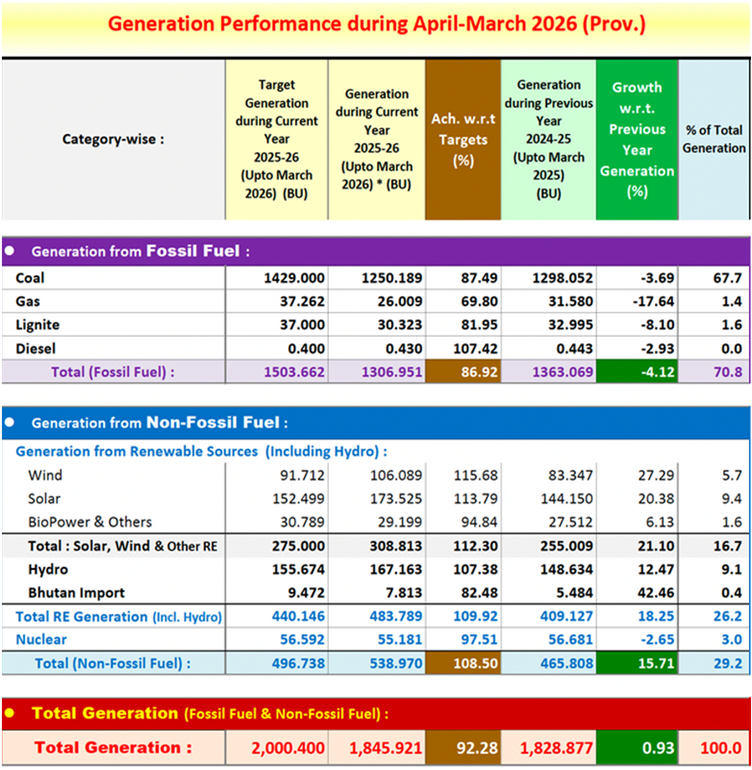
Source: pib.gov.in. Total Power generation in April-March 2026 – Fossil & Non-Fossil.
That also means India has to stop thinking in false choices. It does not need to choose between development and decarbonisation. It needs a disciplined transition. Fossil dependence, especially in power and transport, has to come down over time. But India cannot switch off hydrocarbons by political declaration. It is still industrialising, still urbanising, and still building the material base of national power. The more serious approach is to reduce import dependence where possible, electrify more of the economy, build renewables and storage much faster, and use present fossil-era strengths temporarily and strategically. That includes refining, petro-infrastructure, offshore exploration, and export capability where commercially viable. The key condition is that this transitional strength must finance the next system: nuclear power, battery storage, transmission, solar manufacturing, and strategic energy technologies.
This is where maritime geography enters the argument. Energy security for India is also maritime security. A large share of trade, fuel flows and strategic supply chains move through sea routes. That is why Great Nicobar should not be seen as a remote island story. It should be seen as a node in India’s larger strategic architecture. Officially, nearly 75 percent of India’s transshipped cargo is handled outside the country, and Colombo, Singapore and Klang together handle more than 85 percent of that volume. Galathea Bay matters because it sits on the international shipping route and gives India a chance to pull some of that transhipment activity back into its own system. In strategic terms, that is not just a port argument. It is a resilience argument. A country that wants industrial depth and strategic autonomy cannot remain permanently dependent on foreign hubs for such a large share of trade movement.
The same strategic lens applies to offshore hydrocarbons in the Andaman basin. This should not be oversold as a guaranteed giant oil-and-gas windfall. That would weaken the case. But it is entirely reasonable to see the basin as a frontier opportunity worth pursuing. Government replies in 2025 noted that exploratory work in the Andaman blocks had already generated 8,501 line-km of 2D seismic data, 3,270 sq km of 3D seismic data, and three wells, while four additional blocks covering 47,058 sq km were offered under OALP-X. The stated purpose is clear: long-term energy security and lower import dependence. Even moderate commercial discoveries there would improve India’s strategic room for manoeuvre, strengthen the eastern maritime flank, and support port-led infrastructure.
None of that removes the environmental question, and it should not. Great Nicobar cannot be developed with careless language. The correct state response is not “cut here and plant elsewhere.” It is a harder and more credible four-part method: avoid ecologically irreplaceable areas, minimise the footprint of infrastructure, compensate through serious afforestation and coastal restoration, and monitor the entire process transparently. That is not softness. It is the difference between a weak project and a durable one. Strategic projects survive when they can withstand both geopolitical and environmental scrutiny. The broader point is that India should not frame development and ecological seriousness as opposites. It should show that national power can be built with legitimacy.
If maritime infrastructure and transitional hydrocarbons are one side of the 2050 picture, the second side is the domestic clean-energy buildout. Solar has to become much bigger, but India should not remain only an installer of imported hardware. It should build a full ecosystem around cells, modules, inverters, software, storage, grid integration and manufacturing depth. The current base is already meaningful: India had 150.26 GW of solar, 56.09 GW of wind, and 283.46 GW of non-fossil capacity by the end of March 2026. But the real strategic value will not come from deployment alone. It will come from who designs, manufactures, integrates and controls the value chain. Energy security does not come from importing the future. It comes from building it at home.
Storage will matter just as much. India’s future energy system cannot rest only on central plants and long transmission lines. It will also need distributed resilience: solar-plus-storage systems for islands, border regions, military facilities, telecom infrastructure, industrial clusters and logistics nodes. In defence terms, this matters more than it is usually admitted. A military that depends entirely on a fragile civilian grid is more vulnerable than a military backed by hardened, layered and partly local power systems. Forward bases, naval facilities, radar chains, drone networks, data centres, ammunition plants and command systems all need reliable electricity. The right energy-security model, therefore, has to include both national-scale generation and local resilience. That is why storage is not only a commercial energy question. It is also a defence-readiness question.
Hydropower should be handled with the same realism. India should be cautious about large new dams in fragile ecological zones, especially in sensitive mountain regions where environmental and social costs can become strategically counterproductive. But that does not mean hydropower should be discarded. The better line is small run-of-river projects where appropriate, upgrading existing hydro assets, and using pumped storage as a balancing tool for solar and wind. In an energy-security framework, the issue is not ideology. The issue is system design. India needs flexible capacity, resilient grids and climate-aware planning, not one slogan for every region.
Yet even after saying all this, one fact remains unavoidable: the backbone of India’s long-term energy security must be nuclear power. Renewables are necessary, but they cannot alone carry the full weight of a large industrial and military power. India needs reliable, high-density, low-carbon baseload electricity that can run in peace and crisis, in the monsoon and at night, during industrial expansion and during wartime supply stress. That is what nuclear provides. The Government’s current roadmap is explicit: India aims for 100 GW of nuclear power by 2047. The present 8.78 GW base is expected to rise to about 22 GW by 2031–32, then to roughly 54 GW by 2047 through NPCIL and existing plans, with the balance expected through other public-sector, joint-venture and private-linked pathways. The mission now includes ₹20,000 crore for SMR development and a target of at least five indigenously designed SMRs by 2033.
This is where Homi Bhabha’s three-stage nuclear vision matters more than ever. It is still India’s most serious long-range answer to energy sovereignty. Stage 1 uses natural uranium in PHWRs. Stage 2 uses plutonium in fast breeder reactors to produce more fissile material than is consumed. Stage 3 aims to unlock India’s thorium advantage by converting thorium into uranium-233. The strategic importance of this framework is obvious: India has limited uranium, but a stronger thorium base, so the fuel cycle itself has to be designed for autonomy over time. That is why Kalpakkam is not just a technical milestone. The PFBR’s criticality marks movement from theory toward industrial execution. If India is serious about long-run energy sovereignty, then Stage 2 expansion—breeders, reprocessing, MOX fabrication, materials science, and fuel-cycle engineering—has to accelerate. Stage 3 will not be reached by speeches. It will be reached by industrial preparation.
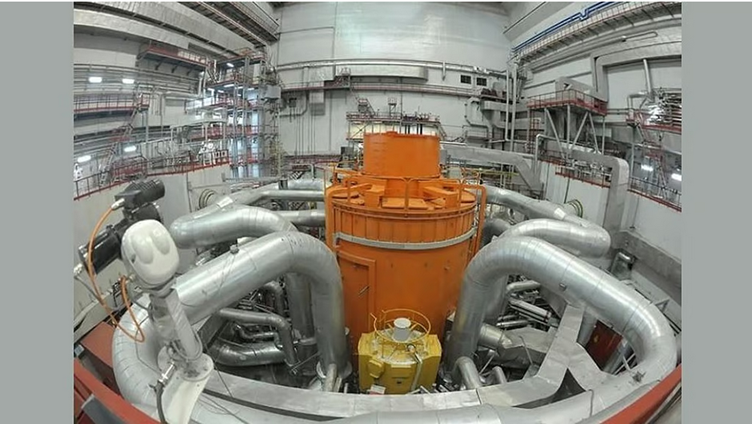
Source: India’s 500 MW Fast Breeder Reactor (FBR) prototype at Kalpakkam to attain first criticality by March 2026 & become operational by September 2026.
The defence angle strengthens this case further. India’s armed forces will need more electricity, more synthetic and alternative fuels, more resilient logistics, and more secure industrial support as warfare becomes more technology-intensive. The same holds for the defence-industrial base. Officially, at least 65 percent of India’s defence equipment is now manufactured domestically, and indigenous defence production has risen sharply over the last decade. That is good news, but it also means India’s defence manufacturing base will increasingly depend on secure electricity, resilient grids, assured fuel, and lower import vulnerability in energy-intensive sectors. Ammunition plants, shipyards, aerospace facilities, missile production lines, semiconductor assembly, communications networks and rail logistics all sit on top of an energy system. If that system is weak, the defence system will also be weak.
The broader conclusion, then, is straightforward. India’s energy strategy should now be written as part of India’s national security strategy. The country must reduce domestic fossil dependence, but in sequence and without self-harm. It must use the transition years intelligently. It must secure the Indian Ocean, build Great Nicobar with strategic clarity, explore the Andaman basin without fantasy, expand solar and storage, use hydro with more care, and place nuclear power at the centre of long-term sovereign capacity. A secure India will need strong armed forces, but it will also need secure ports, secure fuel routes, secure grids, secure cyber infrastructure, and secure baseload power. Energy, in that sense, is not separate from national security. It is one of its foundations.
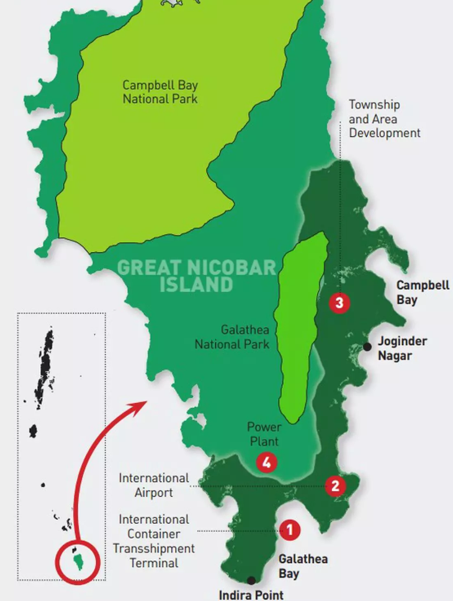
Source: Drishtiias.com. Andaman & Nicobar Islands Pre-feasibility report, March 2021
Title Image Courtesy: Gemini AI
Disclaimer: The views and opinions expressed by the author do not necessarily reflect the views of the Government of India and the Defence Research and Studies.


Reference list
Barc.gov.in (n.d.) Advanced Heavy Water Reactor (AHWR). Bhabha Atomic Research Centre. Accessed 20 April 2026.
Defence Research and Studies (2026) India and Africa: A Strategic Framework For Critical Minerals, Energy Security And Defence Cooperation. By Vatsal Garg. 19 April. Accessed 20 April 2026.
Press Information Bureau (2023) Shri Sarbananda Sonowal visits Galathea Bay in Great Nicobar Island to review the progress of the proposed International Container Transshipment Port. 23 November. Government of India. Accessed 20 April 2026.
Press Information Bureau (2025a) EoI to be invited for the International Transhipment Port at Galathea Bay, Great Nicobar Island. 27 January. Government of India. Accessed 20 April 2026.
Press Information Bureau (2025b) A nuclear energy mission for research & development of Small Modular Reactors (SMR) with an outlay of ₹20,000 crore will be set up. 1 February. Government of India. Accessed 20 April 2026.
Press Information Bureau (2025c) Nuclear Power in Union Budget 2025-26. 3 February. Government of India. Accessed 20 April 2026.
Press Information Bureau (2025d) Make in India Powers Defence Growth. 29 March. Government of India. Accessed 20 April 2026.
Press Information Bureau (2025e) Electricity generation capacity through nuclear energy. 10 December. Government of India. Accessed 20 April 2026.
Press Information Bureau (2025f) What is Nuclear Energy? 19 December. Government of India. Accessed 20 April 2026.
Press Information Bureau (2026a) The Evolving Spectrum of Energy Sources. 28 February. Government of India. Accessed 20 April 2026.
Press Information Bureau (2026b) Advancing Self-Reliance and Export Resilience. 2 March. Government of India. Accessed 20 April 2026.
Press Information Bureau (2026c) Government of India [Parliamentary/official release on thorium and nuclear fuel cycle progress]. 25 March. Government of India. Accessed 20 April 2026.
Press Information Bureau (2026d) India Ranks third globally in Renewable Energy Installed Capacity: Shri Pralhad Joshi. 8 April. Government of India. Accessed 20 April 2026.
Press Information Bureau (2026e) A New Chapter in India’s Nuclear Journey. 7 April. Government of India. Accessed 20 April 2026.
Press Information Bureau (2026f) Andaman oil exploration. 11 August 2025. Government of India. Accessed 20 April 2026.