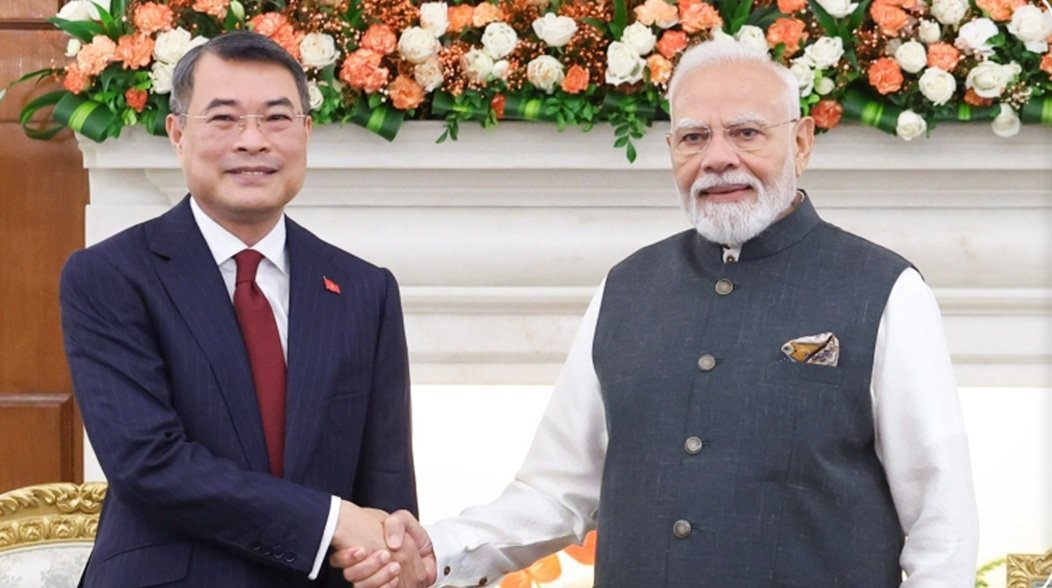

India is positioning itself as a leading voice of the Global South, bridging divides between Latin America, Africa, developing nations and the Global North while advocating for reforms to institutions such as the UNSC and the IMF.
A System in Transition
The reconfiguration of the international order is introducing new dynamics into cooperation among the emerging powers of the Global South. Within this context, India and Latin America share structural conditions that favour a progressive strategic convergence: the pursuit of strategic autonomy, the diversification of security partnerships, and the need to strengthen indigenous technological capabilities. Although geographic distance has historically constrained the depth of their ties, the multipolar logic of the twenty-first century is redefining the parameters of interregional cooperation.
Three concepts underpin this convergence. First, strategic autonomy as a shared principle: both India and the principal Latin American states have built foreign policy traditions oriented towards preserving independent margins of manoeuvre vis-à-vis the major powers. Second, South–South cooperation as a normative framework: both regions participate in multilateral platforms—the G20, BRICS, and development forums—where they converge in demanding greater inclusion in global governance. Third, technological complementarity: India has developed cost-efficient defence industrial and space technology capabilities, while several Latin American states possess industrial and scientific infrastructures that can be articulated with those capabilities.
Drivers of Convergence
The first driver is the expansion of India’s strategic reach. In July 2025, Prime Minister Modi undertook the first bilateral visit to Argentina in 57 years and attended the BRICS Summit in Brazil, agreeing on five pillars of cooperation encompassing defence, digital technology and strategic industry, with a bilateral trade target of USD 20 billion by 2030. In December 2025, the Indian Navy formalised with Brazil a maintenance agreement for Scorpène-class submarines — the first operational link of this level between the two navies. India’s Defence Production and Export Promotion Policy 2020 sustain this momentum, setting an annual export target of USD 5 billion and creating structural incentives to deepen India’s industrial presence across the region.
The second driver is Latin America’s strategic diversification. Argentina has expressed interest in Indian defence systems — including BrahMos cruise missiles and the Akash surface-to-air missile — while bilateral trade with India grew by nearly 54 per cent in the first months of 2025. In April of that year, Chilean President Boric visited India to advance cooperation in defence, critical minerals and space technology. India is emerging as a preferred partner for offering advanced technology, genuine industrial transfer, and an absence of any hegemonic legacy in the region.
The third driver is maritime interdependence. The Indian Ocean carries two-thirds of the world’s oil shipments, and the South Atlantic channels South America’s strategic commodity exports towards Asia and Europe. Both regions share challenges of illegal, unreported and unregulated fishing, maritime illicit economies, and the surveillance of Exclusive Economic Zones. The IBSAMAR exercise — with its eighth edition concluded in October 2024 and its ninth edition scheduled for 2026 — illustrates the growing institutionalisation of trilateral India–Brazil–South Africa naval cooperation across this shared oceanic space.
Domains of Cooperation: A Strategic Map
| Domain | India’s Capabilities | Latin American Capabilities | Cooperation Modalities |
| Defense Industry | Unmanned Aerial Systems (military and surveillance drones); naval technology; surveillance electronics; BrahMos cruise missiles and Akash surface-to-air missile systems | Brazil’s aerospace industry (Embraer KC-390 military transport aircraft); Argentina’s radar systems; Brazil’s naval shipyards (Itaguaí submarine program) | Bilateral Memoranda of Understanding; industrial co-production agreements; technology transfer; joint equipment maintenance and lifecycle support programs |
| Maritime Security | Multilateral naval exercises; NISHAR networked communication system (real-time sharing of imagery, text and video between allied fleets); naval special operations units | Navies of Brazil, Argentina and Chile; South Atlantic patrol operations; monitoring of 200-nautical-mile Exclusive Economic Zones | India–Brazil–South Africa trilateral naval exercise (IBSAMAR, operational since 2008; 9th edition scheduled for 2026); maritime intelligence exchange; naval officer training programs |
| Space Technology | Indian Space Research Organization (ISRO): 434 satellites launched for 36 countries; NASA–ISRO Earth Observation Satellite (NISAR) launched in 2025; low-cost commercial launch services | Argentina’s National Commission on Space Activities (CONAE): SAOCOM synthetic-aperture radar satellites for Earth observation; Brazil’s Space Agency (AEB): environmental and meteorological observation programs | Joint development of remote-sensing satellites; environmental and natural resource monitoring; space-based maritime surveillance; early warning systems for natural disasters |
| Cybersecurity | Indian artificial intelligence industry applied to critical infrastructure protection; regulatory expertise in digital security developed through the India–United States technology cooperation program | Indian Space Research Organisation (ISRO): 434 satellites launched for 36 countries; NASA–ISRO Earth Observation Satellite (NISAR) launched in 2025; low-cost commercial launch services | Cyber threat intelligence sharing; joint technical training programs; development of regulatory frameworks for the protection of critical energy, transport and communications networks |
Priority Strategic Opportunities
Defence industry cooperation. In October 2025, Brazil dispatched to New Delhi a high-level delegation led by Vice President Alckmin — accompanied by the Minister of Defence and the Commander of the Air Force — to negotiate a co-production agenda encompassing the Akash air defence system, offshore patrol vessels and battlefield communication systems. Concurrently, Embraer is advancing with Mahindra a proposal to supply the C-390 Millennium military transport aircraft to the Indian Air Force with local manufacture, while in January 2026, Adani Aerospace signed a Memorandum of Understanding with Embraer to establish an aircraft assembly line in India. The depth of this agenda reflects a qualitative leap in a relationship that, as recently as 2023, was confined to statements of intent.
Maritime security and naval interoperability. In December 2025, the Chief of the Indian Navy visited Brazil and formalised the Scorpène-class submarine maintenance agreement, extending cooperation to maritime security and training exchanges. This operational link rests on a solid human foundation: since 2007, more than 130 defence officers from both countries have completed courses at the other’s military institutions. The trilateral IBSAMAR naval exercise, active since 2008, will hold its ninth edition in 2026, consolidating operational cooperation in the South Atlantic.
Dual-use space technology. Space cooperation has concrete precedents: in 2021, India launched the Amazonia-1 satellite — the first Earth observation satellite entirely designed, integrated, tested and operated by Brazil — under an inter-institutional agreement in force since 2004. The launch of the NISAR satellite jointly with NASA in July 2025 confirms India’s capacity for high-complexity missions at competitive cost. Argentina’s synthetic-aperture radar capabilities and Brazil’s environmental observation programs are naturally complementary to India’s remote-sensing offer, opening possibilities for joint development with both civilian and maritime security applications.
Cybersecurity and critical emerging technologies. At the Modi–Lula summit in July 2025, both countries agreed to establish a Bilateral Cybersecurity Dialogue as a permanent exchange platform. India, which in 2024 achieved the highest tier of the International Telecommunication Union’s Global Cybersecurity Index, possesses transferable capabilities in critical infrastructure protection and specialist training that are directly relevant for Latin America, where institutional gaps persist as documented by the OAS and the IDB in their 2025 Cybersecurity Report.
From Political Will to Institutional Architecture: Structural Constraints and Prospects to 2026
The strategic convergence between India and Latin America does not stem from a formal alliance or ideological alignment, but from a coincidence of structural interests within an international system undergoing accelerated transition. The pace of recent developments — the MILAN 2026 naval exercise drawing participation from 74 nations, the ten-year India–United States defense agreement signed in October 2025, and bilateral India–Brazil trade reaching USD 15.2 billion in 2025 on track towards the USD 20 billion target for 2030 — illustrates that India now operates as a global security actor capable of simultaneous power projection across multiple regions including Latin America.
Three structural constraints modulate, without blocking, this trajectory. Geographic distance introduces real logistical friction, though the IBSAMAR exercises have demonstrated since 2008 that transoceanic naval cooperation is operationally feasible when sustained political will and adequate logistical planning are in place. Bilateral institutional density remains incipient: the relationship still lacks the permanent defence attaché networks, language training programs and shared technical manuals that characterise mature security partnerships; yet the accumulation of over 130 officer exchanges between India and Brazil since 2007 signals that this foundation is being steadily built. Finally, competition from established defence suppliers requires India to differentiate itself not on price, but on the quality of genuine technology transfer and industrial co-development — precisely the model that underpins the Adani–Embraer agreement (January 2026), the Mahindra–Embraer consortium for the C-390, and the Akash co-production negotiations with Brazil.
By early 2026, India had advanced trade negotiations with Peru and Chile and launched a new engagement framework with Mexico, consolidating a pattern of regional diversification that no longer centres exclusively on the two traditional bilateral pivots. Cooperation is extending into critical minerals, digital infrastructure, pharmaceuticals and space technology, broadening the material base upon which a durable security partnership can be constructed. Brazil, holding the world’s second-largest reserves of critical minerals and rare earths, represents for India a strategic partner in building alternative supply chains for electric vehicles, defence technology and semiconductors.
In a long-term perspective, a consolidated India– Latin America partnership would contribute to shaping a strategic bridge between the Indo-Pacific and the South Atlantic: two maritime spaces that together concentrate critical trade routes, strategic energy reserves and intensifying dynamics of great-power competition. The consolidation of this relationship will depend on the capacity to translate the agreements of 2025 into permanent institutional mechanisms — regular exercises, co-production projects with verifiable timelines and shared intelligence platforms. The path has been charted; what remains is to walk it with the same resolve with which it was opened.
Title Image Courtesy: YouTube
Disclaimer: The views and opinions expressed by the author do not necessarily reflect the views of the Government of India and the Defence Research and Studies.