For many years, when people spoke about national security, they mostly spoke about soldiers, borders, nuclear weapons, missiles, satellites, ships, aircraft and intelligence agencies. Today, one more powerful force has entered this field, and that force is artificial intelligence, or AI. Earlier, many people thought AI was only about chatbots, office work, mobile apps, social media or simple automation. But now AI has become much bigger. It is becoming a source of national power. The country that has AI dominance will be able to study threats faster, protect its systems better, support its armed forces better and make quicker decisions in moments of danger. This is why AI must now be seen in the same serious way as nuclear power, cyber power and space power.
AI can help India in many useful ways. It can study satellite images, detect movement near borders, help drones, find cyberattacks, support telecom networks, protect banks, translate languages, track ships, help soldiers and support disaster response. But the same AI can also be used in dangerous ways. It can create fake videos, fake voices, false messages and deepfakes. It can help hackers find weaknesses in software, telecom networks, banking systems and cloud platforms. It can be used by enemy countries, criminal groups or terrorist groups to confuse people and attack critical systems. This means national security is no longer only about protecting land, sea and air. It is also about protecting data, digital networks, satellites, financial systems, public trust and the minds of citizens.
This is why AI has entered the area of strategic stability. In simple words, strategic stability means that countries should not be pushed into panic, wrong decisions or sudden conflict because another country has a hidden technology advantage. During the nuclear age, countries created rules and systems to reduce the risk of accidental war. During the cyber age, governments learned that attacks on banks, power grids, airports, telecom systems and government networks can also become national security threats. During the space age, satellites became important for communication, weather, navigation, defence and intelligence. Now, in the AI age, data, chips, cloud infrastructure, AI models and trusted software are becoming equally important.
For India, this subject is very important because India lives in a difficult security environment. India has a long border with China, a tense relationship with Pakistan, the threat of terrorism, cyberattacks, drone threats, maritime challenges and growing competition in the Indian Ocean. In such a situation, AI can help India become stronger and faster. But AI can also create new weaknesses if India depends too much on foreign chips, foreign cloud systems, foreign AI models, foreign apps and foreign defence software. A strong country cannot depend fully on others for the most important technologies of the future.
The first important area is semiconductors, or chips. AI needs powerful chips to work. Without chips, there is no serious AI. These chips are used in data centres, satellites, drones, telecom systems, defence equipment, cars, mobile phones, banking systems and many other areas. Chips are now like the new oil of the digital world. India has started moving in the right direction through the India Semiconductor Mission. The mission provides fiscal support of up to 50 percent of project cost for approved semiconductor fabs, display fabs and some other semiconductor facilities. This is important because in a future crisis, the country that has trusted access to chips will have a major advantage. India should not only assemble chips. It must also build strength in chip design, packaging, testing, materials, skilled workers and trusted supply chains.
The second important area is cloud infrastructure and AI compute. AI needs huge computing power. This power comes from data centres, GPUs and cloud platforms. If India’s sensitive data is processed only on foreign-controlled systems, national security risks can increase. India’s IndiaAI Mission is important because it has a budget outlay of ₹10,371.92 crore and includes a plan for public AI compute infrastructure of 10,000 or more GPUs through a public-private partnership. The mission also speaks about indigenous foundational models, datasets, startup support and safe and trusted AI. This is important because Indian startups, researchers, public agencies, defence labs, universities and small companies also need access to AI compute. AI power should not be limited only to a few large foreign companies.
The third important risk is AI-based hacking of India’s critical infrastructure. A recent report in The Economic Times said the Centre is increasingly worried about the cybersecurity of telecom infrastructure because of powerful AI models such as Anthropic’s Claude Mythos. The report said Communications Minister Jyotiraditya Scindia held an unscheduled meeting with telecom companies and academia to understand the seriousness of the situation and the preparedness of the industry. Telecom networks are not ordinary business systems. They are connected to national security, banking, emergency services, defence communication, digital payments and the daily life of citizens. If AI tools can find weaknesses in telecom networks, APIs, cloud systems and software at high speed, then India must protect its digital backbone before a crisis happens.
This concern is also linked to the financial sector. The Economic Times also reported that Finance Minister Nirmala Sitharaman and Union Electronics and Information Technology Minister Ashwini Vaishnaw held discussions with banks and other stakeholders on threats involving AI models, especially the possibility that such tools may be misused to weaponise software vulnerabilities. The report said India is looking to create a strong real-time threat intelligence sharing system among banks, CERT-In and other agencies. This is very important because India’s financial system is deeply connected with UPI, banking apps, stock markets, insurance, government payments and digital identity. A major AI-led cyberattack on finance can damage not only money, but also public confidence in the system.
India’s market regulator has also started responding to this new risk. Reuters reported that SEBI has set up a task force to study threats from AI-driven vulnerability detection tools and create a uniform strategy to reduce such risks in the securities market. SEBI has also asked market institutions and intermediaries to report cyberattacks, system vulnerabilities and malicious activity on priority. This shows that AI security is no longer limited to one ministry or one sector. It is now a joint national security issue for telecom, finance, cyber, defence, space, infrastructure and public administration.
Another concern is the use of foreign AI apps and platforms for sensitive work. India should not treat every foreign AI tool as dangerous, because many global tools are useful and can help productivity. But India must be careful when official documents, citizen data, financial information, defence information or infrastructure details are entered into foreign-controlled AI systems. Reuters reported that India’s Finance Ministry advised its employees to avoid using AI tools such as ChatGPT and DeepSeek for official work because of risks to the confidentiality of government documents and data. This shows why India needs clear rules for government use of AI tools, secure Indian AI platforms and trusted cloud systems.
The next important area is space-based AI. Space is already central to India’s security and development. Satellites help in communication, weather forecasting, navigation, disaster management, agriculture, mapping, border monitoring, maritime awareness and defence. AI can make space systems much more powerful. It can help process satellite images faster, detect changes on the ground, track ships, support disaster alerts, monitor crops, improve weather models and help manage spacecraft. The Department of Space has already said that ISRO is using AI and machine learning in areas such as launch vehicles, spacecraft operations, big data analytics, space robotics and space traffic management. It has also listed AI uses in satellite health monitoring, satellite data processing, resource mapping, weather prediction, disaster prediction, geo-intelligence and precision agriculture.
But space-based AI also needs strong precautions. A wrong AI reading of satellite data can create a wrong warning. A hacked satellite system can damage communication, navigation or defence operations. AI used in space traffic management must be very reliable because a wrong decision can increase the risk of collision. AI-based image analysis must be checked carefully because shadows, weather, camouflage or technical errors can mislead the system. India should therefore follow a simple rule in space AI: machines can help detect, process and alert, but important decisions must be checked by trained human experts. Satellite control systems, ground stations, space data centres and private space suppliers should also be protected with strong cyber standards, encryption, testing and regular security audits.
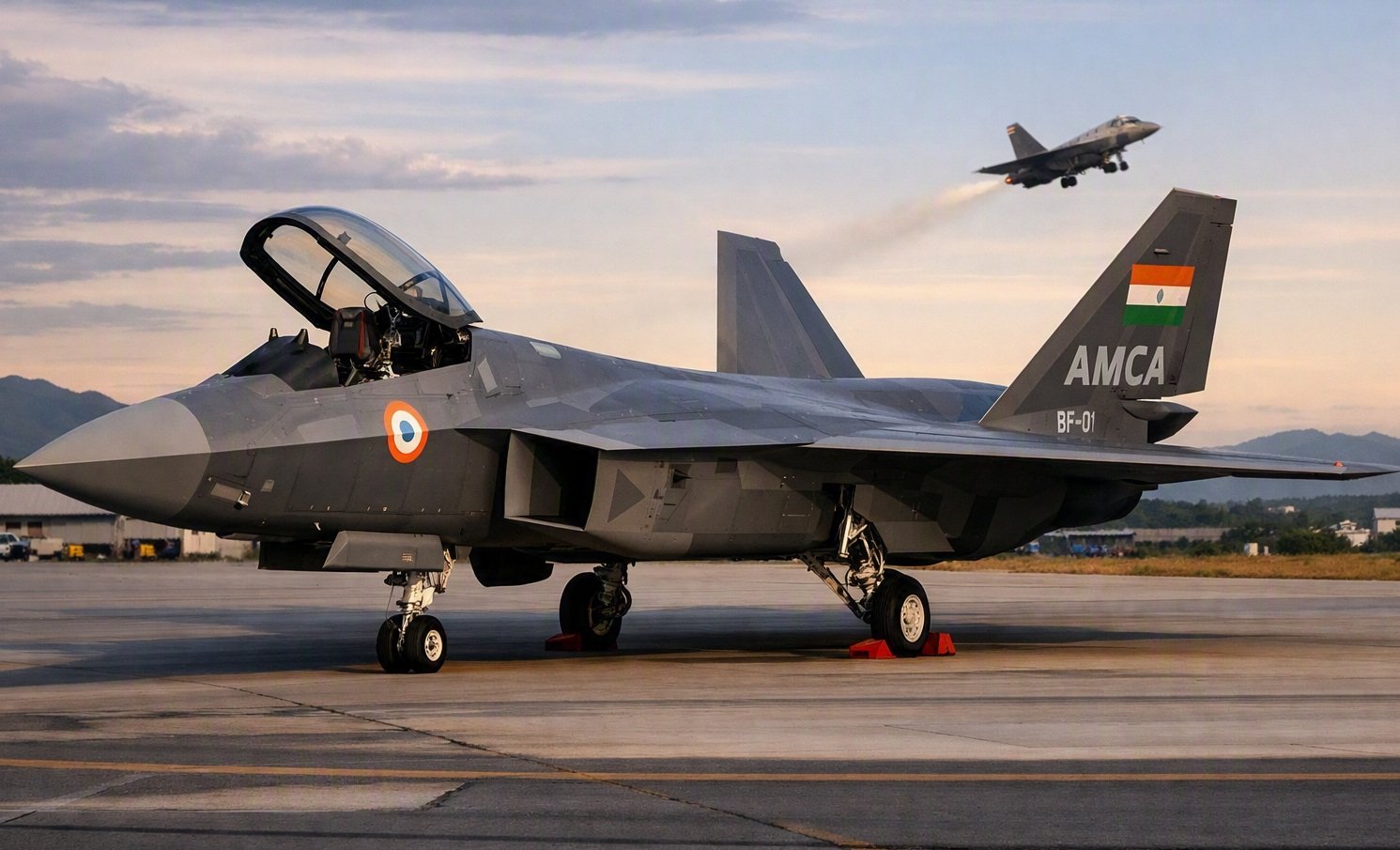
The next area is defence AI. AI can help the armed forces in surveillance, logistics, maintenance, border monitoring, underwater detection, drone operations, cyber defence and command decision support. India has already created the Defence AI Council and the Defence AI Project Agency to support the adoption of AI in defence. The government has also said that an AI roadmap has been finalised for each Defence Public Sector Undertaking. This shows that India is not ignoring defence AI. But the real challenge is to use it safely, because defence AI is different from ordinary commercial AI. A mistake in a shopping app may cause inconvenience. A mistake in a defence AI system can put soldiers and citizens at risk.
India must therefore follow strong precautions in defence AI. First, humans must remain in control of serious military decisions, especially decisions involving the use of force. AI can assist, but humans must decide. Second, every defence AI system should be tested in Indian conditions, because border terrain, weather, languages, signals and enemy behaviour may be different from foreign testing environments. Third, there must be audit trails so that officers can later understand why an AI system gave a certain warning or recommendation. Fourth, there must be red-team testing, where Indian experts try to break or fool the system before an enemy does. Fifth, defence AI suppliers must be trusted, checked and monitored. Hidden weaknesses in software, chips or data pipelines can become serious national security risks.
Model governance is another major issue. AI models are not perfect. They can make mistakes, show bias, give wrong answers and sometimes behave in unexpected ways. In normal life, a wrong AI answer may only confuse. But in policing, defence, banking, telecom, border management or disaster response, a wrong AI answer can create serious harm. NITI Aayog’s Responsible AI approach document speaks about important principles such as safety, reliability, equality, privacy, security, transparency and accountability. These principles are not only ethical ideas. They also have security needs. India should create clear rules for high-risk AI systems and ask simple questions: Who is responsible if the AI makes a harmful mistake? Can the system be audited? Where is the data stored? Can a human override the machine? Can the model be tricked? Is there a record of how the decision was made?
Export controls and trusted supply chains will also become more important. Around the world, advanced chips, AI models, cyber tools and dual-use technologies are increasingly being treated as strategic goods. This means countries are becoming careful about who can buy the most advanced systems and where they can be used. India must understand this clearly. If India remains only a buyer of advanced technology, it can face pressure during a crisis. But if India becomes a maker, designer and trusted partner, it will have more freedom. India does not need to isolate itself from the world. It should work with friendly countries and trusted companies. But it should also build enough domestic ability so that no foreign country or company can easily block India’s security choices.
Public security is also part of this issue. AI-generated fake videos and fake voices can create panic, communal tension, election confusion and distrust in public institutions. A fake video of a minister, military officer, police officer or religious leader can spread very fast. During a border crisis, a terror attack or an election, such content can become dangerous. India must build systems to detect deepfakes, label AI-generated content, train police forces, protect elections and educate citizens. People must learn not to believe every video, image or message they receive online. In the AI age, public awareness is also a form of national defence.
India has many strengths. It has strong software talent, a large youth population, digital public infrastructure, growing startups, active defence innovation and a strong space programme. But India also has gaps. It still depends on other countries for many high-end chips. It needs more secure data centres, more AI safety experts, more cyber defence professionals, more semiconductor talent and more advanced research in Indian AI models. It also needs better coordination between ministries, regulators, armed forces, intelligence agencies, banks, telecom companies, cloud providers, space agencies, startups and universities.
The way forward is clear. India should treat AI infrastructure as national infrastructure. Just as roads, railways, ports, electricity and telecom networks are important for the country, chips, cloud systems, data centres, satellites, AI models and cyber defence systems are also important now. India should create a national AI security policy that brings together telecom, finance, defence, space, cyber and public infrastructure. This policy should clearly explain where AI can be used, where human control is necessary, how systems will be tested, how suppliers will be checked, how data will be protected and who will be responsible if something goes wrong.
India should not be afraid of AI. Fear alone will not help. AI can help farmers, doctors, teachers, police, courts, soldiers, startups and small businesses. The real challenge is to build AI that is useful, safe and trusted. India must encourage innovation, but it must also protect national interest. It must welcome new technology, but it must not become fully dependent on others. It must work with the world, but it must also stand on its own feet.
The next ten years will be very important. Countries that understand AI early will shape the future. Countries that delay may become dependent on others. In the nuclear age, power came from the atom. In the space age, power came from satellites. In the cyber age, power came from networks. In the AI age, power will come from data, chips, compute, cloud, satellites, models and trust. For India, the message is simple and urgent: AI is no longer only a technology issue. It is a national security issue, and India must treat it with the seriousness it deserves.
Title Image courtesy: https://www.nsed.gov.hk/
Disclaimer: The views and opinions expressed by the author do not necessarily reflect the views of the Government of India and the Defence Research and Studies.


Sources
- India Semiconductor Mission (n.d.) India Semiconductor Mission. Ministry of Electronics and Information Technology, Government of India.
- Press Information Bureau, Government of India (2024) Cabinet Approves Ambitious IndiaAI Mission to Strengthen the AI Innovation Ecosystem.
- IndiaAI (n.d.) IndiaAI Compute Capacity. Ministry of Electronics and Information Technology, Government of India.
- IndiaAI (n.d.) Safe and Trusted AI. Ministry of Electronics and Information Technology, Government of India.
- NITI Aayog (2021) Responsible AI: Approach Document for India, Part 1 — Principles for Responsible AI. Government of India.
- Press Information Bureau, Government of India (2023) Over the Last Three Years, ISRO Has Been Steadily Leveraging Artificial Intelligence and Machine Learning in Space Domain. Department of Space.
- Press Information Bureau, Government of India (2025) Atmanirbharta in Defence Sector. Ministry of Defence.
- Press Information Bureau, Government of India (2022) Raksha Mantri Launches 75 Artificial Intelligence Products and Technologies During First AI in Defence Symposium.
- The Economic Times (2026) AI Models Raise Telecom Cyber Threat Concerns in India.
- The Economic Times (2026) FM Sitharaman, IT Minister Vaishnaw Meet Bankers Over Looming Claude Mythos; Push for Faster Intel Sharing.
- Reuters (2025) India’s Finance Ministry Asks Employees to Avoid AI Tools Like ChatGPT, DeepSeek.
- Reuters (2026) India’s Markets Regulator Sets Up Task Force to Tackle AI-Driven Cyber Threats.
- Anthropic (2026) Project Glasswing.
- Stockholm International Peace Research Institute (2020) Artificial Intelligence, Strategic Stability and Nuclear Risk.
- United Nations Office for Disarmament Affairs (n.d.) Artificial Intelligence in the Military Domain.