For centuries, military power was measured by the size of armies, the number of tanks, or the range of artillery. While these capabilities remain important, the defining advantage on today’s battlefield is increasingly determined by something less visible—the ability to collect information, process it rapidly, and convert it into precise military action. In modern warfare, information has become a weapon in its own right.
This transformation is best understood through the sensor-to-shooter concept, which links surveillance systems, intelligence networks, decision-makers, and strike platforms into a seamless operational chain. Rather than rewarding the force with the largest arsenal, contemporary conflicts increasingly favour the force that can detect threats first, decide faster, and engage with precision. Recent conflicts—from Ukraine to India’s Operation Sindoor—have demonstrated that shortening this decision cycle can fundamentally alter the course of military operations.
As militaries embrace artificial intelligence, autonomous systems, and network-centric warfare, the sensor-to-shooter chain is emerging as the foundation of future combat effectiveness. For India, understanding and strengthening this capability is no longer merely a technological objective—it is becoming a strategic necessity for maintaining military superiority in an increasingly contested security environment.
Evolution of Battlefield Decision-Making
For much of military history, battlefield success depended on the concentration of manpower, firepower, and logistical endurance. Commanders often operated with incomplete information, making decisions based on delayed intelligence and limited situational awareness. While these principles shaped conventional warfare for decades, advances in surveillance technologies, satellite reconnaissance, unmanned systems, and digital communications have fundamentally changed how military operations are planned and executed.
At the heart of this transformation lies the sensor-to-shooter chain—an integrated process that connects surveillance assets (the sensors) with command-and-control networks, enabling military leaders to rapidly analyse information and direct the most appropriate strike platform (the shooter). The effectiveness of this chain is measured not merely by the accuracy of a weapon, but by how quickly information moves from detection to decision and finally to engagement. A shorter sensor-to-shooter cycle allows military forces to seize the initiative, disrupt adversary plans, and maintain operational momentum.
This shift represents more than a technological advancement; it reflects a fundamental change in military thinking. Modern warfare increasingly rewards forces that can integrate intelligence, communications, and precision strike capabilities into a single operational ecosystem. In this environment, the decisive advantage no longer belongs to the side with the largest arsenal, but to the side capable of transforming information into timely and coordinated military action. As the pace of conflict accelerates, decision superiority is emerging as the new measure of combat effectiveness, making the sensor-to-shooter chain one of the defining features of twenty-first century warfare.
From Ukraine to Operation Sindoor
Recent conflicts have demonstrated that the sensor-to-shooter chain is no longer a theoretical military concept—it has become a decisive operational reality. In Ukraine, both sides have extensively employed satellites, unmanned aerial systems, electronic warfare assets, and real-time intelligence to identify targets and deliver precision strikes within increasingly compressed timelines. The conflict has shown that the ability to rapidly detect, analyse, and engage a target often provides a greater battlefield advantage than simply possessing superior numbers of troops or equipment.
Operation Sindoor further reinforced the growing importance of this operational model in the Indian context. The integration of intelligence, surveillance, precision strike capabilities, and coordinated command structures highlighted how information-driven operations can enhance both the speed and effectiveness of military decision-making. Rather than relying solely on conventional firepower, the operation demonstrated the value of synchronising multiple capabilities to achieve strategic objectives while maintaining control over escalation.
The common lesson emerging from these conflicts is clear: the future of warfare belongs to militaries that can compress the time between sensing a threat and neutralising it. As artificial intelligence, autonomous systems, and advanced C4ISR networks continue to mature, the sensor-to-shooter chain will become even faster, more resilient, and increasingly autonomous. For India, this is not merely an emerging technological trend but a strategic imperative that will shape the effectiveness of future military operations across land, air, maritime, cyber, and space domains.
Why India Must Prioritise Decision Superiority
For India, the sensor-to-shooter revolution is not simply about adopting new technologies—it is about redefining how military power is generated and employed. As India’s security environment becomes increasingly complex, with contested borders, rapid technological advancements, and the emergence of multi-domain threats, the ability to make faster and more informed decisions will be as important as the capability to deliver precise firepower. Future conflicts are likely to reward forces that can integrate intelligence, surveillance, communications, and strike capabilities into a seamless operational network.
Building such a capability will require more than acquiring advanced drones or artificial intelligence platforms. It demands resilient C4ISR networks, secure data-sharing mechanisms, interoperable command structures, and sustained investment in indigenous defence technologies that reduce dependence on external suppliers. Equally important is the development of a military culture that encourages jointness, rapid decision-making, and continuous adaptation to emerging operational challenges.
Ultimately, the sensor-to-shooter chain represents a shift in military philosophy rather than merely a technological innovation. In future conflicts, the decisive advantage will belong to the force that transforms information into action faster than its adversary. For India, strengthening this capability is essential not only to enhance battlefield effectiveness but also to maintain credible deterrence and operational readiness in an increasingly dynamic strategic environment.
Conclusion
The sensor-to-shooter revolution marks one of the most significant transformations in modern military affairs. As recent conflicts have demonstrated, the ability to collect, process, and act upon information faster than an adversary is rapidly becoming the decisive factor in achieving battlefield success. Information superiority is no longer merely a force multiplier—it is emerging as the foundation upon which future military operations will be planned and executed.
For India, embracing this transformation requires more than technological modernisation. It demands an integrated approach that combines resilient C4ISR networks, indigenous innovation, joint operational planning, and a doctrine that places rapid decision-making at the centre of military strategy. The objective is not simply to acquire more advanced systems, but to ensure that every sensor, commander, and weapon platform functions as part of a unified operational ecosystem.
Ultimately, the future of warfare will belong not to the military that possesses the most sophisticated weapons, but to the one that can transform information into decisive action faster than its adversary. As the character of conflict continues to evolve, strengthening the sensor-to-shooter chain will be essential for safeguarding India’s military effectiveness, strategic deterrence, and national security in the decades ahead.
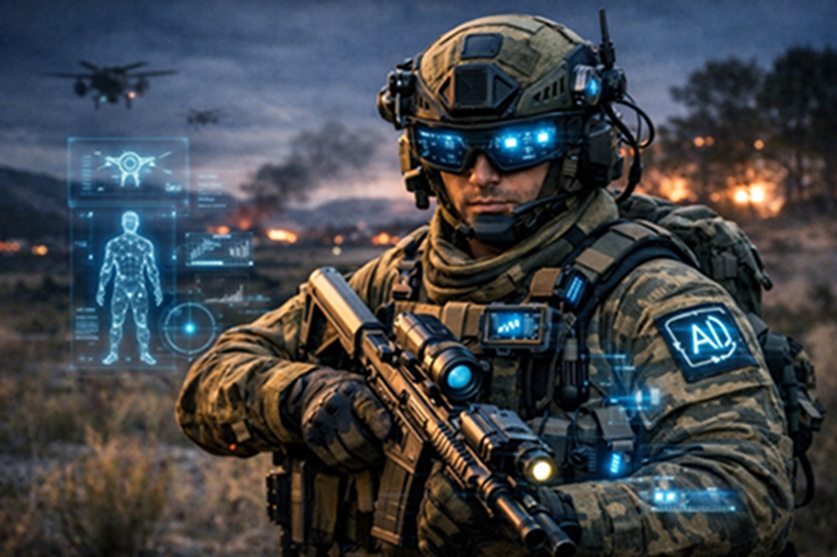
Title Image Courtesy: Copilot AI
Disclaimer: The views and opinions expressed by the author do not necessarily reflect those of the Government of India or the Defence Research and Studies.