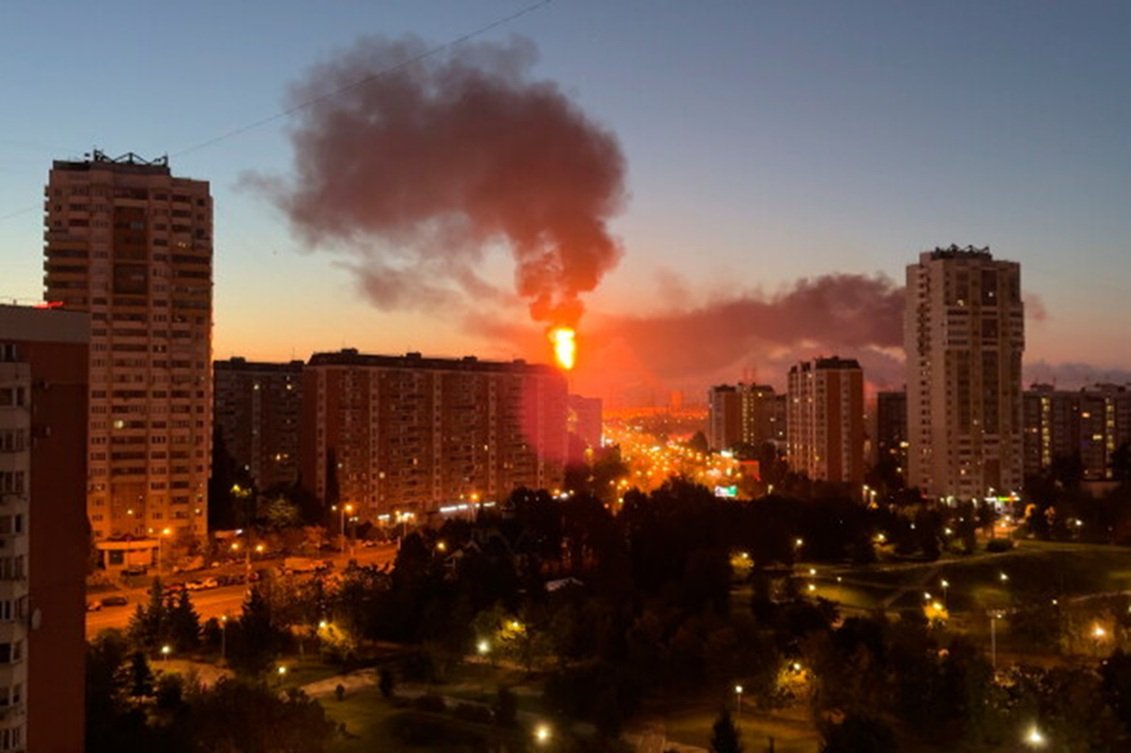
On the night of September 19–20, 2026, Ukraine conducted its largest-ever drone attack on Moscow and the surrounding Moscow region, coinciding with the final day of Russia’s parliamentary elections. Significant damage to assets that affect Russia’s war-fighting capability included the Gazpromneft-Moscow Oil Refinery, oil loading stations, logistics facilities, and a semiconductor/microelectronics plant (Angstrem in Zelenograd) critical for Russian defence electronics. Debris affected areas near Sheremetyevo Airport, though no flight disruptions were reported.
Drone Types, Capabilities, Navigation & Control
No official sources are available on the number of drones used, though Russian sources place this number over 1000. The Ukrainians used the following types of drones for this attack:
FP-1 Firepoint Fixed-wing, turbojet-powered one-way strike drone with a range of 1450 km, payload of 118 kgs, using INS (inertial navigation) and optic/terrain matching navigation with semi-autonomous operation.
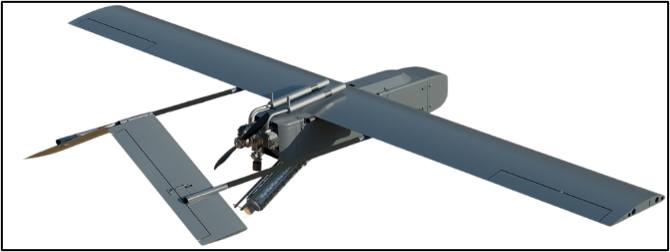
RS-1 Bars & Bars SM Gladiator jet-powered winged drone/ cruise-missile hybrid with a range of 500+ km, payload of 45-90 kgs, using INS (inertial navigation) and optic/terrain matching navigation with semi-autonomous operation.
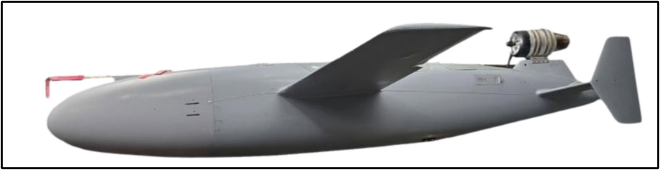
Flamingo heavy 6-ton long-range jet-powered winged drone/ cruise-missile hybrid with a range of 1000+ km, payload of 1000+ kgs, using INS (inertial navigation) and optic/terrain matching navigation with near-fully autonomous operation.
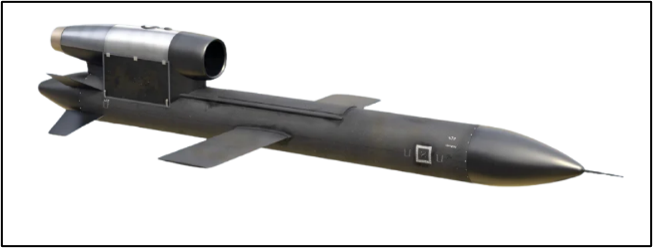
Pelican Long Range Missile Drone with a range of 200-350 km and a payload of 150 Kg with semi-autonomous operations using INS and satellite communication if available.
Only about 5-10% of the drones used were likely to have been operated with full AI-driven route adaptation and target selection without real-time human input. The vast majority (80-90%) of the drones/ missiles were pre-programmed with routes which they navigated using INS + Optical/Terrain matching. A negligible proportion (< 5%) had any kind of active human control due to the distances involved.
Russian Defence Systems
Moscow is protected by two dense concentric air-defence rings plus inner-city positions (~130 total sites verified by OSINT). Their key systems include:
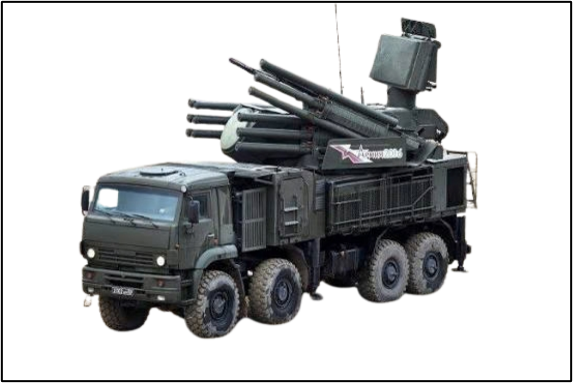
Pantsir-S1 / Pantsir-S1M / Pantsir-SM (Primary anti-drone system) had approx. 90-130 units in the Moscow region. It is optimised for low-flying drones and cruise missiles. This system has multi-channel phased-array capability (detection 30-70Km) and combines missiles and 30mm guns. It can track up to 40 targets, engages 3–4 simultaneously at ranges from 1.2 to 30km with missiles and guns upto 4 kms. The new Gvozd mini-missiles (up to 48 per launcher) extend swarm defence with a 0.5–7 km range.
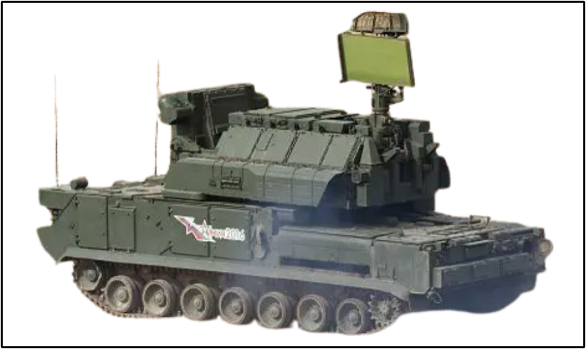
Tors System (Short-to-medium range) supplements the Pantsir for low-altitude threats. It is highly mobile, radar-guided, with an engagement range of 12-16 km. It is very effective against small UAVs but has limited magazine depth against large swarms
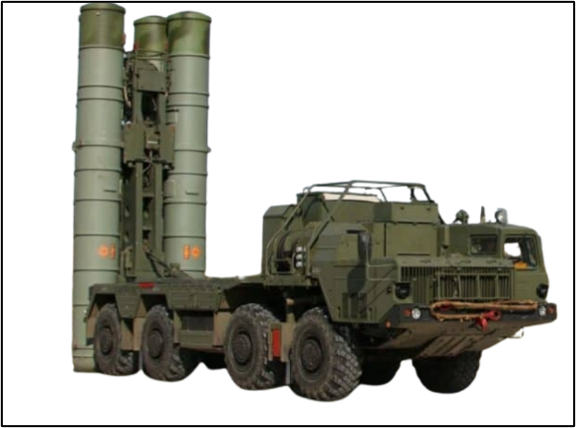
S-400 (~2 dozen batteries around Moscow) with long-range layered defence. Up to 400 km against aircraft; shorter (~40–60 km effective) against low-observable drones and cruise missiles. It has a multi-function radar and long-range missiles for the outer ring. Primarily handles higher-altitude or larger threats and is not very effective against smaller drones due to radar-cross-section challenges.
How Ukrainian Drones Slipped Through Russian Defences
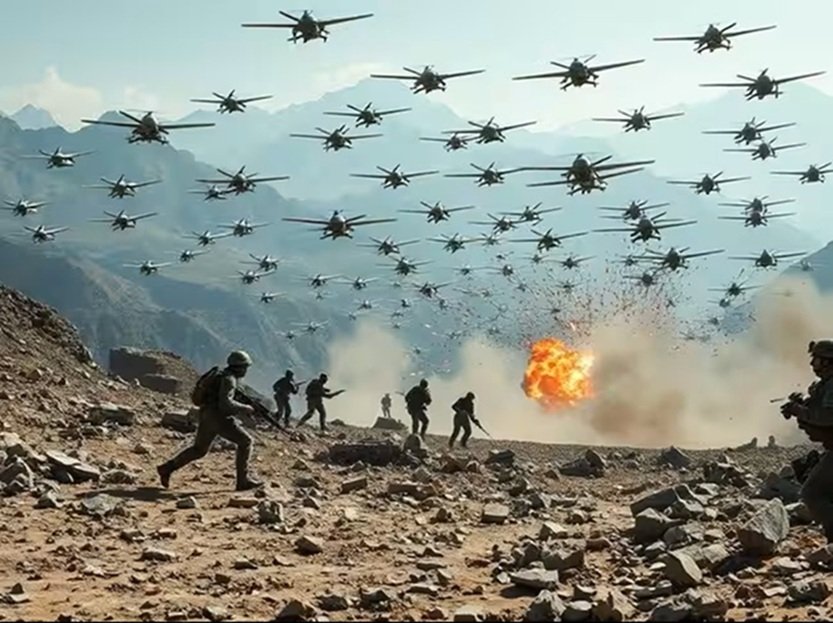
The Ukrainians used a variety of operational concepts to overcome Russian Air Defences around Moscow. The RS-1 Bars (configured for mass production) were mostly used for swarm attacks. The Russians claim to have brought down 90% of the drones, though accurate figures could not be independently corroborated. Despite intercepting the majority, several drones penetrated both outer and inner rings. Key reasons, based on analysis:
- Wave Timings: Carefully coordinate timings for drone/ missile waves. Initial swarm drone saturation expended the magazine depth of frontline systems. Subsequent waves were timed in a manner to punch through sequentially behind the saturation wave.
- Intelligent Route Planning: Drones used complex, non-straight paths including terrain masking to avoid known SAM sites, passing through radar gaps identified during pre-mission intelligence, weak points and poor-overlap zones.
- Low-Altitude Flight & Terrain/Urban Masking: Once in the Moscow region, drones flew at very low altitudes (<100 m in urban areas), using buildings, terrain, and Moscow’s dense high-rise environment to hide from radar horizons. Urban sprawls highly enhance drone survivability.
- Low Radar Cross-Section (RCS): Composite/plywood construction and small size made drones hard for traditional radars (designed for metal aircraft/cruise missiles) to detect reliably, especially at low altitude and high speed.
- Autonomous Navigation Resilience: Heavy reliance on INS + optical/terrain- allowed drones to continue despite Russian electronic warfare and jamming.
- Patchwork Defence & Resource Strain: The Ukrainian tactics exploited the size of Russian landmass. Resource constraints and the availability of AD systems created a patchy air-defence deployment, with the majority of the assets being pulled between the frontline requirement and hinterland defence. Once drones penetrated the frontline AD shield, identification and interception in the operational and strategic depth became much harder.
The Psychological and Economic Impact
The attack demonstrated Ukraine’s ability to reach Moscow despite layered defences, causing psychological shock, minor economic disruption to refining capacity, and political embarrassment during elections. At conservative estimates, the total destructive economic costs on Russia range between $ 150-180 Mn. To achieve this, Ukraine’s expense for the volume of the attack is anticipated to be between $ 70-90 Mn, giving a 2x advantage economically.
The incident underscores a shifting paradigm in modern warfare where inexpensive autonomous systems challenge even sophisticated layered defences. It highlights that perfect interception is nearly impossible against large-scale, low-observable autonomous swarms with the current weapon systems. The attack highlighted that quantity, stealthy profiles, and smart routing can defeat even heavily defended capitals when defences rely primarily on kinetic interceptors with finite ammunition.
What are the Military Lessons and Imperatives for India?
The Indian experience of drone warfare was borne out of Operation SINDOOR. However, this engagement in operational and tactical equivalence compared with the second year in Ukraine-Russia War. We continue to design and manufacture drones and anti-drone defences, which are nearing obsolescence and are unlikely to yield good dividends even in the present context. Some of the lessons that emerge out of the recent Ukraine attack on Moscow lend themselves to the u/m deductions:
On the defensive end:
- Swarm and saturation attacks will require multiple low-cost kinetic and non-kinetic engagement systems with infinite magazine depth.
- Massed drone volumes will require EW and anti-drone engagement systems with very high rates of fire.
- A grid pattern of AD deployment will be required to enable identification and engagement layered vertically and horizontally in depth with overlap. A forward-biased deployment will create gaps in sensitive depth given the ability of drones to penetrate.
- Multi-sensor fusion and automated fire control are critical for faster detection and engagement of small, fast, low-flying targets. Clear distinction is imperative for weapon to drone/missile matching.
- Expanded low-altitude radar networks and passive sensors (acoustic, optical, RF detectors) must be incorporated to close blind spots.
- Terminal defences (such as naval close-in-weapon systems or short-range anti-drone rockets) will need to be mandatory for own high-priority assets.
- Anti-drone solutions need to be developed for engagement in urban sprawls and cities.
On the drone end:
- Doctrinally, massed drone attacks have much higher chances of success than their use in penny packets. Need to bring doctrinal and conceptual formalisation of drone tactics and operational planning.
- Planning and preparation for a massed drone attack will require AI-enabled route selection and waypoint mapping for semi-autonomous (level-3/4) drones to reduce human load.
- All drones beyond visual range need to be built hardened against EW and have the capability to navigate in a GPS-denied environment.
- FPV drones (OFC linked) have efficacy only for tactical-range engagements. RF-based C2 for FPV drones is unlikely to be effective due to inherent EW jamming at the target end.
- Need to develop a viable and reliable drone-based post-strike damage-assessment (PSDA) to ascertain strike effectiveness and determine revisit requirements.
- Path-randomisation – Drones to have inbuilt path randomisation (in speed, altitude and direction) to enhance survivability against trajectory-based engagement by anti-drone kinetic weapons.
Conclusion
The unfolding events in Europe and Middle East Asia make it clear that legacy platforms and concepts are obsolete and redundant. The world is undergoing a paradigm shift in how power is projected and contested. The ongoing Revolution in Military Affairs (RMA) will likely last for the next 10 years. At the end of that period, the militaries across the world will look drastically different from what exists now. Therefore, military planners across the world should not blindly ape and replicate, but rather draw lessons to recognise the trajectory and visualise the future of warfare. In order for us to prevail, the systems and tactics that will become relevant then need to be researched and developed now.
Title Image Courtesy: AP News
Disclaimer: The views and opinions expressed by the author do not necessarily reflect those of the Government of India or the Defence Research and Studies.