Alluding to the 5th anniversary of the establishment of the China-ASEAN Comprehensive Strategic Partnership, Chinese Foreign Minister Yang Yi has characterized South China Sea as “our shared home” and encouraged the ASEAN countries to make “peace, stability, cooperation and friendship the mainstream narrative of the South China Sea”. Further, both sides should keep the “initiative over peace and stability in the South China Sea (SCS) firmly in our own hands” and counselled against foreign intervention i.e. regional countries should “reject attempts by external forces to fan the flames, oppose certain countries’ moves to stir up trouble by taking advantage of maritime issues”.
It is not difficult to discern from the above advice that Foreign Minister Yang Yi is referring to the United States and the Philippines, who recently celebrated 80 years of diplomatic relations and the 75th anniversary of the 1951 United States-Philippines Mutual Defence Treaty (MDT). Significantly, the geographic space of the MDT extends to the South China Sea, and the MDT can be invoked during “armed attacks against either country’s armed forces, aircraft, public vessels – including those of their coast guards – anywhere in the Pacific, including the South China Sea”.
The Joint Statement on the Philippines-United States Bilateral Strategic Dialogue held in February 2026 makes specific references to the South China Sea wherein both sides “condemned China’s illegal, coercive, aggressive, and deceptive activities in the South China Sea, recognizing their adverse effects on regional peace and stability and the economies of the Indo-Pacific and beyond”. Both sides welcomed “improved multilateral cooperation with like-minded partners, including Australia and Japan, to enhance regional security”. In this context, defence secretary/minister of Australia, Japan, the Philippines and the United States held meetings bilaterally to strengthen multilateral cooperation.
Likewise, the Defence Ministers of Japan and the Philippines have warned against “unilateral attempts [by China] to change the status quo by force or coercion in the East China Sea and the South China Sea” and “shared serious concerns regarding the situation in the South China Sea, including China’s intensification of dangerous and coercive activities against the Philippines”.
Similarly, Defence Ministers of Australia and Japan reiterated “concerns about the situations in the East China Sea and the South China Sea”, “opposed unlawful maritime claims, militarisation of disputed features and other dangerous and coercive activities in the South China Sea” and “reiterated the 2016 South China Sea Arbitral Tribunal Award is final and legally binding on the parties to the dispute”.
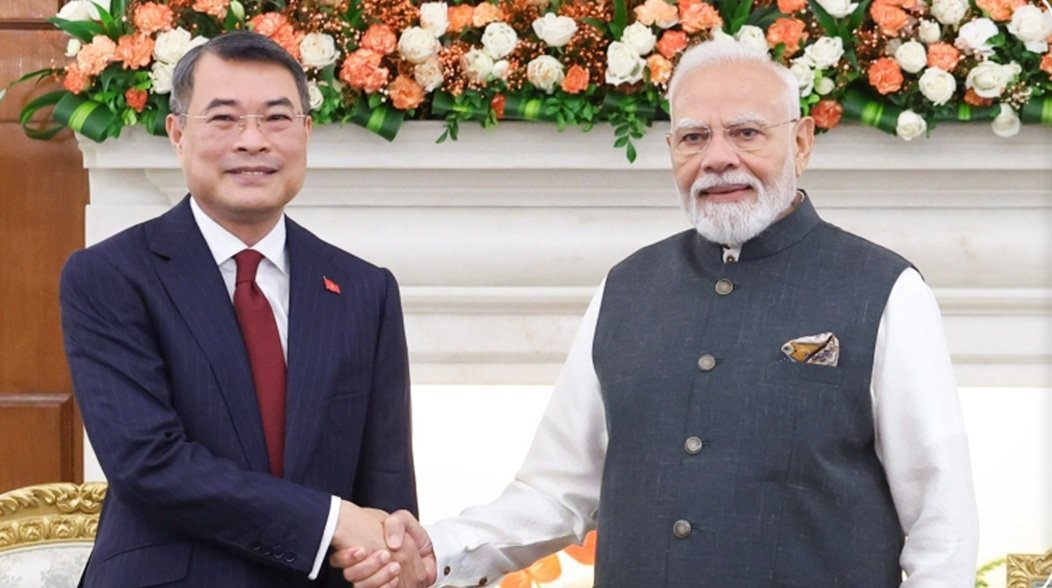
Meanwhile India too has expressed concern over the developments in South China Sea and in their joint statement Vietnamese President To Lam and Prime Minister Modi called for “the full and effective implementation of the Declaration on the Conduct of Parties in the South China Sea (DOC) in its entirety and the early conclusion of negotiations towards a substantive and effective Code of Conduct in the South China Sea (COC) in accordance with international law, including UNCLOS”. Meanwhile, India announced the sale of the Brahmos supersonic cruise missile system to the Philippines, Indonesia and Vietnam.
Interestingly, the QUAD member states (Australia, India, Japan and United States) too have expressed concern “about the situation in the East China Sea and the South China Sea” and expressed “strong opposition to any destabilizing or unilateral actions” as well as “unsafe use of water cannons and flares, and ramming or blocking actions in the South China Sea: and “the militarization of disputed features.” It is not surprising then that Chinese Foreign Minister Yang Yi is concerned about external factors such as the United States, Australia, Japan and even India.
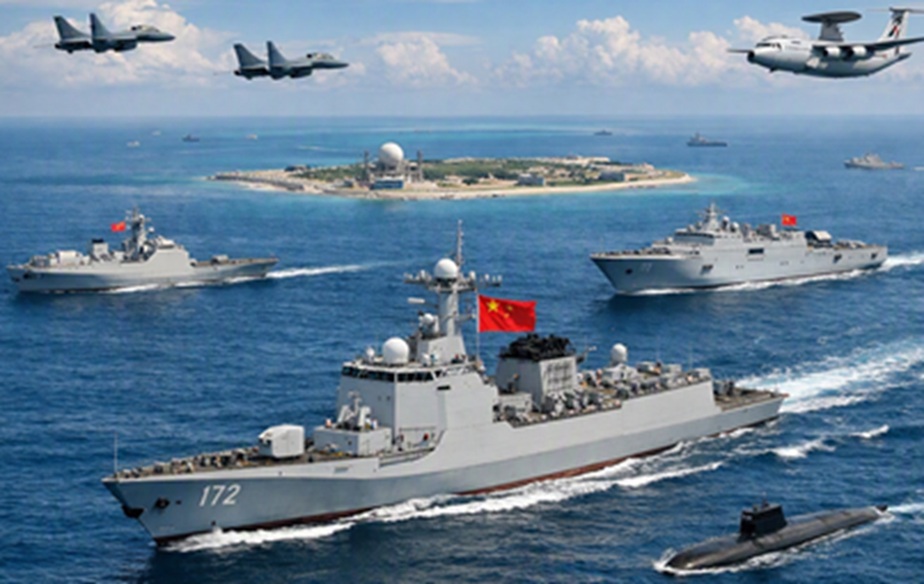
Meanwhile, military buildup has been accorded high priority by the claimant states in the South China Sea dispute. Similarly, islands, reefs, shoals and rocks are being reinforced with dual-use infrastructure that handle civil-military needs. The claimants have also intensified naval and coast guard presence in the South China Sea to enforce sovereignty, though disputed and contested by other contenders.
Chinese naval presence has been most conspicuous in the South China Sea, and its Coast Guard has been very active. According to Asia Maritime Transparency Initiative at the Centre for Strategic and International Studies (CSIS), the Chinese coast guard vessels were deployed for “993 ship days around Scarborough Shoal in June alone, nearly as much as they spent in the entirety of 2025”.
Another important feature of the Chinese military buildup in the SCS is the use of fisheries vessels to serve as quasi-military vessels, and the crew are being trained and equipped to operate like a regular navy vessel (including low-level combat) and coast guard as law enforcement agencies. They also serve as surveillance and information-gathering platforms while engaging in innocent fishing activities. For instance, in 2024 Vietnam delivered a strong protest to China over a fishing vessel incident, and the foreign ministry spokesperson noted that “Vietnam is extremely concerned, indignant and resolutely protests the brutal treatment by Chinese law enforcement forces of Vietnamese fishermen and fishing boats operating in the Hoang Sa archipelago of Vietnam.”
At another level, legitimate economic and scientific activity by claimant states within their respective exclusive economic zones and continental shelves is also being challenged by China through the deployment of naval and coast guard vessels that engage in disruptive activities and exert undue pressure.
Although global attention is currently focused on the developments in the Persian Gulf-Strait of Hormuz- Red Sea involving US-Israel and Iran-Houthis, the disputes in SCS have not cooled; instead, they are very much alive and can add to the existing global turmoil arising from West Asia. In this context, the ongoing deliberations and discussions on the Code of Conduct (COC) for the South China Sea, and the intention to conclude talks by the end of 2026, are positive developments.
Title Image Courtesy: Copilot AI
Disclaimer: The views and opinions expressed by the author do not necessarily reflect those of the Government of India or the Defence Research and Studies.