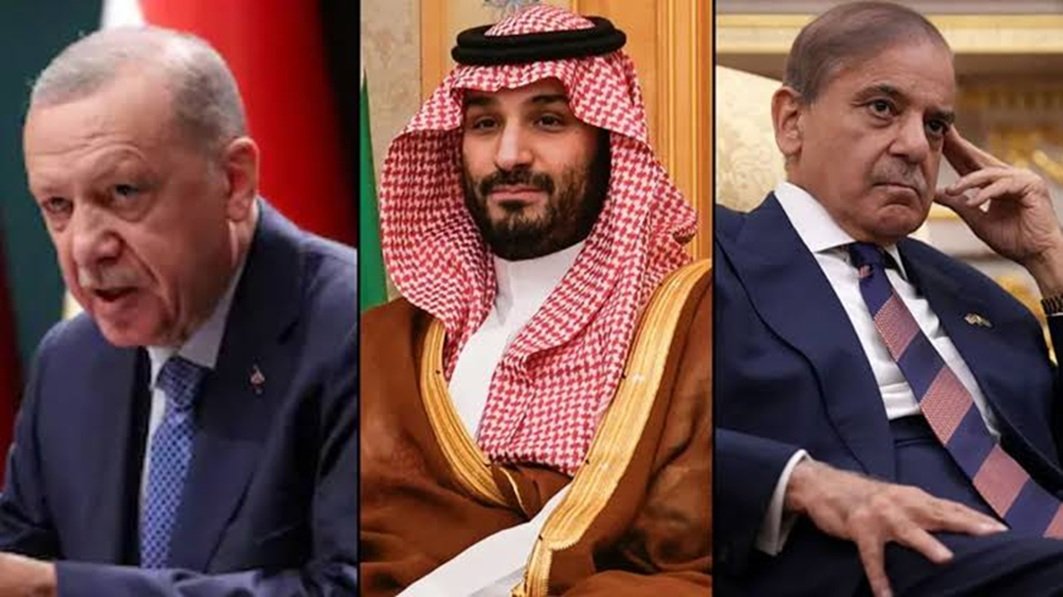
The Mecca Pact, the joint defence agreement signed in August 2026 by Saudi Arabia, Türkiye, and Pakistan, creates a collective security pact that requires careful strategic monitoring by India
On the battlefield, a commander does not watch only his own formation’s progress. He watches the map for the adversary’s regrouping, a fresh concentration of forces, a change in axis or an unexpected alignment between formations. Sometimes, the significance lies not in what has happened, but in what the new disposition suggests may happen next.
For India, the Mecca Pact exactly a month back needs to be read in precisely this way, not as an isolated diplomatic event, but as a possible shift in the strategic disposition around its western flank.
That is roughly where India stands after 7 August, when Saudi Arabia, Turkey and Pakistan signed the Mecca Joint Defence Agreement at Al-Safa Palace, committing that an armed attack on any one of the three shall be regarded as an attack on all.
A New Architecture Takes Shape
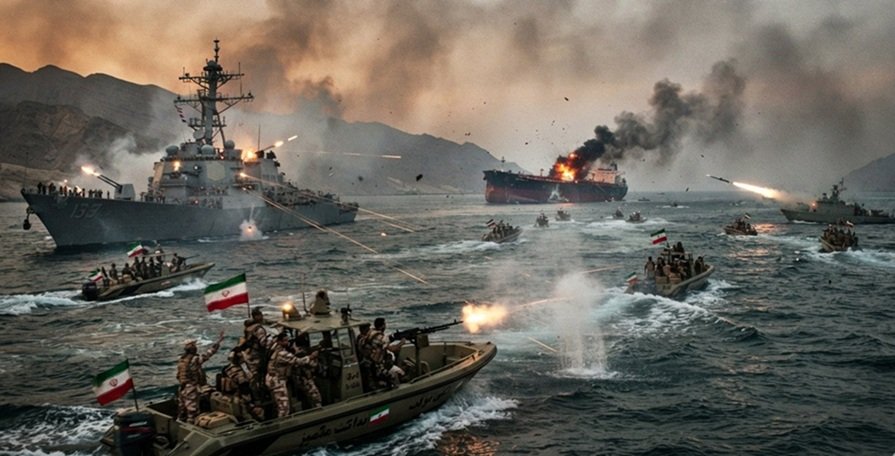
The venue was not accidental. Nor was the timing. The pact was signed in the holy city, on a Friday, while the region sat in the middle of the Israel-US conflict with Iran that has run since late February. Saudi Arabia has taken repeated missile and drone fire from Iran-linked forces during this period, and its longstanding faith in American security guarantees has visibly frayed.
Turkish Foreign Minister Hakan Fidan called the arrangement “technically the same” as NATO’s Article 5, and said it was nearly three years in the making. He also said the door is open for more countries, with Egypt named as a possible future member, and a secretariat to be based in Riyadh.
This did not spring from nothing. It builds on the bilateral Saudi-Pakistan Strategic Mutual Defence Agreement of September 2025. What changed on 7 August is that a bilateral understanding turned into a trilateral, more institutional structure — one with a committee, a secretariat, and stated ambitions to grow further.
Reading the Fine Print, Carefully
New Delhi’s instinct will be to read this through the Pakistan lens. That instinct is not wrong, but it is incomplete. Pakistan remains the only Muslim-majority state with nuclear weapons, and its army chief was present in Riyadh in the run-up to the signing. Saudi officials have been deliberately vague about what “all military means” covers under the earlier bilateral pact, and nothing in the public text of the Mecca Agreement confirms any nuclear dimension. That ambiguity itself deserves attention, but it should not be dressed up as certainty.
What is certain is the geometry. Three militaries with very different histories and capabilities – a NATO member with the alliance’s second-largest army, a nuclear power with battle experience against India, and the Gulf’s most heavily resourced air force — are now bound by a shared, formal deterrence commitment. All three insist this is not aimed at any particular country. India would be naive to take that at face value, and equally naive to treat it as a declaration of hostility. The honest reading sits somewhere in between.
There is also a governance committee and a Riyadh-based secretariat in the works, which matters more than it sounds. Institutions, once built, tend to acquire their own momentum and their own agenda-setting power, independent of the leaders who signed the founding document. That is precisely why India’s assessment cannot stop at counting warheads and squadrons. It has to track how this new secretariat behaves once it starts functioning, who gets invited to its meetings, and what regional questions it eventually decides to weigh in on.
The Energy Equation
Strip away the politics for a moment, and the numbers alone justify New Delhi’s attention. India still imports close to nine-tenths of its crude oil requirement, and nearly half of that basket comes from the Middle East. A little over half of India’s crude imports transit the Strait of Hormuz, a chokepoint that has already proved vulnerable this year.
Then there is the human bridge. Close to ten million Indians live and work across the six Gulf Cooperation Council states, and remittances from that region account for close to 38 per cent of India’s total inward remittances. Any recalibration of Gulf security architecture, however loosely worded, touches this corridor. It is not abstract geopolitics for the millions of Indian families who depend on a paycheque from Dubai, Riyadh or Doha.
From Personal Chemistry to Institutional Doctrine
Here is where the governance parallel becomes useful.
A company run on the strength of one promoter’s personal relationships, without institutional processes to back it up, is fragile the moment that relationship changes hands or comes under strain. India’s West Asia policy has, for two decades, leaned heavily on personal chemistry- the Modi-MBS relationship being the clearest example. It delivered real results. But September 2025 was an early warning: Riyadh signed its bilateral pact with Pakistan regardless of that rapport, and the Ministry of External Affairs’ response was, by its own admission, to “study the implications.”
Independent directors exist precisely because personal trust, however genuine, is not a substitute for structured oversight. India’s Gulf engagement needs the same discipline: institutional dialogue mechanisms, standing defence and energy consultations, and frameworks that outlast any single leader’s tenure on either side.
The Road Ahead
None of this calls for alarm. It calls for structure. India should press ahead with crude and LPG source diversification, already visible in the sharper tilt toward US and non-Hormuz suppliers this year. It should deepen institutional, not just ceremonial, engagement with the UAE and Qatar, both of which New Delhi has cultivated carefully. And it should treat the Mecca Agreement as a signal to build its own layered West Asia doctrine, rather than wait for the next bilateral pact to catch it off guard.
The three signatories in Mecca said their pact was not directed at anyone. India’s task now is not to argue with that claim, but to make sure it never again finds itself reading the region’s security map a step behind the men who redrew it.
Title Image Courtesy: NDTV
Disclaimer: The views and opinions expressed by the author do not necessarily reflect those of the Government of India or the Defence Research and Studies.