China acts as a strategic constraint on the United States primarily through supply chain dominance, technological rivalry and geopolitical friction. How the US is balancing China can be observed by reading the Trump Administration’s Strategic Reordering Through Energy, Trade, Technology and Geography.
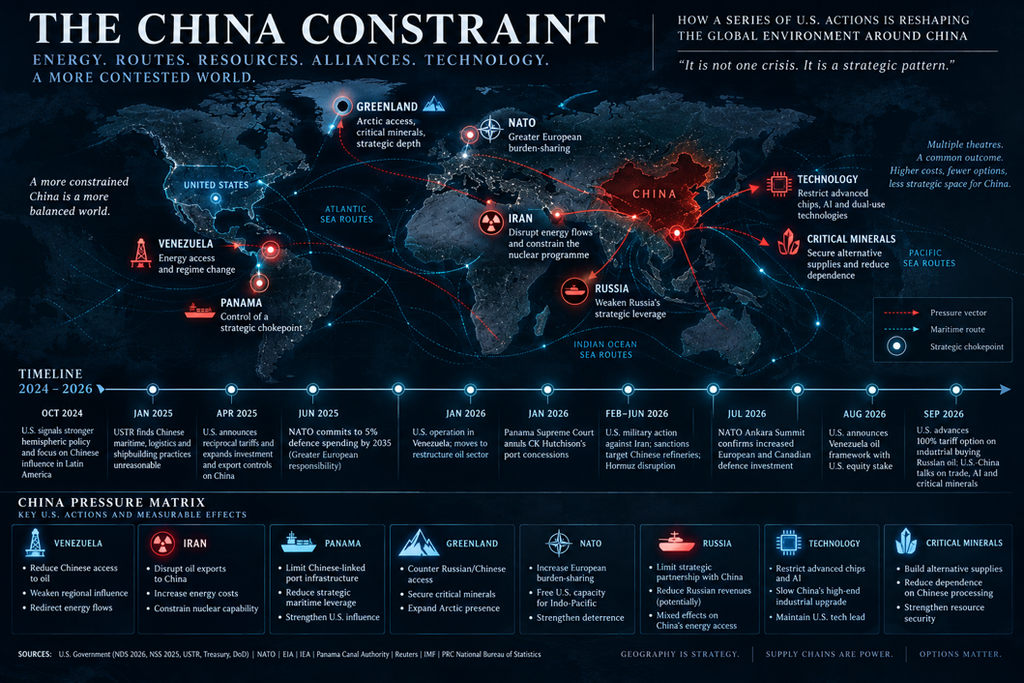
Figure 1. Selected milestones in the emerging U.S. strategic architecture
From Isolated Policies to a Strategic Pattern
The central analytical question is not whether Washington has announced a policy of “destroying” China. It has not. The 2026 National Defence Strategy (NDS) states that the U.S. goal is to deter China through strength, establish a denial defence along the First Island Chain and prevent any state, including China, from dominating the United States or its allies. The same document makes burden sharing a third priority and says allies should increasingly handle other theatres while Washington concentrates on its highest priorities. This creates the strategic frame within which apparently disconnected measures should be assessed.
The economic relationship is changing. U.S. goods trade with China fell to an estimated $414.6 billion in 2025, while the goods deficit fell 31.8% to $202.7 billion. The decline has multiple causes, but it coincides with a strategy that explicitly links economic resilience, supply chain restructuring and Indo-Pacific deterrence.
The analytical distinction is between intent and effect. Where official documents name Chinese influence or firms, the linkage is direct. Where a theatre-wide policy changes China’s access to resources, markets or routes, the linkage is structural.
Trade, Technology and Maritime Power: Pressure on the Chinese Production System
Trade and industrial policy form the internal economic layer. In April 2025, the White House imposed a reciprocal tariff regime in the name of national and economic security; subsequent orders and negotiations focused specifically on China. USTR’s separate Section 301 investigation found China’s maritime, logistics and shipbuilding practices actionable and identified dependence on Chinese maritime capacity as a supply chain and economic security risk. In its January 2025 determination, USTR contrasted the U.S. position—less than five commercial ships built annually—with more than 1,700 built in China.
The effect is wider than tariffs. It targets the infrastructure through which China converts industrial scale into global trade power. The April 2025 maritime action sought to rebuild U.S. shipbuilding and reduce U.S. exposure to Chinese capacity; it was then suspended for one year after the November 2025 U.S.-China trade arrangement.
Technology policy adds a second bottleneck. U.S. export controls explicitly seek to constrain China’s advanced semiconductor and AI capabilities. In March 2025, BIS added 80 entities in a package targeting Chinese high-performance computing and quantum capabilities. Yet January 2026 rules also allowed case-by-case licensing for Nvidia H200, AMD MI325X and similar chips under safeguards. The evidence supports selective constraint, not isolation.
Energy: Iran, Hormuz and the Cost of China’s Industrial Dependence
Energy is the clearest measurable vulnerability. China imported a record 11.6 million barrels per day of crude in 2025; about 92% of its crude imports arrive by sea. EIA’s latest country analysis shows that in 2024 the Middle East supplied 54% of China’s crude imports, with Russia at 20%, Saudi Arabia 14%, Iran 11% and Iraq 10%. This makes Persian Gulf disruption an immediate industrial variable for China.
The Iran campaign began on 28 February 2026. U.S. statements defined its military objectives around Iranian military and nuclear capabilities, not China. The China linkage emerged through sanctions: Treasury targeted a China-based “teapot” refinery and, in May, networks facilitating Iranian oil sales to China, stating that China purchased about 90% of Iran’s oil exports.
The transmission mechanism is measurable. EIA put China’s crude imports at 8.1 million b/d in Q2 2026, 32% below Q1, amid higher prices and Hormuz disruption. IEA also recorded sharp declines in Chinese imports and inventory draws. Yet China still reported 4.7% GDP growth and 13.4% export growth in H1 2026. The evidence points to higher costs and vulnerability, not economic collapse.
Venezuela and Panama: The Western Hemisphere as a Chinese Access Problem
The Western Hemisphere becomes more significant when seen through Chinese access rather than through Latin America alone. The 2025 U.S. National Security Strategy states that strengthening hemispheric supply chains should reduce dependence and make it harder for non-hemispheric competitors to increase their influence. It specifically calls for protection of strategic assets and infrastructure. Pete Hegseth subsequently stated at the Shangri-La Dialogue that Washington was increasing security in the Western Hemisphere and taking the Panama Canal back from malign Chinese influence, while asking European allies to assume greater responsibility so the United States could increase its focus on the Indo-Pacific.
Venezuela shows the resource dimension. After the January 2026 U.S. operation, Washington restructured the oil sector. By August, the White House announced 100-year concessions covering fields with approximately 65 billion barrels of proven reserves, alongside a 35% U.S. government equity stake and preferential access to production; Reuters reported that several affected fields had previously been operated by Chinese or Russian firms. The measurable effect is reduced Chinese commercial access and greater U.S. influence over Venezuelan oil.
Panama is more clearly documented. China does not own the Canal, but it was the second largest origin/destination country for Canal cargo in FY2025, at 53.5 million long tons; the Canal authority describes China as its second largest user, at roughly 16% of cargo. In January 2026, Panama’s Supreme Court annulled CK Hutchison’s port concessions, reducing a major Chinese-linked commercial foothold around the Canal.
Greenland and NATO: Controlling the Strategic Perimeter While Reallocating U.S. Capacity
Greenland completes the geographic arc. NATO Secretary General Mark Rutte stated in January 2026 that the alliance needed to prevent Russia and China from gaining greater access to the Arctic economy or establishing a military presence there. In September, the United States, Denmark and Greenland reached an agreement expanding U.S. military access while barring adversaries from establishing military bases or making sensitive investments. The documentary linkage to China is therefore explicit at the NATO level, even though the agreement itself is framed as Arctic and North Atlantic security.
NATO burden sharing provides the resource allocation mechanism. At The Hague in June 2025, allies committed to 5% of GDP annually for defence and security-related spending by 2035. At Ankara in July 2026, NATO reported more than $139 billion of higher European/Canadian core defence investment in 2025 and over $50 billion in new procurements. The NDS links greater allied responsibility to a stronger U.S. focus on China and the Indo-Pacific.
Russia: The Ambiguous Component
Russia is the component that prevents a simplistic “everything is about China” thesis. The NDS treats Russia as a serious but comparatively manageable regional problem and shifts more of Europe’s conventional defence burden to European allies. At the same time, U.S. action against Russian energy can directly affect China because Russia has become China’s largest crude supplier in recent years. Reuters reported that Russian oil accounted for about 20% of China’s oil imports in 2025 and that early 2026 Russian deliveries rose as China compensated for Middle Eastern disruptions.
This creates opposing effects. Tighter Russian oil access can remove a Chinese alternative to Gulf supply, but discounts, rerouting and deeper Sino-Russian ties can also help Chinese buyers. In September 2026, Russian ESPO exceeded $120 per barrel amid stronger Chinese demand, while proposed U.S. legislation contemplated tariffs of up to 100% on Russian oil buyers. The Russian track therefore has a measurable but two-sided China effect.
Analytical Proposition
The available policy record does not establish that every U.S. action under the second Trump administration was conceived as a single programme to destabilise China. It does establish, however, that China is the principal long-term strategic competitor identified in U.S. defence planning, and that policies spanning energy, trade, maritime infrastructure, technology, critical minerals, the Western Hemisphere, the Arctic and alliance burden-sharing constrain important elements of China’s external operating environment. Of the nine pressure tracks assessed, eight have an explicit or documented China linkage; the Russia/NATO track is more indirect and has countervailing effects.
The evidence therefore points to selective constraint combined with bargaining leverage, rather than economic severance. The May 2026 U.S.-China agreement on trade, investment and critical minerals, followed by renewed engagement in September 2026 on AI, trade and critical minerals, demonstrates that pressure and negotiation are being pursued simultaneously.
The emerging pattern is thus one of restructuring China’s strategic environment—raising the costs, risks and dependencies associated with its access to energy, technology, resources, markets and strategic geography—while preserving economic and diplomatic leverage.
Indicators to Watch
The hypothesis can be tested with observable indicators: tighter controls on advanced computing; sustained investment in alternative critical mineral supply chains; declining Chinese influence over strategic infrastructure in the Western Hemisphere and Arctic; persistent disruption or restriction of Gulf and Russian energy flows affecting China’s import mix; and continued European defence expansion enabling greater U.S. concentration in the Indo-Pacific.
A sustained reversal of these trends would weaken the hypothesis; their continuation, particularly in combination, would strengthen it. The value of the proposition therefore lies in its falsifiability through measurable outcomes rather than assumptions about undisclosed intent.
Conclusion
The strategic contest is increasingly being conducted outside China’s borders and beyond the traditional battlefield. An oilfield in Venezuela, a port concession in Panama, a shipping fleet, a semiconductor tool, a rare earth plant and a NATO budget line are separate policy questions, but together they affect the cost and security of China’s access to the global system.
The significance lies not in any single U.S. action, but in the cumulative effect of multiple, mutually reinforcing pressure points. It does support a more precise conclusion: China is central to long-term U.S. strategic planning, while economic security, technology controls, maritime policy, hemispheric positioning and alliance reallocation are reshaping the environment in which Chinese power operates. The emerging model is selective constraint combined with bargaining leverage, not a single campaign of economic destabilisation.
China Pressure Matrix
Document-based classification. “Direct” means the cited record explicitly identifies China or Chinese-linked entities/interests. “Structural” means the China effect is clear from the policy mechanism but is not the stated primary objective. “Mixed” indicates significant countervailing effects.
| U.S. action | Immediate objective | China linkage | Economic effect on China | Military/geopolitical effect | Evidence strength |
| Reciprocal tariffs / industrial policy | Rebalance trade, reshore manufacturing, reduce external dependencies. | Direct: China-specific tariff actions and industrial-policy findings. | Raises market access costs; accelerates supply-chain diversification. | Reduces China’s leverage from export dependence in strategic sectors. | Direct |
| Critical-minerals policy | Secure alternative supply of processed minerals and strategic inputs. | Direct/structural: China is the dominant refiner for many key minerals. | Over time, reduces China’s pricing and supply leverage; in the near term, raises diversification costs. | Weakens a major Chinese economic security chokepoint. | Direct |
| Maritime/shipbuilding | Restore U.S. shipbuilding and reduce reliance on Chinese shipping capacity. | Direct: USTR explicitly targets Chinese maritime dominance. | Challenges China’s scale advantages in ship construction and logistics services. | Constrains conversion of commercial maritime scale into strategic leverage. | Direct |
| Advanced semiconductor / AI controls | Limit military-relevant technology transfer and protect U.S. security. | Direct: controls explicitly target China/PRC entities. | Slows access to selected leading-edge chips, equipment and know-how. | Limits China’s ability to translate AI/compute scale into military capability. | Direct |
| Venezuela intervention + oil restructuring | Stabilise Venezuela and restructure oil production around U.S. interests. | Direct: Chinese/Russian-operated fields displaced; China’s oil access reduced. | Potentially redirects barrels toward U.S. aligned buyers and raises China’s sourcing costs. | Reduces Chinese strategic economic presence in the Western Hemisphere. | Direct |
| Iran sanctions / military campaign | Deny Iran nuclear, missile and military capabilities; cut regime revenues. | Direct for sanctions: Treasury targets Chinese refineries/networks buying Iranian oil. War motive is not documented as China-focused. | Raises risk/cost of Iranian crude; Hormuz shock reduces China’s seaborne imports. | Degrades an Iranian node in a network important to China and Russia. | Direct linkage; mixed motive |
| Panama Canal/ports | Secure U.S. access to a key maritime route and reduce adversary influence. | Direct: U.S. officials explicitly cite malign Chinese influence; Chinese-linked port concessions annulled. | Potentially changes operating and investment conditions for Chinese logistics firms. | Reduces China’s foothold around a major interoceanic chokepoint. | Direct |
| Greenland / Arctic security | Expand U.S./NATO access and block adversary military or sensitive investment. | Direct: NATO explicitly names China as an Arctic access concern. | Restricts future Chinese access to Arctic resources, infrastructure and projects. | Strengthens North Atlantic/ Arctic perimeter and constrains Chinese strategic access. | Direct |
| Russia / NATO burden-sharing | Make Europe carry more conventional defence burden; manage Russia as a regional threat. | Structural/mixed: Russia is a major Chinese energy supplier, but effects run both ways. | Sanctions can squeeze Russian supply to China; discounts and rerouting can also benefit Chinese buyers. | Frees U.S. capacity for Indo-Pacific while risking deeper Sino-Russian alignment. | Structural/mixed |
| U.S.-China negotiation (counter-signal) | Preserve trade, negotiate critical minerals and technology safeguards, reduce friction. | Direct: talks explicitly address AI, trade, tariffs and rare earths. | Keeps selected trade channels open and uses access as bargaining leverage. | Shows strategy is leverage-based rather than blanket economic severance. | Direct counter-signal |
Title Image Courtesy: Republicworld
Disclaimer: The views and opinions expressed by the author do not necessarily reflect those of the Government of India or the Defence Research and Studies.


Sources and Notes
1. U.S. Department of Defence, 2026 National Defence Strategy. January 23, 2026; identifies deterring China in the Indo-Pacific as the second strategic priority, calls for denial defence and greater allied burden-sharing.
2. U.S. Trade Representative, China Trade Summary; U.S. Census Bureau. 2025 U.S.-China goods trade: $414.6B; U.S. goods deficit about $202.7B, down about 31.8% from 2024.
3. The White House, 2025 National Security Strategy. Links hemispheric supply-chain resilience to reducing non-hemispheric competitor influence and ties economic discipline to Indo-Pacific deterrence.
4. The White House, Reciprocal Tariff Executive Order. April 2, 2025; frames trade deficits and industrial capacity as national/economic security issues.
5. USTR, Section 301: China maritime, logistics and shipbuilding. January findings, February 21 proposed action, and April 17, 2025 final measures; documents U.S. findings on Chinese maritime and shipbuilding dominance.
6. USTR, Suspension of action in maritime Section 301 case. November 9, 2025; action suspended for one year following the U.S.-China trade arrangement.
7. U.S. Bureau of Industry and Security, China AI/advanced computing controls. March 25, 2025; 80 Entity List additions and explicit objectives relating to Chinese AI, high-performance computing and quantum capability.
8. U.S. Bureau of Industry and Security, semiconductor licensing policy. January 13, 2026; case-by-case licensing for H200, MI325X and similar chips subject to safeguards.
9. U.S. Energy Information Administration, China Country Analysis / chokepoints. China imported 11.1 mb/d in 2024; 92% seaborne; Middle East 54% of crude imports; Russia 20%, Saudi 14%, Iran 11%, Iraq 10%.
10. U.S. Department of Defence / White House, Operation Epic Fury. February 28, 2026; official U.S. statement of military objectives in Iran. The stated objectives concern Iranian military/nuclear capabilities rather than China.
11. U.S. Treasury, Iran oil sanctions targeting China-linked networks. April 24 and May 11, 2026; sanctions on a China-based refinery and networks enabling Iranian oil sales/shipment to China.
12. U.S. Energy Information Administration, China crude imports Q2 2026. July 31, 2026; 8.1 mb/d in Q2, 32% below Q1, amid Hormuz disruption and higher prices.
13. International Energy Agency, Oil Market Report, 2026. Reports sharp declines in Chinese crude imports and refinery activity following the Hormuz shock; August data also track inventory and price effects.
14. National Bureau of Statistics of China. July 15-17, 2026; first-half GDP growth 4.7%, exports +13.4%, imports +22.1%.
15. U.S. Department of Defence, Hegseth at Shangri-La Dialogue. 2025; explicitly links Western Hemisphere security, Panama, European burden-sharing and increased U.S. focus on the Indo-Pacific.
16. The White House / Reuters, Venezuela oil restructuring. 2026; U.S. announced 65B barrels of proven reserves covered by new concessions and 35% U.S. government equity; Reuters reported displacement of Chinese and Russian operators from some fields.
17. Panama Canal Authority, Annual Report 2025. China was the second-ranked origin/destination country for cargo, with 53.47 million long tons; the Canal Authority separately describes China as its second-largest user at roughly 16%.
18. Reuters / Council on Foreign Relations, Panama ports. January-March 2026; Panama Supreme Court annulled CK Hutchison port contracts; analysts link the outcome to reduced Chinese leverage around the Canal.
19. NATO, Secretary General remarks on the Arctic and Greenland. January 22 and 26, 2026; explicitly discusses preventing Russian and Chinese access to the Arctic economy and Greenland.
20. Reuters, U.S.-Denmark-Greenland agreement. September 18-19, 2026; agreement expands U.S. military presence/access and bars adversary bases or sensitive investments.
21. NATO, The Hague Summit Declaration. June 25, 2025; allies commit to 5% of GDP annually on defence and defence/security-related spending by 2035.
22. NATO, Ankara Summit Declaration. July 8, 2026; reports more than $139B higher European/Canadian core defence investment in 2025 and more than $50B in new procurements.
23. Reuters, Russia-China energy ties. May 19, 2026; reports deeper Russian energy ties with China, including Russia at about 20% of China’s oil imports in 2025.
24. Reuters, Russian ESPO price and U.S. Russia sanctions legislation. September 18, 2026; ESPO above $120/bbl amid Chinese demand; U.S. legislation would permit tariffs up to 100% on countries buying Russian oil.
25. The White House, U.S.-China economic arrangement. May 2026; creates boards for trade/investment and includes Chinese commitments on critical minerals and U.S. goods purchases.
26. Reuters, U.S.-China talks on AI, trade and critical minerals. September 20, 2026; Treasury Secretary Scott Bessent and Chinese Vice Premier He Lifeng prepare talks ahead of a Trump-Xi summit.