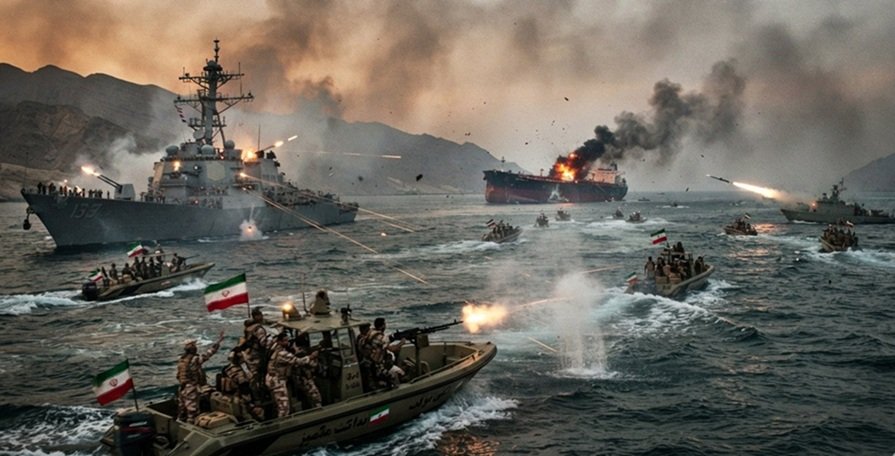
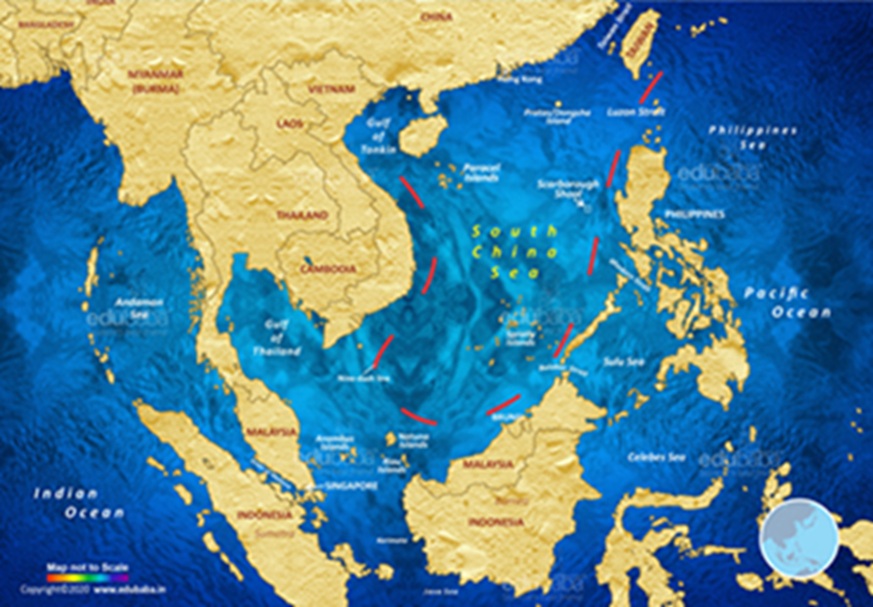
The South China Sea is no longer a key trade route. It has become a point of tension between the United States and China. In 2026, the situation is getting more complicated. There are energy crises and conflicts in parts of the world. The South China Sea is getting a lot of attention.
Some people might think that there is a lot of diplomacy going on. Countries in Southeast Asia and China are talking a lot. They are having meetings and making agreements.. This is just a show. The reality is very different. China is using a strategy to control the area. They are building up their military. Harassing other countries. The dialogue is not making any progress.
1. The Architecture of Pretence: The Diplomatic Instrumentalisation of the Code of Conduct
To understand the problem, we need to look at the diplomacy. The Code of Conduct is a part of this. China is using this to stall and gain an advantage. They want to keep the talks going to prevent countries from getting involved.
China is not trying to resolve the conflict. They are just trying to gain control. They are using the talks to make themselves look good. The ASEAN countries are not strong enough to resist China. They are divided and do not have a front. China is taking advantage of this.
2. Grey-Zone Warfare and the Militarisation of Territorial Fait Accompli
While diplomats are talking, China is using force to control the area. They are using their coast guard and maritime militia to harass countries. They are building up their military on islands. This is a problem for Southeast Asian countries. They do not have the resources to compete with China. They are under a lot of pressure.
3. The Trap of Global Polarisation and the Illusion of a Regional Third Way
The situation in the South China Sea is getting more complicated. The United States and China are polarising the region. Asian countries are caught in the middle. They do not have the freedom to make their choices. They are dependent on China economically. Are threatened by China’s military. The situation in the South China Sea is not going to get better in 2026. The conflict is going to continue.
The Philippines is making a move in this situation. They are working closely with the United States for defence. Manila has become a place for military resistance against China’s plans. The Enhanced Defence Cooperation Agreement (EDCA) now lets U.S. Armed Forces use military bases that are close to Taiwan and the South China Sea. The Philippines and the U.S. are doing scale joint military exercise, like Balikatan 2026 . These exercises used to hide behind humanitarian scenarios, but now they openly simulate the recapture of island territories and high-intensity coastal defence against a major state adversary, China. The Philippines is also teaming up with countries like Japan, Australia and the United States in a group called the “Squad”.
Manila thinks this international cooperation is the way to stop China from invading or taking over its maritime positions. However, other countries in ASEAN, like Malaysia and Indonesia, are worried about this. They do not want to be pulled into a war that they cannot control. These countries prefer to stay neutral and not take sides. They think that getting close to the U.S. And bringing in Western military capabilities will provoke China. Malaysia and Indonesia want to keep their relations with China, which is their main trading partner. They are worried that a big militarisation of the South China Sea will make their region a battlefield for the U.S.-China conflict.
The situation in Southeast Asia has become more difficult in 2026 because of problems in the global economy. There are disruptions to maritime flows in the Middle East, and the global energy markets are volatile. This has caused a supply crisis in Southeast Asia.
Some regional governments are thinking of making deals with China to secure their energy and financial needs. China is good at using pressure to get what it wants. It promises investments. Threatens trade sanctions to get ASEAN countries to do what it wants. The idea of a way for Southeast Asia is not working. ASEAN cannot propose an alternative security plan. The concept of the “ASEAN Outlook on the Indo-Pacific” (AOIP) is an idea and has no real impact. Traditional multilateral meetings, like the ASEAN Regional Forum (ARF) or the East Asia Summit (EAS) are not helpful. They just become places for the U.S. And China to accuse each other of causing problems. Asian countries are stuck and cannot make a strategic choice. They are worried about China’s threat. Do not have a strong military. They are just watching as the U.S. And China change their security environment.
The Institutionalisation of a Frozen yet Burning Conflict. It seems clear that the South China Sea will remain a problem for a long time. The main reasons for this conflict are deeply rooted in identities and power needs. There will be no diplomatic solution. China wants to control the South China Sea as a matter of right.
The US wants to preserve freedom of navigation and honour its defence treaties with allies. ASEAN countries will not give up their rights. They think that would mean giving up their independence and compromising their future food and energy security. In this situation, the current impasse is not a lack of action. A highly militarised and unstable balance. The likely scenario is not a big war but a continuation of low-intensity conflict. There will be continued talks and diplomatic efforts. In reality, the law of the strongest will keep imposing itself. The South China Sea will remain a zone where peace is impossible, but a big war is not allowed. This situation will keep the region under the shadow of a conflict.
Conclusion
The institutionalisation of a frozen yet burning conflict. At the conclusion of this analysis, it appears evident that the South China Sea is condemned to remain locked in a durable strategic impasse throughout 2026 and beyond. The fundamental drivers fueling this conflict are too deeply anchored in national identities and power imperatives to permit any diplomatic resolution.
For China, absolute control over this maritime space is perceived as an inalienable historic right—a sine qua non condition to break Western strategic encirclement and to sanctuarize its submarine nuclear deterrence forces. For the United States, preserving freedom of navigation and honouring defence treaties with regional allies forms the very bedrock of its credibility as a global power and guarantor of the international liberal order. For the littoral countries of ASEAN, abdicating their sovereign rights would be tantamount to renouncing their own national independence and compromising their future food and energy security.
In this context of irreconcilable vital interests, the current impasse must not be interpreted as a lack of dynamism, but as a highly militarised, unstable equilibrium. The most probable scenario for the coming years is neither open, all-out war—the economic and human cost of which would be prohibitive for all actors—nor a pacification through international law. Instead, the trajectory points toward an institutionalisation of the crisis, where the South China Sea will function as a permanent laboratory for low-intensity global confrontation.
Facade dialogues will continue to occupy the media and diplomatic stage, offering a necessary political outlet to save the appearances of multilateralism, while in the dark waters of the Spratlys, the law of the strongest will continue to impose itself, millimetre by millimetre. The South China Sea will remain the ultimate grey zone: a space where peace is impossible, but where global war is forbidden, sentencing the region to live under the cast shadow of a spark that remains perpetually possible.
Title Image Courtesy: Edubaba
Disclaimer: The views and opinions expressed by the author do not necessarily reflect those of the Government of India or the Defence Research and Studies.