The long-delayed Code of Conduct (COC) for the South China Sea appears to be making headway. According to Philippine Foreign Secretary Maria Theresa Lazaro, the ongoing negotiations have made “good progress”. Earlier, the Association of Southeast Asian Nations (ASEAN) Foreign Ministers’, through their Joint Communique issued at the end of their 59th meeting held at Manila on 24 July 2026, too were optimistic and had noted that they are looking “forward to continued efforts in endeavouring to conclude the negotiation of an effective and substantive COC” in 2026, albeit “in accordance with international law, including the 1982 UNCLOS”.
Also, the “importance of maintaining and promoting peace, security, stability, safety, and freedom of navigation in and overflight above the South China Sea” has been reiterated and reaffirmed. Likewise, “the importance of the full and effective implementation of the DOC in its entirety” has been “underscored” given that the issue has witnessed a rollercoaster journey since 2002 marked by diplomacy, coercion, legal debates, including the award by the Permanent Court of Arbitration (PCA) in favour of the Philippines.
Meanwhile, during the China-ASEAN Foreign Ministers’ Meeting, Chinese Foreign Minister Wang Yi observed that an “important window of opportunity exists for concluding a Code of Conduct in the South China Sea (COC)”. Furthermore, he urged that both China and ASEAN countries should “continue handling the South China Sea issue properly and make peace, mainstream narrative of the South China Sea”.
By all accounts, it has been a long haul for the COC negotiations since 2002. There appears ‘negotiation fatigue’ and according to an expert, the “only scenario in which an agreement might be reached by year-end is if its scope and substance are significantly scaled back, allowing the parties to secure a largely symbolic diplomatic achievement,” This cautious approach is largely due to the claimants differing on “legal positions, strategic interests and competing perspectives on the future regional security architecture,” which precludes consensus. Notwithstanding that, the process of negotiations is a valuable tool and should build confidence and reduce miscalculation, which can potentially trigger conflict, a situation that both China and ASEAN wish to avoid.
It is fair to argue that the Code of Conduct (COC) for the South China Sea could be a reality only after all parties reach a consensus, which will no doubt be driven by national interests. The latter, among other issues, involves reinforcing defences and completing the ongoing projects on their claimed-occupied features in the South China Sea so that other claimants should not attempt to forcibly occupy.
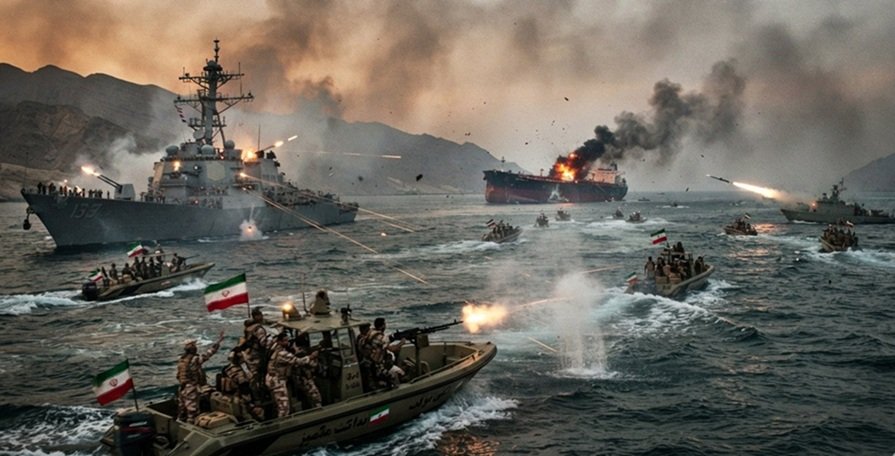
Skirmishes-clashes at sea involving China and the claimant states have been a regular feature in the South China Sea. In this context, at least two recent clashes between China and the Philippines merit attention. First, “a Philippine Navy personnel (was hit) on the head with a wooden baton, causing injury and damaging the Navy rubber boat,” and both sides “accused each other of escalating tensions”. This was the third such incident during the week. It prompted Beijing and Manila to initiate diplomatic response by summoning ambassadors of the respective countries; and second, the Chinese Coast Guard ships came very close to Philippine Bureau of Fisheries and Aquatic Resources vessels (including one carrying CNN crew embarked onboard for gaining firsthand experience of the mission to resupply fuel for local fishermen near Scarborough Shoal, a sandbar claimed by both Beijing and Manila) and fired water cannon.
ASEAN is hopeful of concluding an “effective and substantive COC” in 2026, and Chinese Foreign Minister Wang Yi too has offered assurances and called on both sides to “seize the opportunity, remove disruptions, and strive to achieve the goal”; yet the outcome is ambitious both in terms of timeline and concluding a ‘consensus-based COC’. Perhaps what is needed as a pre-requisite for that is “self-restraint”, which has been absent during the last two decades. (to be continued).
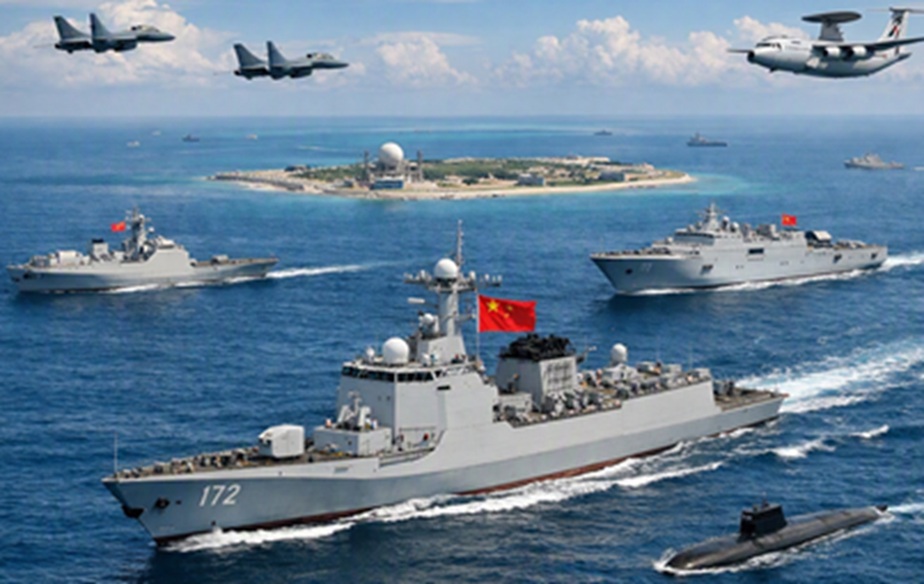
Title Image Courtesy: Copilot AI
Disclaimer: The views and opinions expressed by the author do not necessarily reflect those of the Government of India or the Defence Research and Studies.