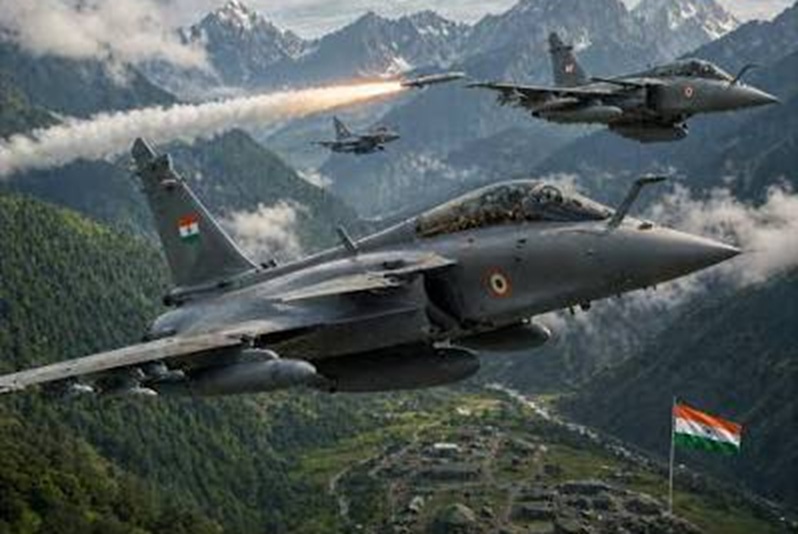
With the comprehensive theatreisation, blueprints recently submitted to the government, structural military integration has entered a decisive phase (Pandit, 2026). As General Dhiraj Seth assumes command of the Indian Army with a clear mandate for multi-domain jointness, the operational execution of these reforms faces its ultimate test (Seth, 2026). This paper argues that while the China-centric Northern Theatre Command (NTC) is critical to countering a complex two-front threat landscape along the Line of Actual Control (LAC), true success hinges on deep, real-time land-air structural integration rather than superficial coordination (Panag, 2025).
Introduction
The Equal Vision: “Deván bhávayatánena te devá bhávayantu vaḥ parasparaṁ bhāvayantaḥ śreyaḥ param avāpsyatha”
Translation: “Foster each other through mutual sacrifice and cooperation, and by thus sustaining one another, you shall attain the supreme good.” (The Bhagavad Gita, 1986, Chapter 3, Verse 11)
Any sovereign land comprises not just the soil, but also the waters that run through it and the universal airspace that sits above it (Subramaniam, 2016). In modern warfare, these domains cannot be defended in isolation. Therefore, a truly integrated military must move past legacy single-service ‘tactical support’ mindsets—where the air component is viewed merely as an auxiliary crutch for ground forces—and evolve toward a unified command structure that treats land and air as equal, co-dependent vectors of a single operational vision (Pandit, 2026).
The Clash of Operational Philosophies
To operationalise this ‘equal vision’ within the newly conceived NTC in Lucknow, the military must first reconcile a fundamental divergence in service philosophies (Panag, 2025). Historically, the Indian Army and the Indian Air Force (IAF) have viewed the application of force through distinct operational lenses (Subramaniam, 2016). Ground commanders, particularly those tasked with defending the rugged, high-altitude terrain along the LAC, operate on a doctrine of decentralised execution; they require guaranteed, immediate, and localised fire support—such as Close Air Support (CAS)—to respond to sudden border incursions.
Conversely, the IAF’s doctrine is anchored in the principle of centralised control and decentralised execution (Indian Air Force, 2022). Because air assets are inherently scarce and highly flexible, the Air Force prefers keeping control centralised at the highest level, allowing aircraft to be rapidly swung across different fronts rather than being ‘parcelled out’ permanently to localised ground commands. Bridging this philosophical gap is not merely a logistical challenge; it is the primary bureaucratic hurdle to achieving real-time integration (Panag, 2025).
Dual-Command Fragmentation
While the Army’s Northern Command in Udhampur acts as the boots-on-the-ground anchor—handling complex counter-terrorism operations, high-altitude mountain warfare, and maintaining a constant state of operational readiness along the northern borders—the IAF’s apex planning apparatus operates from a different geographic and institutional orbit in New Delhi (Panag, 2025). On one hand, Udhampur hosts a massive, forward-deployed military garrison where the local Air Force Station provides critical tactical logistics, localised air defence, and immediate casualty evacuation assets. On the other hand, the foundational strategic planning, overarching acquisition management, and centralised policy formulation for the northern skies are housed within the IAF’s Western Air Command (WAC) in New Delhi (Indian Air Force, 2022).
Because effective joint operations and proactive military planning must move in absolute lockstep, this geographical and functional divide highlights a distinct structural vulnerability (Seth, 2026). To build a resilient NTC, the defence establishment must recognise the vital institutional equity of both Udhampur’s tactical reality and New Delhi’s strategic breadth. Integration must focus on consolidating these distributed command nodes into a single, cohesive operational matrix rather than forcing the services into a zero-sum bureaucratic struggle over institutional precedence (Pandit, 2026).
The Tactical Sky: Friction in the Unmanned Battlespace
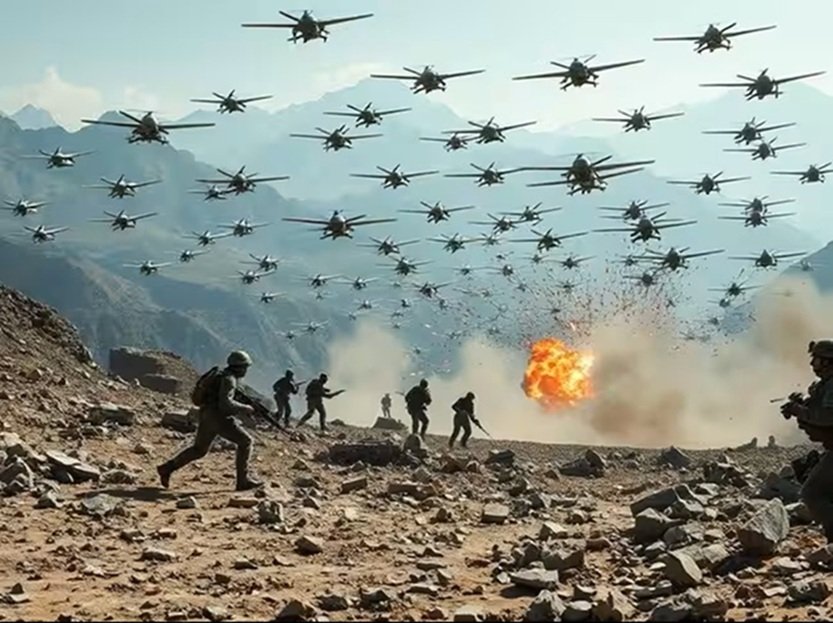
The traditional doctrinal debate over high-altitude airspace is no longer limited to fighter jets and heavy artillery (Indian Air Force, 2022). The democratisation of the tactical sky via localised drone swarms and private domestic small-arms manufacturing has compressed the time and space available for command decisions (Seth, 2026). This technology tests the NTC’s land-air integration frameworks directly at the forward edge of the battle area (FEBA).
1. FPV Loitering Munitions and Mountain Dead Zones
In the mountainous topography of the LAC, physical terrain dictates the limits of conventional weapon systems (Subramaniam, 2016). First-Person View (FPV) kamikaze drones have fundamentally altered how infantry forces target fixed enemy assets, expanding land operations into lower airspace:
- Bypassing Dead Zones: High-altitude ridges create radar and artillery blind spots. FPV drones bypass these barriers, dropping directly into reverse-slope valleys that conventional artillery cannot hit.
- Precision Bunker Busting: Infantry units can guide a cost-effective FPV drone directly through narrow bunker slits or trench networks, providing immediate, localised precision strikes without requesting heavy assets from higher commands.
- Denying Trench Manoeuvres: Constant low-altitude patrols keep opposing forces under cover, completely freezing tactical troop rotations along the front lines.
2. The Logistics Shift: Private Industry vs. Global Scale
This shift to drone warfare relies heavily on the rapid prototyping capabilities of the domestic private defence sector (Seth, 2026). India is moving away from foreign reliance by matching tactical needs with innovative private manufacturing ecosystems:
- Agile Private Procurement: Under modern military modernization directives, the military accelerates production by awarding fast-tracked contracts to private domestic firms like ideaForge Technology.
- Industrial Scale and Autonomy: Backed by substantial multi-billion dollar domestic procurement programs, domestic manufacturers are establishing local electronic supply chains to counter global mass-production monopolies.
- High-Altitude Optimization: Unlike standard commercial models, domestic military platforms are custom-built to operate reliably in the thin air and extreme sub-zero temperatures of the Himalayas.
3. Airspace Deconfliction and Counter-UAS Grids
The rapid expansion of localised unmanned systems risks creating severe operational confusion in the skies unless sensor data is unified under a single command (Indian Air Force, 2022). If the Army deploys thousands of small strike drones while the IAF independently manages tactical air defences, the threat of friendly fire increases significantly. Managing this congested airspace requires a tightly integrated, multi-layered counter-UAS grid:
- Layered Electronic Defences: Advanced soft-kill technology, such as the DRDO Anti-Drone System, jams and spoofs enemy control frequencies up to 4 km away, neutralizing threats before they reach forward positions.
- Autonomous Wide-Area Domes: AI-driven frameworks like the Indrajaal dome track and intercept multi-directional drone swarms across extensive strategic areas without requiring manual input for every target.
- Kinetic Interception: Frontline defences utilise specialised hard-kill systems, such as the Bhargavastra micro-rocket platform and advanced laser weapons, to destroy incoming targets that bypass electronic jamming.
- Unified Airspace Control: To manage this complex environment, tactical platforms must feed real-time sensor data directly into broader defence networks like the Akashteer Air Defence System. Government initiatives, including the Akash Tarang procurement push, ensure local counter-drone actions are fully visible to higher airspace management authorities.
This unmanned revolution underscores the urgent need for a unified command structure (Panag, 2025). If tactical drones are operated in service silos, they risk disrupting national airspace coordination. For the NTC to function effectively, decentralised drone operations must be structurally synchronised with centralised air defence networks (Seth, 2026).
The Bureaucratic Crucible: Realigning Human Resource Dynamics
Beyond geographical and philosophical differences, the ultimate test of land-air integration lies within the quiet corridors of human resource management, specifically regarding institutional loyalty, promotions, and disciplinary control (Panag, 2025). Under the legacy structure, an officer’s ‘rewards’—their Annual Confidential Reports (ACRs), career advancements, and promotions—are governed strictly by their parent service headquarters in New Delhi. This creates an unstated but powerful bureaucratic friction: an Air Force officer or an Army officer assigned to a joint operational environment may fear that prioritising a unified theatre objective over their own service’s traditional doctrine could jeopardise their standing with their parent promotion board.
Furthermore, the operationalisation of the Inter-Services Organisations (Command, Control and Discipline) Act is designed to grant a unified Theatre Commander direct disciplinary and administrative powers over personnel from all services under their watch (Government of India, 2023). However, for true integration to take root in the NTC, this administrative stick must be balanced with an institutional carrot. The military establishment must transition toward joint promotion boards and unified career tracking systems. Until a posting within a tri-service command is universally recognised as a mandatory, high-reward credential for apex promotions rather than a temporary detour from one’s parent service, structural integration will remain secondary to legacy institutional loyalties (Panag, 2025).
Conclusion
Ultimately, whether evaluating the complexities of the Army, the Air Force, or the Navy, the defence establishment must deeply construe the unique operational dynamics of each domain and unify them through structural bonds rather than maintaining a superficial alignment (Seth, 2026). True theatreisation cannot be achieved through bureaucratic mandate alone (Pandit, 2026). Without treating each service as an operational equal—embracing that fundamental strategic ‘equal vision’—a forced integration will fail to project true military power. Instead, it risks instigating structural friction that could disintegrate our command capabilities in the long run. For the Northern Theatre Command to successfully deter a complex two-front threat, land-air integration must transcend a mere marriage of convenience and become a flawless, unified entity (Panag, 2025).
Title Image Courtesy: Indian Air Force
Disclaimer: The views and opinions expressed by the author do not necessarily reflect those of the Government of India or the Defence Research and Studies.


References
- Government of India. (2023). The Inter-Services Organisations (Command, Control and Discipline) Act, 2023. Ministry of Law and Justice, Gazette of India. https://egazette.gov.in/WriteReadData/2025/260852.pdf
- Indian Air Force. (2022). IAF Air Power Doctrine: IAP 2000-22. Directorate of Operations.
- Panag, H. S. (2025). Theatre Commands: The Strategic Imperative for the Northern Borders. CLAWS Journal, 18(1), 24-39.
- Pandit, R. (2026, July 1). Final Blueprints for Integrated Theatre Commands Submitted to Government. The Times of India. https://timesofindia.indiatimes.com/india/indias-proposed-integrated-theatre-commands-plan/articleshow/113074831.cms
- Seth, D. (2026, July 3). Jointness and Multi-Domain Integration in the Indian Army: Vision VIJAY [Speech]. Centre for Land Warfare Studies (CLAWS), New Delhi.
- Subramaniam, A. (2016). India’s Wars: A Military History, 1947-1971. HarperCollins India.
- The Bhagavad Gita (A.C. Bhaktivedanta Swami Prabhupada, Trans.). (1986). Bhaktivedanta Book Trust.