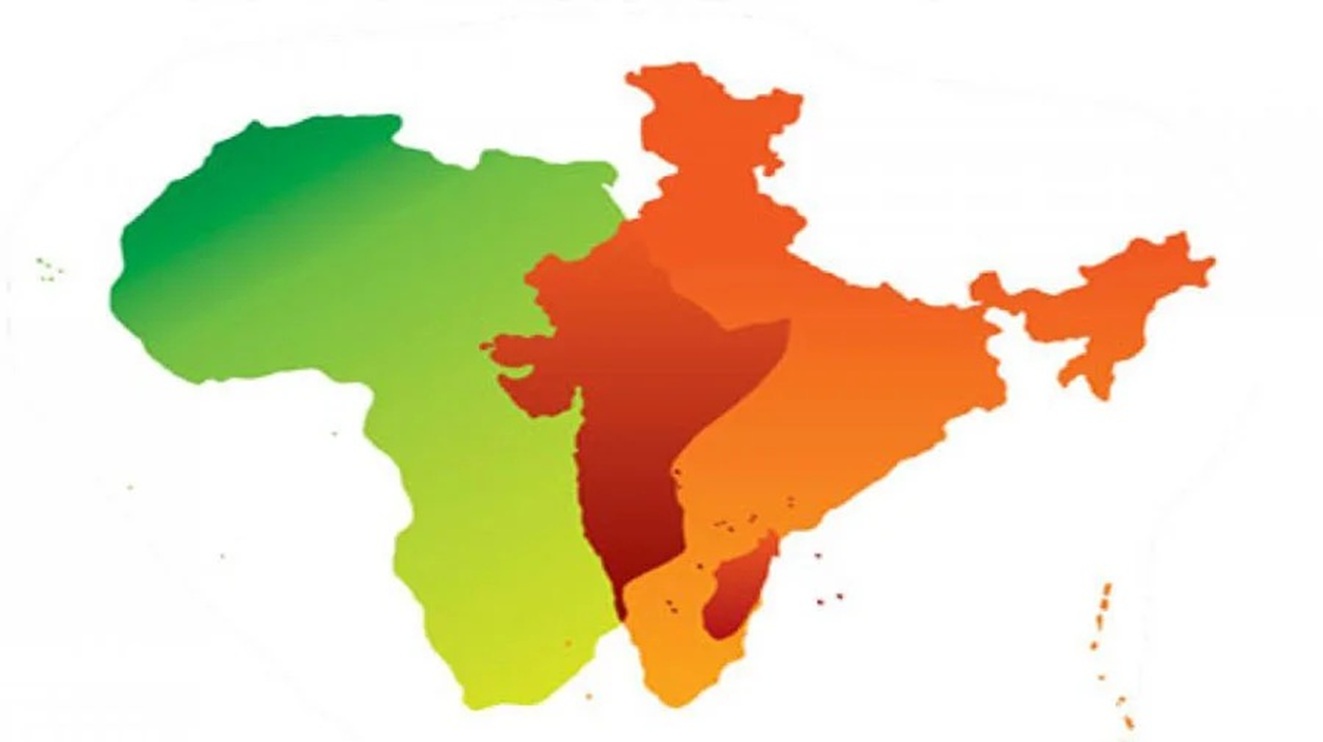
India’s Africa policy is a proactive, partnership-based approach rooted in South-South cooperation, focusing on capacity building, digital infrastructure, technology sharing, and maritime security.
Foreign Policy
Fundamentally, a nation’s foreign policy is aimed at propagating its national interest in response to the dynamic geopolitical events. In an era defined by the fast-paced world, driven by resource geopolitics for the quest for critical minerals and rare earth elements, climate change-driven policies vis-à-vis migration amid resource scarcity, the capacity of cyber warfare in disrupting economies and influencing elections, as well as the advent of artificial intelligence, have accentuated that change is the only constant. Likewise, statesmen shall dive deep into the strategic substratum and counterpoise their foreign policy with the changing character of global geopolitics by primarily prioritising national interest, internal and external security, as well as perpetuity with their allies.
Historical Continuity
India’s relations with Africa are historical, underpinned by geographical and cultural affinities, connected by the Indian Ocean and involve a wide spectrum of activities. The roots of the Afro-Indian relations can be traced back to the period when India, as a newly independent nation, vigorously catalysed and wrestled against decolonisation along with apartheid through the Non-Aligned Movement (NAM) as one of the formative tenets of India’s Foreign Policy. The relationship was further cultivated by the strategic waters of the Indian Ocean by acting as a maritime bridge for sea-borne commerce, people-to-people ties, energy supplies and conducting joint military exercises with the States of Africa. Past precedents suggest that it was the Indian labour which made landfall in African nations to serve as a comprador vis-à-vis infrastructure and commercial ventures. This mingling of the human race led to the interpenetration of culture and created what we today call the Indian Diaspora in Africa.
Going further, a large number of nations began to taste the fruit of independence from 1957 to 1964 across Africa and started becoming members of groups such as the Organisation of African Unity in 1963, the United Nations, NAM and thus brought India and Africa together vis-à-vis diplomatic reciprocity. Subsequently, both India and Africa collaborated in the quest for finding an egalitarian place in the global world order. Though India itself was a newly independent nation, it took no time to open the doors of its establishments for capacity building as well as productive human resources across Africa, for instance, the establishment of Imperial Military Academy in Harar, Ethiopia, in 1958 as the first capacity building institution by India and a similar academy was established in Nigeria. Proceeding ahead, in 1964, the Indian Technical and Economic Cooperation (ITEC) programme was put forward to forge India’s relations with other emerging economies with regard to technical and economic cooperation for a reciprocal benefit, and thus, African nations were included in the ITEC programme. This highlighted the government of the day’s initiative regarding the Global South framework, and contemporaneously, India witnessed migration of students from Africa through scholarship endowments, thus emphasising a progressive pathway of people-to-people partnership.
In the post-bipolar era (1989 to 1991), Africa opened its doors to new partners for forging favourable and constructive partnerships. However, it was in 2000, when India’s African Policy and African Renaissance complemented each other without any contradictions. Going forward, in 2002, a new union was brought into being in Durban, which came to be known as the African Union, in which India, as a nation, was represented by Amb. Gurjit Singh. Simultaneously, the Ministry of Commerce announced its Focus Africa programme in 2003-2004 and the Indian Development and Economic Assistance Scheme (IDEAS) scheme to provide Lines of Credit (LOC) and Team 9 was formed to deal with countries of Central and Western Africa. Then in 2005, a PAN Africa e-network project was announced by the then President of India, Dr APJ Abdul Kalam and the CII India-Africa Business Conclave was established as a cornerstone of fiscal diplomacy. In 2006, it was decided to organise a forum summit between India and Africa to further concretise the strategic ties and facilitate high-level political and economic dialogue. Accordingly, the first India-Africa summit took place in 2008 at New Delhi, India; the second in 2011 at Addis Ababa, Ethiopia and the third again in New Delhi, India, in 2015.
Congregation of Plurilateral Heads of State in Three India-Africa Forum Summits
New Delhi was allowed to host the First India-Africa Forum Summit in 2008, which underscored India’s policy blueprint in the Delhi Declaration and the Africa-India Framework for Cooperation in the 21st Century by broadening the unilateral duty-free and preferential market access vis-à-vis exports from thirty-four African nations. Going further, in 2011, while addressing the second India-Africa forum summit hosted by Addis Ababa, the then Prime Minister of India, Dr Manmohan Singh, emphasised that “India will work with Africa to realise its vast potential. We believe that a new vision is required for Africa’s development and participation in global affairs”. Henceforth, India pledged a fiscal contribution of $5 billion as part of LOC, supplemented by $700 million to establish new institutes together with the African Union. Furthermore, it was proposed to establish India-Africa cluster-based institutions vis-à-vis food processing and integrated textiles, as well as a centre for medium-range weather forecasting and an institute of agriculture and rural development. The tertiary session, hosted again by India in 2015, witnessed the august presence of forty-one heads of state and representatives from other countries. To amplify the partnership, India unveiled LOCs worth $10 billion for the next quinquennium, supplemented by a credit programme of $7.4 billion and $1.2 billion as a grant. Secondly, an additional support grant of $600 million was communicated for the advancement in the domain of education, skill development, healthcare centres and lastly, an initiative based on Blue Economy was announced to strengthen cooperation and capacity building in fields such as sustainable fisheries, maritime connectivity, exploring marine and non-marine resources, fostering eco-tourism, optimising renewable energy, as well as mitigating disasters.
Evolutionary Transitions in the Past Decade, 2015-2025
In 2016, the then President of India, Shri Pranab Mukherjee, embarked on a momentous state visit to Ghana, Côte d’Ivoire and Namibia. It was an official maiden visit by an Indian President to Ghana and Cote d’Ivoire as well as a second in the last two decades to Namibia. The visit signifies the strategic relevance and diplomatic harbinger to demonstrate India’s commitment and constancy in its interplay with Africa. The President noted that “We seek today to build on this strong foundation and forge new relationships based on shared values for mutual benefit. The visits were an opportunity for me to reiterate that India will always stand by Africa. I urged the governments of the three countries to take maximum advantage of announcements made by India for Africa during IAFS-III, especially the US $ 10 billion additional concessional lines of credit, enhanced ITEC and ICCR scholarships as well as US $ 600 million grant assistance” Going forward, in 2017, the then President of India Ram Nath Kovind while addressing the India-Ethiopia Business Dialogue hosted at Addis Ababa, emphasised that; “Ethiopia and India’s trade relations flourished during the ancient Axumite Empire from the 1st century A.D. India is now among the top three foreign investors in Ethiopia in sectors such as; textiles and garments, engineering, water management, education, pharmaceuticals and healthcare which has resulted in creating employment opportunities in Ethiopia” Similarly, to further concretize the India-Africa relations, Prime Minister Narendra Modi in 2018 proclaimed ten principles as the basis of India-Africa relations in the times to come and it was for the first time that an Africa oriented Foreign Policy was spelt out by an Indian PM; “Africa will be at the top of our priorities. We will continue to intensify and deepen our engagement with Africa. As we have shown, it will be sustained and regular. Our development partnership will be guided by your priorities. It will be on terms that will be comfortable for you, that will liberate your potential and not constrain your future. We will rely on African talent and skills. We will build as much local capacity and create as many local opportunities as possible. We will keep our markets open and make it easier and more attractive to trade with India. We will support our industry to invest in Africa. We will harness India’s experience with the digital revolution to support Africa’s development, improve the delivery of public services, extend education and health, spread digital literacy, expand financial inclusion, and mainstream the marginalised. This will not just be our partnership to advance the UN Sustainable Development Goals, but also to equip the youth of Africa for their place in the digital age. Africa has 60 per cent of the world’s arable land, but produces just 10 per cent of the global output. We will work with you to improve Africa’s agriculture. Our partnership will address the challenges of climate change. We will work with Africa to ensure a just international climate order, to preserve our biodiversity and adopt clean and efficient energy sources. We will strengthen our cooperation and mutual capabilities in combating terrorism and extremism, keeping our cyberspace safe and secure, and supporting the UN in advancing and keeping peace. We will work with African nations to keep the oceans open and free for the benefit of all nations. The world needs cooperation and not competition in the eastern shores of Africa and the eastern Indian Ocean; that is why India’s vision of Indian Ocean security is cooperative and inclusive, rooted in security and growth for all in the region. This is especially important to me: as global engagement in Africa increases, we must all work together to ensure that Africa does not once again turn into a theatre of rival ambitions, but becomes a nursery for the aspirations of Africa’s youth, just as India and Africa fought colonial rule together, we will work together for a just, representative and democratic global order that has a voice and a role for one-third of humanity that lives in Africa and India. India’s own quest for reforms in the global institutions is incomplete without an equal place for Africa. That will be a key purpose of our foreign policy. Going forward, there was significant progress witnessed following the onset of the 2019-2020 period regarding India’s Africa outreach policy. Firstly, the first incoming and outgoing visits by Heads of State post the installation of newly elected governments were to and from Africa. Secondly, this period testified to the first-ever state visit of President Edgar Lungu of Zambia to India and the President of India’s visit to Benin, the Gambia and Guinea, as well as a pioneering visit to Comoros by the Vice President of India. Thirdly, about political affairs, in an unprecedented move, India deployed its election observers during the General Elections of Zimbabwe and India’s EVMs were used in Namibian Elections as well. Fourthly, India augmented its consular presence with the commencement of a Resident Mission in Eswatini, Malawi, Mbabane and Uganda and E-Visa facilities were extended to encompass thirty-three nations in Africa. There was a notable augmentation of air connectivity in the region as direct flights from Dar-es-Salaam by Air Tanzania and new connectivity between Addis Ababa and Bengaluru by Ethiopian Airlines were commenced.
In the light of the foregoing, the quinquennial phase between 2015 and 2020, India collaborated in defence, commerce, political and scientific spheres, and to further increase India’s diplomatic presence, the Government of the day established eighteen new Missions in Africa (nine operational), thus increasing to forty-seven. India truly believes in consultative, non-reciprocal and result-oriented partnerships; therefore, Africa is the second largest recipient of India’s overseas assistance, for instance, around 181 LOCs comprising more than $11 billion were issued to forty-one countries. Secondly, on the education and medical front, India has started eVidya Bharati and eAarogya Bharati Network Project with Africa to furnish tele-education and tele-medicine knowledge along with technical know-how. Additionally, around 5,400 Indians have extended their valiant services in the five peacekeeping operations in Africa, coupled with an initial cohort entirely composed of a fearless female police unit of the United Nations in Liberia.
Post Pandemic Permanency and Prospective Projections
In the following five years (2020-2025), the trade between India and Africa exhibited considerable resilience during the COVID-19 pandemic. Even though the overall trade decreased to $53.5 billion in 2020, it rebounded to reach a historic high of $102.6 billion in 2022. This bounce-back underscores the strategic depth and robustness of the India-Africa economic partnership and exemplifies each other as trustworthy counterparts in uncertain global settings. Over the period from 2020 to 2021, the government of the day extended assistance of 211 LoCs worth $12.87 billion to African nations in sectors such as power transmission and distribution networks, hydroelectricity, roads and railways, skills development, as well as incorporated new domains, for instance, telecommunication, defence and solar. Going further, during 2021-2022, the Indian Council of Cultural Relations (ICCR) extended twenty scholarships under the “ICCR Africa Scholarship Scheme” for Nigerian citizens to undertake bachelor’s as well as master’s level and other advanced courses in India. Furthermore, Nigerians took active part in 102 civilian training programs under e-ITEC and more than 1500 students successfully secured admissions in numerous Indian universities under “Study in India programme” From an economic perspective, the overall bilateral trade between India-Nigeria in 2022-23 amounted to $11.89 billion accompanied by the capital inflows into Nigeria estimated to be around $26 billion with no less than 150 Indian companies operating in Nigeria in domains such as; petrochemicals, telecom, electrical machinery, engineering goods, pharmaceuticals and LNG. Thus, collectively, the period from 2020 to 2025 recorded an uptick in the trade at a compound annual growth rate of 2.74 percent highlighting a stable and secure commitment between India and Africa. The case in point is Ethiopia, which recorded a total trade of $550.19 million in 2024-2025. Secondly, in the same year, India exported goods worth $476.81 million and imported $73.38 million. Thirdly, Indian companies rank among the top three foreign investors in Ethiopia, as more than 675 Indian companies are registered with the Ethiopian Investment Commission, with capital exceeding $6.5 billion and through these investments, Indian investors have generated employment opportunities for more than 17,000 people.
Conclusion
India and Africa share longstanding linkages connected via civilizational roots. The evolving partnership and incremental synergy between India and Africa were experienced by the global community during India’s G20 Presidency in 2023. It was in New Delhi that the African Union was admitted as a perpetual member of the G20, thus exhibiting a symbiotic relationship as well as a collective call on multilateral forums to advocate security interests and strategic objectives of the Global South. Africa’s engagement in global platforms such as the International Solar Alliance and the Coalition for Disaster Resilient Infrastructure accentuates the overarching outlook for inclusive development. India is an indispensable partner in developmental projects that align with the strategic imperative of African nations by endorsing and financing infrastructural projects. Simultaneously, India affirms its commitment to the security of the Indian Ocean, which in contemporary times can be best described as the backbone of India-Africa relations. The initiatives, such as SAGAR to MAHASAGAR, maritime security, knowledge-building initiatives, anti-piracy and Humanitarian Assistance and Disaster Relief operations, as well as the participation of India in the Africa-India Key Maritime Engagement in 2025 at Dar-es-Salaam, Tanzania, depict a landmark achievement in strengthening maritime cooperation between India and Africa with a global commitment to peace and stability in the Indian Ocean Region.
Way forward
In the twenty-first century, India looks forward to collaborating with Africa in the imminent Fourth India Africa Forum Summit to be held in May 2026 and stands united as well as committed to sharing its digital technology expertise vis-à-vis India Stack, Skill India Digital Hub, Artificial Intelligence, Fintech, cyber security, and counter terrorism expertise, where both India and Africa can collaborate for a sustainable and stable future. Furthermore, space-based technology solutions for weather forecasting and early warning systems, such as Bhuvan geo-portal, can assist African farmers in agriculture, water resources, and disaster management, as well as maritime security and capacity building via the Information Fusion Centre-Indian Ocean Region, can be facilitated.
Title Image Courtesy: The Diplomatist
Disclaimer: The views and opinions expressed by the author do not necessarily reflect the views of the Government of India and the Defence Research and Studies.


References
1. https://www.mea.gov.in/Speeches-Statements.htm?dtl%2F35322%2F
2. https://www.pib.gov.in/Pressreleaseshare.aspx?PRID=1553221®=3&lang=2
3. https://www.mea.gov.in/Images/attach/IP_Jul_Sep_18_Book_low.pdf
4. https://www.mea.gov.in/distinguished-lectures-detail.htm?869
5. https://www.mea.gov.in/Uploads/PublicationDocs/24148_REVISED_50_yrs_of_ITEC_brochure.pdf
8. https://www.pib.gov.in/newsite/PrintRelease.aspx?relid=72281®=3&lang=2
10. https://www.pib.gov.in/newsite/printrelease.aspx?relid=133723®=3&lang=2
11. https://www.pib.gov.in/newsite/PrintRelease.aspx?relid=146306®=3&lang=2
12. https://www.pib.gov.in/PressReleseDetail.aspx?PRID=1505090®=1&lang=1
13. https://www.mea.gov.in/Uploads/PublicationDocs/32489_AR_Spread_2020_new.pdf
14. https://static.pib.gov.in/WriteReadData/specificdocs/documents/2025/jun/doc2025618572301.pdf
15. https://www.cii.in/International_ResearchPDF/India%20Africa%20Report%202025.pdf
16. https://static.pib.gov.in/WriteReadData/specificdocs/documents/2025/dec/doc20251217735201.pdf
18. https://www.mea.gov.in/Uploads/PublicationDocs/34894_MEA_Annual_Report_English.pdf
19. https://www.mea.gov.in/Images/CPV/38005_Final-MEA-AR-2023-English.pdf