
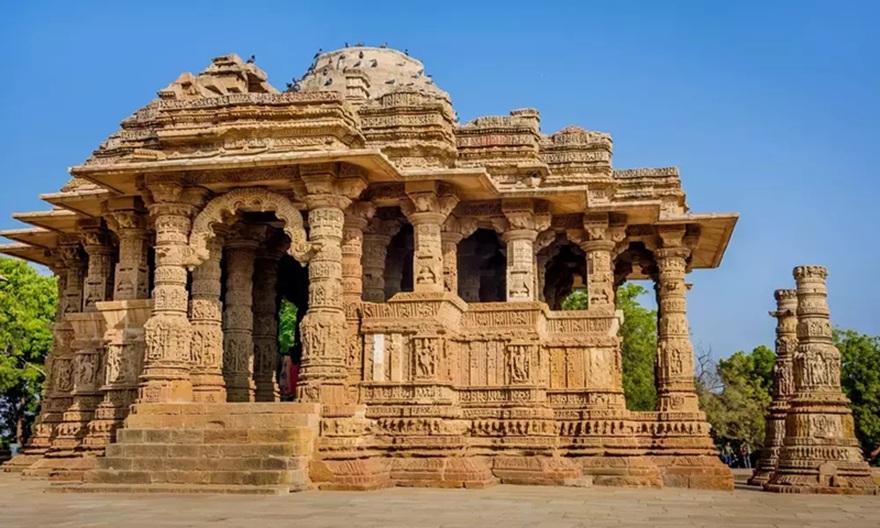
Climate change has become a significant global concern of the modern era. It has contributed significantly to the loss of global ecology and biodiversity. The search for combat measures has led to the revival of Traditional Ecological Knowledge (TEK) in the pockets of the world. TEK has garnered greater global attention as a sustainable tool that supports climate resilience efforts. Though India possesses a rich repository of indigenous knowledge associated with nature, environment and ecology, it is significantly impacted by rising global temperature, harming and obstructing the everyday life of citizens. This paper attempts to analyse the sustainable features embedded in the TEK of India with respect to its indigenous architecture and bring to light its various sustainable elements.
Through secondary literature review and largely theoretical study, this paper highlights the rich indigenous knowledge systems in Indian vernacular architecture and highlights the prevalence of sustainable elements embedded in the system by analysing ancient texts such as the Shilpasastra, Vastusastra and various ancient constructions over centuries and across empires. This paper argues that Indian vernacular architecture embodies the adaptive sustainable principles that continue to be relevant in the national efforts to combat climate change. Through practical policy recommendations, it attempts to integrate such knowledge systems into modern planning frameworks to contribute positively to environmentally responsive and culturally rooted development strategies.
Introduction
The term Traditional Ecological Knowledge, also referred to as Indigenous knowledge, lacks a definitive definition. The term traditional is commonly used in formal texts to refer to a long-established custom or belief that has been passed from one generation to another (Oxford University Press, n.d). It is also understood to be cumulative and adaptive to change over time (Nakashima 1998). UNESCO (n.d.) defines culture as the distinct spiritual, material, intellectual, and emotional features characterising a society. It can be derived from this definition that Indigenous knowledge forms a significant part of any culture’s intellectual capital. Of the various subsets of indigenous knowledge, Traditional Ecological Knowledge (TEK) has garnered much attention from scholars. TEK has been defined as an aggregate of practices and beliefs shaped through adaptive processes which have been passed from one generation to another (Berkes, 2017). This transmitted knowledge provides a plethora of information regarding the ways in which living beings interact with one another and their environment. TEK has also been identified as inseparable from indigenous identity and society (Diver, 2017).
People depended on their immediate environment for survival. Hence, there was a strong incentive for them to use environmental resources sustainably. As a result, a cumulative body of knowledge was generated that emphasised not harming the environment (Sioui et al., 2022). The sustainable nature and features of TEK have contributed to its being included at varying levels in the combat against climate change. While TEK has been considered an environmentally sustainable key to protect the biodiversity (Priyadarshini & Abhilash, 2019), TEK itself is at risk of becoming obsolete in the modern world. The pace of climate change is understood because of this (Nakashima et al., 2012). This research examines how the gradual erasure of TEK from modern architecture has influenced growing climate change.
Data sourced from NITI Aayog’s dashboard (2025) show that both the number of high-rise buildings and energy consumption in southern India are on the rise, and that, while the national average of per capita electricity consumption in India is at 1,331 kWh, per capita energy consumption in south India ranges from 1,768 kWh in Tamil Nadu to 2,349 kWh per capita in Telangana. The increase in energy consumption has been attributed to the increasing use of cooling systems such as Air conditioners and coolers. The growing heat coincides with the timeline of the rising number of high-rise buildings. Thus, the impending link between the reduction in traditional architectural practices and increasing heat becomes the crux of this paper’s research.
Research Questions
- What are some of the characteristic features of Indian architecture? How environmentally sustainable are they?
- Has there been an erosion of traditional architecture across the subcontinent that has significantly influenced or aggravated climate change? Can the inclusion of traditional architecture in modern construction aid in climate change combat efforts?
Methodology
This paper is an interdisciplinary and analytical study of traditional architecture as an indigenous pathway to climate resilience. The study employs thematic exploration through peer-reviewed journals, books and historical texts to understand the inherent sustainable nature of India’s architecture and introduce the same as a tool to combat climate change in the subcontinent. Through Interlinking areas of study such as Architecture, Environmental studies and Climate studies, the paper focuses on recognising recurring patterns of climate sustainability embedded in Indian architecture. Secondary data sources on Traditional Ecological knowledge and Indian vernacular architecture become the foundation of the study. Additionally, case studies on Indian architecture from multiple sources are consulted in the study.
Scope and Limitations
The scope of the study broadly examines traditional architectural practices of the Indian subcontinent and their climate-resilient nature. The analysis is principally reliant on secondary data sourced from scholarly works, historical records, and documented case studies. The research lacks primary case studies, field visits, and quantitative analysis of energy efficiencies. The lack of subject expertise, combined with limited financial resources and agencies, poses a limitation to conducting any laboratory or field research. While the study attempts to build a link between traditional architecture and sustainability, the paper does not empirically quantify energy efficiency or climate responsiveness. Nevertheless, the study’s objective to frame indigenous architecture as a relevant solution in today’s climate discourse remains intact. The study aims to inform policy discussions on the relevance of indigenous architecture as a climate response tool and to revive indigenous architectural practices to reverse climate change.
Literature review
Traditional architecture, with its profound connection to traditional environments and cultural narratives, inherently embodies principles of sustainability (Xu, 2024). Sustainable architecture is gaining popularity among the public and architects alike. Coincidentally, Traditional architecture from various parts of the world has also been increasingly recognised as ecologically sustainable.
Eiraji and Namdar (2011) conducted extensive research on the Iranian traditional architecture and recognised a wide range of systems developed across the nation early on to combat varying climatic conditions. From a hot and dry climate to a cold and arid one, Iranian traditional architecture varied to adapt to the area’s unique climatic features. In Turkey, efforts are underway to revive traditional architecture by identifying and analysing the traditional design strategies which utilise the natural environment to create efficient and sustainable buildings (Sözer & Bekele, 2018).
Similarly, the traditional Igala architecture practised in Nigeria exemplifies sustainability through energy and resource-efficient, passive solar techniques and environmental conservation strategies (Henry Emusa & Amanyi, 2023). African traditional architecture, though considered primitive due to reduced use of modern technology as commonly seen in modern architecture, is essentially sustainable and has evolved culturally to suit the people (Ejiga et al., 2012). More sympathetic to the environment, traditional African architecture maintains a high level of internal thermal comfort, regardless of prevailing solar radiation outside (Ejiga et al., 2012b).
In the central region of Saudi Arabia, the tradition of earth architecture that is unique in style, culture and sustainability includes the use of local materials to build homes that fit the environmental and cultural conditions (Mortada, 2016). Indian civilisation also has a long history of traditional architecture aligned with the principles of sustainability. More than mere aesthetics, these designs served as energy-efficient features affecting indoor thermal comfort and conditions (Chandel et al., 2016). Climate – responsive designs are built using local and sustainable materials. They include sophisticated designs like courtyards, clusters, wind towers, roof terraces, and jaalis (stone lattices) for effective climate control (Jadhav, 2007).
The sustainable character of traditional architecture is not restricted to one country or continent but is a recurring pattern that can be observed across the globe. Climate responsiveness with emphasis on adaptability, energy efficiency, sustainability, locally sourced materials and thermal comfort becomes the hallmark of any traditional architecture. Over the years, the world has witnessed a slow demise of traditional architecture as modern architecture grows in popularity. The growth of modern architecture also coincides with the rise of global warming and climate change. While traditional architecture has been increasingly recognised as environmentally sustainable, the steady decline of traditional architecture is yet to be recognised as a cause for increasing global warming and climate change.
Evolution of Indian traditional architecture
The Indian subcontinent lacks a singular traditional architectural practice. A variety of architectural practices have developed across the country. Its diversified socio-cultural, traditional, religious background and most importantly, climatic variations lay the foundation for this development (Bera, 2020). Landscape, sea, climate and more importantly, history have played a pivotal role in the evolution of the traditional architecture of India (Thapar, 2012). The Indian subcontinent has witnessed diverse civilisations and dynasties in power. Each of these civilisations and powers has left a lasting imprint on the art and architecture of their respective regions. Understanding these civilisations and ruling powers can help in shaping a better understanding of India’s traditional architecture (Kadian & Bhandral, 2023a).
Shilpasastra and Vastusastra: Codified knowledge of ancient Architecture
Indian architecture did not evolve through a process of trial and error. Rather, rich knowledge systems were codified and passed down through generations. The most prominent scriptures laying down the indigenous architectural knowledge of India are Shilpasastra and Vastusastra. These ancient texts functioned as great repositories of traditional ecological knowledge, analysing in detail principles related to site selection, material selection, ventilation, etc. (Acharya, 1934). Creating a harmonious relationship between the surrounding nature and the human-made environment was the foundation of the text (Dagens, 1994). Rather than viewing nature through mere aesthetic lenses, these texts emphasised the importance of its preservation.
The Shilpasastra is an amalgamation of 63 volumes in which Manasara1, Mayamata2 and Samarangana Sutradhara3emphasised on climate-responsive construction. Region-specific guidelines with regard to solar movements, wind directions, and rainfall patterns can be found in these volumes (Kramrisch, 1946a). Design elements such as open courtyards, wall thickness and even roofing systems were, hence, not products of the architect’s aesthetic senses but a deliberate strategy employed to enhance climate assimilation, natural ventilation and comfort. Owing to this indigenous knowledge, traditional architecture was able to reduce dependence on artificial cooling systems. These texts, hence, bring to light the very sophisticated understanding of thermal cooling and passive climate control that prevailed in the subcontinent long before the advent of modern sustainability discourses.
The Shilpasastra offered a theoretical framework that was not rigid in nature. It had a significant scope for contextual and regional adaptation. Thus, it accounted for the regional variation and allowed the architecture to evolve in response to India’s diverse climatic zones. This flexibility sowed seeds for the rising number of regional variations in architecture. For example, the courtyard-centric designs of the tropical regions are in contrast to the thicker stone structures in the arid regions. Though the term was yet to be coined, traditional practices of architecture as prescribed in the Vastusastra and Shilpasastra were anchored in the principles of sustainability (Kramrish, 1946b).
Indus Valley Civilisation (2800 BC – 1900 BC)
The Indus Valley civilisation, also referred to as the Harappan civilisation, flourished on the banks of the river Indus from 2800 BC (Vahia, 2007). Evidence traced from the excavation sites shows that even the civilisation had extensive town planning and water management systems. Evidence suggested that baked bricks of uniform built were used extensively to build multi-story buildings with intricate patterns and designs (Kadian & Bhandral, 2023b). The civilisation also had a sophisticated system of drainage, with evidence of covered drains and public baths (Kadian & Bhandral, 2023c).
“The patterns of settlements drew from the behaviour of rivers, which provided flood plain ecology, regional trade over rivers, a favourable climate for daily life, access to trade routes and natural resources, etc.” (Miller, 1985).
Jain architecture (300 BC to 1700 CE)
Jainism was established as a religion by Mahavira, the 24th Tirthankara (Long, 2013). Ahimsa, i.e., non-violence, which was a cornerstone of Jainism, extended beyond humans and animals to the environment as well. Stemming from the belief that harmony between living creatures and the environment was essential for the well-being of both, Jainism encouraged its followers to adopt a lifestyle of simplicity and sustainability, and to minimise their impact on the environment (Kadian & Bhandral, 2023d). Jain architecture reflects these very principles. Designed to be energy efficient, the Jain architecture ensured maximisation of natural light and air circulation through effective use of jaalis (perforated stone screens) and strategically placed windows (de Mallmann, 1954). Builders used locally sourced granite, marble, or sandstone. Hence, these constructions lacked strong carbon footprints and thereby required minimal maintenance. Dilwara temple at Mount Abu in Rajasthan is a striking example of sustainable and environmentally inclined Jain architecture.
Buddhist Architecture (300 BC to 1200 CE)
Siddhartha Gautama developed Buddhism, which flourished in the 3rd century (Keown, 2012). Most architectural relics associated with Buddhism were built to commemorate significant events of Buddha’s life (birth, enlightenment, death, etc.) (Deva,1974). The Buddhist architecture in India reflects an intricate relationship with the environment, showcasing sustainability, harmony, and reverence for nature (Sharma, 2024). Rather than dominating or upsetting the ecosystem, Buddhist architecture took special care to get itself integrated with the surroundings, for example, “Many Buddhist monasteries were established in or near sacred groves, which became centres of biodiversity. These groves were often protected by religious beliefs, serving as sanctuaries for flora and fauna. This approach resonates with modern conservation efforts, highlighting the foresight of ancient practices” (Sharma, 2024).
Maurya Architecture ( 550 BCE to 320 CE )
The Mauryan Empire is one of the most powerful empires of ancient India. The art and architecture of the Mauryan period depicted detailed carvings of human and animal figures (Kadian & Bhandral, 2023e). Ray (1977) suggests that animals were used in carvings not for mere aesthetic purposes but as symbolic figures. For example, he noted that elephants are used in Mauryan art to depict linear rhythm and flowing plasticity. The plethora of animal carvings found in Mauryan architecture, and the symbolic meaning attached to them, emphasise the volume of biodiversity within the state and a cooperative synergy between the lives of humans and animals. The Mauryan empire has also left behind long-standing architectural relics such as the Ashokan Pillars, the Pataliputra palace, etc. Of these, the Ashokan pillars adorned with inscriptions and carvings are considered the most longstanding example of Mauryan architectural prowess. Many of these pillars stand tall even today in Haryana, Uttar Pradesh, Delhi, Madhya Pradesh and Bihar. This is a testament by itself regarding the quality of indigenous materials used (Sandstone, timber, clay, etc.).
Magadh served as the granary of Bihar during the Mauryan Empire. However, modern abortive irrigation practices had turned the area into an arid, uncultivable land, prompting many farmers to abandon agriculture in the region. Presently, attempts are underway to revive the traditional irrigation channels across Magadh set up by the Mauryan empire to restore irrigation facilities (Pathak, 2018). This revival underscores how long-term sustainability of public infrastructure was of relevance even in the Mauryan empire.
Mughal Architecture (16th to 19th Century CE)
The Mughals made marble architecture a defining feature of their construction in India. While native to Indian regions such as Makrana, Rajasthan, marbles were utilised by the Mughals to showcase imperial grandeur. Mughals used red sandstone and intricate marble designs in their monuments, enhancing both structural strength and visual elegance. This contrasted with the eco-logic of Indian traditional architecture, which, up until this point, sought sustainability and thermal comfort from indigenous materials (Koch, 1991). This is not to say Mughal architecture was unsustainable. Charbagh gardens, according to Ali (2013), functioned as micro-climate management systems that reduced heat in the surrounding areas. Similarly, open courtyards and step wells serve both ornamental and climate-regulating functions. The domed roof, a hallmark of Mughal architecture, was not only pleasing due to its geometric and symmetric appearance, but it also played a key role in providing thermal comfort as it provided more surface area for the hot air from within to rise. Mughal monuments such as the Taj Mahal, Humayun Tomb, etc., are intact today with very little to no modern engineering intervention. However, this era marked a crossroad: ecological sustainability reduced in importance, and in contrast, monumentalism and grandeur rose to prominence.
Colonial Architecture
The earliest influence of colonial architecture can be seen in India through the churches. The Gothic and neoclassical style of architecture was introduced to India during this time. Over the years, British architecture evolved in ways to include Indian and Islamic artistic elements within itself. This new style that emerged as a part of the confluence was called the Indo-Saracenic style of architecture. Red sandstones, arches, long pillars and corridors became the hallmark of Indo-Saracenic architecture. Public buildings built during the British era often included these elements. The Victoria Memorial in Kolkata, the Gateway of India in Mumbai, etc., are striking examples of this integrated art style (Metcalf, 1989). The colonial architecture offset traditional architectural practices as they did not rely purely on locally sourced material. Given the naval
strength of the British and the vast expanse of their colony, it was convenient for them to import building materials from other parts of the world to India. In this way, the aesthetic appeal of the building took precedence over the climate-adjustive nature of the building. While high ceilings and long verandas accommodate passive cooling, the tendency to prioritise grandeur and visual appeal resulted in sustainability quotients being overridden. By attempting to replicate European architectural features on Indian soil, they failed to realise the necessity to adapt architecture to the local ecology and environment.
South Indian Architecture and Sustainability
While architecture across the subcontinent exhibits ecological sensitivity, South India presents a particularly rich case of climate-responsive design due to its tropical environment and dynastic innovations. Dravidian architecture of southern India emerged and developed from the temples of the region, which doubled as both places of worship and ecological hubs. Unlike the dynasties of the North, who introduced new styles of architecture, the development of the traditional architecture in southern India catered to the local climatic conditions while simultaneously ensuring continuity of the previous ruler’s aesthetic elements. The region was ruled by Pallavas, Cholas, Pandya and later by the rulers of Vijayanagar, who all left lasting impressions not only through the grandeur of construction but also through engineering and climate-responsive elements. Hence, the evolution of South Indian traditional architecture is rooted in sustainability, both in terms of preserving the surrounding ecology and cultural traditions.
Governed by a tropical climate, the southern plateau of India experiences both hot and humid climates mingled with heavy rains. Hence, passive cooling, natural ventilation, and thermal insulation systems were necessary to ensure a pleasant climate indoors. The naalukettu houses in Kerala, with the open courtyard at the centre of the house, accommodate this very purpose. The open courtyards allow the hot air to rise to the top, letting cool air from the surrounding take its place. Making the interior cooler in comparison to the outside. The Chettinaadu mansions from Tamil Nadu also depict a similar sensitivity to climate (Susilo & I.W, 2007). Lime plastered walls and high ceilings of these mansions accommodate heat sensitivity and passive cooling. Their deep verandas and ornate courtyards allow the houses to maintain pleasant temperatures even during harsh summers. In Karnataka, sloped roofs with Mangalore tiles allow for rainwater to flow to the ground. In the drier regions of Andhra Pradesh and Telangana, the architectural elements were modified to suit the microclimate of the region. Mud and lime were used more extensively in these regions to protect against harsh sun during the day and release warmth at night.
This climate-responsive form of architecture also appears in the temples of the South. Delving deeper into the history of South Indian architecture leads us to the temple architecture of the Cholas, notably. The Cholas followed the legacy of Dravidian architecture envisaged by the Pallavas while adding their own classical elements to the same. Brihadeeshwara temple of Tamil Nadu, built by Raja Raja Chola, is considered the most magnificent symbol of Dravidian art and architecture. Built using quarried granite and large rocks (measuring up to 80 tonnes) transported from neighbouring states, the carbon footprint of the temple is negligible relative to the size of the construction. More notable, though, is the use of dry masonry. The entire temple, including the 80-tonne dome that rests above the Garbhagriha of the temple, was entirely constructed and connected through an interlocking system without any binding agent such as lime or cement (Deeksha & Behera, 2022). While the construction technique is yet to be decoded entirely, studying the same would provide invaluable knowledge and aid the engineering efforts to reduce life-cycle emissions in modern constructions, thereby making them more sustainable.
Key Features and Sustainability Quotient of Indian Traditional Architecture
The inquest of Indian traditional architecture reveals the recurring pattern of sustainability as the keystone of its design principles. Across regions and climatic zones, buildings were constructed with aesthetic nuances while maintaining harmony with nature. Indigenous knowledge, particularly that identified from ancient texts such as Vastusastra and Shilpasastra, offers boundless guidance on making constructions environmentally inclined.
In Southern India, these principles are more evident. The traditional Naalukettu and Chettinad Mansions with their open courtyards, deep verandas and high ceilings regulate indoor temperature and airflow naturally. Such designs help reduce dependence on artificial climate regulators such as air conditioners and heaters, highlighting a sophisticated understanding of climate-responsive construction and passive cooling. Dating further back, the Chola temples built in dry masonry and interlocking granite systems illustrate the long-term durability that can be achieved without exploiting or harming the surroundings. Similarly, principles of sustainability appear adapted to cultural and regional contexts across the subcontinent. Jaalis of Jain architecture, durability of Ashokan pillars, climate-regulating Charbagh gardens of Mughals, etc. showcase a seamless blend of aesthetics and climate-adaptive nature of traditional construction.
The following elements form the foundation of vernacular architecture being sustainable in India:
- Use of Native Resources: Traditional architecture primarily relies on locally sourced materials such as mud, lime, timber and clay tiles. This contributed significantly to sustainability by ensuring compatibility between building materials and the local climate. Natural insulating properties of indigenous material were also utilised to regulate indoor temperature, leading to reduced reliance on artificial sources to control indoor climate. Additionally, reliance on native resources contributed to the strengthening of local economies and knowledge systems by encouraging traditional methods of construction and reducing carbon footprints created through transportation. For example, the Dilwara Temple in Rajasthan was built entirely from marble and sandstone available within the region.
- Designs that are climate sensitive: Across the subcontinent, the precedence of climate-sensitive architecture can be traced across generations and empires. Sloped roofs, open courtyards, high ceilings, and gardens were incorporated into the architecture to add both splendour and practicality. Building orientation, including the thickness of the walls, was adapted to the regional climatic conditions such as heat, humidity, rainfall, and wind patterns. Intentional designs allow for full utilisation of daylight and natural ventilation, allowing the buildings to respond to climatic variations with minimal energy consumption. Naalukettu Houses of Kerala, Charbagh gardens of Mughals and Chettinadu Mansions are examples of the same.
- Provisions that minimise resource need: Traditional architecture reduces extensive dependence and usage of natural resources. Rainwater harvesting systems, stepwells, and efficient drainage networks contributed to the conservation of available water resources. They also ensured optimal water availability even during dry seasons. Hence, through efficiency, over consumption and wastage were both curtailed. For example, Rani Ki Vav was designed as a water harvestment and conservation tank in Patan, Gujarat, to reduce dependence on monsoon for water in the 11th century AD by King Bhimdev I (UNESCO, 2014).
- Passive thermal regulation systems: Jaalis and Long verandas accommodate passive cooling by utilising the stack effect and heat dissipation, allowing hot air to escape and cooler air to remain indoors. Such a system ensures thermal comfort without reliance on energy – intensive appliances.
- Dry construction: The application of dry masonry, as seen in the Brihadeeshwara temple, is the epitome of low-carbon engineering. This means of construction serves two sustainable purposes. Firstly, it enables the expansion of the material without cracking and ensures the recyclability of the structure at the end of its life cycle. Additionally, dry masonry enables the structure to last for centuries, prioritising engineering precision over material consumption.
- Symbiotic site planning: Symbiotic here refers to the harmony between man-made environment and natural ecology. Previously, settlements were designed around nature to not disrupt ecological balance. Assigning a symbolic spiritual meaning to aspects of nature, for example, sacred groves, temple tanks etc., accommodated preservation of biodiversity through religious practices. Site selection followed the Vastu principles of slope and soil quality, ensuring that construction did not disrupt natural watersheds. In hilly regions like the Himalayas, houses were built on south-facing slopes to maximise winter sun (passive solar gain), while in the plains, settlements were clustered to create mutual shading, and significantly reducing the “Urban Heat Island” effect long before the term was coined. The sacred groves called Kaavu in Kerala serve the same purpose.
Overall, Indian traditional architecture demonstrates that sustainability was not optional. It was intended and embedded into the system intentionally. These architectural features reflect a deliberate effort to balance human needs with the surrounding environmental conditions. Their adaptability and resource efficiency showcase the enduring legacy of environmental intelligence and sustainability. Recognising these features leads to greater appreciation of traditional ecological knowledge of the subcontinent, revival of which can be beneficial in the combat against climate change.
Policy Recommendations
From the above discourse, it is ascertained that Traditional Architecture across the Indian subcontinent is inherently climate – responsive and environmentally sustainable. The systematic revival and conscious integration of indigenous architectural practices can extend, contribute and aid national and international efforts to combat the rising climate challenges. In this context, the following policy interventions are recommended:
- Revival of TEK: Rather than treating indigenous architectural practices as cultural relics, they must be formally recognised as climate adaptation resources. Government institutions must take conscious efforts to map regional indigenous building techniques across the regions of the state. They must be systematically documented and digitised to both preserve and propagate indigenous knowledge. Workshops must be organised at the community level by including local craftsmen, artisans and masons to accommodate intergenerational knowledge transfer and prevent further erosion.
- Inclusion of TEK in academic curriculum: Educational institutions play a crucial role in preserving indigenous knowledge. TEK must be systematically included in university and professional training curricula by incorporating modules on vernacular designs. Such curriculum reform will ensure that future professionals, such as architects, engineers, planners, and policy makers, are equipped to apply traditional knowledge within modern developmental frameworks. This integration would effectively bridge the divide between indigenous practices and sustainable development.
- Financial incentives for accommodating TEK in modern constructions: Economic limitations often pose a barrier to adopting traditional construction practices. Targeted financial incentives such as tax rebates, construction subsidies, Low-interest green loans and benefits for builders, engineers and developers who incorporate climate-responsive indigenous elements to their projects can drastically accelerate the adoption of climate-resilient traditional practices and low – carbon building practices across the subcontinent.
- Revival and integration of traditional water and landscape management system: As early as the Harapan civilisation, the Indian subcontinent has had a sophisticated water and landscape management system, complete with temple tanks, harvesting systems and stepwells. Integration of these traditional practices is vital to modern-day urban and city planning to ensure water security in densely populated regions. By reviving traditional water conservation infrastructure, policymakers can effectively recharge groundwater and reduce vulnerability to floods. Incorporating green corridors, such as sacred groves, can also help mitigate the urban heat island effect.
Conclusion
This paper explored whether the degradation of traditional architectural practices in the Indian subcontinent has had any impact on the current climate issues. The degradation of indigenous climate-responsive architectural practices over the years by the unsustainable modern architectural practices has had an increased impact on the rising heat island effects in urban areas. The degradation of indigenous architectural practices has not only led to the loss of cultural heritage but has also impacted the indigenous climate adaptation practices that were developed over the years. The degradation of Traditional Ecological Knowledge has made the built environment more vulnerable to climate change instead of mitigating it.
However, the results also shed light on the viable and low-carbon solutions provided by traditional architecture to enhance climate resilience in both rural and urban settings. The indigenous building methods, such as the traditional water management systems of stepwells and temple tanks, provide resilient approaches to mitigate overconsumption and enhance environmental sustainability. The revival and incorporation of these very same principles into modern development policies can, therefore, provide a viable climate adaptation strategy while also enhancing energy security and urban resilience.
Going beyond its domestic applications, India also has the potential to utilise its indigenous sustainability practices as a strategic resource in global climate politics. By leveraging its vast repository of sustainable architectural knowledge through global cooperation, regional partnerships, and multilateral climate agreements, India can help enhance adaptation capacity in climate-vulnerable regions, particularly in the global South. Such global diplomatic efforts, informed by Vernacular knowledge, not only enhance India’s strategic soft power but also make the country a normative leader in sustainable development and climate resilience. In an age where climate change increasingly converges with global stability and security, the revival of traditional ecological knowledge, therefore, presents itself not only as an imperative for environmental sustainability but also as a strategic opportunity. Thus, TEK serves a purpose beyond that of being a mere heritage system. It presents itself as a forward-looking, future-oriented solution capable of building ecologically resilient built environments in an era of growing climate challenges.
Acknowledgement
The author acknowledges with gratitude the guidance and mentoring for this research given by Dr R Srinivasan, Group Captain Parthasarathi, Dr Ashok Dua and Sri. Santosh Namby Chandran for this research work during internship with DRaS-Praghna Research Writing Program
Title Image Courtesy: Novatr
Disclaimer: The views and opinions expressed by the author do not necessarily reflect the views of the Government of India and the Defence Research and Studies.


References
1 More literally, ‘by the sages known as Mānasāra’ (literally essence of measurement), i.e., by those who specialise in mensuration or measuring, which is a very important feature of the science of architecture. The term mānasāra has been used in three different senses: (i) as a generic name of architects, (ii) as the title of the treatise, and (iii) as the individual name of its author or compiler, cf. chapter XIXX, concluding lines, chapter XXXIII, 2, LXVIII, 11, chapter LXIX, 216. As the possible name of an architect, it is mentioned in the Holal inscription (Epigraphist’s Report, 1914-15, p. 90) and the Agni-purāṇa (chapter XLII, 127), and as the name of a king in the Daśa-kumāra-carita (eel. Kale, pp. 4, 12, 43). For more details, see the writer’s Indian Architecture, pp. 2, 3,4. [Source: https://www.wisdomlib.org/hinduism/book/manasara- english-translation/d/doc421043.html#:~:text=Footnotes%20and%20references:,2%2C%203%2C4.]
2 Mayamata is considered an abridged version of Manasara by many scholars. However, a careful examination of its contents reveals that both in the precise grammatical language and specific contents, Mayamata differs from Manasara. While Manasara uses Sanskrit in an ungrammatical context, Mayamata uses grammatically correct representation, indicating that this is a later work. Also, Manasara is conspicuous by the lack of discussion on Vimana (gopuram or temple towers). It merely uses the term Amalaka (ripe gooseberry) to describe Vimana. Mayamata, on the other hand, pays considerable attention to the construction of Vimana (calls it Prasada), indicating thereby a distinct South Indian or Dravidian flavour. We observe that the temple towers in North India and South India are distinctly different in their architectural style.
3 This work is by King Bhoja (1000-1055 AD), who ruled parts of Central India in what is now Madhya Pradesh. Bhoja was a great warrior, philosopher and a keen architect. He also authored Sringara-Prakasa and Saraswathi-Kanthabharana, both much acclaimed for their literary merits. Bhoja built the lake at Bhopal, so massive and a life-giver to the region that a proverb is still in vogue saying Tala to Bhopala Tala, aur sub talaiya. Apart from precise architectural details about civil and religious works, Bhoja was especially noted for the art of building embankments to artificial lakes that have stood the test of time. His style was even emulated by Maharaja Raj Singh of the Sissodiya dynasty, who built the Rajasamudra Lake at Rajsamand in Rajasthan.
Other References
Acharya, P. K. (1934). Indian architecture according to Mānasāra-Śilpaśāstra. Oxford University Press.
Ali, A. (2013). Passive cooling and vernacularism in Mughal buildings in North India: A Fsource of inspiration for sustainable development.
Bera, A. T. (2020). Glimpses of Indian traditional architecture. International Research Journal of Engineering and Technology, 7(5), 4208–4213.
Berkes, F. (2017). Sacred ecology (4th ed.). New York, NY:Routledge. doi:10.4324/9781315114644 Chandel, S. S., Sharma, V., & Marwah, B. M. (2016). Review of energy efficient features in vernacular architecture for improving indoor thermal comfort conditions. Renewable and Sustainable Energy Reviews, 65, 459–477. doi: 10.1016/j.rser.2016.07.038
Dagens, B. (1994). Mayamata: An Indian treatise on housing, architecture and iconography. New Delhi: Indira Gandhi National Centre for the Arts.
Deeksha, P. S., & Behera, P. (2022). The magnificence of Brihadeeshvar temple, Thanjavur.
De Mallmann, M. T. (1954). The art and architecture of India: Buddhist, Hindu, Jain. Harmondsworth, England: Penguin.
Deva, K. (1974). Buddhist architecture in India. Cambridge University Press.
Diver, S. (2017). Negotiating indigenous knowledge at the science-policy interface: Insights from the Xáxli’p Community Forest. Environmental Science & Policy, 73, 1–11. doi: 10.1016/j.envsci.2017.03.001
Eiraji, J., & Namdar, S. A. (2011). Sustainable systems in Iranian traditional architecture. Procedia Engineering, 21, 553–559. doi: 10.1016/j.proeng.2011.11.2050
Emusa, H., & Amanyi, W. (2023). Sustainability of traditional building practices in Nigeria: The case of Igala traditional architecture. International Journal of Science and Research Archive, 10(2), 41–55. doi:10.30574/ijsra.2023.10.2.0886
Jadhav, R. (2007). Green architecture in India: Combining modern technology with traditional methods.UN Chronicle.
Kadian, A., & Bhandral, A. (2023). Analyzing the architecture timeline of India on social, cultural and ecological parameters to comment on future trends. In Proceedings of EAD 2023.
Keown, D. (2012). Buddhism. In Encyclopedia of applied ethics (2nd ed., pp. 338–344). Amsterdam, Netherlands: Elsevier. doi:10.1016/b978-0-12-373932-2.00189-7
Koch, E. (1991). Mughal architecture. An Outline of its History and Development (1526-1858). Kramrisch, S. (1946). The Hindu temple. Calcutta: University of Calcutta.
Long, J. D. (2013). Jainism: An introduction. London, England, Bloomsbury Publishing.
Metcalf, T. R. (1989). An imperial vision: Indian architecture and Britain’s Raj. Berkeley: University of California Press.
Miller, D. (1985). Ideology and the Harappan civilization. Journal of Anthropological Archaeology, 4(1), 34–71.
Mortada, H. (2016). Sustainable desert traditional architecture of the central region of Saudi Arabia. Sustainable Development, 24(6), 383–393. doi:10.1002/sd.1634
Nakashima, D. J. (1998). Conceptualizing nature: The cultural context of resource management. Nature and Resources, 34(1), 8–20.
Nakashima, D. J., Galloway McLean, K., Thulstrup, H. D., Ramos Castillo, A., & Rubis, J. T. (2012). Weathering uncertainty: Traditional knowledge for climate change assessment and adaptation. Paris, France: UNESCO & UNU.
NITI Aayog. (2025). India Climate & Energy Dashboard (ICED) 3.0. Government of India. Oxford University Press. (n.d.). Traditionally. Oxford English Dictionary. Retrieved July 15, 2025.
Pathak, S. (2018, January 4). Ancient Mauryan technology brings water, hope to dry Magadh in Bihar. Hindustan Times.
Priyadarshini, P., & Abhilash, P. C. (2019). Promoting tribal communities and indigenous knowledge as potential solutions for the sustainable development of India. Environmental Development, 31, 100459. doi: 10.1016/j.envdev.2019.100459
Ray, N. (1977). Animal symbols in Maurya art: Formal and cultural significance. Bulletin of Tibetology, 13(2), 5–17. Namgyal Institute of Tibetology.
Sharma, B. (2024). The role of Buddhist architecture in sustainable practices. Social Research Foundation Journal, 12(2), 45–56.
Sioui, G., McGregor, D., Drisdelle, B. L., & Witham, J. (2022). Indigenous architecture through indigenous knowledge: Assembling ourselves together. Frontiers in Sustainable Cities, 4, 798967. doi:10.3389/frsc.2022.798967
Sözer, H., & Bekele, S. (2018). Evaluation of innovative sustainable design techniques from traditional architecture: A case study for the cold dry climatic region in Turkey. Architectural Science Review, 61(3), 143–155. doi:10.1080/00038628.2018.1457509
Susilo, I. W. (2007). The living culture and typo-morphology of vernacular-traditional houses in Kerala. EJournal of Asian Scholarship Foundation, diunduh pada, 22, 1-24.
Thapar, B. (2012). Introduction to Indian architecture. Singapore: Tuttle Publishing.
UNESCO. (n.d.). What is meant by “culture”? United Nations Educational, Scientific and Cultural Organization. Retrieved July 15, 2025.
United Nations Educational, Scientific and Cultural Organization. (2014). Rani ki Vav (the Queen’s Stepwell), Patan. Retrieved February 22, 2026
Vahia, M. (2007). The Harappan question. Annals of the Bhandarkar Oriental Research Institute, 88, 43–59.
Xu, M. (2024). Bridging traditions: The synergy of historical wisdom and modern sustainable practices in architecture. Applied and Computational Engineering, 66(1), 160–165. doi:10.54254/2755- 2721/66/20240942.