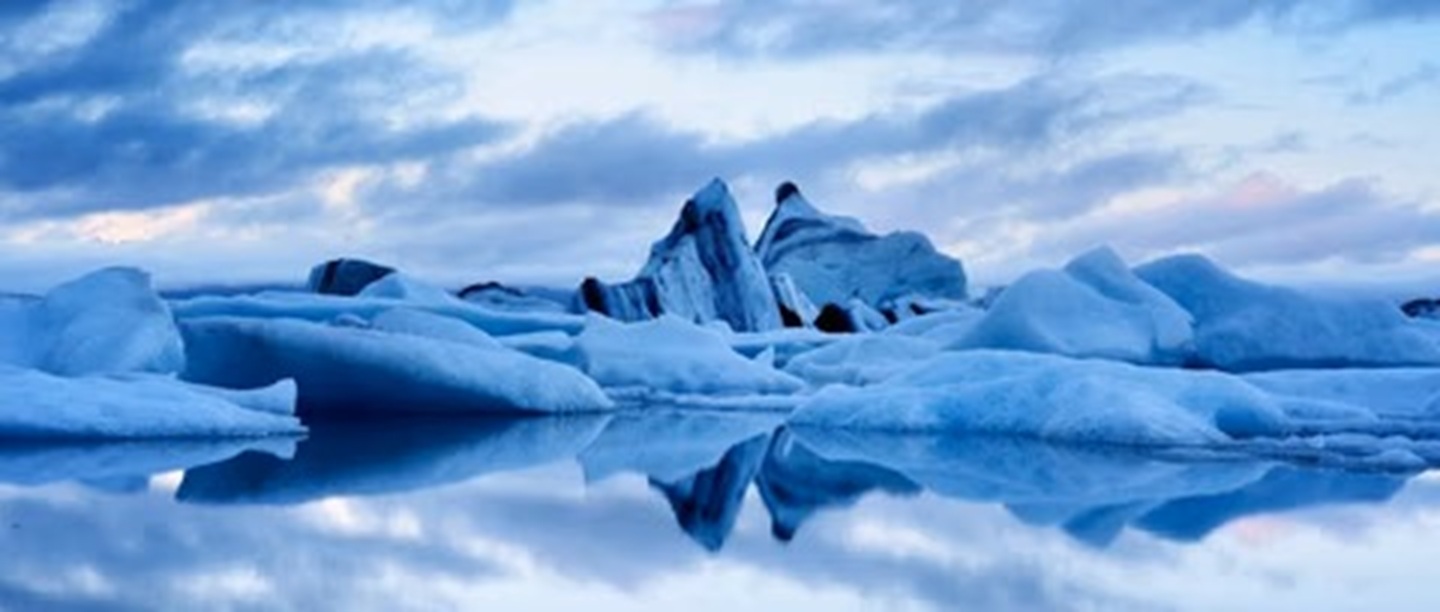
India’s Arctic energy policy should be understood as part of a larger national project: securing energy, climate resilience, maritime access and strategic autonomy in a changing world. The Arctic is not geographically close to India, but it is strategically relevant. Its melting ice affects sea levels, ocean systems, weather patterns and possibly the monsoon; its shipping routes may alter global trade; its hydrocarbons, critical minerals and clean-energy potential are attracting major powers; and its governance is becoming a test of international law, climate responsibility and geopolitical balance.
India’s official Arctic engagement is not new. The Government of India notes that India’s connection with the Arctic dates back to the signing of the Svalbard Treaty in 1920, and that India has conducted Arctic research across oceanography, atmosphere, pollution, microbiology and glacier studies. More than 25 Indian institutes and universities have been involved in Arctic research, and India has completed thirteen Arctic expeditions by 2022. India also launched its first multi-sensor moored observatory in Kongsfjorden in 2014 and its atmospheric laboratory at Gruvebadet, Ny-Ålesund, in 2016.
The foundation of India’s Arctic strategy is its 2022 policy, India and the Arctic: Building a Partnership for Sustainable Development. The policy rests on six pillars: scientific research and cooperation, climate and environmental protection, economic and human development, transportation and connectivity, governance and international cooperation, and national capacity building. It also explicitly links Arctic change to India’s climate, economic and energy security, and calls for better analysis of the implications of Arctic ice melt for shipping routes, energy security and mineral wealth.
India’s first principle should be that the Arctic is not a lawless frontier. India is a non-Arctic state and an observer in the Arctic Council, not a sovereign Arctic power. The Arctic Council makes clear that decision-making belongs to the eight Arctic states, with the involvement of Permanent Participants representing Indigenous peoples; observers may contribute mainly through working groups and must recognise Arctic states’ sovereignty, the Law of the Sea framework and the rights, values and traditions of Arctic Indigenous peoples. Therefore, India’s Arctic foreign policy should be disciplined, cooperative and lawful: science first, sovereignty respected, Indigenous consent taken seriously, and energy security pursued without environmental adventurism.
Energy is the strongest reason India cannot ignore the Arctic. India’s energy demand is rising rapidly because of urbanisation, industrialisation, cooling demand, transport growth and manufacturing expansion. The International Energy Agency says India’s energy demand has major implications for global energy markets, and that coal remains the largest source of supply even as India integrates more renewables and reforms its energy system. The Government of India has also described India as the world’s third-largest crude oil consumer and says its energy demand is projected to grow faster than almost any other major economy through 2035.
This energy reality explains why the Arctic matters. The US Geological Survey estimates that around 30 per cent of the world’s undiscovered gas and 13 per cent of its undiscovered oil may be located north of the Arctic Circle, mostly offshore. India should not treat these figures as a call for reckless extraction, but it should treat them as a strategic fact. If the Arctic becomes a future energy province—through gas, LNG, oil, hydrogen, ammonia, critical minerals or electricity-intensive industrial activity—India must have diplomatic, scientific, commercial and maritime visibility in the region.
India’s Arctic energy policy should therefore be based on diversification, not dependence. The country should not become over-reliant on any single Arctic partner, corridor or fuel. Russia will remain central because of geography, energy reserves, the Northern Sea Route and the India–Russia strategic partnership. India and Russia have already discussed the Northern Sea Route and the Eastern Maritime Corridor between Vladivostok and Chennai, including training Indian seafarers in polar and Arctic waters. The 2024 India–Russia summit also described energy, science and technology, nuclear, space, defence, trade and investment as part of the broad strategic relationship.
However, India’s Arctic foreign policy must be wider than Russia. A serious strategy would also deepen cooperation with Norway, Denmark/Greenland, Iceland, Sweden, Finland, Canada, the United States, the United Kingdom and Japan. With Norway, India can expand polar science, maritime safety, offshore technology and Arctic research. With Denmark and Greenland, India can build dialogue on sustainable development, critical minerals and climate science. With the UK and Nordic countries, India can connect Arctic expertise to offshore wind, hydrogen, shipping standards and environmental monitoring. With the US and Canada, India can work on Arctic governance, LNG markets, satellite systems, search and rescue, and climate-security assessments.
The second pillar should be Arctic–Himalaya climate security. India’s Arctic policy already calls for studying linkages between polar regions and the Himalayas. This should become a flagship foreign-policy programme. India is uniquely placed to connect polar science with Himalayan glacier research, monsoon modelling, sea-level rise, water security and disaster preparedness. Such a programme would give India a responsible voice in Arctic affairs without appearing extractive or militarised. It would also directly serve Indian farmers, coastal cities, ports, insurers, power planners and disaster-management agencies.
The third pillar should be the maritime and logistics strategy. The Northern Sea Route may not replace the Suez route in the near term, and it is exposed to climate, insurance, sanctions, environmental and security risks. But India should still build knowledge of polar shipping. The India–Russia understanding on seafarer training in polar and Arctic waters is a practical start. India should develop Arctic navigation expertise, ice-class vessel knowledge, polar insurance capability, port-readiness assessments, maritime domain awareness and emergency-response cooperation. This should be led by the Ministry of Ports, Shipping and Waterways, the Navy, the Coast Guard, Indian shipping companies, insurers, port operators and maritime universities.
The fourth pillar should be clean energy and critical minerals. India’s Arctic policy should not be narrowly focused on oil and gas. Energy security in the twenty-first century increasingly means access to minerals, technology, finance, grids, storage, hydrogen, nuclear fuel services and resilient supply chains. India has already crossed a major domestic clean-energy milestone: in June 2025, it achieved 50 per cent of cumulative installed electricity capacity from non-fossil sources, five years ahead of its 2030 NDC target. India’s Arctic diplomacy should therefore include responsible mineral sourcing, recycling, traceability, battery materials, rare earths, green steel inputs, offshore wind components and hydrogen value chains.
The fifth pillar should be nuclear and advanced energy systems. Arctic conditions create demand for reliable low-carbon power in remote settlements, research stations, ports, mining sites and military-civilian infrastructure. India should not promote the unrealistic idea of a reactor for every village, but it can study small modular reactors, microreactors, hydrogen-linked nuclear heat and remote-grid systems as part of a wider advanced-energy strategy. The Arctic can serve as a reference environment for extreme-weather energy systems, while India can apply the lessons to Ladakh, the Himalayas, islands, border infrastructure, mines, ports and industrial corridors.
The sixth pillar should be private-sector mobilisation. India’s Arctic policy says implementation will involve academia, the research community, business and industry. This point needs to be operationalised. Indian public and private companies can participate in Arctic-linked energy and infrastructure without waiting for the government to do everything. ONGC Videsh, Indian Oil, GAIL and Petronet LNG can examine long-term energy offtake, LNG security and upstream partnerships. L&T, BHEL and Indian shipyards can study polar engineering, modular infrastructure, offshore platforms and cold-climate equipment. Adani Ports, JSW Infrastructure and other port operators can assess Arctic-linked logistics through the Chennai–Vladivostok corridor. Tata Power, NTPC, Reliance, ReNew and other energy companies can work on hydrogen, storage, grids and renewable integration with Arctic and Nordic partners.
India should also build an Arctic finance platform. The key question is not only where energy comes from, but who finances it and on what terms. Indian banks, sovereign funds, infrastructure investors and insurers should develop competence in Arctic risk: environmental liability, ice conditions, sanctions exposure, shipping insurance, carbon rules, Indigenous rights, project finance and political risk. Without financial expertise, India’s Arctic strategy will remain academic rather than commercial.
Foreign policy is the frame that holds all these pieces together. India’s Arctic posture should reflect strategic autonomy: engage Russia without being trapped by Russia; cooperate with the West without becoming a camp follower; work with Arctic states without challenging their sovereignty; and participate in Arctic governance without imitating China’s more assertive “near-Arctic state” language. India’s strength is credibility as a major developing economy, a scientific actor, a maritime power and a voice for climate justice. That credibility should not be diluted by sounding like a late entrant in a resource race.
India should therefore propose an India Arctic Energy and Foreign Policy Initiative with five practical instruments. First, an Arctic–Himalaya Climate and Energy Observatory linking satellites, polar stations, Himalayan research and AI-enabled modelling. Second, a Polar Shipping and Northern Sea Route Cell to train Indian seafarers, insurers, port planners and logistics companies. Third, a Responsible Arctic Energy Forum involving Russia, Norway, the UK, Denmark, Japan and Indian companies. Fourth, a Critical Minerals and Clean Technology Dialogue focused on recycling, traceability and environmental standards. Fifth, an Advanced Energy Systems Programme studying SMRs, microgrids, hydrogen, storage and resilient power for remote regions.
The central argument is simple: India’s Arctic policy should not be an Arctic policy alone. It should be an energy-security policy, a climate policy, a maritime policy and a foreign-policy instrument. The Arctic gives India a platform to connect science with strategy, energy with diplomacy, and climate responsibility with national interest. If India acts early, carefully and lawfully, it can become a respected Arctic stakeholder—one that helps shape the future of energy security without undermining the fragile environment that makes the Arctic so strategically important in the first place.
Title Image Courtesy: Down To Earth
Disclaimer: The views and opinions expressed by the author do not necessarily reflect the views of the Government of India and the Defence Research and Studies.


References
Arctic Council (n.d.) About the Arctic Council. Available at: Arctic Council.
Arctic Council (n.d.) Observers. Available at: Arctic Council.
Government of India, Ministry of External Affairs (2022) Union Minister Dr Jitendra Singh releases India’s Arctic Policy in New Delhi. Available at: Ministry of External Affairs.
Government of India, Ministry of Earth Sciences (2022) India’s Arctic Policy: Building a Partnership for Sustainable Development. Available at: Arctic Portal Library.
International Energy Agency (n.d.) India: Countries and regions. Available at: International Energy Agency.
International Energy Agency (2025) Coal 2025: Demand. Available at: International Energy Agency.
Press Information Bureau, Government of India (2026) India’s expanding role in the global energy transition. Available at: Press Information Bureau.
Press Information Bureau, Government of India (2026) Energy transition and renewable capacity. Available at: Press Information Bureau.
Press Information Bureau, Government of India (2026) Non-fossil fuel share in total installed power capacity. Available at: Press Information Bureau.
Press Information Bureau, Government of India (2023) India and Russia discuss cooperation on Northern Sea Route and Eastern Maritime Corridor. Available at: Press Information Bureau.
Prime Minister’s Office, Government of India (2024) Joint statement following the 22nd India–Russia Annual Summit. Available at: Prime Minister’s Office.
United States Geological Survey (2008) Circum-Arctic Resource Appraisal: Estimates of undiscovered oil and gas north of the Arctic Circle. Available at: United States Geological Survey.
Observer Research Foundation (2025) Introducing the Arctic as a strategic geopolitical pillar for India. Available at: Observer Research Foundation.
Indian Council of World Affairs (2025) India in the Arctic: An outsider or a distant neighbour? Available at: Indian Council of World Affairs.