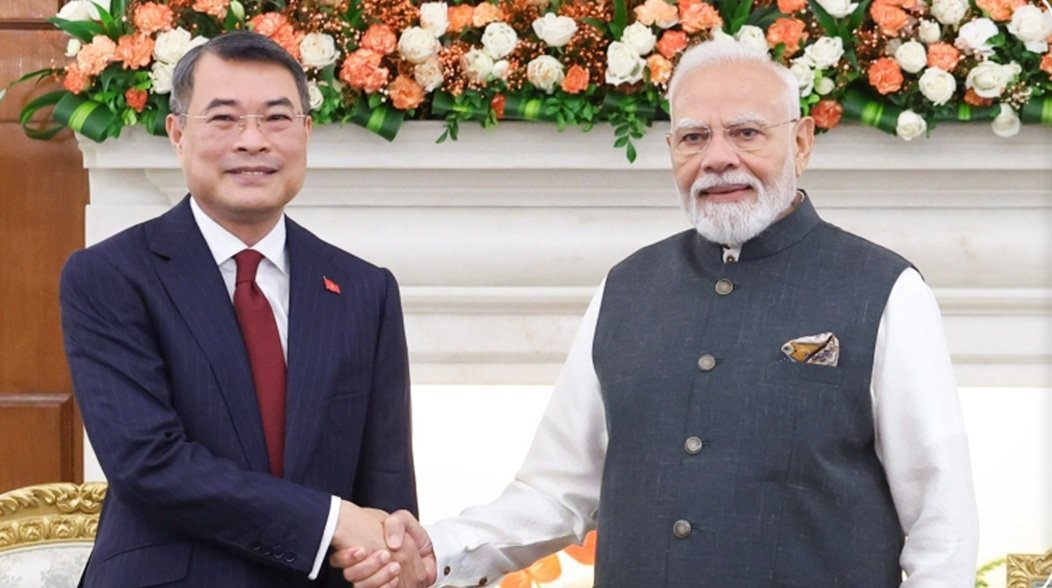
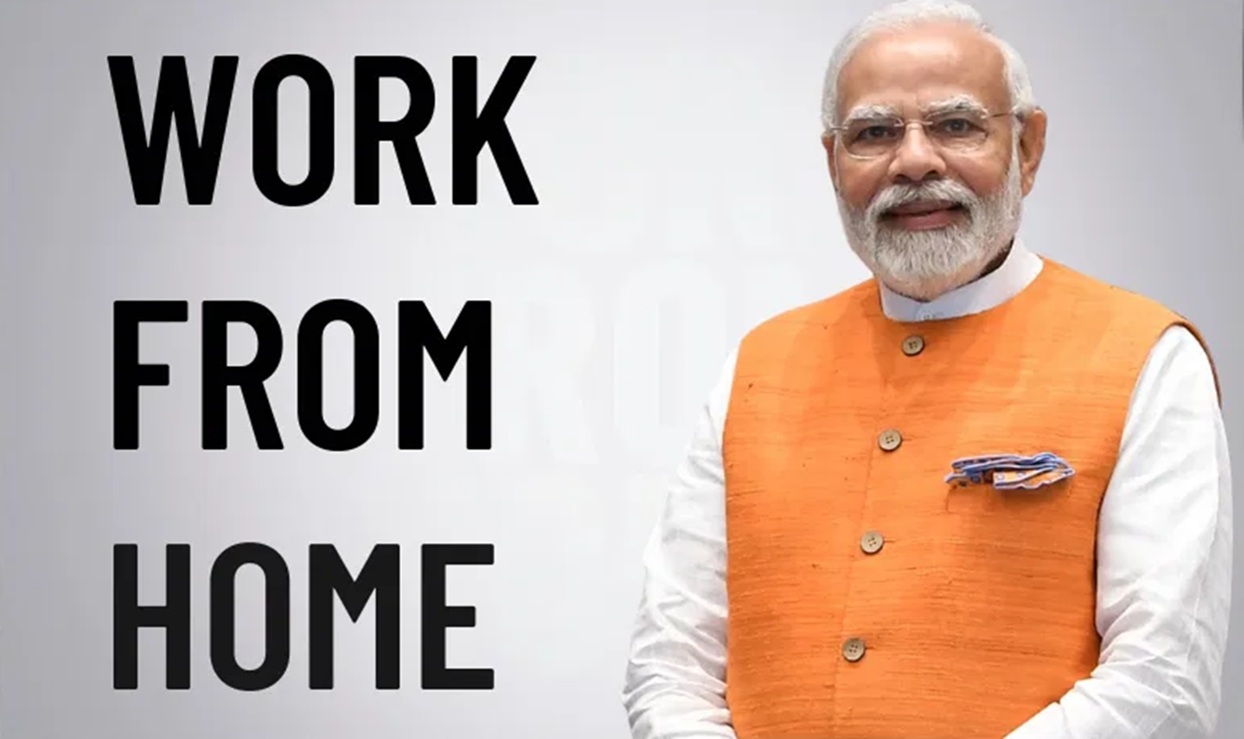
As the world faces geopolitical instability, energy insecurity, supply-chain disruptions and economic uncertainty, Narendra Modi has revived an idea many associated only with the Covid- 19 era: work from home. This time, however, the discussion is not centred around a health emergency. It is increasingly being viewed as a strategic response to emerging global challenges.
In recent speeches, PM Modi encouraged citizens and businesses to reduce unnecessary travel, adopt virtual meetings and embrace a flexible work culture wherever feasible. The suggestion came at a time when global tensions in West Asia and concerns over rising oil prices have once again highlighted India’s dependence on imported energy resources. (economictimes.indiatimes.com)
Rather than being perceived merely as a temporary administrative measure, Modi’s recommendation reflects a broader vision of economic resilience, sustainability, and national preparedness in an increasingly volatile global environment.
Why the Work-From-Home Model Matters in the Current Global Context
India imports over 85 per cent of its crude oil requirements, making the economy highly sensitive to international fuel price fluctuations and geopolitical developments. (business- standard.com).
Against this backdrop, reducing large-scale daily commuting through remote or hybrid working models could significantly lower fuel consumption and reduce pressure on foreign exchange reserves. According to reports, PM Modi has urged Indians to revisit habits adopted during the pandemic, including online meetings, virtual coordination and minimising non-essential travel. (economictimes.indiatimes.com).
In this context, work from home is no longer simply a matter of employee convenience. It is gradually emerging as a policy tool capable of supporting economic stability and national efficiency.
How Flexible Work Culture Can Help India Address Modern Global Challenges
One of the most immediate benefits of remote working is reduced fuel consumption. In metropolitan cities such as Delhi, Mumbai, and Bengaluru, millions of employees commute long distances every day. A decrease in vehicular movement directly contributes to lower petrol and diesel usage. At a time when crude oil markets remain vulnerable to geopolitical tensions, even moderate reductions in consumption can strengthen India’s economic resilience. (business-standard.com).
Several states, including Uttar Pradesh and Maharashtra, have reportedly encouraged virtual meetings and partial remote work arrangements following the Prime Minister’s appeal. (m.economictimes.com).
Strengthening Economic Continuity During Global Disruptions
The Covid-19 pandemic demonstrated that large segments of India’s digital economy can function effectively through remote systems. Industries such as information technology, consulting, finance, and professional services maintain operational continuity through virtual infrastructure. Academic and institutional studies on remote work ecosystems have indicated that hybrid work models can improve organisational resilience during periods of disruption. (arxiv.org)
In an era increasingly shaped by wars, pandemics, cyber threats and climate-related emergencies, remote work enables institutions and businesses to sustain operations despite external instability. For a rapidly developing economy like India, this adaptability is strategically important.
Supporting Climate and Sustainability Objectives
Remote work also aligns with India’s long-term sustainability goals. Reduced traffic movement leads to lower carbon emissions, improved urban air quality, and decreased pressure on transport infrastructure.
PM Modi’s broader appeal extended beyond work from home. He also encouraged greater use of public transport, carpooling, and energy-conscious practices. (m.economictimes.com)
Collectively, these measures complement India’s climate commitments and reinforce the importance of sustainable urban planning.
Accelerating India’s Digital Transformation
The expansion of remote work naturally encourages investment in digital infrastructure, cloud- based systems, cybersecurity, and decentralised communication technologies. In 2022, PM Modi had already referred to flexible workplaces and work-from-home ecosystems as “the need of the future.” (ndtv.com)
India’s rapid progress in digital payments, virtual collaboration platforms and technology-led services suggests that the country is increasingly capable of supporting a large-scale flexible work environment. Such a transition may also create opportunities for smaller cities and emerging urban centres to participate more actively in India’s knowledge economy.
Enhancing Productivity and Workforce Well-being
Several studies have suggested that hybrid work models can reduce commuting stress, improve work-life balance, and contribute positively to employee productivity. (business-standard.com)
In many Indian metropolitan regions, employees spend several hours each day travelling to and from workplaces. Flexible work arrangements can help reduce fatigue while enabling organisations to retain skilled professionals more effectively. This factor has become increasingly relevant as global workplace expectations continue to evolve, particularly among younger professionals who prioritise flexibility and quality of life.
The Structural Challenges of Remote Work
Despite its advantages, work from home cannot be universally implemented across all sectors. Industries such as manufacturing, healthcare, logistics, hospitality and retail continue to require physical presence and on-ground operations. Experts have also raised concerns regarding collaboration, mentorship, and workplace culture in prolonged remote environments. (business- standard.com)
Additionally, local economies built around office ecosystems, including restaurants, transport operators and small retailers, may experience economic strain if large-scale remote work becomes permanent. Public opinion on the issue remains divided. While many professionals favour hybrid work models, others question whether organisations will adopt such systems without stronger institutional or policy support. (reddit.com)
As a result, the future is more likely to involve balanced hybrid structures rather than a complete shift towards remote employment.
Conclusion
PM Modi’s renewed emphasis on work from home reflects a larger strategic perspective on how India can adapt to an increasingly uncertain global order. From energy conservation and economic continuity to sustainability and digital transformation, a flexible work culture has the potential to strengthen India’s resilience against modern global challenges.
As international crises become more interconnected and unpredictable, nations capable of adapting quickly through technology, efficiency and policy innovation are likely to remain more economically secure. India’s evolving approach towards remote and hybrid work may therefore become not merely a workplace reform, but an important component of its long-term developmental strategy.
Title Image Courtesy: News9live
Disclaimer: The views and opinions expressed by the author do not necessarily reflect the views of the Government of India and the Defence Research and Studies.