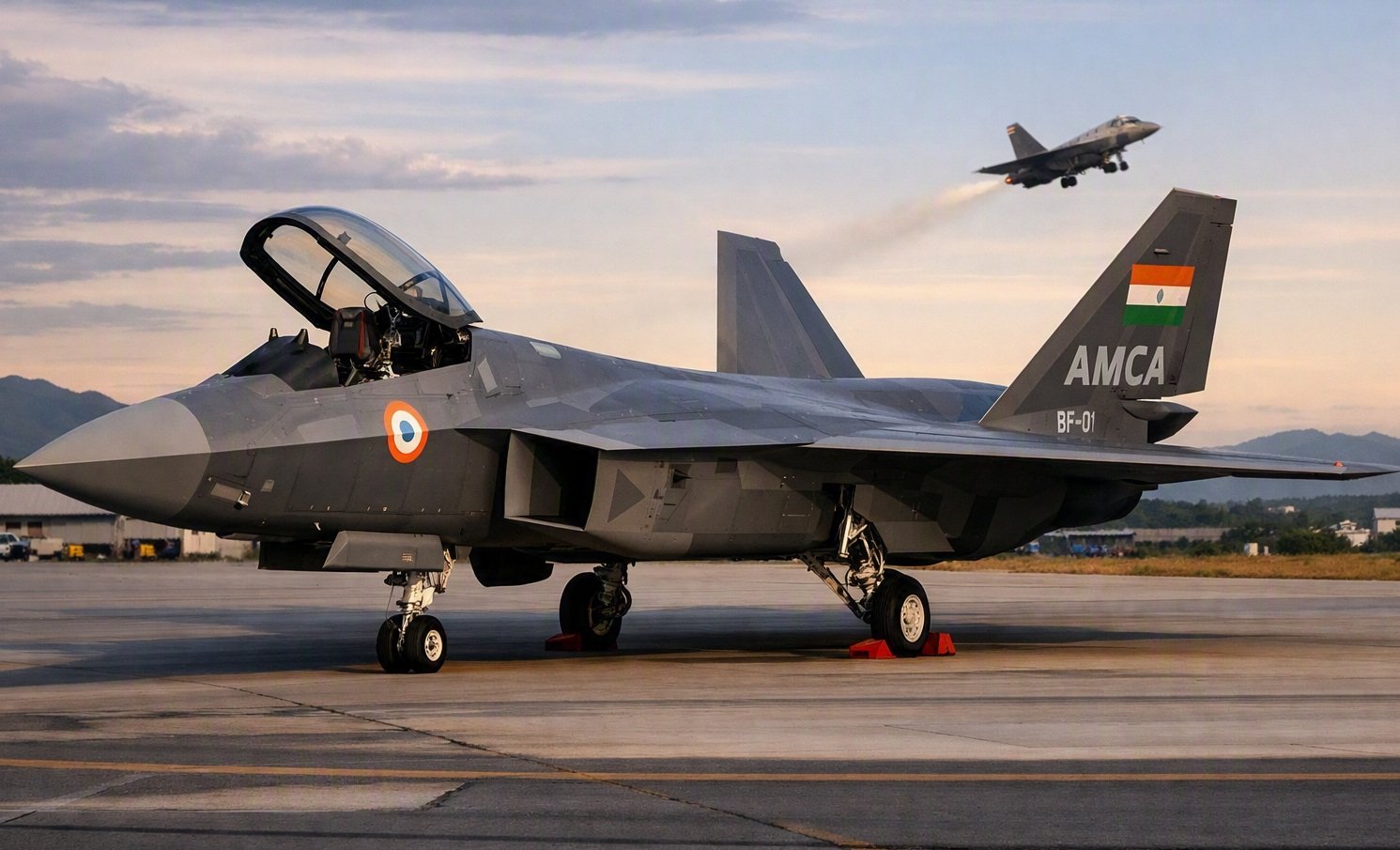

For decades, India has harboured the ambition of achieving strategic autonomy and self-reliance through the indigenous development and manufacturing of defence equipment. Despite the establishment of a massive defence industrial complex—spearheaded by the Defence Research and Development Organisation (DRDO), Defence Public Sector Undertakings (DPSUs), and recent “Make in India” initiatives—the nation remains one of the world’s largest importers of arms. This article examines the structural, bureaucratic, technological, and strategic bottlenecks that have historically impeded India’s progress in defence indigenisation. Though the country has developed many landmark projects viz., Arjun MBT, Pinaka MBRL, Zorawar Light Tank, Advanced Towed Artillery Gun System (ATAGS), Light Combat Aircraft (LCA) Tejas, Dhriv ALH, Prachand LCH, NETRA & TAPAS-BH-201, Agni, Prithvi, Brahmos, Akash SR/MRSAM, INS Vikrant Aircraft Carrier, Arihant submarine, Kotkota Class Destroyers, and many other significant defence equipment, we are still dependent on foreign OEMs for many critical platforms and services which are inhibiting our Armed Forces from achieving strategic autonomy. This study attempts to illuminate the gap between policy intent and execution, concluding with strategic recommendations for a more agile, private-sector-led defence ecosystem.
Introduction
In the matrix of national security, true sovereignty is inextricably linked to technological self-reliance. For a nation like India, flanked by nuclear-armed adversaries and situated at the epicentre of geopolitical volatility in the Indo-Pacific, relying on foreign Original Equipment Manufacturers (OEMs) for critical military hardware presents a profound vulnerability. Dependencies on foreign supply chains expose India to diplomatic leverage, spare-parts blackmail, and end-user restrictions during crises.
While India’s space and nuclear programs have achieved remarkable milestones, its defence indigenisation trajectory has been agonisingly slow. This dissertation investigates the multi-layered paradox of why a nation with a robust scientific pool and a booming IT sector continues to import a significant portion of its capital military requirements.
Historical Context and Policy Evolution
Post-independence, India adopted a state-controlled, socialist model for defence production. The state established a monopoly over defence research and manufacturing through the DRDO and a network of Ordnance Factories (now restructured) and DPSUs (e.g., HAL, BEL, Mazagon Dock).
[State Monopoly (DRDO/DPSUs)] ➔ [License Production (USSR/Russia)] ➔ [DPP / DAP Reforms] ➔ [Atmanirbhar Bharat]
For a long period, India’s primary strategy for “indigenisation” was License Production rather than Indigenous Design. While manufacturing foreign equipment (like Soviet MiG fighters or Russian T-90 tanks) under license built basic shop-floor skills, it did not foster a culture of fundamental research, design capability, or intellectual property (IP) creation.
In the 21st century, the introduction of the Defence Procurement Procedure (DPP)—later evolving into the Defence Acquisition Procedure (DAP)—and the Atmanirbhar Bharat (Self-Reliant India) campaign sought to reverse this trend by prioritising domestic procurement categories. However, legacy structural inefficiencies continue to create friction against these reforms.
Core Bottlenecks in Indigenous Defence Development
(a) Technological Gaps and the “Import Legacy”
Defence technology represents the absolute frontier of metallurgy, material sciences, and software engineering. Historically, India skipped foundational industrial revolutions in heavy precision machinery and advanced material sciences. Consequently, Indian defence labs often find themselves attempting to design complex systems (like jet engines or active electronically scanned array radars) without the underlying domestic industrial ecosystem to support them.
(b) The Bureaucratic Triad and Systemic Delays. The Indian defence acquisition ecosystem is governed by a complex, often adversarial triad:-
- The Ministry of Defence (MoD): Dominated by generalist bureaucrats who lack specialised technical or military expertise, leading to slow decision-making.
- The Armed Forces (The Users): Confronting immediate, real-world threats, the military demands cutting-edge, battle-proven equipment. This leads to the formulation of unrealistic Qualitative Requirements (QRs) that change mid-development.
- The Developers (DRDO/DPSUs): Prone to over-promising on timelines and budgets to secure project approvals, resulting in inevitable delays.
(c) Chronic Underfunding of R&D. While India’s overall defence budget is among the top five globally, a staggering percentage is consumed by revenue expenditure—specifically, military pensions and salaries. The capital budget left for modernisation is modest, and the slice allocated strictly to Research and Development (R&D) is a fraction of what global powers like the United States or China spend. Furthermore, public defence labs have historically lacked accountability for the capital they consume.
(d) Marginalisation of the Private Sector. For decades, the private sector was systematically locked out of defence production due to ideological biases and security paranoia. While recent policies have opened the doors, private defence majors and Micro, Small, and Medium Enterprises (MSMEs) still face an uneven playing field. DPSUs are frequently awarded contracts on a nomination basis, depriving the ecosystem of the cost-efficiencies, agility, and innovation driven by open market competition.
Case Studies: Promises and Pitfalls
| Defense Project | Genesis Year | Operational Induction | Key Reasons for Delay / Limitations |
| LCA Tejas (Light Combat Aircraft) | 1983 | 2016 (Initial Operational Clearance) | Constant shifts in Air Force requirements; failure of the indigenous Kaveri engine (forcing reliance on US GE engines). |
| Arjun MBT (Main Battle Tank) | 1974 | 2004 (Limited Induction) | Excessive weight (unsuited for desert borders); high percentage of imported components (transmission, engine). |
| INS Arihant (Nuclear Submarine) | 1970s (ATV Project) | 2016 | A notable success, but required extensive, highly classified technological hand-holding and reactor design support from Russia. |
Recent Paradigm Shifts (The Turning Tide)
It is vital to acknowledge that the trajectory has begun to shift over the last decade. The Indian government has instituted structural overhauls aimed at rectifying these historical errors:
- Corporatisation of Ordnance Factories: In 2021, the archaic Ordnance Factory Board (OFB) was dissolved and restructured into 7 functional, corporate DPSUs to improve accountability and profitability.
- Positive Indigenisation Lists: The MoD has published multiple “Positive Indigenisation Lists” banning the import of thousands of line items, sub-systems, and major platforms, forcing the military to buy local.
- Innovations for Defence Excellence (iDEX): A highly successful initiative engaging tech startups, MSMEs, and academia to co-develop boutique, cutting-edge military tech (e.g., drones, AI-driven systems).
- Private Defence Ecosystem Maturity: Private players like Tata Advanced Systems, Larsen & Toubro, and Kalyani Strategic Systems are now successfully exporting artillery, aerospace components, and armoured vehicles globally.
Recommendations for Accelerated Progress
To transition from a state of delayed indigenisation to rapid, cutting-edge self-reliance, India must adopt structural and philosophical changes:-
- Freeze Qualitative Requirements (QRs): Once a project enters the engineering and manufacturing development phase, the Armed Forces must freeze requirements. Additional upgrades should be reserved for subsequent, modular iterations (Block II, Block III), preventing perpetual development cycles.
- Implement a Joint Defence Acquisition Cadre: Establish a specialised, professional cadre within the Ministry of Defence comprising military planners, technical scientists, and financial procurement experts to eliminate bureaucratic red tape.
- Shift from DPSU Monopoly to Private-Led Consortia: The government should act as a facilitator and customer rather than a manufacturer. Critical strategic platforms should be assigned to private-led consortia via competitive bidding to foster domestic industrial depth.
- High-Risk, High-Reward R&D Funding: Dramatically increase funding for foundational research (materials science, microprocessors) and foster deep-tech military startups through expanded venture-style funding via iDEX.
Conclusion
Ultimately, India’s pursuit of self-reliance in defence cannot merely be a defensive reaction to geopolitical vulnerabilities; it must be re-engineered as a proactive, ecosystem-wide transformation. The structural slow progress of the past highlights that shielding domestic public sectors from competition while treating private industry as an afterthought creates technological stagnation rather than strategic autonomy. To break the cycle of delayed projects and cost overruns, the Govt must transition from a culture of bureaucratic over-regulation to one of agile co-development. This requires institutionalising long-term funding for defence R&D, streamlining procurement timelines, and genuinely integrating the private sector, academia, and startup ecosystems into the national security calculus.
True self-reliance is not defined by complete isolation from global supply chains, but by the strength and leverage India commands within them. By balancing indigenous development with strategic technology transfers and collaborative foreign partnerships, India can cultivate a sophisticated defence-industrial base capable of meeting modern warfare demands. The success of this transition will determine whether the country remains a perennial captive market for foreign weapons or it will emerge as a resilient, self-sustaining global power. For India, achieving defence autonomy is no longer just a matter of military readiness—it is the ultimate litmus test for its aspirations on the world stage.
Title Image Courtesy: Copilot
Disclaimer: The views and opinions expressed by the author do not necessarily reflect the views of the Government of India and the Defence Research and Studies.