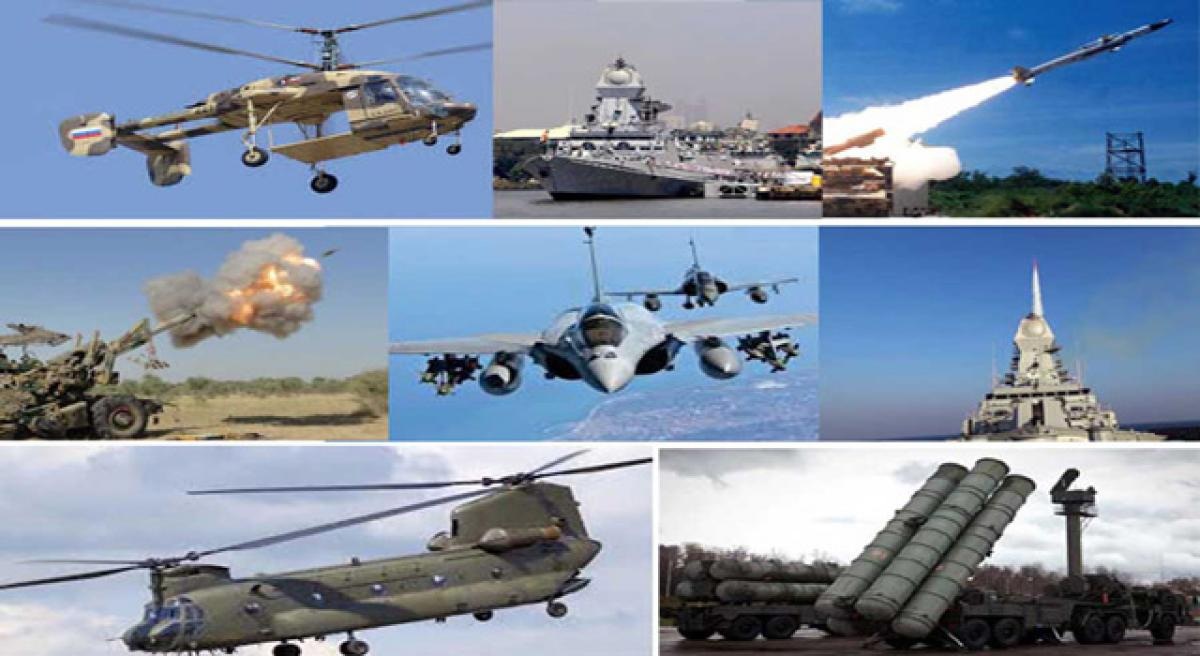
India’s next defence reform cannot be limited to buying more platforms or announcing more indigenisation lists. The real test is whether India can convert defence manufacturing into a national security instrument: one that reduces wartime vulnerability, builds surge capacity, creates technological depth, and gives the armed forces credible options in a contested neighbourhood.
Aditya Sinha’s political-economy question — “When does a country reform?” — offers a useful lens. Reform does not happen merely because policymakers know it is desirable. It happens when the cost of the status quo becomes too high, when the groups resisting change can no longer delay it, and when a credible coalition emerges to push the system toward a new equilibrium. In defence, this means reform will not come from slogans alone. It will come when delays in aircraft production, engine dependence, ammunition shortages, drone gaps, submarine timelines, imported sensors, and foreign supply-chain risk are treated as strategic vulnerabilities rather than procurement inconveniences.
India has already made measurable progress. Annual defence production reached a record ₹1.78 lakh crore in FY2025-26, up from ₹1.54 lakh crore in the previous year, while defence exports rose to ₹38,424 crore. These are not marginal improvements; they show that India’s defence-industrial base is no longer only a public-sector procurement ecosystem. It is becoming a manufacturing and export ecosystem.
But the next stage is more difficult. India has moved from being mainly an importer to being a builder and assembler. The national security requirement now is to become a designer, integrator, component owner, propulsion producer, electronics developer, and wartime-scale manufacturer. That requires deeper reform across the Air Force, Navy, Army, space, missiles, cyber, electronics, and the broader manufacturing ecosystem.
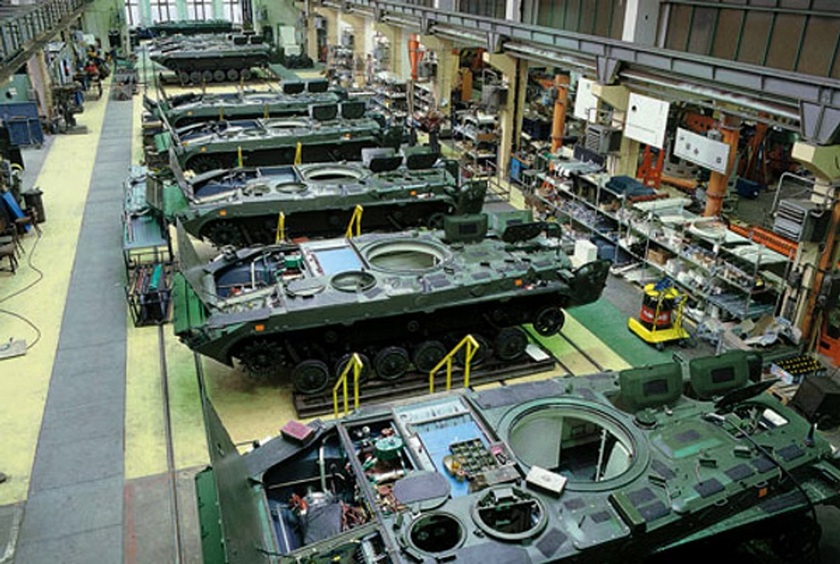
The National Security Problem
India faces a hard strategic environment. It has a long-running threat from Pakistan, a much larger military competitor in China, a contested maritime space in the Indian Ocean, vulnerability in critical imports, and a rapidly changing character of warfare. Modern conflict is increasingly defined by drones, missiles, electronic warfare, space assets, cyber operations, precision munitions, real-time intelligence, and industrial endurance. This changes the meaning of defence manufacturing. It is no longer enough to ask whether a tank, aircraft, ship, or missile is “made in India” at the final assembly stage. The real questions are:
Can India build the engine?
Can India produce the radar?
Can India manufacture the seeker?
Can India secure the chip, actuator, composite, battery, fuze, datalink, and propulsion system?
Can India replace combat losses quickly?
Can India scale ammunition and missile output during a crisis?
Can India support its platforms without waiting for foreign spares?
If the answer is no, then the system is only partially sovereign. This is where defence reform must be anchored. The goal is not protectionism. The goal is strategic autonomy under pressure.
Why Reform Is Urgent Now
India’s existing reform architecture is meaningful. The Defence Acquisition Procedure 2020 sought to simplify acquisitions and institutionalise monitoring. The Positive Indigenisation Lists have pushed procurement toward domestic sources, including strategically important line replacement units, sub-systems, components, weapons, and ammunition.
The Defence Procurement Manual 2025 was approved to streamline and rationalise revenue procurement for operational and sustenance needs, especially in the context of modern warfare. This matters because national security is not only about capital acquisition of new platforms; it is also about spares, maintenance, upgrades, repairs, and operational readiness.
The July 2026 Defence Acquisition Council approval of capital acquisition proposals worth ₹52,000 crore also shows that India is still in a major modernisation cycle. But approval is not the same as delivery. India’s reform challenge is to compress the distance between “Acceptance of Necessity,” contract, production, induction, maintenance, and export.
For a national security state, this is the critical metric: not how many proposals are approved, but how quickly capability reaches the front line.
The Central Reform Principle
India needs to move from a procurement-led defence policy to a capability-led defence industrial strategy. A procurement-led system asks: What does the service want to buy? A capability-led system asks: What must India be able to produce, sustain, repair, upgrade, export, and replace in wartime? This distinction is crucial. Procurement can create inventory. Capability creates deterrence. The reform agenda should therefore be organised around seven national security outcomes:
| National Security Outcome | Manufacturing Implication |
| Air superiority | Fighters, engines, radars, EW systems, missiles, simulators, MRO |
| Maritime denial and sea control | Warships, submarines, propulsion, sonars, anti-ship missiles, unmanned systems |
| Border deterrence | Artillery, armour, drones, ISR, precision rockets, secure communications |
| Long-range strike | Missiles, seekers, propulsion, guidance, warheads, launch platforms |
| Space resilience | Military satellites, launch-on-demand, ISR, secure communications, SSA |
| Industrial endurance | Ammunition, spares, munitions, repair capacity, stockpiles |
| Technological sovereignty | Chips, sensors, AI, cyber, electronic warfare, datalinks |
Air Force: From Platform Shortage to Aerospace Sovereignty
The Indian Air Force is the most urgent case for defence reform. Reuters reported in 2025 that the IAF had 31 fighter squadrons against an authorised target of 42, and subsequent reporting has indicated continuing pressure after the retirement of older aircraft. This is not just a numerical gap. It is a warning that India’s aerospace manufacturing model is too slow for its threat environment.
The first reform is to create multiple aircraft production lines. HAL remains central, but India cannot rely on one dominant public-sector aircraft manufacturer for every major platform. Private industry must be allowed to become a genuine prime contractor in selected categories: fighters, trainers, helicopters, transport aircraft, UAVs, loyal wingman systems, and MRO.
The second reform is a national jet-engine mission. India can buy aircraft, assemble aircraft, and integrate weapons, but true airpower sovereignty requires engines. The same applies to helicopter engines, UAV engines, marine engines, and tank engines. India should treat propulsion as a national mission similar to space or nuclear technology. Without domestic propulsion depth, every platform remains vulnerable to foreign supply decisions.
The third reform is to build the combat electronics stack domestically. The value of modern aircraft is increasingly in AESA radars, electronic warfare suites, mission computers, helmet-mounted displays, datalinks, infrared search-and-track systems, secure communications, and missile seekers. India should not define indigenisation only by airframe content. It should define it by mission-system sovereignty.
The fourth reform is faster unmanned procurement. Drones, swarm systems, autonomous wingmen, loitering munitions, and counter-drone networks must not be forced into the same slow procurement rhythm as legacy platforms. The Air Force needs a rapid acquisition pathway for systems where technology changes every 12–24 months.
Navy: From Builder’s Navy to Systems-Sovereign Navy
The Indian Navy has one of India’s strongest indigenisation stories. According to PIB, Indian shipyards have delivered over 40 indigenous warships and submarines to the Navy since 2014, and a new platform was inducted on average every 40 days over the last year. Nearly 67% of the Navy’s capital acquisitions over the last decade have been with Indian industry.
This shows that naval manufacturing reform can work. The Navy moved from being mainly a buyer to becoming a builder. But the next challenge is harder: India must move from building hulls to owning the high-value naval systems inside them.
The Navy’s reform priorities should be propulsion, combat management systems, sonars, anti-submarine warfare systems, shipborne radars, electronic warfare, torpedoes, vertical-launch systems, marine gas turbines, diesel engines, gearboxes, and unmanned underwater platforms.
Submarine production needs special attention. Submarines cannot be manufactured through stop-start industrial cycles. A submarine line that goes cold loses skilled labour, design memory, supplier capacity, and production discipline. India needs a continuous submarine construction model, with public and private yards working within a long-term national undersea plan.
Private shipyards should be integrated more deeply into naval manufacturing. They can build modules, patrol vessels, auxiliary vessels, unmanned surface vessels, landing platforms, logistics ships, and eventually larger combatants. Public shipyards should not be weakened, but India needs redundancy and capacity. In wartime, redundancy is not inefficiency; it is resilience.
The Navy also requires an undersea industrial strategy. China’s naval expansion makes the Indian Ocean a central theatre of competition. India needs submarines, anti-submarine warfare aircraft, seabed sensors, unmanned underwater vehicles, mine warfare capability, long-range anti-ship missiles, and maritime surveillance systems. These are not separate procurement lines. They are part of one maritime deterrence architecture.
Space: Defence-Space Must Become an Industrial Sector
India’s Space Policy 2023 opened the space sector to greater private participation across the value chain, including space and ground-based assets, communication, remote sensing, data services, and launch services. This is a major national security opportunity.
Defence-space reform should begin with a simple recognition: space is now a warfighting domain. Satellites support targeting, navigation, communications, missile warning, maritime awareness, border surveillance, and battlefield transparency. If space assets are degraded, the military loses speed, precision, and coordination.
India needs a defence-space procurement pipeline for private companies. Startups and private firms can build small satellites, synthetic aperture radar payloads, optical payloads, propulsion systems, ground terminals, secure communications, analytics platforms, launch vehicles, and space situational awareness systems. But they need assured demand, classified-use pathways, testing support, and predictable contracts.
The armed forces should also buy services, not only satellites. Instead of procuring every satellite as a bespoke platform, the state should purchase imagery, bandwidth, maritime data, analytics, and launch readiness from Indian private providers where security permits. This would create a real defence-space market.
Launch-on-demand must become a strategic capability. If satellites are disabled or if a crisis requires rapid coverage, India should be able to launch replacement or supplementary assets quickly. This requires small launch vehicles, mobile launch support, responsive regulation, and pre-approved military payload pathways.
Defence-space also needs component sovereignty: radiation-hardened electronics, optical systems, SAR payloads, electric propulsion, secure encryption, laser communications, and hardened ground infrastructure. The next war will not wait for foreign supply-chain approvals.
Army: From Heavy Platforms to Networked Land Warfare
The Army’s reform challenge is different from the Air Force and Navy. It is not only about big-ticket platforms. It is about scale, survivability, mobility, sensors, logistics, and mass.
The Army needs to modernise around drones, counter-drone systems, precision artillery, secure communications, battlefield networks, loitering munitions, armoured mobility, electronic warfare, and ammunition depth. The lesson from recent conflicts is clear: even a well-equipped army can become vulnerable if it lacks drones, counter-drone coverage, precision fires, and resilient logistics.
The first reform should be mass drone integration. Drones should not sit only in specialised units. They must become normal tools for infantry, artillery, armour, logistics, and border formations. India should manufacture surveillance drones, tactical UAVs, loitering munitions, cargo drones, swarm drones, and counter-drone systems at scale.
The second reform is ammunition resilience. Ammunition manufacturing should be treated as a strategic industry, not a routine procurement category. India needs surge capacity in artillery shells, rockets, propellants, fuzes, anti-tank missiles, air-defence missiles, loitering munitions, and precision kits. Wartime stockpiles should be linked to domestic production lines, not only inventory planning.
The third reform is platform standardisation. Too many vehicle types, radio systems, drone models, and imported sub-systems create logistics complexity. The Army should move toward families of platforms and common electronics architectures.
The fourth reform is the domestic engine and transmission capability for land systems. Armoured vehicles, tanks, infantry combat vehicles, and heavy logistics platforms require reliable engines, transmissions, thermal sights, active protection systems, and rugged communications. A tank without domestic spares is not sovereign in a prolonged crisis.
Missiles and Munitions: From Test Success to Production Scale
India has strong missile capabilities, but national security depends on production depth, not only on successful trials. Modern deterrence requires inventories large enough to survive crisis conditions and industrial capacity large enough to replenish usage.
India should build high-volume manufacturing lines for air-defence interceptors, anti-ship missiles, anti-tank guided missiles, long-range rockets, precision-guided bombs, glide weapons, loitering munitions, and artillery rockets.
The real reform is in sub-systems: seekers, propulsion, warheads, fuzes, control surfaces, composites, batteries, guidance electronics, datalinks, and testing infrastructure. If these remain import-dependent, missile assembly will not equal missile sovereignty.
Munitions reform should also include private-sector entry. The state must retain control over sensitive technologies and safety standards, but India needs more than one production base. In a high-intensity conflict, the question will not be whether India has advanced weapons. It will be whether India can produce enough of them quickly.
Cyber, Electronic Warfare and AI: Procurement Must Move at Software Speed
Defence procurement is still largely designed for hardware. But future warfare will be shaped by software-defined systems, cyber tools, AI-enabled decision support, electronic warfare, signals intelligence, secure cloud infrastructure, and autonomous platforms. India needs a separate acquisition pathway for software-heavy defence capabilities. These systems cannot wait for five-year procurement cycles. They need iterative development, rapid testing, field feedback, and continuous upgrades.
The priority should be electronic warfare. Jamming, anti-jamming, spectrum monitoring, signals intelligence, electromagnetic deception, secure communications, and counter-drone EW systems are now central to battlefield survival. The second priority should be a sovereign defence cloud and secure data architecture. AI cannot be built on fragmented, inaccessible, low-quality data. The armed forces need classified data pipelines, common standards, and secure compute infrastructure. The third priority should be open architecture. Aircraft, ships, tanks, drones, radars, missiles, and command systems should communicate through secure, standardised interfaces. Proprietary silos weaken jointness and slow upgrades. The fourth priority should be cybersecurity of the defence-industrial base. As more private firms enter defence manufacturing, suppliers themselves become targets. India needs defence-grade cybersecurity standards for MSMEs, startups, electronics firms, software vendors, and component suppliers.
The Manufacturing Reforms India Needs
The sectoral reforms above will fail unless the manufacturing base changes. India should focus on ten industrial reforms.
1. Create Long-Term Capability Pipelines
Private firms cannot invest in defence manufacturing if demand is uncertain. India needs 10-year rolling capability plans for aircraft, drones, missiles, ships, submarines, engines, electronics, ammunition, and space systems. These plans should be linked to budget visibility, not only strategic intent.
2. Build Private Prime Contractors
India needs private companies that can become full system integrators, not merely component suppliers to DPSUs. The Strategic Partnership model was designed to bring private firms into major defence equipment manufacturing, but it needs stronger execution and clearer order visibility.
3. Make Propulsion a National Mission
Jet engines, marine engines, UAV engines, helicopter engines, tank engines, rocket motors, and missile propulsion should be treated as one national propulsion mission. This is the single most important manufacturing reform for long-term strategic autonomy.
4. Build the Sensor and Electronics Stack
Modern weapons are sensor systems attached to platforms. India must prioritise AESA radars, seekers, sonars, electro-optical systems, infrared systems, secure chips, mission computers, electronic warfare modules, datalinks, and ruggedised communications.
5. Reform Testing and Certification
Testing delays can destroy innovation. India needs faster, independent, well-equipped testing and certification facilities for drones, aircraft components, naval systems, munitions, batteries, electronics, cyber tools, and space components. Testing should remain rigorous, but it must not become a bottleneck.
6. Convert iDEX from Grant Pipeline to Procurement Pipeline
iDEX has created an ecosystem for innovation by engaging startups, MSMEs, individual innovators, R&D institutes, and academia. The next reform is to create automatic bridges from prototype to trial order to limited series production.
7. Build Tier-2 and Tier-3 Suppliers
A defence platform is only as indigenous as its supply chain. India needs deep suppliers in precision machining, optics, composites, propulsion materials, actuators, bearings, batteries, advanced ceramics, semiconductors, fuzes, and rugged electronics.
8. Develop Defence Export Financing
Exports require state support. India needs defence export credit, insurance, government-to-government sales support, training packages, spares guarantees, and diplomatic backing. Defence exports are not normal commercial exports; they are strategic relationships.
9. Expand MRO as a Strategic Industry
Maintenance, repair, and overhaul should be treated as a core defence industry. Aircraft, engines, helicopters, submarines, radars, drones, missiles, and naval systems all require lifecycle support. MRO creates readiness, jobs, technical learning, and export potential.
10. Create Wartime Surge Capacity
Manufacturing policy should include crisis expansion plans. India should know which factories can shift to munitions, which suppliers can scale electronics, which shipyards can repair battle damage, and which private firms can produce drones or spares during emergency mobilisation.
The Institutional Reform: A Defence Industrial Delivery Authority
India does not lack policies. It lacks delivery discipline across policy, procurement, industry, research, and the armed forces.
The strongest institutional reform would be a Defence Industrial Delivery Authority under the Ministry of Defence, with direct coordination with the Chief of Defence Staff, the services, DRDO, DPSUs, private industry, and the finance side of government.
Its mandate should be narrow and measurable:
What capability is needed?
Who is responsible for delivering it?
What is the domestic-content target?
What is the deadline?
What are the supply-chain risks?
What is the fallback option?
What is the export potential?
What happens if the deadline is missed?
This authority should not become another committee. It should publish classified and unclassified dashboards, track project slippage, identify bottlenecks, escalate decisions, and link procurement approvals to industrial outcomes.
The goal should be to make defence reform irreversible. Sinha’s reform logic is important here: reform succeeds when it creates institutions that reduce discretion and prevent easy reversal. India needs defence-industrial institutions that lock in delivery, not only announcements.
Conclusion: From Atmanirbharta to Strategic Readiness
India’s defence manufacturing story has entered a new phase. The first phase was import dependence. The second phase was licensed production and public-sector manufacturing. The third phase was Make in India, indigenisation lists, higher exports, and private-sector entry. The fourth phase must be strategic readiness.
That means India should no longer measure success only by production value, export value, or the number of indigenous items listed. Those metrics matter, but they are incomplete. The deeper metrics are national security metrics:
Can India fight if supply chains are disrupted?
Can India replace aircraft, drones, missiles, spares, and ammunition in wartime?
Can India build engines, sensors, electronics, propulsion systems, and seekers?
Can India sustain the Air Force, Navy, Army, space assets, cyber systems, and missile forces without external coercion?
Can India export enough to create scale, influence, and industrial discipline?
The defence sector reforms India needs are therefore not merely economic reforms. They are sovereignty reforms. The strategic objective should be clear: India must become a country that can design, manufacture, sustain, upgrade, export, and rapidly replenish the core instruments of its military power. That is the real meaning of defence self-reliance. Not isolation. Not symbolic localisation. Not final assembly. But credible national power under pressure.
Title Image Courtesy: DRaS
Disclaimer: The views and opinions expressed by the author do not necessarily reflect those of the Government of India or the Defence Research and Studies.


References
Alesina, A. and Drazen, A. (1991) ‘Why are stabilizations delayed?’, American Economic Review, 81(5), pp. 1170–1188.
Department of Defence Production (n.d.) iDEX Details. Ministry of Defence, Government of India. Available at: https://www.ddpmod.gov.in/offerings/schemes-and-services/idex
Department of Space, Government of India (2023) Indian Space Policy 2023. Available at: https://www.isro.gov.in/media_isro/pdf/IndianSpacePolicy2023.pdf
Drazen, A. and Easterly, W. (2001) ‘Do crises induce reform? Simple empirical tests of conventional wisdom’, Economics & Politics, 13(2), pp. 129–157.
Fernandez, R. and Rodrik, D. (1991) ‘Resistance to reform: Status quo bias in the presence of individual-specific uncertainty’, American Economic Review, 81(5), pp. 1146–1155.
Ministry of Defence (2020) Defence Acquisition Procedure 2020. Government of India. Available at: https://www.mod.gov.in/dod/sites/default/files/DAP2030new_0.pdf
Ministry of Defence (2024) Aatmanirbharta in defence: MoD notifies fifth Positive Indigenisation List of 346 items for DPSUs. Press Information Bureau, Government of India. Available at: https://www.pib.gov.in/PressReleasePage.aspx?PRID=2033571
Ministry of Defence (2024) 5th Positive Indigenisation List. SRIJAN Defence. Available at: https://srijandefence.gov.in/DMA_5thList.pdf
Ministry of Defence (2025) Raksha Mantri approves Defence Procurement Manual 2025. Press Information Bureau, Government of India. Available at: https://www.pib.gov.in/PressReleasePage.aspx?PRID=2166559
Ministry of Defence (2025) Defence Procurement Manual 2025. Government of India. Available at: https://www.mod.gov.in/dod/index.php/en/defence-procurement–manual
Ministry of Defence (2025) The Indian Navy’s Aatmanirbhar Bharat Journey. Press Information Bureau, Government of India. Available at: https://www.pib.gov.in/PressReleasePage.aspx?PRID=2198298
Ministry of Defence (2026) Defence exports skyrocket to record Rs 38,424 crore in Financial Year 2025–26. Government of India. Available at: https://mod.gov.in/sites/default/files/Defence-exports-skyrocket-to-record-in-Financial-Year-2025-26.pdf
Ministry of Defence (2026) Defence production soars to a record Rs 1.78 lakh crore in Financial Year 2025–26. Press Information Bureau, Government of India. Available at: https://www.pib.gov.in/PressReleasePage.aspx?PRID=2273824
Ministry of Defence (2026) The Defence Decade. Press Information Bureau, Government of India. Available at: https://www.pib.gov.in/PressReleasePage.aspx?PRID=2273854
Ministry of Defence (2026) DAC approves capital acquisition proposals worth Rs 52,000 crore to enhance combat readiness of Defence Forces. Press Information Bureau, Government of India. Available at: https://www.pib.gov.in/PressReleasePage.aspx?PRID=2280728
Reuters (2025) Indian warplane maker promises faster delivery after air chief’s rebuke. Available at: https://www.reuters.com/business/aerospace-defense/indian-warplane-maker-promises-faster-delivery-after-air-chiefs-rebuke-2025-02-12/
Reuters (2025) Indian defence panel recommends using private sector to boost fighter production. Available at: https://www.reuters.com/world/india/indian-defence-panel-recommends-using-private-sector-boost-fighter-production-2025-03-04/
Sinha, A. (2026) ‘When does a country reform?’, The Economic Times, 3 July. Available at: https://economictimes.indiatimes.com/opinion/et-commentary/when-does-a-country-reform/articleshow/132145311.cms