10th Anniversary of the PCA Ruling: Part 1 was previously published on the DRaS platform. This is the second part of that article.
The Philippines has not been able to enforce the South China Sea Arbitration “The Republic of the Philippines v. The People’s Republic of China” Award, and therefore, there are no changes on the ground in the South China Sea. On the contrary, China has consolidated its position in the South China Sea by militarisation of the disputed territories as well as by continuously undertaking reclamation activities on new reefs and shoals against the PCA Ruling.
Among the many positive observations embedded in the Award that merit attention, at least two are discussed below, which should help the region to pursue its claims in South China by following the 1982 UNCLOS.
First, the Award delegitimised the “Nine-Dash Line”, noting that it has no legal basis under the 1982 UNCLOS. This dismissed Chinese historic claims in the South China Sea, where it was noted that “Chinese navigators and fishermen, as well as those of other States, had historically made use of the islands in the South China Sea, there was no evidence that China had historically exercised exclusive control over the waters or their resources”. This should put to rest any Chinese assertions with regard to its U-shaped nine-dash line; instead, China continues to assert its rights based on its claims that stretch nearly 80 percent of the South China Sea space. Also, it helps the claimants to legally claim and peacefully validate their claims and pursue maritime activities based on the Award.
Second, the Award elucidated on the status of features (island, reefs and rocks) in the South China Sea under the 1982 UNCLOS. The Tribunal noted that “ all of the high-tide features in the Spratly Islands (including, for example, Itu Aba, Thitu, West York Island, Spratly Island, North-East Cay, South-West Cay) are legally,“rocks” that do not generate an exclusive economic zone or continental shelf”. Their “temporary use” by the “fishermen did not amount to inhabitation by a stable community”. Further, “Features that are above water at high tide generate an entitlement to at least a 12 nautical mile territorial sea, whereas features that are submerged at high tide do not”. Given that the “reefs have been heavily modified by land reclamation and construction”, it clarified that the “Convention classifies features on their natural condition, and relied on historical materials in evaluating the features”. Importantly, the Tribunal held that the “Spratly Islands cannot generate maritime zones collectively as a unit” and therefore “none of the features claimed by China was capable of generating an exclusive economic zone”.
At another level, July 2026 is also important from the point of view of the Code of Conduct (CoC) in the South China Sea among the claimants. The CoC has been on the table for discussions and negotiations for nearly two and a half decades (beginning in 2002, followed by starting of formal negotiations in 2018) , but there is widespread frustration with its slow progress.
Although the contenders have taken hard positions on the issue, there are expectations for a CoC during the Philippines presidency of ASEAN. Foreign Secretary Ma. Theresa Lazaro appears upbeat about the “desire” to conclude the CoC for which the “negotiators meet” “every month”, something which has not been “done in the past.” Further, Theresa Lazaro is optimistic about concluding the Code of Conduct (COC) in July 2026 – “I think the whole world will appreciate it if we can come up with this Code of Conduct. This is ASEAN’s gift to the world.” However, she is cautious , “We don’t want to have a situation such as the Strait of Hormuz – (with) those choke points,”
By all accounts, the South China Sea is a complex issue wherein political, legal, economic, environmental and above all, security issues converge. The current situation is marked by the absence of mutual trust, which is potentially precluding a “rules-based approach” to settle the issue.
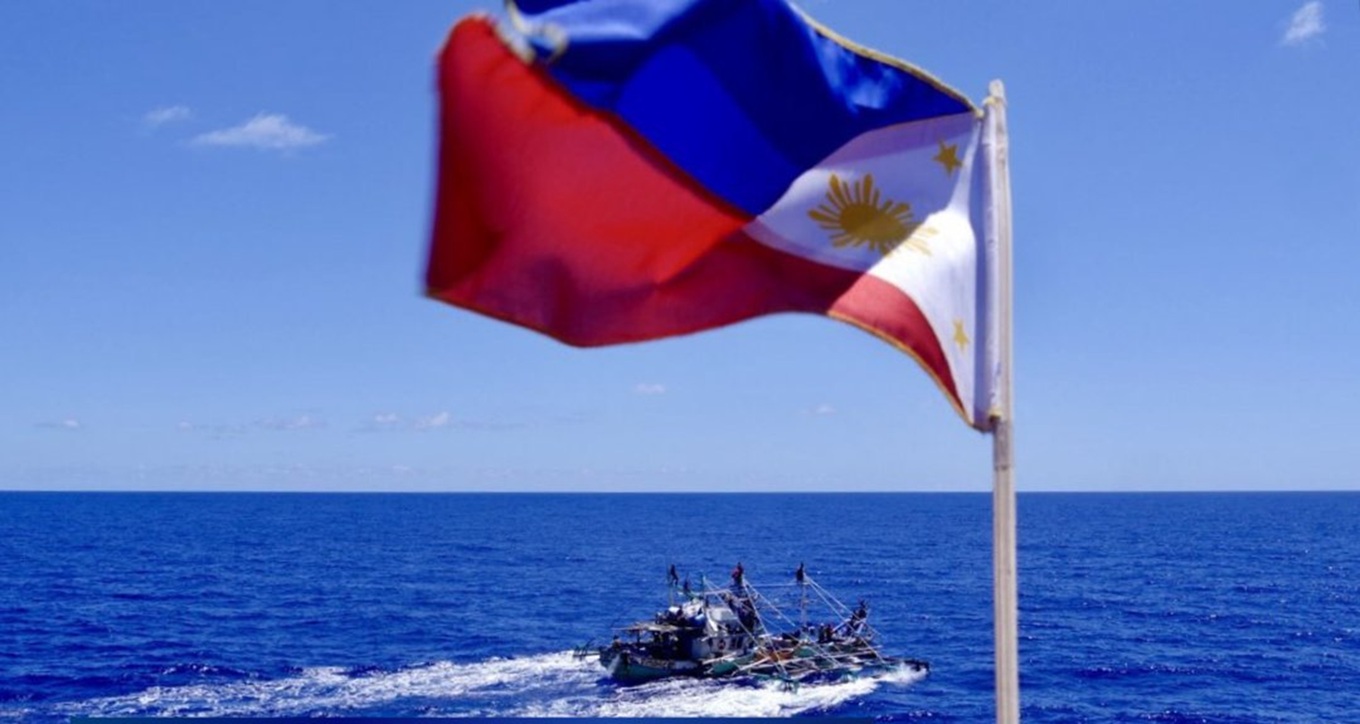
Title Image Courtesy: ‘x.com’ on PCA Ruling
Disclaimer: The views and opinions expressed by the author do not necessarily reflect those of the Government of India or the Defence Research and Studies.