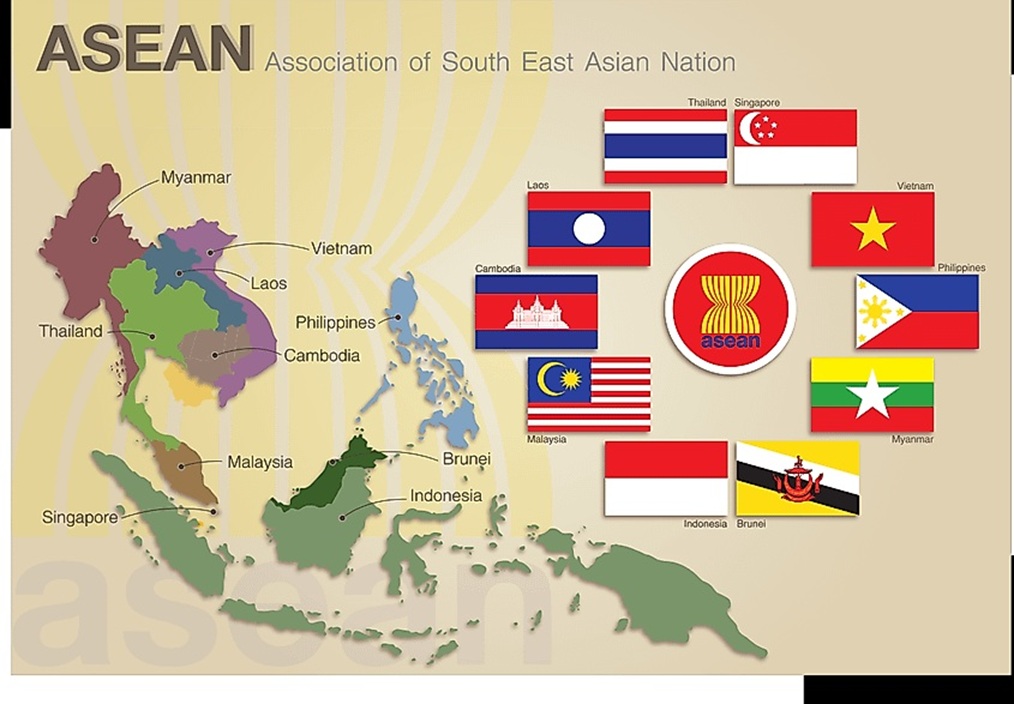
Vietnam officially joined the Association of Southeast Asian Nations (ASEAN) on July 28, 1995, marking its historic emergence from post-war isolation into regional integration. Today, Vietnam serves as a vital economic powerhouse and one of the bloc’s strongest growth engines, successfully advocating for regional resilience and a rules-based order.
President To Lam’s visits to Thailand and Singapore resulted in upgrading bilateral relations to a Comprehensive Strategic Partnership, and to the Philippines, it was an occasion to celebrate 50 years of bilateral relations. Multiple and diverse issues of mutual interest spanning politics, economics, security and technology were discussed, which offer immense opportunities to enhance bilateral relations. There were many ‘firsts’ which reflect Vietnam’s “high regard for its friendly and cooperative relations” with ASEAN member states. These can potentially create additional momentum for Vietnam’s relations with other countries in the region.
First Thailand. Although the visit did not have any ‘big ticket’ declarations or announcements which usually feature in any State-level visit, the Vietnam-Thailand bilateral trade has received a big boost and the two sides agreed to increase it from the current US $ 22 billion to US $ 25 billion in a “balanced and sustainable” manner with “market access for several potential agricultural products”. Besides, importance has been accorded to “defence and security collaboration” and to jointly address non-traditional security threats and challenges, including cybercrimes. Both sides professed centrality of ASEAN and endorsed sub-regional cooperation under the Asia-Pacific Economic Cooperation (APEC) and Mekong groupings. It was not surprising to see the customary reference to “peace, stability, security, safety and freedom of navigation and overflight”, “resolving disputes through peaceful means in accordance with international law”.
President To Lam’s visit to Singapore coincided with the 23rd Shangri-La Dialogue where he delivered the prestigious keynote address. He met with important Singapore political leaders, where the emphasis was on “deepen[ing] cooperation in new and emerging areas, including renewable energy, carbon credits, subsea cable connectivity, and the digital economy” besides “defence and security” cooperation as well as combating transnational crimes. It is to be noted that the two sides had upgraded bilateral ties to Comprehensive Strategic Partnership (CSP) in March this year. Perhaps the important facet of the visit was the focus on technology, innovation and knowledge-based economy wherein Singapore could support hi-tech training for the Vietnamese workforce to “strengthen national technological capabilities”. His visit to the Singapore Agency for Science, Technology and Research (A*STAR)’s Model Factory and the Singapore Rail Test Centre merit mention and should be seen through the prism of the Vietnam-Singapore Industrial Park, which is a flagship economic project between our two countries. Many bilateral initiatives and projects are envisaged under Memoranda of Understanding (MOUs) and agreements such as the “Singapore-Vietnam Strategic Dialogue, supply chain resilience, agrifood, advanced manufacturing as well as the development of a specialized international commercial court within Vietnam’s International Finance Centre (IFC)”.
On his last leg of the tour, President To Lam arrived in the Philippines to “to elevate bilateral relations to an Enhanced Strategic Partnership” and among other issues, to “deepen substantive cooperation in defence and security, maritime and ocean affairs, and promote collaboration to safeguard freedom of navigation and overflight and maintain regional peace and stability through established coordination mechanisms”. They also agreed to “promote negotiations for an effective and substantive Code of Conduct in the East Sea that is consistent with international law, particularly UNCLOS 1982”. In this context, the joint statement make specific references to the South China Sea and calls for “all parties to exercise self-restraint in the conduct of activities that could escalate tension” The Joint Statement recalls the 2016 Award by the Tribunal in the South China Sea Arbitration in accordance with the 1982 UNCLOS, the 2002 ASEAN-China Declaration on the Conduct of Parties in the South China Sea (DOC), and Code of Conduct in the South China Sea (COC).
Statements, declarations and articulations associated with President To Lam’s visits to Thailand, Singapore and the Philippines have not shied away from making reference to upholding international law, particularly the 1982 UNCLOS which lies at the heart of the ASEAN-China relations. However, the South China Sea figured only in the Vietnam-Philippines Joint Statement.
This is smart diplomacy by Vietnam and should be seen through the prism of China-Vietnam “3+3” strategic dialogue on diplomacy, defence and public security, which is an expanded format of the ‘2+2’ dialogue. It is the first such format anywhere in the world and can serve as a model for other countries who find their ideological beliefs are not aligned, yet these are closely tied to foreign policy.
Title Image Courtesy: https://www.worldatlas.com/geography/
Disclaimer: The views and opinions expressed by the author do not necessarily reflect the views of the Government of India and the Defence Research and Studies.