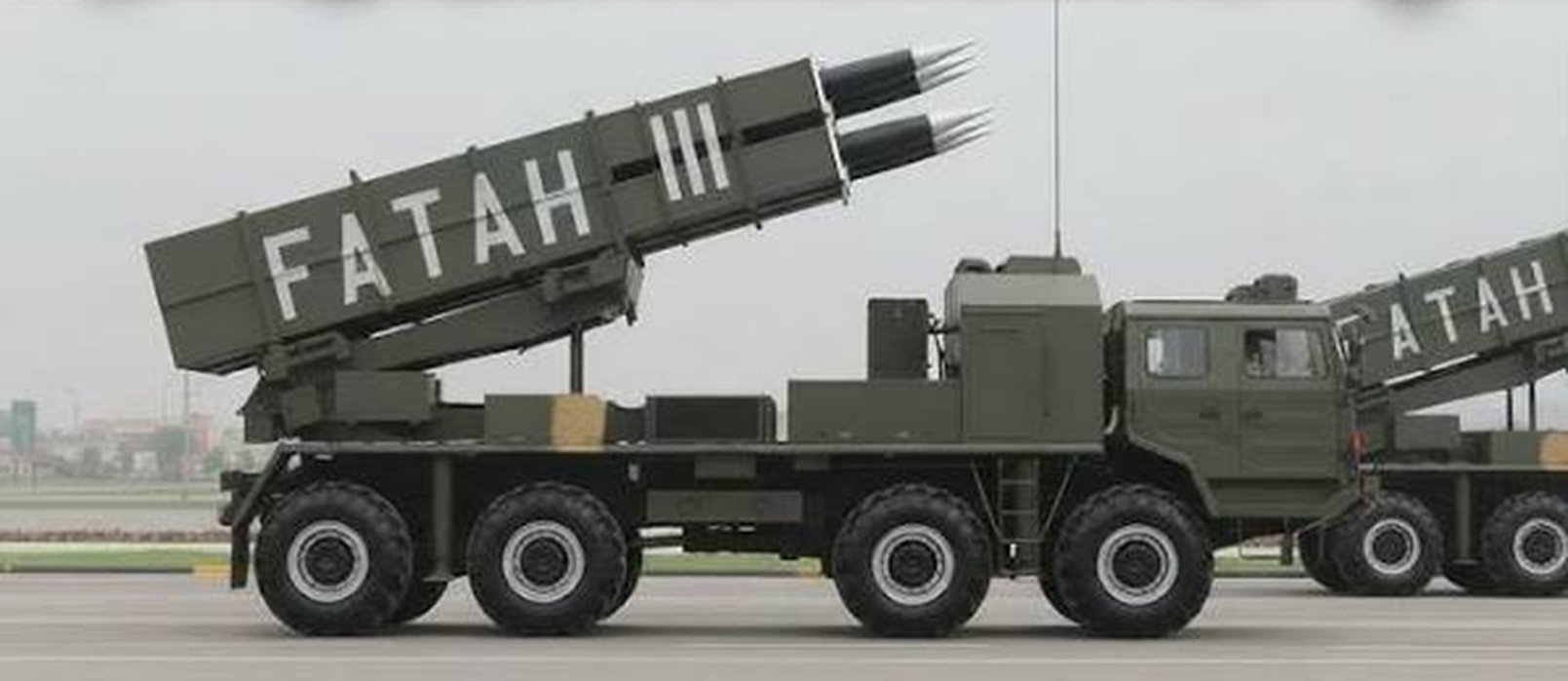
Pakistan’s Fatah–3 supersonic cruise missile, reportedly based on Chinese technology, was unveiled on May 7, 2026, on the first anniversary of the four–day battle with India in 2025 by Pakistan’s Army Rocket Force Command (ARFC). The missile also claims to counter India’s BrahMos, which has a superior operational supersonic strike capability. The reported capabilities of this missile include a terminal velocity ranging from Mach 2.5 to Mach 4, a sea–skimming and terrain–hugging flight profile, ability to make computations for multilayer interception, engagement sequencing, and radar tracking more difficult. It claims to reduce the time it takes for conventional air–defence networks to intercept it.
Estimated Operational and Design Specifications of Fatah–3
Fatah–3’s anticipated range is between 290–450 kms because of its integrated ramjet propulsion system and solid–fuel launch booster. It may be fired from a mobile launcher equipped with two missile canisters, minimising susceptibility to counterattacks and enabling crews to easily relocate before and after firing. The missile’s low–altitude flight profile, which keeps it near land and sea surfaces to minimise detection, is intended for both land–attack and maritime strike operations.
If we observe the design of this HD–1 / Fatah–3 missile, it closely resembles a Solid Fuel Ducted Ramjet (SFDR) missile system. It has two air–intake ducts with a booster section below the principal missile section. Traditional cruise missiles usually don’t carry a ducted ramjet intake unless the required range is very low (below 50–100 kms). Further, there is an absence of any deployable fins on the missile’s surface body, which makes it hard to explain how long it can have its sea-skimming or terrain-hugging capabilities considering solid–fuel ramjet engines have limited range as compared to liquid–fuel ramjet engine–based missiles (Eg. BrahMos).
Fatah–3: Pakistan’s First True Cruise Missile?
Media reports suggest that Fateh–1 and Fateh–2, two of the family’s earlier missiles, were guided rocket artillery systems with a range of 140–400 kms. Being a cruise missile, Fateh–3 operates more like a pilotless aircraft. According to Abdullah Khan from Pakistan Institute for Conflict and Security Studies, this missile marks a significant advancement in the Fateh family from rocket artillery to real cruise missile capability. As per him, this missile represents a significant improvement in precision–strike capability of Pakistan’s rocket forces. However, since it is suspected that Fatah–3 may be based on the Chinese HD–1 missile, it may not be completely an indigenous missile, as Pakistan always claims for its weapons.
Fatah–3 Comparison with BrahMos
Whenever Pakistan introduces a weapon system, it compares that system with the corresponding Indian weapon system as a norm and claims it is at par with or superior to the Indian variant. Since Fatah–3 is presumed to be derived from its parent missile HD–1, which is of Chinese origin, we need to understand HD–1 features. The HD–1 was first test-fired in 2018 and was dubbed as an ‘aircraft carrier killer’ by the Chinese. As per Chinese claims, HD–1 reached predicted values for its flying characteristics during supersonic cruising. It was anticipated that HD–1 would compete with the Indo–Russian joint venture–based missile BrahMos on the global defence market.
Wei Dongxu, a military analyst based in Beijing, had informed local media that HD–1’s solid fuel ramjet uses less fuel than other supersonic cruise missiles available in the market, potentially making it lighter, faster, and less costly than BrahMos. Here, the Chinese were putting emphasis on fuel economics and cost of manufacturing rather than operational capabilities like lethality, kinetic impact, propulsion, guidance, control, manoeuvrability, smart detection, radar jamming features, etc., which are present only in BrahMos.
Pakistan might theoretically borrow a reliable supersonic precision–strike missile. However, recreating speed and range is only one aspect of matching BrahMos capabilities. The ecosystem surrounding BrahMos, including its satellite–backed targeting and guidance, airborne surveillance, integrated command systems, and multi–platform deployment, is another source of BrahMos superiority.
Furthermore, the kind of hype for Fatah–3 generated by local media, Chinese and Pakistani military analysts and government agencies of Pakistan could be a tactic by both Pakistan and China to sell their overrated defence systems to other gullible countries. Regional news outlets suspect that the timing of this missile introduction could be linked with the West Asia crisis. Fatah–3 missile display could be a hint that Pakistan would become China’s front–line agent for selling Chinese weapons to the Gulf nations.
Can Fatah-3 be a Challenge to India?
Pakistan purposefully combined strategic messaging, force–posture signalling, and conventional deterrent optics into a single event targeted concurrently at India by publicly showcasing Fatah–3 through ARFC as a demonstration of its domestic military capabilities. Fatah–3 weighs between 1.2–1.5 tonnes, which is significantly less than BrahMos, which normally weighs more than 2.5 tonnes depending on its operational type and launch configuration. Some defence analysts claim that Fatah–3 could force India to reconsider future investments in layered missile defence infrastructure while undermining presumptions of unilateral Indian dominance in high–speed conventional strike warfare.
A Pakistani newspaper went on to unilaterally claim that even sophisticated systems like Barak–8 and Sudarshan air–defence network could be challenged by Fatah–3’s capabilities. It reports that Barak–8’s reaction time could be tested by supersonic sea–skimming and terrain–hugging at Mach 4. The tracking radars of Barak–8 could be overloaded by numerous oncoming missiles. India’s planned integrated air and missile–defence infrastructure is symbolised by Sudarshan Chakra. Through AI–enabled networks, it seeks to connect S–400, Akash, Barak–8, and other systems. It will take years to reach full operational maturity. India’s air–defence is dealing with several issues at once. Radar horizons prevent low–flying supersonic threats from being detected early. Rapid manoeuvring makes intercept solutions even more difficult.
Limitations of Fatah–3
Fatah–3’s missile’s range is mostly limited to theatre–level conventional strike operations; therefore, despite its substantial operational consequences, it doesn’t significantly change the wider strategic balance between India and Pakistan. The degree to which Pakistan has mastered ramjet propulsion, seeker integration, guidance systems, and large–scale missile production without ongoing Chinese technical help is still up for debate. Any incoming Fatah–3 strikes could still be significantly constrained by contemporary and evolving integrated air–defence systems, especially networked architectures that combine long–range observation radars, layered interceptors, and electronic–warfare capabilities.
Conclusion
As observed, the main limitation of Fatah–3 lies in its propulsion system. Since it uses a solid–fuel ramjet (SFRJ), it must be realised that it utilizes solid–fuel block in the SFRJ combustion chamber. This solid fuel block is always of fixed mass and therefore, combustion and propulsion of SFRJ will always be limited. This means that thrust, range, ability to manoeuvre and strike moving targets for Fatah–3 will always be constrained. Without extra fuel, it will lose kinetic energy and therefore become vulnerable to air–defence systems.
BrahMos, which uses a liquid–fuel ramjet (LFRJ) engine technology, offers superior throttle control and a better specific–impulse (fuel–efficiency), which means fewer drops of fuel burned for longer range along with excellent throttle control and smooth interchange between flight profiles. SFRJ missiles are always used globally for air–to–air and surface–to–air (interceptor) roles rather than as a cruise missile or an anti–ship missile. Pakistan unfortunately doesn’t realise these basic technical concepts, and therefore the hype of Fatah–3 could be safely managed through effective and smart air–defence tactics and policies.
Title Image Courtesy: YouTube
Disclaimer: The views and opinions expressed by the author do not necessarily reflect those of the Government of India or the Defence Research and Studies.