
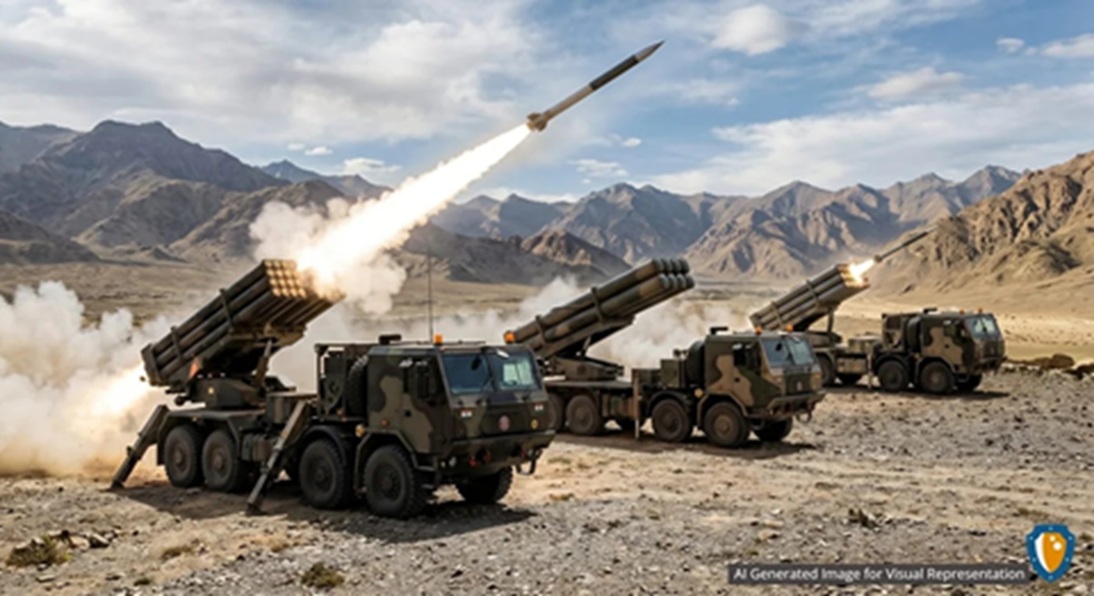
Operation Sindoor in 2025 marked a watershed moment for Indian military doctrine, transitioning the nation’s strategy from reactive posturing to proactive, pre-emptive deterrence. The counter deterrence strategy established a doctrine of “smart power,” combining precise, non-contact punitive strikes with strict escalation control and a deliberate termination of conflict once objectives are met.
The challenge of cross-border terrorism has remained one of India’s most persistent national security concerns for decades. Traditionally, India’s response to major terrorist attacks was characterised by diplomatic pressure, international engagement, and strategic restraint. While this approach helped avoid large-scale military escalation, it often failed to establish credible deterrence against state-supported terrorist networks operating from across the border.
Over the past decade, however, India’s response framework has undergone a significant transformation. The Surgical Strikes of 2016, the Balakot Air Strike of 2019, and, most recently, Operation Sindoor have collectively demonstrated the emergence of a more proactive and calibrated approach to counter-terror operations. These developments suggest that India is gradually evolving a new counter-terror deterrence strategy that combines precision military capabilities, intelligence-driven targeting, and escalation management.
Operation Sindoor represents an important milestone in this evolution and offers valuable insights into the future direction of India’s counter-terror posture.
From Strategic Restraint to Calibrated Retaliation
For much of the post-Cold War period, India largely relied upon strategic restraint when responding to terrorist provocations. While military options remained available, policymakers often prioritised diplomatic engagement and international pressure to prevent escalation.
This approach began to change following the Uri terrorist attack in 2016. The subsequent Surgical Strikes demonstrated India’s willingness to employ limited military force against terrorist infrastructure across the Line of Control. The Balakot Air Strike in 2019 further expanded this framework by utilising air power to strike terrorist facilities located deep within Pakistan’s territory.
These operations signalled an important shift in India’s security doctrine. The objective was no longer limited to absorbing attacks and pursuing diplomatic responses; instead, India sought to impose direct costs on terrorist organisations while maintaining control over escalation dynamics.
Operation Sindoor represents the latest stage in this doctrinal evolution.
Operation Sindoor as a Deterrence Signal
Launched in response to the Pahalgam terrorist attack, Operation Sindoor was designed to target terrorist infrastructure linked to anti-India militant organisations operating from Pakistan and Pakistan-occupied Kashmir.
Unlike traditional military campaigns, the operation relied heavily on precision targeting, stand-off weapons, intelligence integration, and multi-domain coordination. Advanced surveillance systems, real-time intelligence networks, and precision-guided munitions enabled India to engage designated targets while minimising operational risks and collateral damage.
From a deterrence perspective, the significance of the operation extends beyond physical damage inflicted upon terrorist infrastructure. The operation communicated a clear strategic message: terrorist attacks would invite direct and measurable consequences.
Equally important was India’s ability to maintain escalation control throughout the operation. The strikes remained focused, limited, and objective-driven, avoiding unnecessary expansion of the conflict while preserving strategic credibility.
This balance between military effectiveness and escalation management is increasingly becoming a defining feature of India’s evolving deterrence strategy.
Precision Strike Capabilities and Modern Deterrence
Modern deterrence is no longer solely dependent on conventional military superiority or nuclear capabilities. Advances in surveillance systems, precision-guided munitions, unmanned platforms, and intelligence networks have created new tools for calibrated military responses.
Operation Sindoor highlighted the growing role of stand-off precision warfare in India’s security strategy. Long-range precision weapons allow India to impose costs without requiring large-scale force mobilisation or prolonged military engagements.
Such capabilities enhance deterrence in multiple ways. First, they enhance the credibility of retaliation by giving decision-makers flexible military options. Second, they reduce operational risks associated with conventional escalation. Third, they demonstrate technological and military preparedness to both adversaries and international observers.
The integration of Intelligence, Surveillance, and Reconnaissance (ISR) systems further strengthens this approach by enabling accurate target identification, real-time monitoring, and rapid battle damage assessment. Together, these capabilities are reshaping the way deterrence is established and maintained in the contemporary security environment.
Implications for India’s Future Counter-Terror Strategy
Several important lessons emerge from Operation Sindoor.
- First, future counter-terror operations will increasingly depend on intelligence superiority. The ability to identify, track, and validate targets in real time is becoming as important as the strike platforms themselves.
- Second, precision warfare offers a sustainable model for imposing costs on terrorist infrastructure while minimising escalation risks. This approach allows policymakers to respond decisively without automatically triggering broader military confrontation.
- Third, technological innovation is becoming central to deterrence effectiveness. Artificial intelligence, autonomous systems, advanced ISR networks, cyber capabilities, and electronic warfare tools will play an increasingly important role in future operations.
- Fourth, joint and multi-domain operations are likely to become the norm rather than the exception. Effective coordination between military services, intelligence agencies, and technological assets will be essential for achieving strategic objectives.
Finally, strategic communication must remain an integral component of deterrence. Military success must be accompanied by credible messaging that clearly communicates intent, capability, and resolve.
Conclusion
Operation Sindoor was not just a counter-terror operation; more than that, it was a demonstration of the continuing evolution of India’s deterrence strategy. By combining intelligence-driven targeting, precision strike capabilities, stand-off warfare, and escalation management, India showcased a modern and calibrated approach to the use of military power.
As emerging technologies continue to transform the character of warfare, India‘s future counter-terror strategy will increasingly depend upon its ability to integrate military capabilities with technological innovation and strategic decision-making. The lessons from Operation Sindoor suggest that the future of deterrence lies not in large-scale retaliation, but in precise, credible, and carefully calibrated responses capable of imposing costs while preserving strategic stability.
Title Image Courtesy: https://defence.in/
Disclaimer: The views and opinions expressed by the author do not necessarily reflect the views of the Government of India and the Defence Research and Studies.