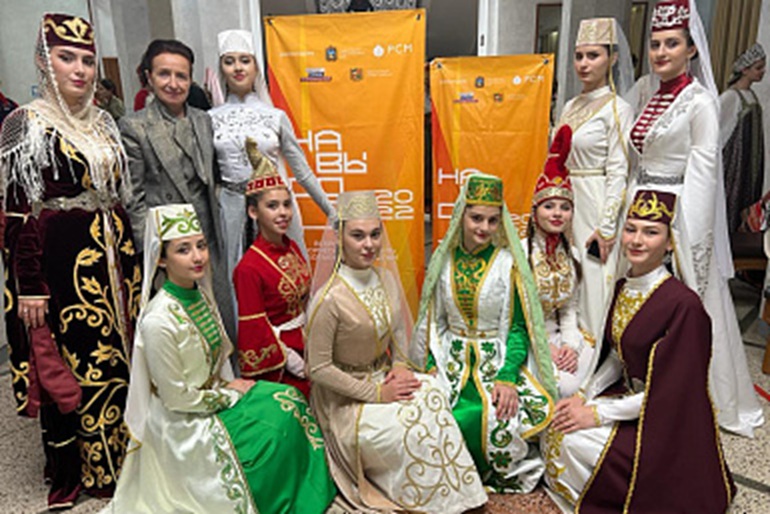
Ingush are a Northeast Caucasian indigenous ethnic group who mainly live in the Republic of Ingushetia, a federal subject of Russia located in the central Caucasus region. The Chechen-Ingush rivalry involves complex territorial, historical, and political tensions between two closely related groups in the North Caucasus.
Since 2018, the Republic of Ingushetia, long regarded as the most loyal and least conspicuous federal subject in Russia’s North Caucasus, has experienced its first mass popular protests since the fall of the USSR. The cause was a border dispute with neighbouring Chechnya, settled by the Russian federal authorities in a manner that the Ingush population perceived as a capitulation to Grozny. Far from a simple local administrative dispute, this episode reveals a broader mechanism: a federal arbitration process that is structurally favourable to Ramzan Kadyrov’s Chechnya, one that the Kremlin oversees without ever truly correcting it.
Understanding this dynamic sheds light not only on the persistent fragility of the North Caucasus, but also on the informal imperial logic through which contemporary Russia governs its Muslim-majority peripheries. It also serves as a useful case study for anyone interested in how a multinational state manages the tension between centralising power and delegating authority to strong regional proxies, a dilemma facing many composite federations well beyond the post-Soviet space alone. For a reader concerned with assessing the long-term strategic soundness of the Russian Federation, this seemingly minor regional file reveals a great deal about the real robustness of Russia’s federal architecture and its potential points of fragility.
A Border Inherited from a Shared and Painful History
Chechens and Ingush share a common Soviet history that largely explains the absence of a formal border between their present-day territories. Brought together within the Checheno-Ingush Autonomous Soviet Socialist Republic created in 1934, the two peoples jointly endured the mass deportation ordered by Lavrentiy Beria in February 1944, when nearly half a million Chechens and Ingush were forcibly sent to Central Asia over accusations of collaboration with the German occupier, accusations now widely considered unfounded by contemporary historiography. Allowed to return in 1957, the two peoples reconstituted their shared republic, which only split apart with the fall of the USSR.
In 1991 and 1992, the two peoples’ paths diverged sharply. On September 6, 1991, the Checheno-Ingush Supreme Soviet was overthrown by members of the National Congress of the Chechen People. A month later, the republic split in two: Chechen president Dzhokhar Dudayev proclaimed the independence of the Chechen Republic of Ichkeria on November 1, 1991, while Ingushetia chose on December 1, 1991 to remain a subject of the Russian Soviet Federative Socialist Republic. This divergence in political choice would have direct and lasting consequences: Chechnya fought two devastating wars against Moscow between 1994 and 2000, marked in particular by the
near-total destruction of Grozny during the fighting of 1999 and 2000, while Ingushetia, having stayed loyal, avoided armed conflict but suffered indirect consequences, starting with a massive influx of Chechen refugees onto its small territory, already one of the smallest and most densely populated in the Federation. No formal administrative border was drawn between the two entities at the time, since none seemed necessary; this territorial ambiguity persisted for more than a quarter century without triggering a major crisis, until the balance of power between Grozny and Magas had shifted enough for the question to resurface.
2018 Treaty- Reveals a Structural Imbalance
It was this ambiguity that Ramzan Kadyrov, head of the Chechen Republic since 2007, chose to exploit methodically. A first legislative attempt to claim part of Ingush territory was launched in 2012; it met with passivity from the federal authorities, who refused to arbitrate publicly and let the situation drag on unresolved. Six years later, with the balance of power having continued to shift in Grozny’s favour, Kadyrov and his Ingush counterpart Yunus-bek Yevkurov signed, on September 26, 2018, a treaty delimiting the administrative border between their two republics. Officially presented by the authorities as a fair exchange of uninhabited land with no economic value, the treaty in fact proved to be heavily unfavorable to Ingushetia: independent cartographers who analyzed it estimate that the republic ceded to Chechnya an area roughly twenty-five times larger than what it received in compensation, including areas containing several oil deposits, a resource that is both scarce and strategically valuable for one of the poorest regions in the Federation.
The process used to validate the agreement also raised a fundamental constitutional problem: Russian law requires a local referendum for any change to the border between federal subjects, a vote that was never held. The Ingush population, already marked by the loss of part of its territory during the 1957 administrative redrawing and facing an unemployment rate that at the time exceeded 50%, saw this new land cession as a further humiliation touching on an essential marker of identity: possession of ancestral land. Protests of a scale unseen since the Chechen independence movements of the 1990s broke out in Magas, the Ingush capital: from October 4 to 17, 2018, residents took turns occupying the city centre around the clock without interruption, demanding the treaty’s cancellation and, in some cases, the resignation of their own president, whom they saw as too accommodating toward his powerful neighbour.
Faced with this popular pushback, the Kremlin adopted a posture of apparent neutrality that, in practice, tilted clearly in Grozny’s favour. It publicly praised Yevkurov for not resorting to force against the protesters and called soberly for dialogue, without ever questioning the substance of the agreement or suspending its implementation. On November 6, 2018, Russia’s Constitutional Court ruled the agreement lawful, despite the absence of the popular referendum required by the Constitution. Far from a neutral legal exercise, this ruling confirms that Moscow systematically favors the stability of its Chechen partner over the small Ingush republic, even though Ingushetia has historically been the most consistently loyal to the federal state since 1991.
The Logic of Patronage: Moscow needs Kadyrov
This imbalance stems from the highly particular nature of the relationship between the Kremlin and the Kadyrov clan, which several researchers describe as a quasi-personal patronage relationship, resting more on individual loyalty than on stable institutions. The initial bet dates back to 1998 and
1999: with Chechnya de facto independent after Russia’s 1996 defeat, Moscow chose to turn to Akhmat Kadyrov, a former Chechen grand mufti and former independence fighter, by appointing him head of the republic at the end of the second war. Assassinated in Grozny on May 9, 2004, he was succeeded by his son Ramzan, then head of his presidential guard, who became deputy prime minister in charge of security before officially becoming president of the republic in 2007. Since then, in exchange for openly unwavering loyalty to Vladimir Putin, the Kadyrov clan has maintained order in a region whose lasting pacification remains a major strategic concern for the Russian state, including in its external operations: the Chechen “Akhmat” battalions are today deployed on the Ukrainian front, further reinforcing the value the Kremlin places on this alliance.
This delegation of sovereignty comes with an exceptional degree of de facto autonomy rarely seen elsewhere in the Federation: personal security forces largely beyond ordinary federal control, an accepted disregard for certain Russian laws, particularly on secularism, and direct, privileged access to the Russian president outside the usual administrative channels. Institutional tools do exist, in theory, to keep this autonomy in check, foremost among them the North Caucasus Federal District, created in 2009 and entrusted to a presidential plenipotentiary envoy with the power to remove a regional leader, as happened with Ingush president Murat Zyazikov in 2008. These tools nonetheless remain largely underused when it comes to Grozny, a deliberate political choice by the Kremlin, which remains convinced that Chechen stability depends above all on Kadyrov’s personal ability to maintain order by whatever means deemed necessary. This mutual dependence explains why Moscow tolerates Chechen territorial and political ambitions toward its neighbours, including Ingushetia and Dagestan, even when they carry a real risk of destabilising the entire North Caucasus region.
Persistent Fragility and Unresolved Tensions
The most recent developments confirm that this balance remains precarious, and that the tensions of 2018 were only frozen on the surface. In October 2024, Kadyrov publicly accused two Dagestani officials and an Ingush deputy of plotting his assassination, in the context of what appeared to be an economic dispute over control of the online retail platform Wildberries, one of Russia’s most profitable companies. Beyond its immediate subject, this episode reveals the persistence of unresolved power rivalries between the Kadyrov clan and the political and economic elites of neighbouring republics, more than six years after the apparent calm secured by the border treaty.
At the same time, reports circulated since 2024 by Russian opposition media in exile, notably Novaya Gazeta Europe, describe serious health problems affecting Ramzan Kadyrov, including a possible case of pancreatic necrosis. These reports, difficult to verify independently but corroborated by several sources, are fueling growing speculation about a succession already being prepared in Moscow. The name of General Apti Alaudinov, promoted in 2024 to deputy head of the political-military directorate at Russia’s Defence Ministry after commanding the Chechen “Akhmat” battalion in Ukraine, frequently comes up as a candidate informally backed by certain federal circles, though no successor currently commands clear consensus, either among Chechen elites or in Moscow. This uncertainty over succession is not a minor biographical detail: in a system built essentially on personal rather than institutional loyalty, any weakening of the current leader potentially opens a window for realignment across the entire regional balance, including Ingushetia.
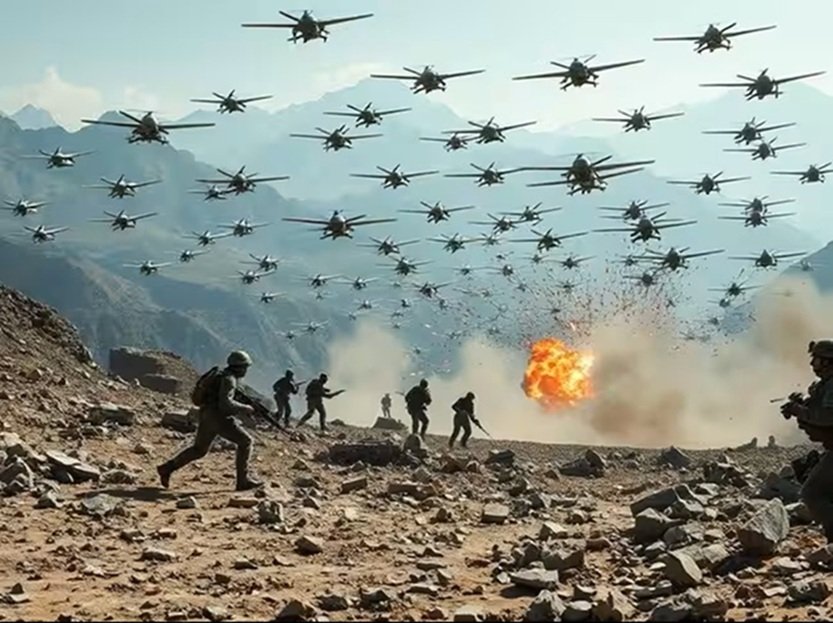
This uncertainty comes as the North Caucasus is also experiencing unprecedented security instability, illustrated by several drone strikes targeting Chechen military installations since October 2024, including a major strike on Grozny itself in late November 2025, which caused the simultaneous
temporary closure of airports in Chechnya, Dagestan, North Ossetia, and Ingushetia. While these attacks are primarily linked to Russia’s war in Ukraine, some Ukrainian intelligence sources suggest they may have been launched, at least in part, from Dagestani or Ingush territory, which would point to a porous boundary between the external conflict and the unresolved internal rivalries of the North Caucasus.
Conclusion
The case of the Chechen-Ingush border illustrates a broader reality: Russia does not govern its North Caucasus republics according to an egalitarian federal logic, but through a differentiated patronage system in which personal loyalty to the central power matters more than the length or consistency of that loyalty. Ingushetia, despite being a model of loyalty since 1991, has paid the price for the power accumulated by its Chechen neighbour, which has become a quasi-autonomous actor that Moscow prefers to accommodate rather than constrain. This arrangement, which has so far kept the situation from igniting, rests on fragile personal factors, namely Kadyrov’s health, the solidity of his succession, and the tolerance of federal elites, and any disruption of these could reopen territorial and identity fractures that the 2018 treaty only displaced rather than resolved.
Title Image Courtesy: https://www.wuor.ru/news/
Disclaimer: The views and opinions expressed by the author do not necessarily reflect those of the Government of India or the Defence Research and Studies.


BIBLIOGRAPHY
Books
Serrano, Silvia, Merlin, Aude, Regamey, Amandine, Le Huérou, Anne, La Tchétchénie, une af aire intérieure ? Russes et Tchétchènes dans l’étau de la guerre, Paris, CERI/Autrement, 2005, 168 p.
Politkovskaya, Anna, A Small Corner of Hell: Dispatches from Chechnya, translated from the Russian by Alexander Burry and Tatiana Tulchinsky, Chicago, University of Chicago Press, 2003. (Originally published in French as Tchétchénie, le déshonneur russe, translated by Galia Ackerman, Paris, Buchet-Chastel, 2003.)
Nivat, Anne, Chienne de guerre: A Woman Reporter Behind the Lines of the War in Chechnya, translated by Susan Darnton, New York, PublicAffairs, 2001.
Academic journals (geopolitics)
Richard-Ferrand, Antoine, “Tchétchénie de R. Kadyrov: ‘Le Tsar est trop loin’: relation de patronage et quête d’autonomie,” Diploweb.com, La revue géopolitique, September 9, 2025, ISSN 2111-4307.