The traditional, Western-led global order established post-World War II has effectively finished, giving way to a highly fractured, interest-driven and multi-aligned global landscape.
As the United Nations enters its 81st year, it is important to note how India, the largest democracy in the world and the most populous nation, has always striven for and supported multilateralism, multilateral institutions and multipolarity. It has been a founding member of almost all multilateral institutions, including the United Nations — even before it achieved independence, at the time of the San Francisco Conference. In the post-World War II era, when the newer institutions were being crafted, New Delhi’s approach was to stand for the cause, welfare and interests of the developing world, which is now called the Global South.
The UN and its other allied organisations, from the Bretton Woods Institutions to the WTO and WHO, have failed to recognise and live up to the reality of the 21st century, when the politico-economic and geo-strategic pivot has shifted to the South and the East. Moreover, the crass and consistent unilateral actions by the very arbiters of the so-called rules-based order have been instrumental in its demise and increasing ineffectiveness, leading to its irrelevance. That would be the biggest danger to global governance and international law, which is being challenged and undermined by the very powers that wish to dictate yet defy it.
In a situation mired in wars, conflicts and unpredictability, the quest for strengthening and, rather, reviving multilateralism and multilateral institutions has acquired stature and urgency for countries like India, which champion it by following strategic autonomy, multi-alignment and the cause of the Global South through diversification and consolidation of the interests of developing countries across the plethora of institutions and organisations, from the trilaterals to quadrilaterals to plurilateral formats mainly focused around the geoeconomic landscape.
It is in this context that India’s presence and efforts not only in the UN and other international organisations but also participation in dozens of plurilateral bodies, arguably at the opposing ends like the BRICS and the Quad, SCO, G20 and the UN itself and a growing number of FTAs and CEPAs and the creation of new initiatives like ISA, CDRI, Black Cat Alliance and Global Biofuels Alliance bear testimony to it. It is usually agreed that as more and more countries resort to strategic autonomy compared to strict and hermetically sealed alliances, there is a possibility of multilateralism and multipolarity reverting to its near original shape at least in the geo-economic sense.
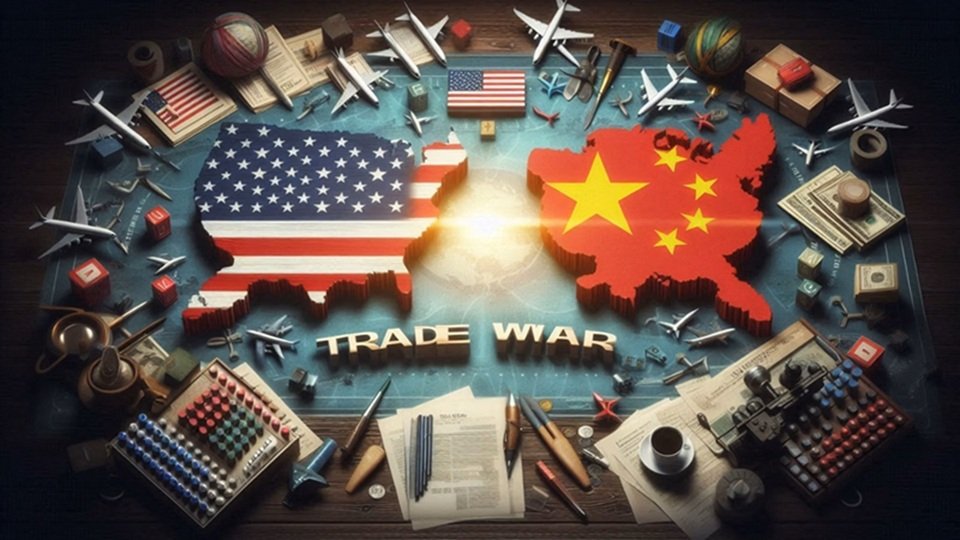
Recent efforts of President Trump to embark on some kind of a G2 matrix with China or G3 along with Russia, its traditionally strategic rivals, where spheres of influence will be earmarked that would herald the onset of Cold War 2.0 in a geopolitical and geo-technological domain. Recently, the Summit between Trump and Xi and the fact that Trump received Xi and his spouse at the tarmac with glee, along with First Lady Melania, confirms the acknowledgement of Chinese power and parity, as both sides need a lot of effort to reduce the impact of ongoing unilaterally driven West Asian and Eurasian wars.
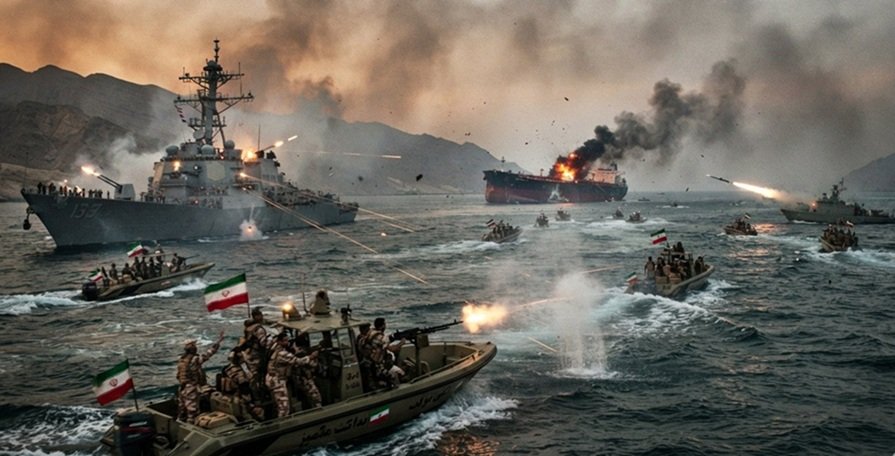
Through his National Security and Defence Strategies 2025, and consequent actions against Venezuela, Canada, Mexico, Panama and Greenland, Trump has already defined his ‘Donroe Doctrine’. His disdain for multilateralism was quite evident in his own address to the 81st UNGA when, in violation of the very UN Charter, he threatened to annihilate the Islamic Republic of Iran. Previously, he also walked out of several international agreements, cut funding to the UN, and undermined the WTO, among other institutions. Even the Russian Foreign Minister Lavrov, speaking at the UNGA, claimed that Russia will not stop until it has achieved its strategic objectives, despite the war going on for nearly five years. In any case, the strategic objectives in a war are like the revolving mirror illusion. Reforms in the minds of some could be the perpetuation of the preferential power matrix of the P5 at the UNSC.
Against this backdrop, India, represented by Dr S. Jaishankar at the UN General Assembly, embarked on its UNSC campaign both for the non-permanent seat for 2028-29 and for fundamental reforms of the UN and other international organisations.
At the Partners for Multilateralism Summit, Jaishankar pushed for “reformed multilateralism”, addressing the “4F” crisis (fuel, food, fertiliser, and finance) and global geopolitical stress. India joined the Partnership for Multilateralism, along with the European Union, Australia, Brazil, Canada, Barbados, and Kenya, aligning with broader efforts to champion the Global South and secure diversified energy and trade interests and to strengthen multilateral cooperation by promoting peace and supporting inclusive prosperity.
Another important initiative was to organise an India-V4 Meeting. Jaishankar hosted the historic first-ever India-V4 Foreign Ministers’ meeting with the Visegrad Group (Poland, Hungary, Slovakia, and the Czech Republic) to boost political, economic, and defence ties. They all supported UN reforms and India’s legitimate place on the reformed UNSC.
Incidentally, for China, all other P4 countries have supported India’s permanent seat at the reformed UNSC. This could even be a ruse; since, as of now, they do understand that China has its own geopolitical reservations with regard to India. None of them would like an expanded UNSC with veto powers and would want to maintain their privileges even if that meant the decimation and irrelevance of the UN itself. Unilateralism is a preferred currency for international discourse.
India, however, has made it her mission to push for UN reforms since the UN and its allied bodies represent the outdated victor and vanquished mindset of the post-WWII era. That cannot go on. Indian Prime Minister Narendra Modi called this out in his opening speech at the 18th Brics+ summit in New Delhi (September 12 -13). He not only said that reforms cannot wait any longer, but also that they should urgently begin acting on the text-based negotiations. The New Delhi Declaration was categorical in this regard as the Leaders pushed for reforms in multilateral institutions and amplified the voice of the Global South to make it relevant to the realities of the 21st century.
Prime Minister Modi also reiterated that BRICS had reached a “coming of age” moment and called on the Global South to become a “rule-shaper” rather than simply accept rules set elsewhere. Hence, they reaffirmed commitment to a more just, representative, democratic, and accountable international system while specifically supporting India and Brazil’s legitimate aspirations, including those of Russia and China and those of Africa in accordance with the Ezulwini consensus. There was indeed a clarion call for just representation of Africa in the reformed institutions. India, in any case, during its G20 presidency in 2023, made sure that the African Union became a permanent member.
In his National Statement at the UNGA, apart from emphasising various important issues, Dr S. Jaishankar laid out the writing on the wall when he reiterated that “We are now well on our way towards a multi-polar world. The post-1945 order is giving way to new realities. This process of adjustment, accommodation, and acceptance will not be easy. Much of the turbulence that we witness today emanates from those very difficulties. Yet, the march of an intrinsically diverse world, towards a more democratic future, cannot be halted. Peace in a pluralistic order requires civil conversations; it requires broad-based consultations; it requires transparent decision-making. Large sections of humanity cannot be excluded from that process. The case for reformed multilateralism only gets stronger day after day”.
This inclusivity and fundamental reforms for the global governance institutions have to happen if “We have to transform this pyramid of privilege into a platform of partnership”, as Prime Minister Modi told the BRICS summit.
Article Courtesy: Firstpost
Title Image Courtesy: Copilot AI
Disclaimer: The views and opinions expressed by the author do not necessarily reflect those of the Government of India or the Defence Research and Studies.