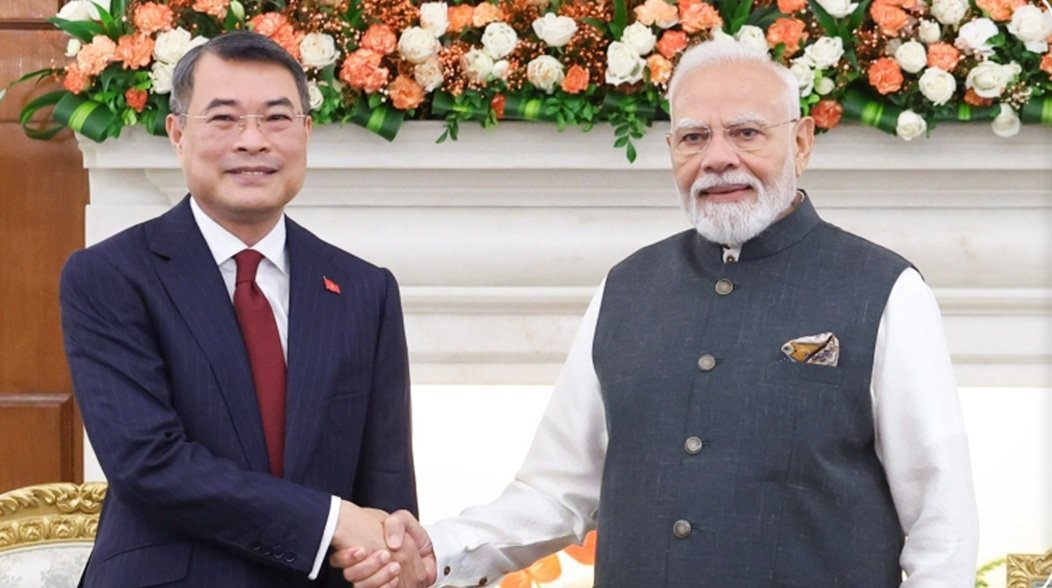
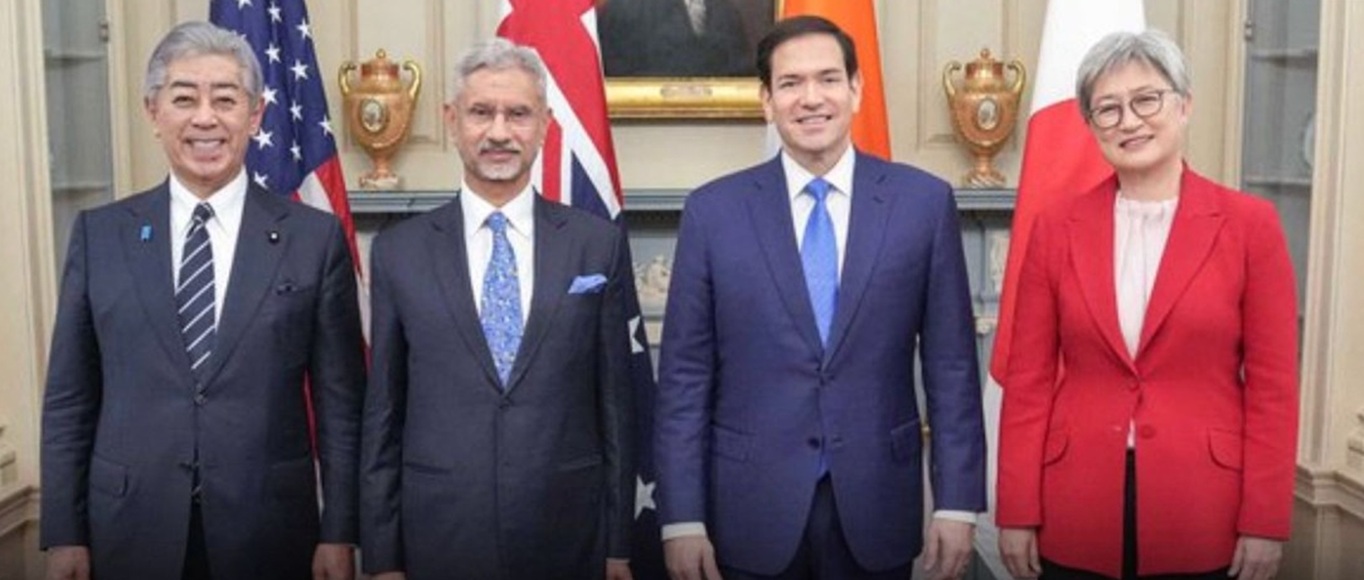
The Quadrilateral Security Dialogue, or Quad, has steadily evolved from a maritime consultation mechanism into one of the most consequential strategic frameworks shaping the Indo-Pacific. The meeting of the Quad’s Foreign Ministers held in New Delhi on 26 May 2026 marked another decisive stage in that transformation. The joint emphasis on Indo-Pacific energy security, critical minerals, resilient supply chains, maritime connectivity, and strategic infrastructure demonstrated that the Quad is now thinking far beyond traditional naval cooperation. It is attempting to create a long-term geo-economic architecture for the Indo-Pacific in an era defined by geopolitical instability, technological rivalry, and resource competition.
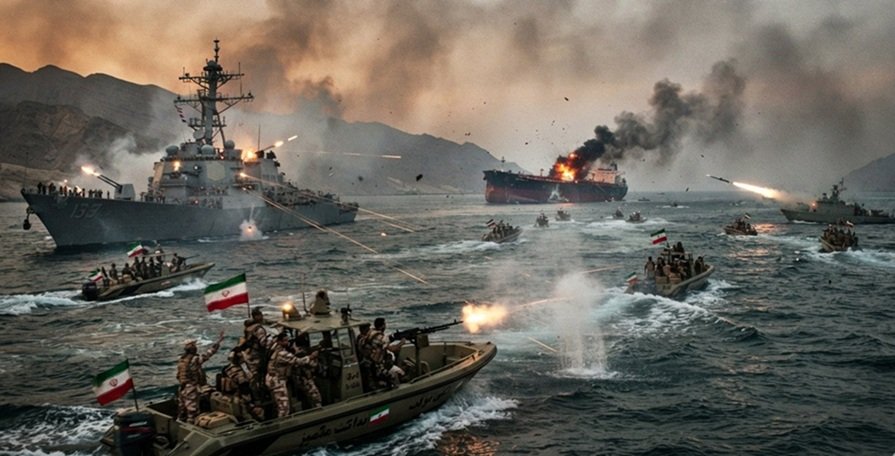
The timing of the initiative is significant. The continuing turbulence in West Asia, uncertainty surrounding Iran and the Strait of Hormuz, repeated disruptions in the Red Sea, and China’s overwhelming control over critical mineral processing have collectively pushed energy security to the forefront of strategic calculations. Simultaneously, the intensifying competition between the United States and China has forced regional powers to reconsider vulnerabilities in shipping routes, manufacturing dependencies, and technological supply chains.
The Quad’s latest initiative reflects a growing recognition that future power equations in the Indo-Pacific will not be determined only by military capability. Control over energy corridors, critical minerals, digital infrastructure, green technologies, and maritime logistics will increasingly define strategic influence. Within this emerging framework, each Quad member brings a distinct strength. The United States contributes military reach and technological dominance. Japan provides industrial sophistication and infrastructure finance. Australia offers critical minerals and energy resources. India, however, provides something equally vital — geography, scale, political legitimacy, and strategic centrality.
As former Japanese Prime Minister Shinzo Abe once observed while conceptualizing the Indo-Pacific idea, “The Pacific and the Indian Oceans are now bringing about a dynamic coupling as seas of freedom and prosperity.” That coupling today is increasingly being shaped through the prism of energy security.
The United States and the Strategic Protection of Energy Corridors
The United States remains the principal strategic backbone of the Quad framework. Despite domestic debates over overseas commitments, Washington continues to possess unmatched naval capability across the Indo-Pacific. From the Persian Gulf to the Western Pacific, the United States Navy remains central to the protection of global maritime commerce and energy flows.
For Indo-Pacific economies, energy security begins with the uninterrupted movement of oil and gas through maritime chokepoints. The Strait of Hormuz, Bab-el-Mandeb, Malacca Strait, and the South China Sea remain the arteries of the global economy. Any disruption along these routes immediately impacts Asian energy-importing economies, particularly India, Japan, and South Korea.
The United States, therefore, offers the Quad deterrence capability, maritime surveillance, anti-submarine warfare systems, and integrated intelligence networks necessary for securing commercial sea lanes. In periods of regional instability, Washington alone possesses the capacity for sustained power projection across multiple theatres simultaneously.
Beyond military capability, the United States is also emerging as an energy stabilizer through liquefied natural gas exports. American LNG has become increasingly attractive for Asian partners seeking politically dependable alternatives to unstable Gulf supply routes. Long-term LNG contracts between the United States and Indo-Pacific economies are likely to deepen in the coming years.
The technological dimension is equally important. America dominates several advanced technologies linked to the future energy ecosystem, including semiconductor design, AI-enabled energy grids, advanced battery systems, and small modular nuclear reactors. These technologies may eventually form the technological foundation of a broader Quad energy-security architecture.
Former US Secretary of State Antony Blinken had earlier remarked that “economic security is national security.” The latest Quad initiative reflects precisely that understanding.
Japan’s Role as Industrial Integrator and Infrastructure Financier
Japan enters the Quad energy-security framework from a position of structural vulnerability. The country imports the overwhelming majority of its hydrocarbons and remains highly dependent on secure maritime trade routes. Yet this vulnerability has also made Tokyo exceptionally focused on resilience, diversification, and technological innovation.
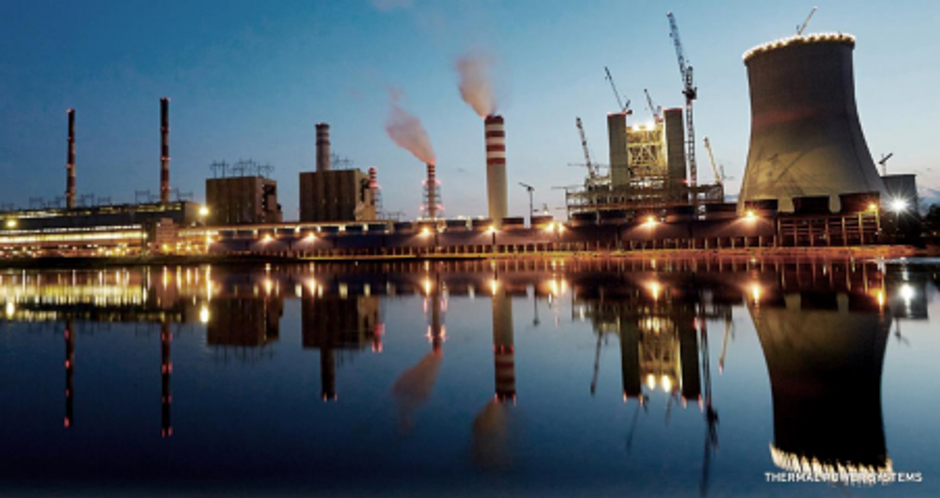
Japan’s greatest contribution lies in infrastructure finance and industrial capability. Japanese institutions and corporations have spent decades investing in ports, transport systems, LNG terminals, industrial corridors, and energy infrastructure across Southeast Asia and the Indo-Pacific. Unlike purely commercial investments, Japanese infrastructure diplomacy is often viewed as transparent, reliable, and development-oriented.
Tokyo is also positioning itself as a global leader in hydrogen and ammonia fuel technologies. Japan sees hydrogen not merely as an environmental initiative but as a long-term strategic energy transition capable of reducing dependence on imported fossil fuels. This aligns naturally with Australia’s resource base and India’s renewable-energy ambitions.
Japan’s advanced industrial ecosystem also makes it indispensable in critical mineral processing and high-end manufacturing. Even where raw materials are sourced from Australia or Africa, Japanese technology and industrial precision remain central to refining and advanced component production.
Importantly, Japan provides diplomatic balance within the Quad. In much of Southeast Asia and the Pacific, Japanese engagement is not perceived through an overtly military lens. Tokyo’s economic statecraft allows the Quad to present itself not simply as a strategic bloc but as a developmental and stabilizing partnership.
Australia and the Rise of a Resource Power
Australia has increasingly become the resource pillar of the Quad’s emerging geo-economic framework. The country possesses some of the world’s largest reserves of lithium, cobalt, rare earths, and natural gas — resources that are becoming as strategically important in the twenty-first century as oil was in the twentieth.
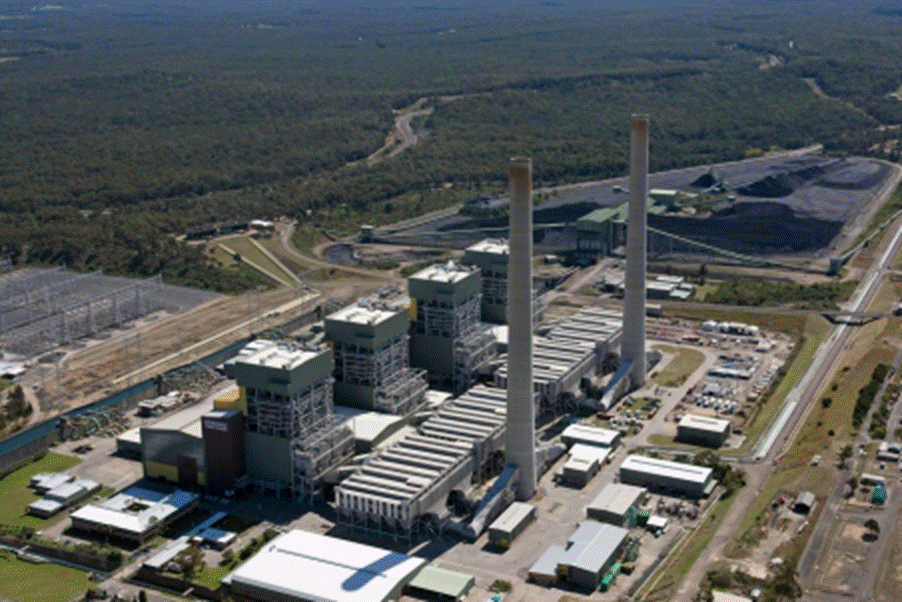
China’s dominance in rare earth processing has alarmed major economies. The Quad’s latest focus on critical minerals clearly reflects efforts to create alternative supply chains insulated from geopolitical coercion. Australia’s mineral wealth, therefore, gives it a pivotal role in the Indo-Pacific energy-security strategy.
Canberra is also one of the world’s leading LNG exporters and is rapidly investing in green hydrogen production. Australia’s long-term vision is to become a clean-energy exporter to Asian economies, particularly Japan, South Korea, and potentially India.
Geography further enhances Australia’s strategic importance. Located between the Indian and Pacific Oceans, Australia occupies a key position in maritime logistics and naval cooperation. The growing synergy between the Quad and arrangements such as AUKUS reflects Canberra’s rising significance in Indo-Pacific strategic planning.
Australian Prime Minister Anthony Albanese recently described the Indo-Pacific as “the centre of global strategic gravity.” That assessment increasingly appears accurate as energy, trade, and technology competition converge across the region.
India as the Strategic Anchor of the Indo-Pacific
While each Quad member brings unique capabilities, India increasingly appears to be the geopolitical centre of gravity around which the Indo-Pacific framework is evolving.
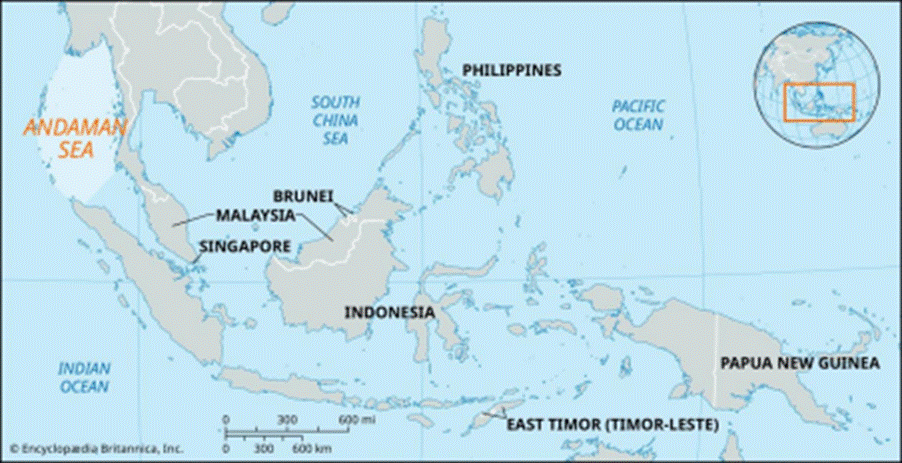
India’s geographic position alone makes it indispensable. Sitting astride the Indian Ocean Region, India overlooks the principal sea lanes connecting the Persian Gulf, East Africa, Southeast Asia, and the Western Pacific. A substantial proportion of global energy trade passes close to Indian waters.
The Andaman and Nicobar Islands provide India with extraordinary strategic oversight near the Malacca Strait, through which much of East Asia’s energy imports flow. In any future maritime contingency, India’s location becomes critically important for sea-lane security, surveillance, and logistics.
The Indian Navy is therefore emerging as a major net security provider in the Indian Ocean. Anti-piracy operations, maritime domain awareness, convoy protection, and undersea infrastructure security are all becoming increasingly important responsibilities.
At the same time, India is transforming into one of the world’s major refining hubs. Massive refining complexes operated by Reliance Industries and Indian Oil Corporation already process crude from multiple regions and export refined products globally. This gives India the ability to function as a regional energy redistribution centre during periods of supply disruption.
India also occupies a central place in the Quad’s broader effort to diversify supply chains away from China. No other democracy possesses India’s combination of market size, workforce scale, industrial potential, and geopolitical location. Through Production Linked Incentive schemes and manufacturing reforms, New Delhi is attempting to position itself as an alternative manufacturing ecosystem for semiconductors, batteries, renewable-energy systems, and electronics.
The energy transition dimension is equally significant. Under the National Green Hydrogen Mission, India is aggressively investing in green hydrogen and renewable-energy infrastructure. With abundant solar potential and rapidly expanding clean-energy capacity, India could eventually become one of the world’s leading green hydrogen producers.
Such a development would align naturally with Japanese hydrogen demand and Australian resource exports, potentially creating a powerful Indo-Pacific clean energy corridor.
India’s diplomatic role may ultimately prove even more important than its economic or military contributions. Unlike China, India is not widely viewed as coercive. Unlike the United States, it is not perceived as an external hegemonic power. This allows New Delhi to act as a bridge between advanced industrial democracies and the Global South.
Many ASEAN, African, and Indian Ocean states remain wary of great-power rivalry and bloc politics. India’s strategic autonomy gives the Quad greater legitimacy across these regions. Countries reluctant to align openly with Washington may still cooperate within frameworks involving India.
Prime Minister Narendra Modi has repeatedly emphasized that the Indo-Pacific should remain “free, open, inclusive and rules-based.” The latest Quad initiative reflects India’s growing role in shaping that vision.
Challenges Before the Quad
Despite the ambitious rhetoric, the Quad’s energy-security framework faces significant challenges. India remains cautious about transforming the grouping into a formal anti-China alliance. ASEAN states continue to resist hard bloc politics and prefer strategic balancing.
Economic realities also complicate strategic ambitions. Australia remains deeply tied to Chinese trade. Japan faces economic stagnation and demographic pressures. The United States confronts political polarisation and changing strategic priorities. India itself remains heavily dependent on imported hydrocarbons and continues to face infrastructure and bureaucratic bottlenecks.
Moreover, the transition from fossil-fuel dependence to green-energy systems will take decades. For the foreseeable future, Indo-Pacific economies will continue to rely heavily on Gulf oil and gas even as they attempt to diversify into renewables and hydrogen.
A New Indo-Pacific Strategic Architecture
The Quad’s 26 May 2026 energy-security initiative nevertheless marks an important strategic evolution. The grouping is no longer confined to maritime exercises or diplomatic symbolism. It is attempting to build a resilient geo-economic framework capable of securing supply chains, protecting energy routes, diversifying industrial production, and reducing vulnerability to coercion.
In this emerging architecture, the United States provides strategic protection and advanced technology. Japan contributes industrial sophistication and financing capability. Australia supplies critical minerals and energy resources. India provides geography, scale, manufacturing depth, and political legitimacy.
Together, the Quad is seeking to shape a new Indo-Pacific order in which economic resilience and energy security become integral components of strategic stability.
The success of this vision, however, will ultimately depend not on declarations but on implementation. Infrastructure investments, supply-chain relocation, energy partnerships, naval coordination, and technological integration will determine whether the Quad evolves into a durable strategic framework or remains an aspirational geopolitical concept.
The direction, however, is now unmistakably clear. The Indo-Pacific has become the central theatre of twenty-first century geopolitics, and energy security is rapidly emerging as one of its defining strategic contests.
Title Image courtesy: DD India
Disclaimer: The views and opinions expressed by the author do not necessarily reflect the views of the Government of India and the Defence Research and Studies.