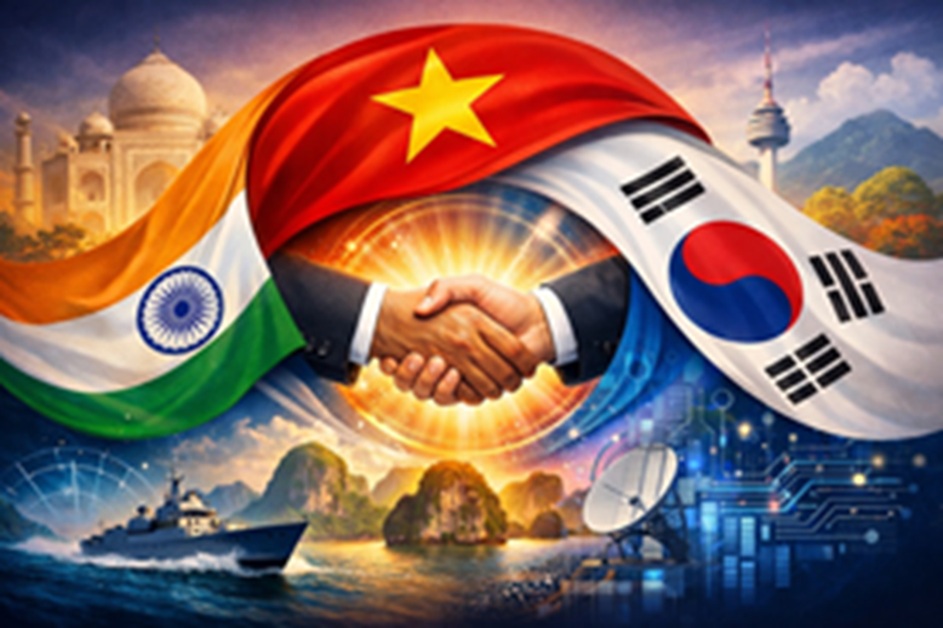
India’s defence diplomacy toward Southeast Asia focuses on building interoperability and strategic partnerships. It leverages robust joint military exercises, maritime security dialogues, and defence exports to establish itself as a credible, benign security provider in the region, without territorial ambitions.
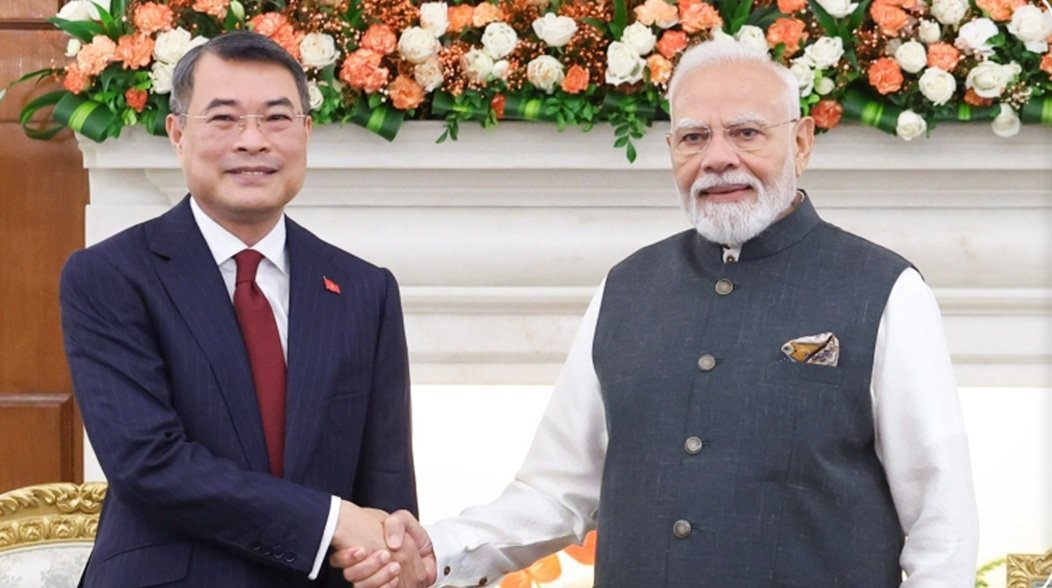
The first major inference from India’s cooperation with Vietnam is that India is using defence diplomacy as a calm but serious tool of Indo-Pacific strategy. Vietnam is not just another friendly country for India; it is a key Southeast Asian state located near the South China Sea, where questions of maritime order, freedom of navigation, and regional balance are of great importance. India’s 2022 Joint Vision Statement on India-Vietnam Defence Partnership towards 2030 and the mutual logistics support arrangement show that the relationship has moved beyond general goodwill and entered a more operational phase. The inference is that India wants to build long-term maritime trust with Vietnam without making the partnership look like a military bloc. This supports India’s Act East policy and gives India a stronger diplomatic and security presence in Southeast Asia (Press Information Bureau, 2022).
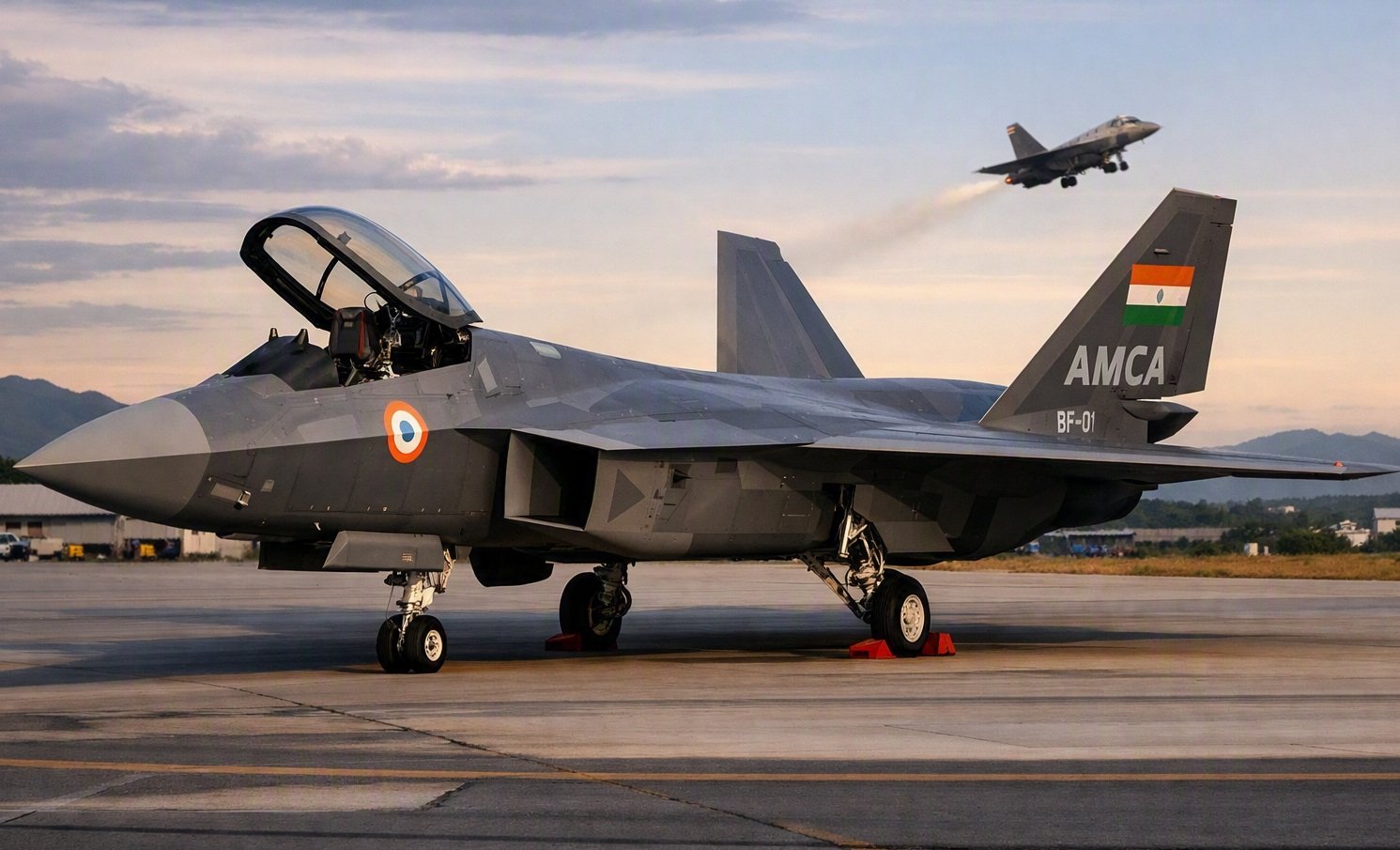
A second inference is that Vietnam helps India convert its defence exports into strategic influence. If Indian defence systems such as BrahMos missiles, patrol vessels, coastal surveillance systems or naval platforms are used by friendly Southeast Asian countries, India gains more than commercial profit. It gains credibility as a security provider. This is important because India has traditionally been seen as a large defence importer, but now it is trying to become a defence manufacturer and exporter. The reported BrahMos agreement with Vietnam, along with earlier BrahMos supplies to the Philippines, suggests that India’s defence industry is entering a new phase where exports can support both economic growth and foreign policy goals. The strategic meaning is that India can help partners strengthen their own defensive capacity while avoiding confrontation or alliance politics (Reuters, 2026a; Reuters, 2025).
The third inference is that India’s cooperation with Vietnam gives New Delhi a quiet way to support a rules-based maritime order. India does not need to use aggressive language or directly enter South China Sea disputes. Instead, it can support training, logistics, repair, coastal defence, maritime awareness and capacity-building. This is a more diplomatic method of strategy. It allows India to stand for international law, free movement of ships and peaceful settlement of disputes while still protecting its own interests. This approach is useful because India has to balance several priorities at the same time: it must protect its own strategic autonomy, avoid unnecessary escalation, and still show that it is willing to support friendly countries facing maritime pressure (Press Information Bureau, 2022; Economic Times, 2026a).
The fourth inference is that South Korea gives India a different but equally important advantage. Vietnam gives India maritime geography, while South Korea gives India technology, manufacturing depth and advanced defence industry experience. South Korea has already built a strong defence industrial base and is now one of the important defence exporters in the world. India can benefit from South Korean strengths in shipbuilding, artillery, electronics, air defence, cyber systems, precision manufacturing and advanced platforms. Therefore, the India-South Korea defence relationship should not be seen only as a normal bilateral relationship. It should be seen as part of India’s larger effort to modernise its armed forces and reduce dependence on a narrow group of traditional suppliers (Press Information Bureau, 2026a; Economic Times, 2026b).
The fifth inference is that cyber security is becoming a central part of India’s defence diplomacy. The India-South Korea agreements on defence cyber cooperation, training and UN peacekeeping show that modern defence cooperation is no longer limited to soldiers, ships, aircraft and missiles. In future conflicts, cyber attacks may target military networks, financial systems, electricity grids, ports, airports, satellites and communication systems. South Korea has deep experience in managing cyber threats because of its own regional security environment. India’s cooperation with South Korea in this field therefore has direct national security value. It also shows that India is preparing for new forms of warfare where digital resilience will be as important as traditional military strength (Press Information Bureau, 2026a).
The sixth inference is that India’s defence partnerships are becoming more modular and flexible. India is not trying to copy NATO-style alliances. Instead, it is building separate arrangements with different countries for different purposes. With Vietnam, the focus is maritime security and capacity-building. With South Korea, the focus is technology and cyber cooperation. With France, the focus is high-end co-development and co-production. With Australia and Japan, the focus is Indo-Pacific maritime stability and interoperability. With Oman and Egypt, the focus is the western Indian Ocean, the Gulf of Aden, the Red Sea and sea-lane security. This modular model suits India because it protects strategic autonomy while still giving India many strategic options (Ministry of External Affairs, 2026a; Ministry of External Affairs, 2025; Press Information Bureau, 2026b).
The seventh inference is that Indonesia and the Philippines should be among India’s next major Southeast Asian defence priorities. Indonesia is important because of its location near critical maritime chokepoints linking the Indian Ocean and the Pacific Ocean. A stronger India-Indonesia defence relationship would help India connect its Andaman and Nicobar posture with the wider Southeast Asian maritime space. The Philippines is important because it is also dealing with maritime pressure in the South China Sea and has already become a buyer of BrahMos missiles. India can build on this by offering training, maintenance, coastal defence cooperation and maritime-domain awareness. The larger inference is that India can slowly help build a network of capable maritime partners across Southeast Asia without formally creating an alliance (Reuters, 2025; Reuters, 2026a).
The eighth inference is that France should remain one of India’s most trusted defence technology partners. France has generally shown comfort with India’s independent foreign policy and has been willing to cooperate in advanced areas such as aircraft, naval systems, space and defence production. The India-France defence industrial roadmap, especially the emphasis on co-design, co-development and co-production, is important because India does not want only buyer-seller relationships. India wants technology partnerships that help domestic industry grow. This makes France valuable not only as a supplier but also as a long-term strategic partner in the Indian Ocean and beyond (Ministry of External Affairs, 2026a).
The ninth inference is that Japan and Australia are important for India’s wider Indo-Pacific strategy, but India should continue to frame cooperation with them in diplomatic and practical language. Japan brings technology, economic security, maritime awareness and high-end industrial capacity. Australia brings Indian Ocean-Pacific geography, naval cooperation, undersea awareness and strong alignment on maritime stability. These relationships can deepen India’s role in the Indo-Pacific without forcing India into a hard military alliance. The best path for India is to strengthen exercises, logistics support, information-sharing, defence technology cooperation and supply-chain security while keeping the language focused on peace, stability, free navigation and respect for international law (Ministry of External Affairs, 2025; Economic Times, 2026c).
The tenth inference is that India must pay more attention to the western side of its maritime strategy. Much of the discussion on the Indo-Pacific focuses on the South China Sea and the Pacific side, but India’s security also depends heavily on the Arabian Sea, the Gulf of Oman, the Gulf of Aden, the Red Sea and the Suez route. Oman is important because access to Duqm supports Indian naval operations in the western Indian Ocean. Egypt is important because it sits near the Suez Canal and Red Sea, which are central to India-Europe trade routes. Saudi Arabia and the UAE are important because of energy security, Indian diaspora interests, maritime security and possible defence industrial cooperation. The inference is that India’s defence diplomacy must be two-sided: it must look east toward Southeast Asia and the Pacific, but also west toward the Gulf, Red Sea and Africa (Ministry of External Affairs, 2018; Press Information Bureau, 2026b; Press Information Bureau, 2025).
The eleventh inference is that India should use defence agreements to strengthen domestic manufacturing, not only military ties. Every new defence partnership should be connected to Make in India and Atmanirbhar Bharat. This means India should prefer agreements that include joint production, local maintenance, transfer of technology, skill development, repair hubs, export opportunities and start-up participation. South Korea, France, the UAE, Israel, Japan and the European Union are especially useful in this area because they have strong technology ecosystems. The aim should not be simply to import more weapons from more countries. The aim should be to build India’s own defence industrial base through partnerships that bring knowledge, production capability and long-term industrial value (Ministry of External Affairs, 2026a; Press Information Bureau, 2026a).
The twelfth inference is that India should avoid formal mutual defence treaties that create automatic military obligations. India’s strength lies in its ability to work with many countries while keeping decision-making independent. A rigid alliance could reduce India’s diplomatic flexibility and pull India into conflicts that may not directly serve Indian interests. Therefore, the better model is selective and issue-based defence cooperation: logistics support, cyber defence, maritime-domain awareness, training, joint production, defence exports, disaster response, intelligence-sharing and maintenance support. This approach allows India to become more influential without losing strategic autonomy. In simple terms, India should build strong partnerships, not binding alliances.
The overall inference is that India’s defence cooperation with Vietnam and South Korea marks a quiet but important shift in Indian strategy. India is no longer satisfied with being only a careful diplomatic player or a large defence buyer. It wants to become a security partner, a defence producer, a technology collaborator and a stabilising power in the Indo-Pacific and Indian Ocean regions. This shift is not aggressive. It is practical. It reflects India’s need to protect sea routes, manage regional uncertainty, strengthen domestic defence manufacturing and work with friendly countries that share similar concerns. The best diplomatic message for India is that these partnerships are not aimed at creating conflict, but at creating balance, resilience and peace through strength.
Title Image Courtesy: Copilot AI
Disclaimer: The views and opinions expressed by the author do not necessarily reflect the views of the Government of India and the Defence Research and Studies.


Reference List
Economic Times (2026a) ‘India, Vietnam elevate ties to “Enhanced Comprehensive Strategic Partnership”’, The Economic Times, May 2026. Available at: The Economic Times website (Accessed: 5 June 2026).
Economic Times (2026b) ‘India, South Korea sign pact in key areas of defence cooperation’, The Economic Times, May 2026. Available at: The Economic Times website (Accessed: 5 June 2026).
Economic Times (2026c) ‘India, Australia to sign pact to deepen defence industry cooperation’, The Economic Times, June 2026. Available at: The Economic Times website (Accessed: 5 June 2026).
Ministry of External Affairs (2018) ‘Question No. 3072: Access to Duqm Port’, Government of India, 14 March. Available at: Ministry of External Affairs website (Accessed: 5 June 2026).
Ministry of External Affairs (2025) ‘Joint Declaration on Security Cooperation between India and Japan’, Government of India, 29 August. Available at: Ministry of External Affairs website (Accessed: 5 June 2026).
Ministry of External Affairs (2026a) ‘India-France Joint Statement’, Government of India, 17 February. Available at: Ministry of External Affairs website (Accessed: 5 June 2026).
Press Information Bureau (2022) ‘Joint Vision Statement on India-Vietnam Defence Partnership towards 2030 signed to enhance defence cooperation’, Government of India, 8 June. Available at: Press Information Bureau website (Accessed: 5 June 2026).
Press Information Bureau (2025) ‘7th meeting of India-Saudi Arabia Joint Committee on Defence Cooperation held in New Delhi’, Government of India, 28 August. Available at: Press Information Bureau website (Accessed: 5 June 2026).
Press Information Bureau (2026a) ‘Raksha Mantri holds bilateral talks with Minister of National Defence, Republic of Korea in Seoul’, Government of India, 20 May. Available at: Press Information Bureau website (Accessed: 5 June 2026).
Press Information Bureau (2026b) ‘11th Joint Defence Committee meeting between India and Egypt’, Government of India, 23 April. Available at: Press Information Bureau website (Accessed: 5 June 2026).
Reuters (2025) ‘Philippines to receive second batch of BrahMos missile system from India’, Reuters, 23 April. Available at: Reuters website (Accessed: 5 June 2026).
Reuters (2026a) ‘India says signed BrahMos missile deal with Vietnam’, Reuters, 30 May. Available at: Reuters website (Accessed: 5 June 2026).
The Diplomat (2018) ‘India gains access to Oman’s Duqm Port, putting the Indian Ocean geopolitical contest in the spotlight’, The Diplomat, 14 February. Available at: The Diplomat website (Accessed: 5 June 2026).