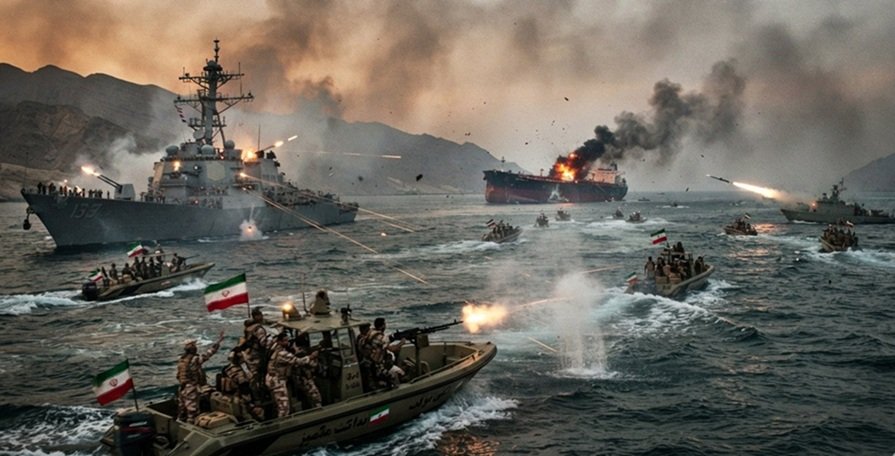

Every soldier understands one enduring truth: battles are won long before the first shot is fired. Victory is shaped by preparation, training, logistics, technology, leadership and above all, timely decision-making. Winning tomorrow’s war is going to be a challenge. On the battlefield, hesitation creates opportunities for the adversary. The same principle applies to defence research and capability development.
Delays in decision-making within laboratories, procurement agencies or administrative headquarters eventually manifest as capability gaps at the front. Winning Tomorrow’s War is going to be a challenge. It is through this operational lens that India’s revised Delegation of Financial Powers (DFP)-2026 for the Defence Research and Development Organisation (DRDO) should be viewed. While many regard it as an administrative measure, its significance extends far beyond financial delegation. It reflects an important shift towards recognising that decision speed has become an operational capability in itself. Future wars will not wait for bureaucracies to catch up.
The Battlefield Has Changed
Military history demonstrates that every major technological transition has transformed the conduct of war. The First World War introduced mechanised firepower. The Second World War demonstrated the decisive impact of armour, air power and logistics. The Gulf War showcased precision-guided munitions and network-centric operations. Today, conflicts in Ukraine and West Asia are revealing another transformation—one driven by autonomous systems, artificial intelligence, electronic warfare, cyber operations and precision strike capabilities.
These conflicts also demonstrate something equally important. Innovation cycles have become dramatically shorter. Unmanned aerial systems are upgraded within months. Electronic warfare techniques evolve continuously. Counter-drone technologies are modified in near real time. Software updates now influence operational effectiveness as much as hardware improvements.
Military organisations therefore require institutions capable of learning and adapting at unprecedented speed.
Operational Readiness Begins in the Laboratory
During military service, commanders often emphasise operational readiness as a function of training, maintenance and logistics. Yet there is another dimension that receives less attention. Operational readiness begins in research laboratories.
Every indigenous weapon system, communication network, surveillance platform or electronic warfare capability starts as an idea. Its journey from concept to deployment determines whether the armed forces receive critical capabilities when they are needed—not years after operational requirements have changed.
Time has therefore become an operational variable. The most advanced technology delivered too late may offer limited battlefield value. Conversely, a reliable indigenous system delivered on schedule can significantly enhance combat effectiveness. DFP-2026 addresses this challenge by enabling faster project execution and reducing administrative delays that have traditionally slowed research programmes.
Decision Velocity Is Combat Power
Military professionals are familiar with the concept of the OODA Loop—Observe, Orient, Decide and Act. Success depends upon completing this cycle faster than one’s adversary. The same principle increasingly applies to defence innovation.
Research organisations must observe evolving threats, orient technological priorities, decide upon development pathways and deliver operational solutions before adversaries exploit emerging vulnerabilities. Every unnecessary administrative layer extends this cycle. Every delayed approval postpones capability induction. Every missed technological opportunity widens operational risk.
Financial delegation alone cannot solve these challenges, but it can significantly reduce decision latency within complex research programmes. Decision velocity is therefore becoming an element of combat power.
The Soldier’s Perspective
Technology is meaningful only when it enhances the soldier’s ability to accomplish the mission. Those who have served in operational areas understand that equipment failures, delayed deliveries and capability shortages directly influence tactical options available to commanders.
Operational commanders rarely seek perfection. They seek dependable capability delivered when required. A surveillance system that reaches a unit before deployment contributes more to mission success than a technologically superior alternative arriving years later. Similarly, indigenous systems that can be upgraded continuously often prove more valuable than imported platforms requiring prolonged acquisition cycles.
The true beneficiaries of administrative reforms are therefore not institutions but soldiers operating under demanding conditions. Every improvement in research efficiency ultimately strengthens those serving at the tactical edge.
Integrating the User with the Developer
One of the most significant lessons emerging from contemporary conflicts is the importance of continuous interaction between users and developers. Modern battlefields evolve rapidly.
Operational formations identify emerging requirements almost daily. Scientists develop technological solutions. Industry contributes manufacturing expertise. The challenge lies in integrating these stakeholders into a responsive innovation ecosystem. DFP-2026 creates opportunities to strengthen this interaction.
Programme managers empowered to make timely financial decisions can respond more effectively to operational feedback, conduct faster trials and accelerate technology refinement. The distance between battlefield experience and laboratory innovation must continue to shrink.
Indigenous Capability Is Strategic Resilience
India’s pursuit of defence self-reliance is often discussed in economic terms. Its operational significance is equally important. Self-reliance enhances strategic autonomy during crises. Indigenous production reduces dependence upon external supply chains. Domestic research enables rapid modification of systems based upon operational experience.
Recent conflicts have repeatedly demonstrated that access to spare parts, ammunition, software support and industrial capacity can determine operational endurance. A resilient defence industrial ecosystem therefore becomes an extension of military capability. Administrative reforms that accelerate indigenous innovation contribute directly to national resilience.
Leadership Beyond Procedures
Military leadership has always demanded initiative within clearly defined intent. Defence research organisations require a similar philosophy. Empowering programme directors while maintaining robust accountability encourages initiative without compromising governance. Innovation thrives where responsible leadership is trusted to act decisively.
Excessive procedural control, however well-intentioned, often discourages initiative and prolongs execution timelines. Future capability development demands institutions confident enough to delegate authority while disciplined enough to measure outcomes.
Preparing for the Next Conflict
India’s strategic environment continues to evolve across multiple domains. The nation faces conventional military challenges, grey-zone competition, cyber threats, information warfare and rapidly advancing disruptive technologies. Future conflicts are unlikely to provide prolonged mobilisation periods or predictable operational patterns. Capability development must therefore become continuous rather than episodic.
The armed forces, DRDO, industry, academia and emerging technology enterprises should increasingly function as components of an integrated national security ecosystem. DFP-2026 represents one important step towards this objective. Its success, however, will ultimately depend upon institutional culture, leadership, accountability and sustained collaboration across the defence establishment.
The Real Measure of Reform
The effectiveness of DFP-2026 should not be judged merely by the volume of delegated financial authority. Its true measure will be whether indigenous technologies reach operational units faster. Whether research programmes become more responsive to battlefield realities.
Whether scientists, soldiers and industry collaborate more closely. Whether India reduces capability gaps before they become operational vulnerabilities. Every timely decision taken in peace has the potential to save lives in war.
Administrative reforms seldom attract public attention. Yet history often records that military success depended not only upon courageous soldiers and capable commanders but also upon institutions that recognised the urgency of preparing for tomorrow’s battlefield before it arrived.
DFP-2026 should therefore be seen not as an exercise in financial decentralisation but as an investment in operational readiness. In an era where conflicts evolve faster than bureaucracies traditionally have, India’s greatest military advantage may lie not only in developing better weapons, but in building institutions capable of making better decisions—faster. That is the essence of preparedness. That is the true combat multiplier.
Title Image Courtesy: Copilot AI
Disclaimer: The views and opinions expressed by the author do not necessarily reflect those of the Government of India or the Defence Research and Studies.