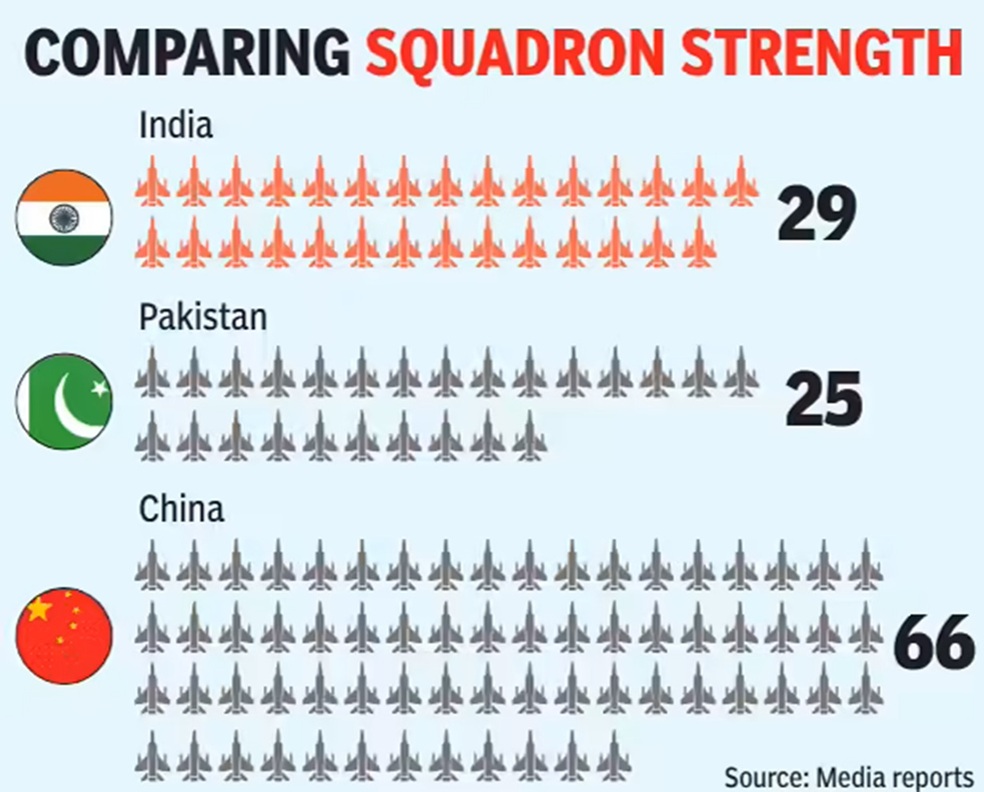
The Indian Air Force is currently operating with 29 combat squadrons against an authorised strength of 42. This shortfall of 13 IAF Squadrons amounts to approximately 230 to 250 aircraft.
A nation that wins the war but still falls short of its own minimum may be celebrating the wrong scoreline.
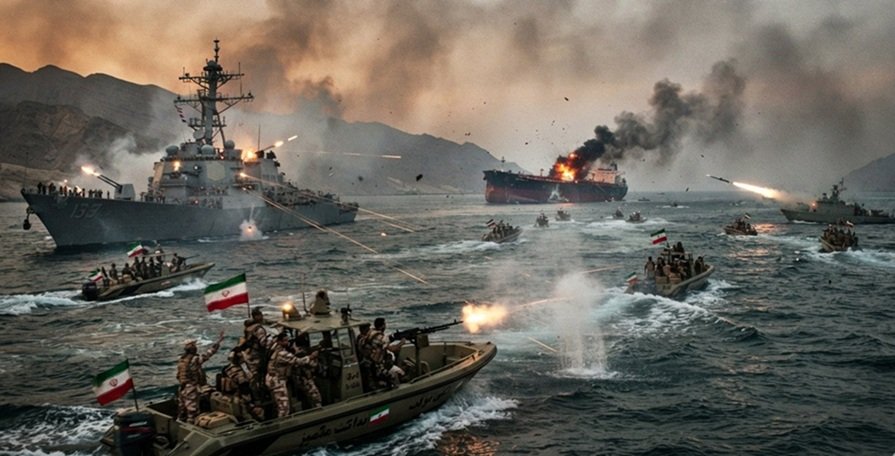
The Strait of Hormuz has become volatile again. Last week, Iran fired on a cargo vessel near the Strait of Hormuz. It barely made the front page back home. But for anyone who has spent a career reading the early signals of a theatre about to turn hot, that single act near a 33-kilometre-wide chokepoint matters more than most headlines we will see this year. A crisis never announces itself with a press release. It arrives quietly, through a probing shot, a contested patrol, a vessel fired upon in waters that the whole world depends on.
Geopolitics: A Chokepoint That Decides Far More Than Oil Prices
The Strait of Hormuz carries roughly a fifth of the world’s seaborne oil. India imports the overwhelming majority of its crude. When a tanker or cargo ship takes fire near that strait, it is not a regional skirmish. It is a direct line to the fuel price at an Indian petrol pump and to the planning desks of our naval commanders.
Add to this picture the steady deepening of the China-Pakistan-Turkey defence axis, and India’s strategic arc of concern keeps widening, not narrowing. Prime Minister Modi’s state visit to Seychelles last week, anchored in maritime security and in framing the Indian Ocean as a connector rather than a divide, was not ceremonial. It was a positioning move, made in real time, against this exact backdrop.
The Squadron Number Nobody Wants to Say Out Loud
Here is the uncomfortable arithmetic. The Indian Air Force is currently operating between 29 and 31 fighter squadrons. The sanctioned requirement, to manage a simultaneous two-front contingency with China and Pakistan, is 42. This is not a new gap. But it is now a gap being tested in real time, on two fronts that are both heating simultaneously, the western land border and a maritime chokepoint thousands of kilometres away that still touches our energy lifeline.
Military Strategy and Defence Matters
The good news, and there is real good news here, is that India is not standing still while the squadron count catches up.
DRDO’s RudraM-II air-to-surface missile completed a fresh round of flight trials this month, sharpening the IAF’s precision strike envelope. The BrahMos supersonic cruise missile is now being made a standard fit across all frontline Navy warships, not a special-case weapon reserved for a few platforms. Tejas Mk1A deliveries are finally gathering pace, with HAL targeting up to twenty-four units this year as engine supply constraints ease. The Tejas Mk2 and AMCA programmes continue to mature, alongside live discussions with France on a sixth-generation Future Combat Air System.
None of this closes the IAF squadrons ‘ gap overnight. But it tells a story I recognise from the battlefield. When you cannot win on numbers alone, you win on precision, integration, and the speed at which you can bring force to bear. That principle held in Kargil. It holds today.
Field Marshal Sam Manekshaw’s old reminder still applies without an expiry date: Preparedness cannot begin after the conflict starts.
Self-Reliance Is Now a Balance Sheet Item
A remarkable announcement recently was not from the government but from a business entity. Bharat Forge’s Swedish subsidiary signed a Letter of Intent with NAMMO Sweden at Eurosatory 2026 in Paris, to jointly produce large-calibre defence sub-systems for the European rearmament drive.
Read that again. An Indian private defence manufacturer is no longer just fulfilling Atmanirbhar Bharat targets at home. It is becoming a trusted node in someone else’s supply chain, at a moment when Europe is actively de-risking from its old suppliers.
This is the real governance lesson hiding inside the defence headlines. Strategic resilience is now becoming a line item that shareholders, lenders, and regulators will increasingly want explained, particularly for any company sitting inside a critical or dual-use supply chain. Any boardroom that treats geopolitical risk as somebody else’s department is the boardroom that is bound to get surprised.
The Bottom Line
India’s defence posture and response are not one of panic. It is recalibration: faster missile trials, broader missile integration, deeper private-sector defence partnerships, and a renewed maritime push toward the Indian Ocean.
Sovereignty is not a one-time purchase made through a budget announcement in February. It is a subscription, renewed every time a chokepoint is tested, every squadron gap is acknowledged honestly, and every defence contract is signed with eyes open.
The cargo ship fired upon near Hormuz last week will fade from the news cycle within days. The question it leaves behind for India will not. Are we closing the gap fast enough, or merely managing it well enough to avoid embarrassment until the next crisis arrives? Sovereignty, as ever, belongs only to those prepared to defend it before they are asked to.
Title Image Courtesy: The ET
Disclaimer: The views and opinions expressed by the author do not necessarily reflect those of the Government of India or the Defence Research and Studies.