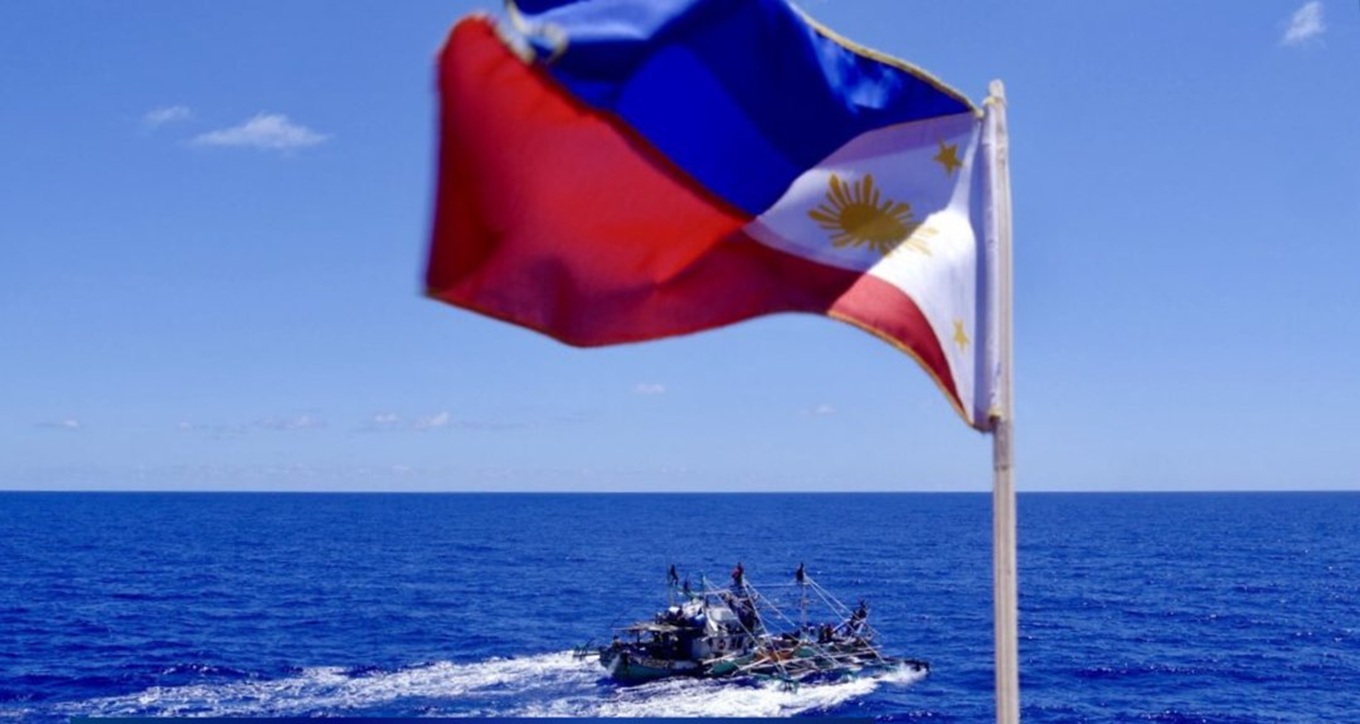
On July 12, 2016, an arbitral tribunal constituted under the PCA (Permanent Court of Arbitration) ruled overwhelmingly in favour of the Philippines in its maritime dispute against China in the South China Sea.
A few days from now, it will be the 10th anniversary of the South China Sea Arbitration, “The Republic of the Philippines v. The People’s Republic of China”, in which China, the defendant, chose to remain absent at the proceedings of the Arbitration. The overall security situation in the South China Sea since the Award has remained tense, attracting labels such as ‘hot spot’ or ‘flash point’. China remains highly active with aggressive military posturing as well as building associated infrastructure. The Philippines recently observed, “several large objects in Scarborough Shoal (known in the Philippines as Bajo de Masinloc or Panatag Shoal), presumably [have been] placed there by China”.
On their part, the other claimants have attempted to consolidate their respective positions by undertaking similar activities amid fears that these are vulnerable to Chinese assertiveness and could be occupied not only by China but also by other claimants who also have bilateral disputes among themselves over many features. Notwithstanding that, both the Philippines and other claimants to the South China Sea (Brunei, Indonesia, Malaysia, the Philippines, Republic of China (Taiwan), and Vietnam), have plenty of reasons to celebrate the 10th anniversary of the South China Sea Arbitration.
Issues such as sovereignty, resource ownership and in recent times underwater space control in the South China Sea have been the harbingers of geopolitical-geostrategic tensions and geo-economic contestation. It is fair to argue that this situation is not unique to the South China Sea, given that “maritime boundary disputes exist on all continents” and that “by the end of 2020, out of 460 possible maritime boundaries, only 280 have been agreed. That leaves 180 outstanding maritime boundary disputes, or approximately 39%”. These are related to issues concerning the territorial sea, the exclusive economic zone (EEZ) and the continental shelf. It is assumed that the number of disputes has gone up since the above data was compiled, and are before the PCA. These have not only added to the numbers but also led to hardened positions over issues of jurisdiction, exploitation rights to living and non-living resources and even freedom of navigation as enshrined in the 1982 UNCLOS.
A strong body of literature substantiates that oceanic and sea spaces have not necessarily been peaceful; instead, there is enough evidence that these bodies of water have been part of contestation. Hugo Grotius (mare liberum – freedom of the seas) and John Selden (mare clausum – closed seas) came to define the 17th-century maritime ownership and rights. The legal dynamics of the ownership, rights and duties continuously evolved, and the 1982 United Nations Convention on the Law of the Sea (UNCLOS), also referred to as the Constitution of the Oceans, is “almost universally accepted and applicable to global oceans and oceanic activities undertaken by humankind”.
The 1982 UNCLOS has robust governance mechanisms for the oceans and seas, including international dispute resolution “through arbitration and other peaceful means”. Set up in 1899 during the first Hague Peace Conference, the Permanent Court of Arbitration (PCA) has facilitated arbitration and other forms of dispute resolution between states and has “developed into a modern, multi-faceted arbitral institution perfectly situated to meet the evolving dispute resolution needs of the international community”. It has offered contending parties a platform for dispute resolution as well as conciliations, and its awards have been a mixed bag of successes-disappointments to different disputes. Yet states have chosen to carry their disputes to the PCA and have developed a sense of ‘faith’ in the process.
Ten years ago, the Philippines decided to legally challenge China’s nine-dash line proclamation and Beijing’s intention to exercise jurisdiction over the entire South China Sea. This expansive maritime claim had rattled the other claimants, who also expressed anxiety over the Chinese assertiveness and started to collectively identify political, diplomatic and legal pathways to address the Chinese claims in the South China Sea.
The Philippines decided to invoke the compulsory dispute resolution provisions embedded in the 1982 UNCLOS and approached the Arbitral Tribunal in The Hague. After nearly three years of proceedings, in which China chose not to be present, the Tribunal delivered its verdict and put out its final ruling on 12 July 2016.
The 2016 PCA ruling in favour of the Philippines was seen by the other claimants to the South China Sea as an opportunity to persuade China to start discussions over disputes with other claimants. However, there has been very little progress despite assurances by China through ASEAN as well as at the bilateral level. The finalisation of the Declaration on the Conduct (DoC) of Parties in the South China Sea remains elusive; meanwhile, the claimants continue to proclaim their positions through diplomatic, military and economic initiatives.
In fact, in January 2026, China and the Philippines met in Cebu and “reported progress on updating their coast guard memorandum of understanding (MoU)”, and the Chinese Ambassador Jing Quan recently reiterated Beijing’s openness to dialogue, the status quo, and joint development. But now there are politico-diplomatic tensions between the two countries over China sanctioning the Philippines’ defence minister, and tactical-operational issues between the two militaries preclude the implementation of the 2016 PCA Award.
The second part of this article is available at this Part 2 link.
Title Image Courtesy: x.com
Disclaimer: The views and opinions expressed by the author do not necessarily reflect those of the Government of India or the Defence Research and Studies.