The Great Nicobar Project is a ₹81,000-crore mega-infrastructure initiative launched to transform India’s southernmost island into a major international transshipment, economic, and strategic military hub. Key components include a mega container terminal at Galathea Bay, a dual-use greenfield airport, a power plant, and a massive new township.
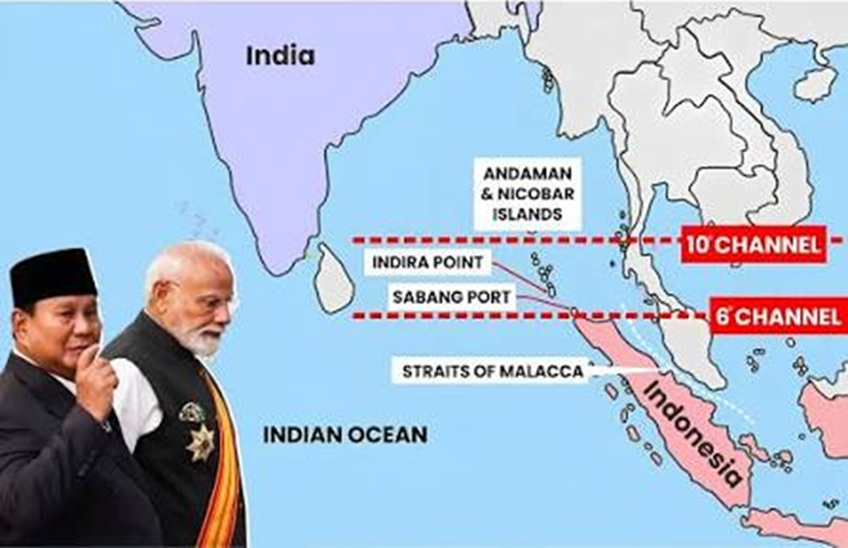
Two significant developments in Great Nicobar Island (India) and Sabang port (Sumatra, Indonesia), which lie astride the western approaches to the Straits of Malacca, merit attention. First, after full judicial scrutiny by the national Green Tribunal, a specialised statutory body entrusted with adjudication of environmental matters, the ‘go-ahead’ by the Indian government to develop the Great Nicobar Project (GNP) is notable. The GNP is expected to cost about US $9 billion to $10 billion and could be operational in three phases and completed by 2047. The project includes an International Container Transhipment Terminal (ICTT) (14.2 million TEU capacity); a Greenfield International Airport (4000 Peak Hour Passengers); a 450 MVA gas and solar-based power plant; and a new township spanning 16,610 hectares.
The project had been mired in domestic environmental debate amid fears that the sensitive Great Nicobar Biosphere Reserve ecosystem would be in jeopardy, and prudence demanded that it should be put on the back burner. Besides, the GNP would impact the Particularly Vulnerable Tribal Groups (PVTGs), in this case the isolated Shompens, who lead a semi-nomadic lifestyle and are primarily a hunter-gatherer tribe.
The Press Bureau of India Backgrounder titled “Great Nicobar Project Strategic Importance, Sustainable Development” of 1 May 2026 has potentially put to rest these concerns. Also, the issue of the Shompen people has been addressed, and it is affirmed by the government that it aligns with the Shompen Policy of 2015 and the Jarawa Policy of 2004.
Second is the development of the port of Sabang in Aceh, Sumatra, Indonesia. India’s interest in Sabang first appeared in the 2018 India-Indonesia joint statement wherein the two sides agreed to “set up a Joint Task Force to undertake projects for port-related infrastructure in and around Sabang” under the “Shared Vision on Maritime Cooperation in the Indo-Pacific between India and Indonesia”. It was envisaged that the project would be a catalyst for “further cooperation in the maritime sector which can be a force of immense stability in the region.”
The Andaman Chamber of Commerce and Industry (ACCI) and Aceh Chamber of Commerce and Industry (KADIN) too were optimistic of “providing a platform for businessmen to meet, explore business opportunities in trade and investment, transfer of technology” and contribute to the development of economic relations between the two countries.
However, there has been little progress on the issue since the first port call by an Indonesian vessel, KM Aceh Milenium, which had carried 150 tonnes of low-value assorted cargo of “coffee, vegetables, spices, vegetable oils, furniture and construction materials (sand, rocks and cement)” for exhibition at Port Blair.
A new opportunity has now arisen for India and Indonesia to explore cooperation wherein the latter can supply construction-related materials including bitumen, cement, stone, sand, steel, timber, and specialised marine engineering materials needed for the Great Nicobar Project (GNP)
Given that local blasting or open-cast mining for sand and stone aggregates is off the table, the construction material and equipment would have to be sourced from the mainland and transported over long distances, i.e. nearly 900 nautical miles from Chennai and Visakhapatnam. This is both a supply chain challenge as well as expensive.
India’s sea freight dependency on the mainland can potentially be offset by sourcing from Indonesia, and Sabang Port (Indonesia) could serve as the hub for supply of road rollers, earthmovers, asphalt and cement mixers and transport vehicles. Similarly, the strategic joint venture between Steel Authority of India Ltd. (SAIL) and PT. Krakatau Steel could be a useful venture to provide specialised steel for both Sabang port and GNP.
However, it merits mention that the sand export has been an environmental issue for the Indonesian government. The country has been a major supplier of sand in the region, but in 2003 it banned export of sea sand; in 2007, the ban was further strengthened to “curb illegal shipments, particularly to neighbouring Singapore”. But in May 2023, the government through Regulation No. 26/2023 “lifted the 20-year ban on sea sand exports” to “capitalise on global market demand and generate state revenue” amid warnings that “renewed exports could lead to long-term ecological damage and harm to fishing communities”. It was reported that the government was considering “revising the regulation, arguing that dredging can benefit ocean health and support domestic infrastructure projects.”
The Indian government has emphasised that GNP “represents a model for future large ecologically sensitive regions, showing how scale infrastructure initiatives in economy and ecology, rather than being at odds, can reinforce one another to serve national and global interests”. In this context, it will be useful to build on the 2018 “Shared Vision on Maritime Cooperation in the Indo-Pacific between India and Indonesia” and “integrated development of the Sabang Port” as envisaged under the July 2026 India-Indonesia Joint Statement and build an economic sub-corridor partnership to accrue “shared regional prosperity”. A ‘sister port agreement’ between the Great Nicobar Project (GNP) and Sabang could be yet another initiative by the Indian and Indonesian governments.
Title Image Courtesy: YouTube
Disclaimer: The views and opinions expressed by the author do not necessarily reflect those of the Government of India or the Defence Research and Studies.