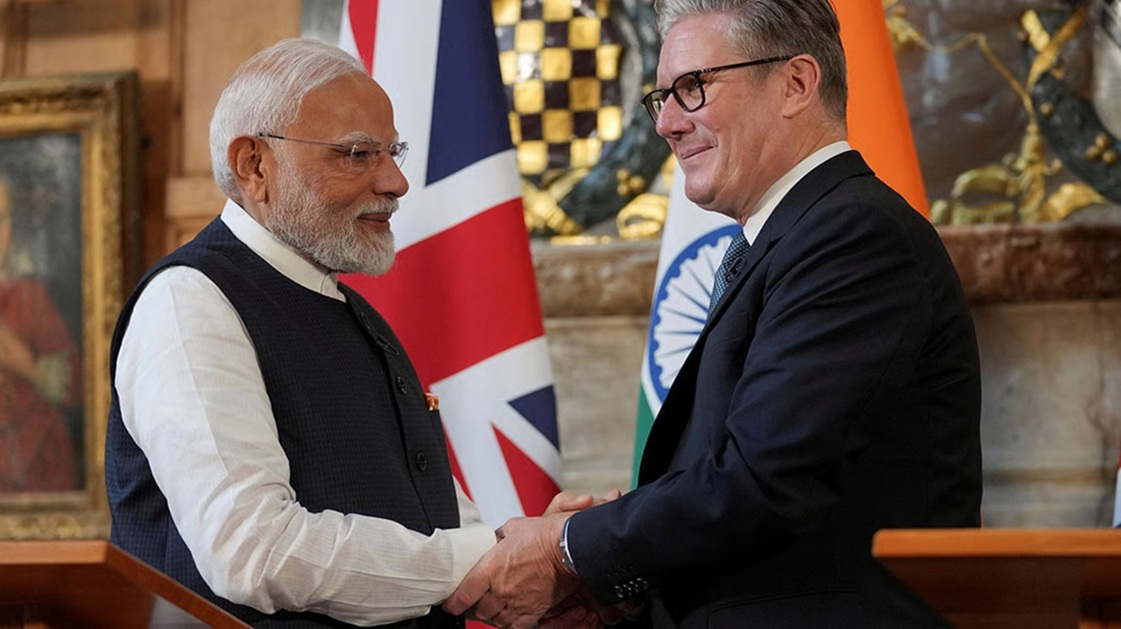
We have been taught a concocted history about India’s partition by the British. We have been told that Muhammad Ali Jinnah was responsible for the demand for the partition, to create a separate state for the Muslims (religious state), and fulfil his quest for power. Though it was one of the ingredients for the partition of united India, the main culprits were the British themselves. The devious plan for the partition of India was in the minds of the British much before 1946-47. This article focuses on the historical information to bring forth the reality and expose the cunningness of London and Simon.
Introduction
The Partition of India in 1947 was one of the most significant, deceitful, and traumatic events in the history of India, leading to the creation of two independent nations- India and Pakistan. This gave birth to a permanent headache for India.
This study brings out how the British triggered the disharmony, accelerated the communal divide, managed the partition as per their plans, causing large-scale displacement of people and loss of life, and long-term antagonism between the two nations.
The Partition was framed as a political expediency by the British, but its social repercussions not only redrew geo-political boundaries but also agonisingly altered the socio-cultural fabric of the subcontinent, leaving deep scars that mark India-Pakistan relations even today
Deploying a combined historical-analytical approach, the article ascertains the facts from archival documents and secondary scholarly works to trace the timeline of key decisions leading up to the Partition.
The article underscores the need for revisiting this historical episode, analysing the political strategies behind the partition decision and examining the role of British colonial policies.
British Policy of Divide and Rule India1
The British have always been known for their Divide and Rule Policy. British Parliament deftly implemented the divide and rule policy by the formation of an all-white Simon Commission. The establishment of this commission was a calculated constitutional deception by the British Parliament, aimed at manipulating the Indian population into a state of division and unrest. These actions of the British Parliament were a direct result of the British strategy for maintaining their control over India. They knew that the only way to continue the rule would be through dividing the country into regions with different religious and cultural identities. It was to serve as a precursor for dividing Indian territory later, under the guise of granting independence. The article examines the British treachery through the Simon Commission.
Constitution of Simon Commission (1927)2
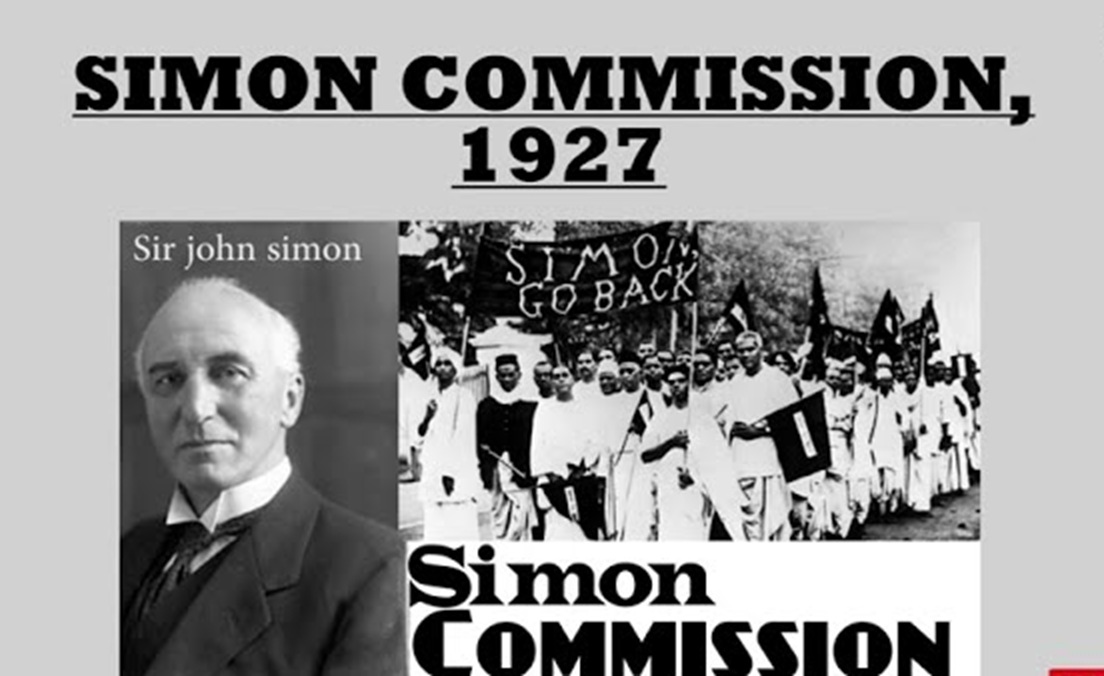
The Simon Commission, also known as the Indian Statutory Commission, which was formed in 1927, was chaired by Sir John Simon. The timing of the formation was not fortuitous, but it was a well-laid-out plan. In 1927, the Indian freedom movement was at its lowest level. The year was fraught with many Hindu-Muslim riots, financial stringency, and the Indian population’s frustration with living under an impractical constitution. That had made the Indian political scenario unstable.
To take advantage of that situation, the British Parliament appointed the Simon Commission, under section 84 of the Government of India Act, 1919, two years in advance. According to that provision, a Statutory Commission was to be appointed on the expiration of ten years after the passing of the 1919 Act. The purpose of the commission was to inquire into the working of the system of Government and the development of representative institutions for India.
The said Simon Commission was required to put forward its recommendations related to extending, modifying, or restricting the degree of responsibility of the existing in-country government. Its stated purpose was to review the progress of the 1919 Government of India Act (Montagu-Chelmsford reforms), and propose further constitutional reforms.
However, its all-white structure was self-defeating. That vital fact made it impossible for the commission to make any worthwhile recommendations for the welfare of the Indian People. This was attributable to the commission’s lack of knowledge about the ground realities. In addition, the Indian leaders were already disenchanted with the British and were no longer subscribers to the entrenched historical fact that Britain was the only guide for India or that it even needed a mentor. This brought in the Indian leaders’ antagonism toward the commission.
Indian leaders opined that the commission was not representative of Indian aspirations and was deliberately formed to basically put down the Indian leaders, and surreptitiously highlight the so-called political incapability of Indian leaders. For Indian leaders, the Commission’s composition demonstrated the British intent of creating communal divisions through their policies. They felt that the commission was put in place to curb the rising nationalism and India’s desire for self-governance since the 1920s. Thus, the Indian National Congress, along with a faction of the Muslim League led by Muhammad Ali Jinnah, decided to boycott the commission at every stage, basically nullifying the commission’s raison d’être.
Antagonism Against the Simon Commission
The Simon Commission arrived in Bombay, India, on 03Feb 1928. Its arrival triggered widespread protests and public outrage. Demonstrations were held by various political factions, including the Indian National Congress, and a faction of the Muslim League led by Mohammed Ali Jinnah. Arrival of the Simon Commission in India was accompanied by: –
- Nationwide Protests: The commission’s arrival was met with massive protests across India, with Indian people expressing their strong dissatisfaction through various strikes and demonstrations.
- Black Flag Demonstrations: Protesters waved black flags at the commission and shouted ‘Simon Go Back,’ a slogan symbolising their rejection of the commission and its discriminatory policies.
- Youth Mobilisation: Students and youth were at the forefront of the protests, demonstrating their commitment to the cause of Indian independence.
Covert Agenda and Objectives of the Commission2-3
London was well aware of the fact that Indian nationalists had been demanding extensive devolution of powers from British to Indian hands, and unrest on the ground for that. London, feigning benevolence. claimed that the appointment of the ‘Statutory Commission’ on 08 November, 1927, two years ahead of the scheduled date, was being done as a concession (basically a favour) for Indian political will. However, the reality, as then Secretary of State for India Lord Birkenhead himself wrote, was quite different. He had said:-
When I made my speech in the House of Lords, suggesting that it might be possible to accelerate the Commission of 1928, if some measure of co-operation were forthcoming in India, I always had it plainly in mind that we could not afford to run the slightest risk that the nomination of the Commission should be in the hands of our successors. You can readily imagine what kind of Commission in its personnel would have been appointed by Colonel Wedgwood and his friends. I have, therefore, throughout been of the clear opinion that it would be necessary for us, as a matter of elementary prudence, to appoint the Commission not later than the summer of 1927. If, therefore, we take the view that we are not prepared to run the slightest political risks in a problem so grave and so decisive of the future of India, it becomes evident that we ought to aim for the best possible terms from our opponents in compensation for a concession which, rightly considered, is no concession at all, because our own interests imperatively require that we should make it.
Simon Commission’s Report3-4
Recommendations of the Simon Commission3
In its recommendatory report, the Simon Commission stated that the new Indian constitution should contain a provision for its own development. The policy should not be too rigid but be flexible enough to allow natural growth and diversity. If any further legislation were required, it should be based on the needs of the time, and not stem from the arbitrary demands with a fixed timeline. It also stated that the implementation of the policy of responsible government in British India should be a gradual process. It’s another recommendation stated that Dyarchy should be scrapped and Ministers -reporting to the Legislature- be assigned for provincial areas of responsibility. The report also advised about safeguards for the maintenance of peace and tranquillity, and the protection of the legitimate interests of the minorities, by granting special powers to the Governors. A clear seed for disharmony.
The report further went on to recommend that a formal federal union should include both British India and the Princely States as a long-term solution for a united India. Finally, the report made a recommendation that for the growth of political consciousness in the people, the franchise should be extended, and the Legislature enlarged, protecting the interests of the minorities.
Consequences of the Commission’s Report4
Undoubtedly, the appointment of the all-white Simon Commission had disappointed Indian leaders. The Indian leaders were sceptical about the commission’s ability to impartially investigate the working of the system of Government and the development of representative institutions in India, spelling out recommendations to extend, modify or restrict the degree of responsible government in India.
It is interesting to note that Lord Birkenhead had justified the exclusion of the Indian representatives from the Commission because there were discords among the Indian political parties. This not only antagonised the Indian leaders further, but it also sowed the seeds of discord between them.
The majority of the then Indian leaders discarded the Simon Commission report as biased. As a result, Lord Birkenhead asked the Indian leaders to prepare a broadly acceptable constitution draft and submit it to the British Parliament for establishing processes for creating a responsible government in India. This resulted in the development of the all-party Nehru Report. In September 1928, the Nehru report was presented to the British parliament. The report emphatically countered the British charges that Indians could not form a constitutional consensus among themselves. The said Nehru Report advocated a constitution based on the principle of responsible government, on the lines of self-governing dominions within the British Empire. The Commission’s and Nehru reports became the basis of the discussions during the Round Table held in the United Kingdom.
At these Round Table Conferences (1930–32), Indian leaders debated constitutional reforms and minority rights. The British failed to find an amicable way to meet the Hindu and Muslim political demands. During these discussions, this failure, coupled with Jinnah’s adamant demands for separate representation, laid the groundwork for the eventual Partition of India in 1947. The price for which India has been paying for a long.
Simon Commission’s Connection with the Partition of India4-5-6
The historical documents clearly show that the Simon Commission indirectly influenced the Partition of India by intensifying communal tensions and shaping constitutional reforms, which heightened the religious divisions. Prominent leaders like Lala Lajpat Rai, Jawaharlal Nehru, and Muhammad Ali Jinnah were unhappy with its recommendations, albeit for different reasons.
Recommendations and Political Impact4-5
To reiterate, the Simon Commission’s report, published in 1930, had recommended abolition of dyarchy at the provincial level, introduction of the responsible government in provinces, with safeguards for minority communities, and special powers for the Provincial Governors for the same. It had also suggested the creation of an Indian federation and the separation of Burma from India. These recommendations emphasised communal representation, which reinforced the political significance of religious identities in governance, revealing a basic plan for politically & religiously dividing the Indian people.
Triggering Communal Tensions5-6
The commission’s exclusion of Indian representatives and its focus on minority safeguards had contributed to an enhancement in communal tensions. The Muslim League, under Jinnah, started demanding a separate electorate and political safeguards for Muslims, fearing domination by the Hindu majority. Thus, the Simon Commission indirectly encouraged the British policy of divide and rule by highlighting the need for protecting minority interests, which later became a key factor in partition discussions.5
Another researcher has pointed out that the Simon Commission’s recommendations (1930) did not resolve communal tensions, but institutionalised them. The proposal to retain separate electorates till inter-communal tensions between Hindus and Muslims remained created a self-perpetuating system of division. By making this a constitutional principle, the British ensured that political discourse would remain in religious tones, rather than in a nationalistic voice. Thus, the ultimate tragedy imposed on India by the Simon Commission was the success of British policy in poisoning the well of Indian politics for generations to come. Sadly, the communal consciousness which British manipulated has outlasted the Raj itself. It not only created the conditions for partition, but also permanently distorted South Asian politics. 6
Conclusion
The British had always deployed their Divide and Rule Policy in their dominions to rule the roost. The British Parliament implemented the same policy in India by the formation of the all-white Simon Commission in 1927. The constitution of this commission was a calculated deception by the British Parliament, aimed at manipulating the Indian population into a state of division and unrest.
The Simon Commission’s report had recommended the abolition of dyarchy, the introduction of responsible government in provinces, with safeguards for minority communities, and special powers for the Provincial Governors, bringing in perpetual political and religious divide, which led to the painful partition of India. Consequences of that partition reverberate even to date.
Finally, the Simon Commission may not have directly advocated the partition of India, but its recommendations and the political reactions triggered by it provoked and intensified communal divisions and influenced subsequent constitutional reforms. These developments contributed to the conditions that ultimately led to the Partition of India. The commission, thus, played a significant indirect role in shaping the political landscape of pre and post – independence India.
The situation is aptly explained by the words of Mrs Indira Gandhi, when she said:” You found an uncle on one side and a nephew on the other, a cousin here and a cousin there. Besides, it’s still true today. I’ll tell you something else. There was a time when even two ambassadors to Switzerland, the one from India and the one from Pakistan, were two blood brothers. Oh, the Partition imposed on us by the British was so unnatural!”7
Jai Hind.
Title Image Courtesy: https://discoveryalert.com.au/
Disclaimer: The views and opinions expressed by the author do not necessarily reflect the views of the Government of India and the Defence Research and Studies.


References
- Pandit, Shraddha, Singh, Dr Pushpraj Singh, May 2025, The Partition of India: Political and Social Consequences of 1947, International Journal of Research Publication and Reviews, Vol (6), Issue (5), May (2025), Page – 9008-9012, https://ijrpr.com/uploads/V6ISSUE5/IJRPR45881.pdf
- V. Venkatraman, V, S Aug, 2019, Simon Go Back!: Reflections of the Indian Press on the Boycott of Simon Commission in the Madras Presidency, 1928-1930, SSRN Electronic Journal DOI:10.2139/ssrn. 3440022 https://www.researchgate.net/publication/335389255_Simon_Go_Back_Reflections_of_the_Indian_Press_on_the_Boycott_of_Simon_Commission_in_the_Madras_Presidency_1928-1930
- Meena, Dr Hateet Kumar, Jan, 2015, Simon Commission (India Statutory Commission, 1928): A Case Study, The International Journal of Humanities & Social Studies(ISSN 2321 -9203, Vol-3 Issue-1, https://internationaljournalcorner.com/index.php/theijhss/article/view/131893/91366
- Bakshi, S. R. (1985). Swaraj Party and the Indian National Congress. New Delhi: Vikas Pub. House, pp. 78-83.
- Andrews, C. (1930). India and the Simon Report, Michigan: University of Michigan Press, p. 67
- Tyagi, Diksha, 13 Aug, 2025, British Divide-and-Rule at its peak: Lessons from 1928, https://organiser.org/2025/08/13/307813/bharat/british-divide-and-rule-at-its-peak-lessons-from-1928/
- Indira Gandhi quote, https://www.azquotes.com/quote/1536896